We are very proud to see that not only our Technical director and some of our technical board members but also a number of farmers and scientists who have supported us, have all made it on the #bovineTB Partnership. Read more about it here #tbfree 🐄🐂🦡https://t.co/VCH0QCpLyR
We are very proud to see that not only our Technical director and some of our technical board members but also a number of farmers and scientists who have supported us, have all made it on the #bovineTB Partnership. Read more about it here #tbfree 🐄🐂🦡https://t.co/VCH0QCpLyR
@sjtomo157@DenLeonard@AustinS48562484@SwaledaleMutton Safety of BadgerBCG was thoroughly assessed in the field and the lab ahead of licensing by VMD. This cat result is interesting though. https://t.co/Nf1BwiPdYX
The Cornwall State of Nature report is an uncomfortable read 😔.BUT we know how to bring nature back and loads of work is already happening, we just need EVERYONE to get involved and do their bit..... YESTERDAY! 🌻🌱🐦
Do farmers, vets and epidemiologists understand the spread of bovine TB in the same way? Our paper out now tried to find out (ft @kimjadeward)
https://t.co/ewR1uuWtUt
(free)
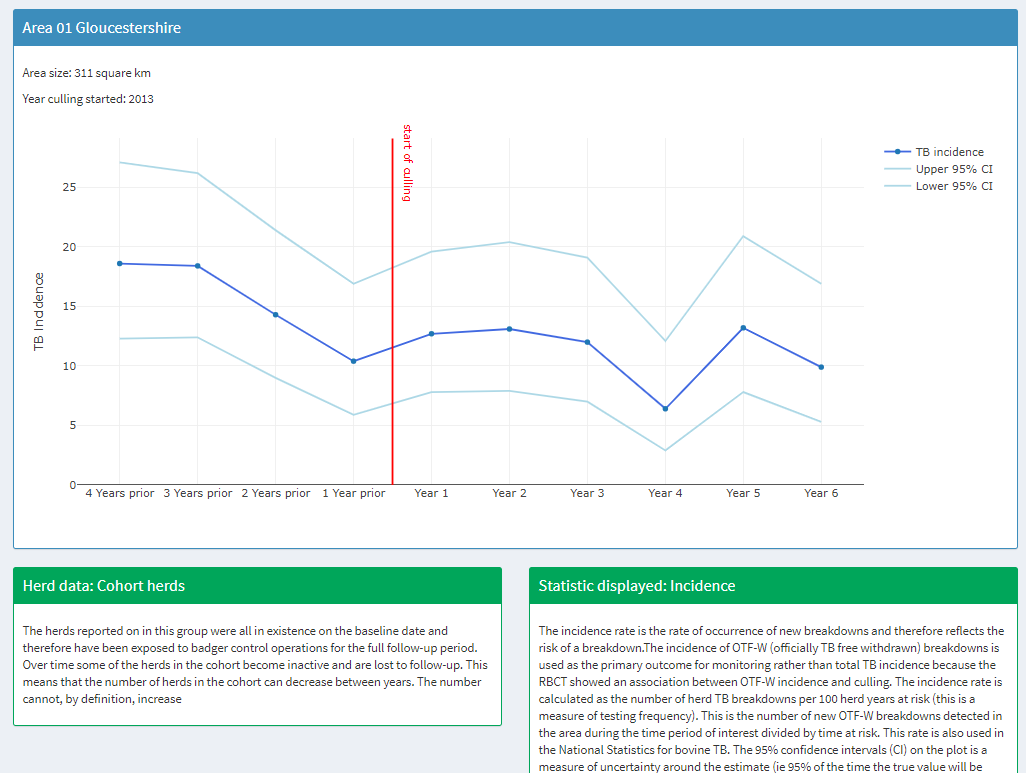
#BovineTB trends in the #BadgerCull areas were published late last year for 32 cull areas. For those interested I have uploaded this data into an interactive webpage, to make it easier to explore and visualise the trends. https://t.co/u6nwXR83gJ @TB_Advisory
@bovinetb@TB_Advisory That's certainly an option. To be honest the main aim was just to take the outputs from the (very lengthy) report and make it easier to explore. Can I ask why you have chosen areas 4-10 for the averages?
The interactive #bovineTB stats dashboard I have been developing is now being maintained by Defra and can be found on the TBhub here https://t.co/O6qvP8SO5S
Its not quite as colourful, but this should have the latest TB figures for your area! @TB_Advisory
Our study on the prevalence of M. bovis in found dead badgers in the Edge Area in 2016/17 has been published. Here’s a thread summarising the work in the Northern edge. https://t.co/swj0wvCex9 1/9
What are 'no regrets' biosecurity measures for controlling #bovineTB? Raising troughs? Using ibTB? isolating cattle? If you have five minutes please fill in the @TBAS survey to rank different measures here and contribute to future TB advice https://t.co/MvAupvZSA5
#Bovinetb infographic displaying biosecurity risks can now be found on the TBhub. Its interactive, just click on the risks to find more information and links to useful sections on the TBhub. https://t.co/Lp5dc8vsce @TB_Advisory
@bovinetb@gisdatamonkey Not possible with the current ibTB im afraid. Currently it displays TB breakdowns but you cant really see or infer the cause of those breakdowns.
The new version of https://t.co/FaO1knD9pJ is now live displaying #bovinetb data for Eng & Wales. To support the launch of the new version I have created a video explaining how ibtb works which can be found on the Defra youtube channel here https://t.co/ppwZYSmXVL
@terrierview Agreed, but the lack of statistical significance in IAA, may be partly due to low sample size as the raw % reduced by a lot, which is encouraging if nothing else.
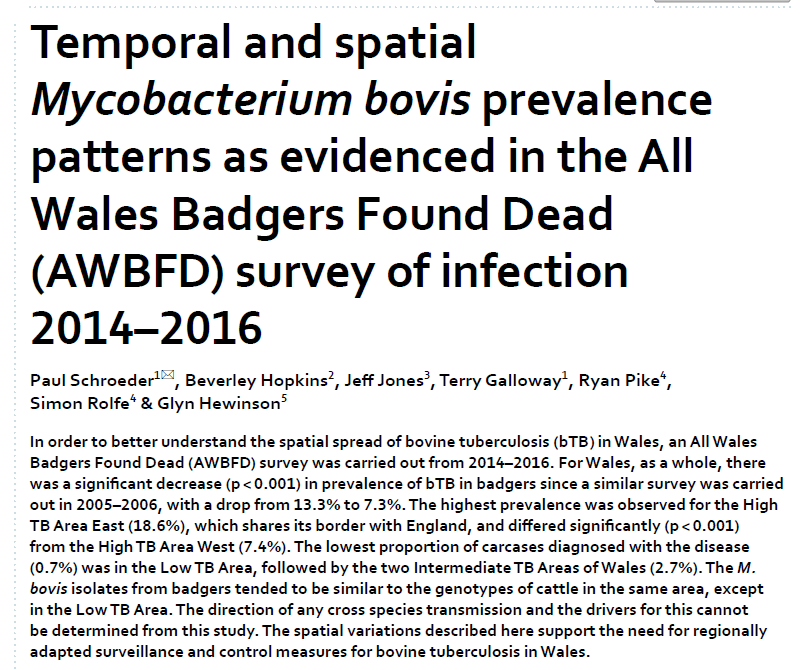
Interesting research from Wales suggesting a significant drop in #bovineTB in the badger population, despite limited culling or vaccination. Does this suggest measures to control TB in cattle are reducing TB in wildlife? https://t.co/CCXY1IS1dB
We've published a paper exploring the progress, operational effectiveness, motivations & barriers for #badger vaccination in England.
Here's the paper https://t.co/jBFgF3L6Qo
Here's a summary https://t.co/b7crlDn8eT
And here's a thread outlining the paper
@PaN_BES#bovinetb 1/7
@bovinetb@terrierview@Rethinkbtb Yes I'd agree this paper is the best data we have on transmission between species. Unfortunately its only from a single site which makes it difficult to extrapolate, particularly to places like Derbyshire. But hopefully we will have more data like this available in the future.
WT review of the APHA claim that 77% of TB breakdowns in Derbyshire are caused by badgers...https://t.co/a0COlbXs9g My own view is that 77% is likely to be an over estimate and the subjectivity/uncertainty of these figures needs to be more clearly stated. #bovineTB#badgercull