Our metacheck package now has an online manual! In 29 short chapters we explain how to set up metacheck (running all modules 100% locally if you want), and explain the 18 available modules. https://t.co/uT4jFOdwW0
We are still in beta, and would love to get feedback!
A new Nature paper makes a powerful point.
Current evaluations treat LLMs like students sitting an exam in which “I don’t know” is marked as wrong. Under these conditions, guessing becomes strategically optimal.
Hallucinations are not only a technical failure of LLMs. They are also, in part, an incentive problem created by the way we evaluate them.
The authors propose an elegant solution: make wrong answers costly, so that the model abstains unless sufficiently confident.
This is a very welcome contribution, which I hope can help develop a new generation of models, one that we can trust more, especially at the frontier of knowledge, where current models are notoriously bad.
*
Full paper in the first reply
Presented at #ASCO26:
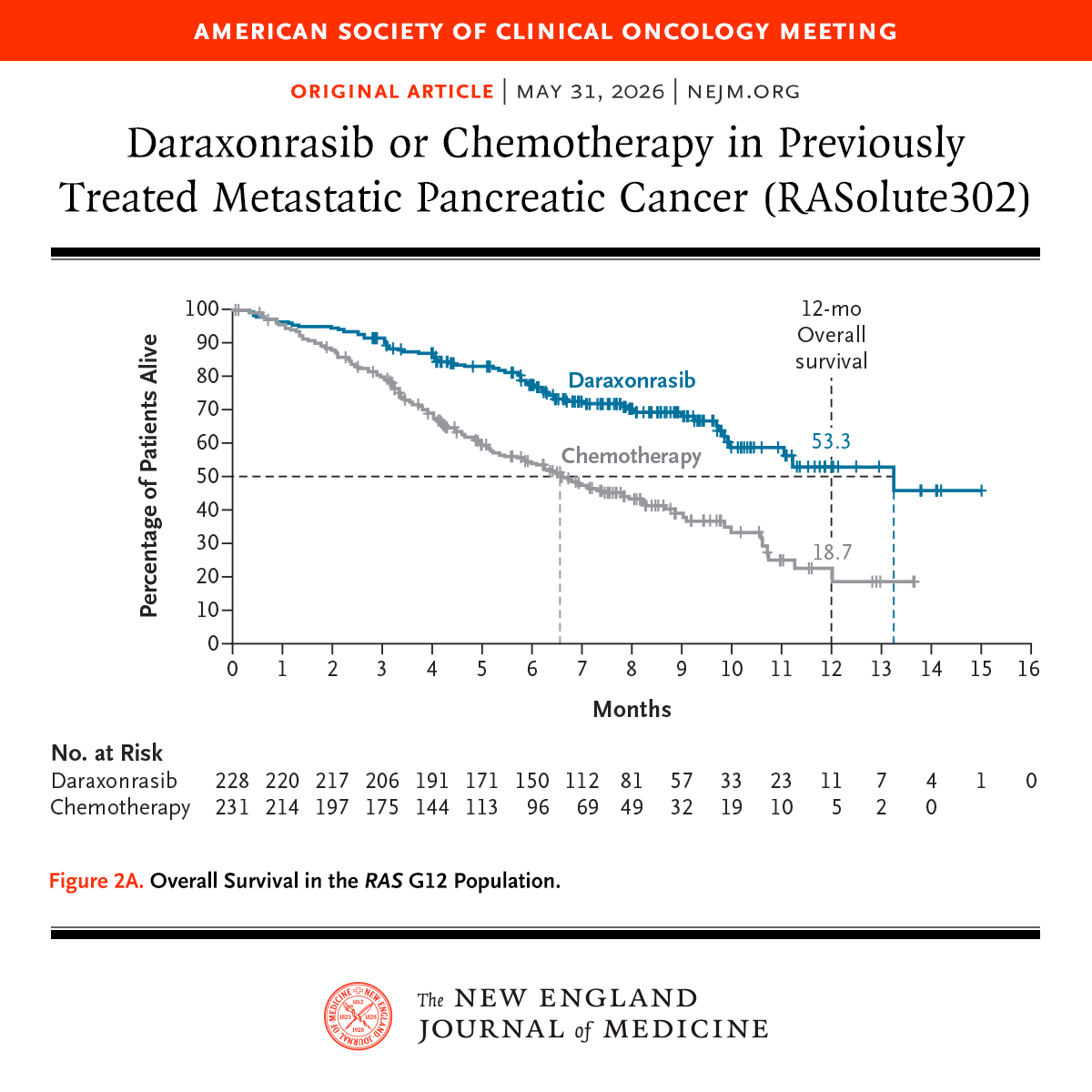
Among patients with previously treated metastatic pancreatic ductal adenocarcinoma, the RAS(ON) inhibitor daraxonrasib led to significantly longer overall survival and progression-free survival than chemotherapy. Full phase 3 RASolute 302 trial results: https://t.co/xwLWBZYRzq
@ASCO
Las inteligencias artificiales no viven una experiencia, no poseen un cuerpo, no pasan por la alegría y el dolor, no maduran en las relaciones ni conocen desde dentro lo que significan el amor, el trabajo, la amistad y la responsabilidad. Tampoco tienen una conciencia moral: no juzgan el bien y el mal, no captan el sentido último de las situaciones ni asumen el peso de las consecuencias. Pueden imitar, pueden simular pero no conocen lo que producen, porque no residen en el horizonte afectivo, relacional y espiritual en el que el ser humano se hace sabio. #MagnificaHumanitas
Excellent news! Nature is expanding Registered Reports to all the fields in which they publish! A great result by all those proposing this strong solution to publication bias and selective reporting (and getting expert feedback before data collection)! https://t.co/lVrQcNDVJT
En la era de la #InteligenciaArtificial, en la que la dignidad humana corre el riesgo de verse eclipsada por nuevas formas de deshumanización, tenemos el deber urgente de permanecer profundamente humanos, custodiando con amor esa magnífica humanidad que se nos ha dado y revelado en plenitud en Cristo, y que ninguna máquina podrá jamás sustituir en su esplendor. #MagnificaHumanitas
https://t.co/Ple93kfbB8
The ramp up of cancer immunotherapy is remarkable. Now we're seeing vaccines achieve some cures or remissions in the most refractory cancers: pancreatic, melanoma, glioblastoma, renal, triple-negative breast cancer.
✓ out the new Ground Truths (link in profile)
People often complain about tough peer reviews
But papers that elicited stronger criticism from reviewers and required more-extensive revisions received more citations tha did papers that drew light comments and sailed through the peer-review process.
We need to embrace constructive criticism if we want to do stronger work. https://t.co/TcTcUDpm2q
The secret is to have a good basic research question that applies to many different topics. In psychology this means studying a basic psychological process, not a phenomena. This allows you to drill down while providing insights to new topics.
I've been able to study social identity for 20+ years, going from the basic impact of minimal group membership on automatic biases and brain function, to decision-making, social media, public health, and now AI.
This is why I always try to instill in my students the need to have a basic research question. It allows for depth and breadth.
I also created a version of the 'guess the correlation' game. Students always enjoyed it, but the original website (with fun retro design) started to require a google account login. So I created my own version. Play it here: https://t.co/Hru1krnKHg
Most teams don’t fail because people are “bad collaborators.” They fail because incentives and competing identities sort them into silos.
My new @HarvardBiz piece explains how to create successful teams in a special issue on "How to Collaborate Better"
Along with @LauraKriska we provide 4 Research-Backed Ways to Help Your Team Collaborate Better. We explain how high-performing teams:
1) focus on a superordinate goal,
2) use inclusive language,
3) allocate resources effectively, and
4) build psychological safety for constructive criticism.
Read it here: https://t.co/t4WlqLRsGs
You can read more about our article and "The team machine" on my substack: https://t.co/06MMkJYeUN
The entire special issue is here: https://t.co/SwjGU7XkSY
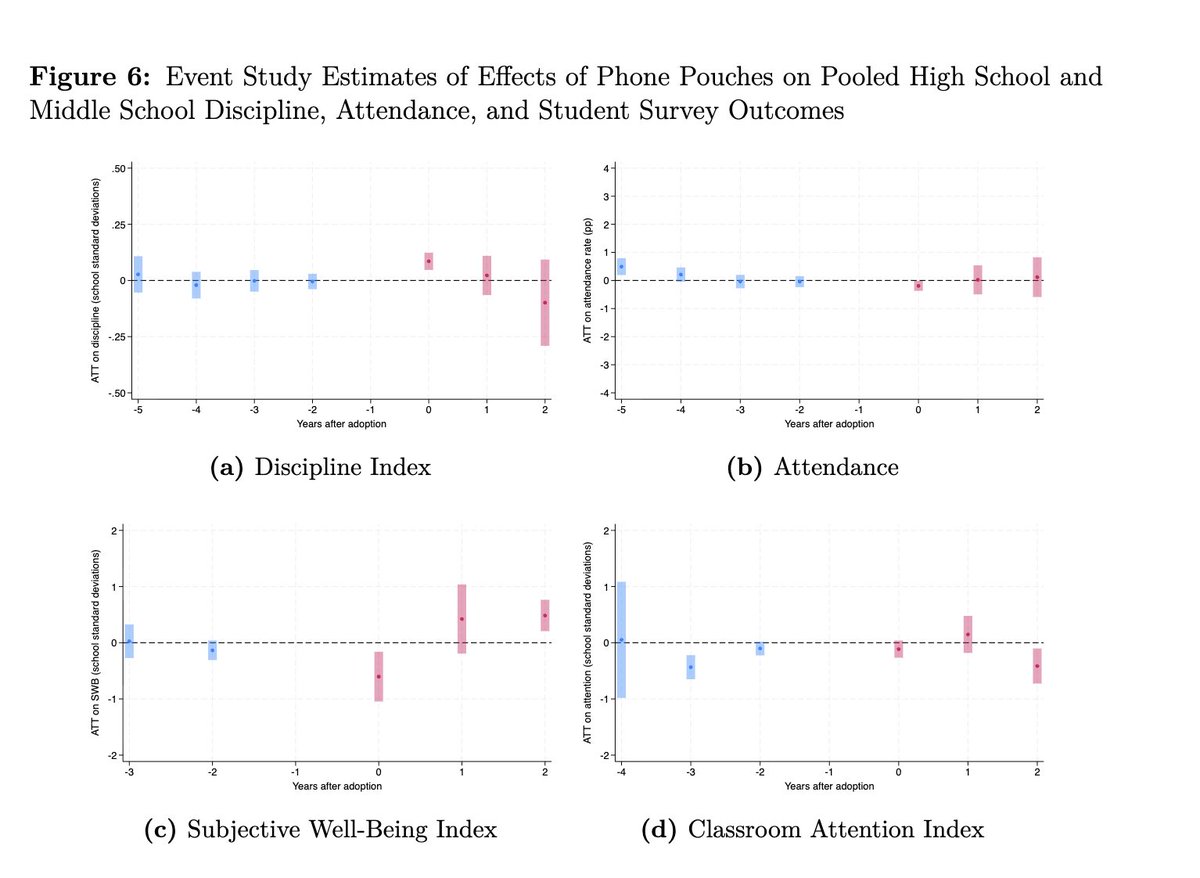
Schools across the U.S. have sharply restricted student smartphone use during the school day. A new paper evaluated the effects of these bans.
The main benefit was increasing student well-being.
Initially, student well-being falls, but the effects on well-being eventually become positive as kids adapt. This is the main positive effect.
But there is little evidence of effects on school attendance, self-reported classroom attention, or perceived online bullying.
https://t.co/fodGqNtPfi
The best predictor of scientific impact isn't gender, seniority, methodology, or geography, it is the informal network of colleagues and mentors who provide guidance and feedback. We are often ignore the most important source of success.
Informal support networks are the unsung heroes in science. Joining a great community of supportive and collaborative colleagues might therefore be one of the most important keys to success.
This is based on a new paper analyzing the scientific impact of 86,000 scholars. The authors found that informal connections (ie the people who you thank in acknowledgement sections) are more important that your coauthors in predicting publication productivity and impact.
https://t.co/w8rJHWFpha
A really dangerous situation. Too many submissions. Too many generated papers. Little responsibility.
1. In 2026, more than 24,000 submissions were made to the International Conference on Machine Learning (ICML). It’s TWO times more than in 2025. To fight it, the organizers now require researchers to pay $100 for every subsequent paper.
2. LLM adoption has increased researcher productivity by 90% (there’s a recent paper in Science).
3. The number of papers is becoming far too high. Submissions to arXiv have risen by 50% since 2022.
4. There are simply not enough reviewers. Plus, many scientists no longer want to invest precious time in it for free.
5. We can’t easily identify AI-made papers from the genuine ones.
__
Important words from Paul Ginsparg, a co-founder of arXiv:
“AI slop frequently can’t be discriminated just by looking at abstract, or even by just skimming full text. This makes it an “existential threat” to the system.”
Basically, we’re getting closer to the tipping point.
📍 Many professors blame the AI.
But the problem is likely elsewhere:
1. Without a sufficient number of papers, many PIs can’t get funded. They have to prove their credibility to reviewers. Their proposals have to rely on prior publications. In many countries, there are some informal (or even formal) expectations for how many papers a group with a certain size has to publish to survive (funding-wise).
2. Our students / postdocs need papers if they want to be hired in faculty roles. Yes, some departments hire people with few publications. But the majority still want to ensure their faculty can get funded. If funding is partly a function of papers, this is used in decision-making.
3. The number of papers is important if you want to get high-level awards. Many of them are not given because you published one paper (even if it’s great). They are given because you made a meaningful CONTRIBUTION to the field. How do you make it? Publish more papers.
4. Tenure promotions in many places take the number of your papers into account (often indirectly). Your tenure may get delayed if you don’t publish enough. Not everywhere, but for many mid- to low-ranked universities this story is more or less the same.
+ There are many more to mention.
📍My opinion:
Much of this is rooted in how funding is distributed.
There is a strong correlation between the requirements at a university and the funding acquisition criteria.
If funding were based ONLY on the quality of published papers, universities would hire people for the quality of their science. If funding agencies strongly discouraged publishing too many papers, universities wouldn’t expect numbers from faculty during promotions. And some supervisors wouldn’t pressure students and postdocs to publish unfinished studies and low-quality data.
Yes, we need good detectors of fake papers.
But we also need the right policies and better funding allocation criteria.
New blog, inspired by the excellent qualitative paper by Makel and colleagues: On the reliability and reproducibility of qualitative research.
I reflect on realist ontologies in qualitative research, and how I will incorporate these in my own research.
https://t.co/YcMbE3Namx
Bye bye Zotero, EndNote and Mendeley!
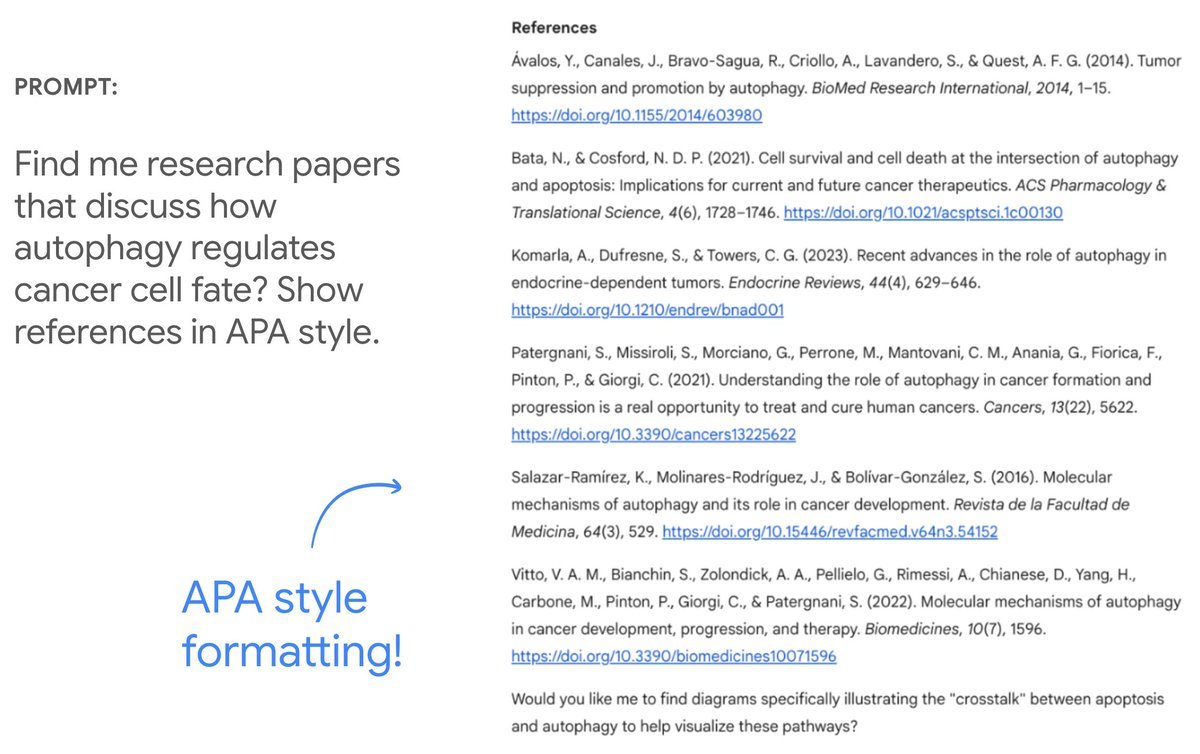
Gemini can now create proper APA-style inline citations and detailed reference sections, which should help students and researchers everywhere.
The question now is, will you still use an old reference management software?
More here: https://t.co/Y3EZsbMVHq
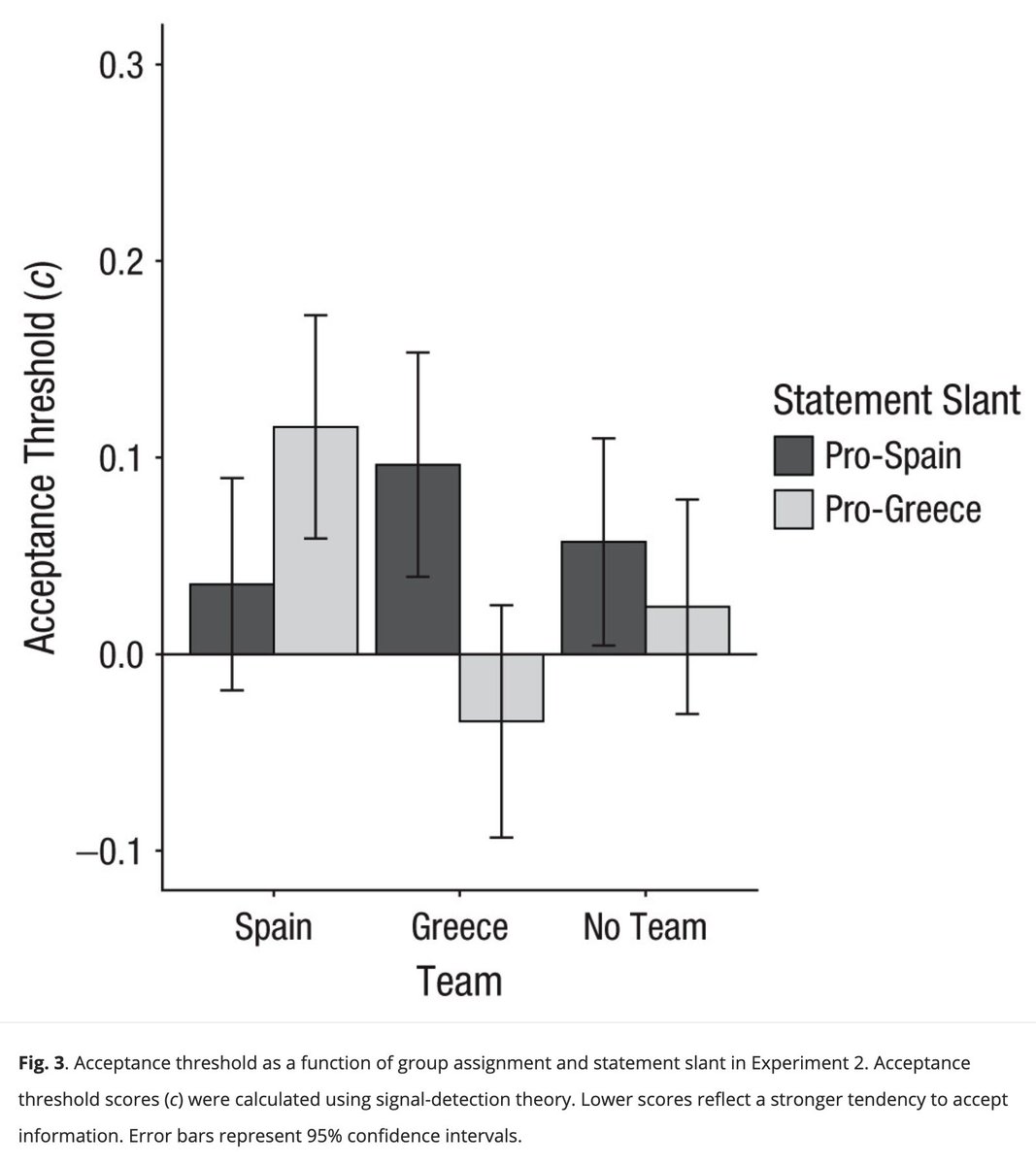
Social identities shape our beliefs
This new paper offers compelling evidence for the Identity Model of Belief: randomly assigning people to groups lowers their threshold for believing information that aligns with their identity.
"These results support theories that emphasize identity protection as a factor underlying partisan bias in the acceptance of misinformation, with important practical implications for misinformation interventions."
https://t.co/LzvQeTevsn