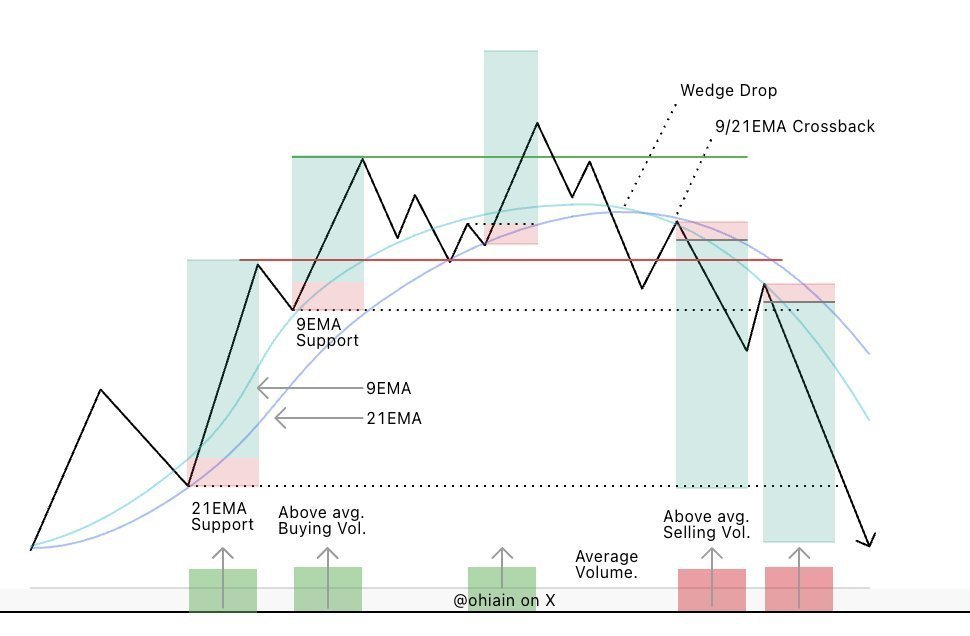
Qullamaggie tries a same day re-entry about 50% of times he gets stopped out intraday..
One of the most asked questions I get to this article read by almost 400,000!
If u don't hold $HYPE - read this
If hold $HYPE - read this
I think very few ppl actually understand what hyperliquid is, where it’s going, how it makes money, how to properly value it, and therefore what kind of expectations to have, this article will help
Qullamaggie and Martin Luk both trade momentum, but their entries are almost completely opposite.
‼️Qullamaggie's entry is one of the most misunderstood parts of his trading.
If you work during market open you can still make it as a swing trader!
QULLAMAGGIE: Forget the concept of the opening range high. A lot of people get so confused.
You're not missing some hidden statistical edge by skipping the 1-min or 5-min ORB.
For Qullamaggie, the daily multi-day/week range break is the setup. The opening range is mostly a timing tool to keep the stop tight without chasing an extended entry. Martin Luk is the opposite, a lot of his edge is in his entry technique.
DAILY LEVEL VS ORB:
Across all of Qullamaggie's logged breakouts, 89.0% were bought at or above the prior day's high (median 1.91% above it).
When I ranked entry triggers mechanically across 513 confirmed breakout days (same stocks, same exit, so only the ranking across rules matters), a buy stop at the prior day's high ranked #1, ahead of 1m, 5m, 15m, 30m, and 60m ORB.
Win rate barely moved across all of them (36% to 41%). Waiting just widened the stop from 1.3% (1m) to 4.2% (60m).
FAST ORB ONLY WINS IF YOU SIZE UP AGGRESSIVELY:
Simulating 1m, 5m, 15m, and 30m ORB across 805 of his long setups, 1m ORB makes more than 2x the R of 30m (3.61R vs 1.54R) only when you size every trade to constant risk, which takes 3x the position size on a 1.2% stop vs a 3.8% stop.
Once you cap single-position size at 10-15% (at 0.5% risk), 5m and 15m actually beat 1m because 1m gets shaken out of more winners and catches every morning fakeout (all 30 setups skipped by 5m lost at 1m).
In all his breakouts, buying the first 5 minutes got stopped out 83.0% of the time vs 70.1% after 09:35, with no clear advantage in average R (+0.93R vs +1.27R, and +0.25R without GME).
What allows Martin to size up so aggresively is his tight, tight risk, which he gets from more granular entry techniques.
NOT BUYING EXTENDED (ADR) MATTERS MORE THAN THE ORB CANDLE:
Qullamaggie's rule aims for 1/3 to 2/3 of ADR and avoiding buys up more than 1 ADR.
Measured from the day's low, his median entry is 0.47 ADR, with 87% under 1 ADR. Measured from the prior close across 827 breakouts, entries already up >1 ADR produced fewer 5R+ runners (7.2% vs 11.4%).
Buying too early hurts even more: under 0.25 ADR off the low lost money (-0.47R, 91% stop-out rate) because the stop sits inside morning noise.
PRACTICAL OPTIONS IF YOU'RE AT WORK DURING THE OPEN:
Qullamaggie himself used buy stops heavily early on and only quit because of slippage on big share size.
The one trap with a plain overnight buy stop at prior day's high: across 825 of his breakout days, 381 (46%) gapped over the prior high at the open, so a buy stop fills on big gaps too. Use a buy-stop-limit capped so you don't chase past ~0.5-0.75 ADR. I imagine this can also easily be solved by building an execution engine.
Even end-of-day buying on breakouts that hold above the level at the close (LOD stop, 2.5 ADR max stop) still produced +0.61R across 511 breakout days (34.1% win rate). You give up R compared to morning entries (+2.20R on those same 511 days) mainly because the median stop widens from 2.31% to 5.51%, not because the edge disappears. This is why @jfsrev "late" entries works.
WHY MARTIN LUK CARES WAY MORE ABOUT INTRADAY SETUPS:
Different stop math. In my 2025-2026 log of Martin's 563 trades, 75% of his longs are daily EMA/AVWAP pullbacks with a modeled median stop of 1.31%.
Putting a ~1.3% stop on a daily breakout gets you shaken out constantly, especially with post-2024 morning chop.
That's why Martin avoids the first 15-30 min and hunts 5m/15m pullbacks and opening-range-low undercuts, while Qullamaggie used wider daily breakout stops (~2.0-2.4%) and straight-up says on stream he'd be just as profitable using only daily and 1H charts.
Same math applies to sleep.
People mistakenly believe it's wasted time.
6hr vs 8hr pushes your system near 100% capacity, multiplying errors, brain fog, and biological debt by 12x.
Tracking the points that manage to escape the trajectory of the Mandelbrot set (Samsara) and the probability distribution looks like a Buddha.
Like, Be for real.
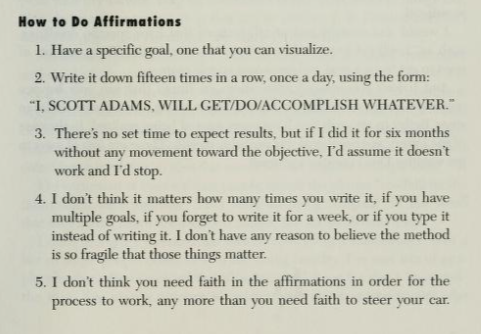
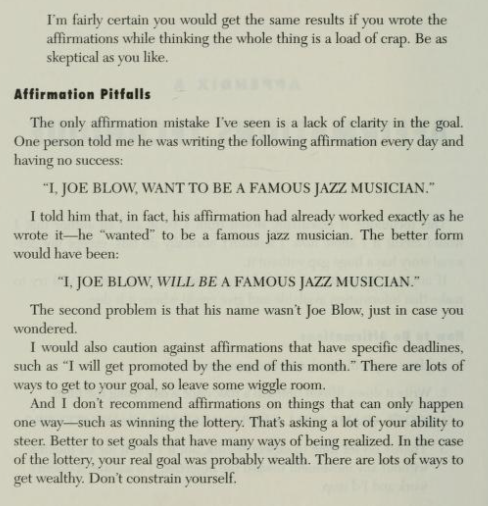
Scott Adams says he stole this from a book but did not know how to give the author credit.
In the spirit of tradition, I am now stealing this from Scott Adams' book to share with you (I don't think he would mind).
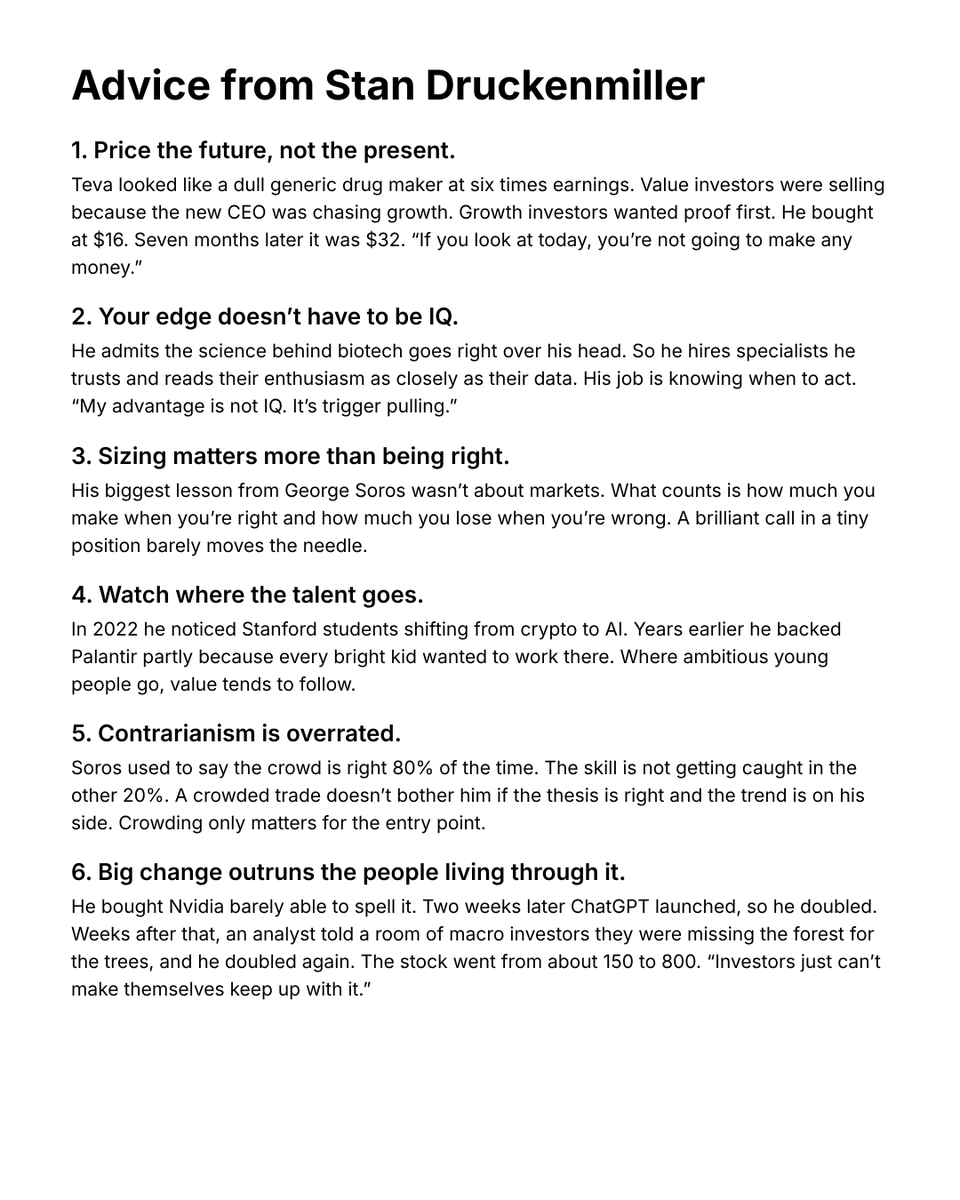
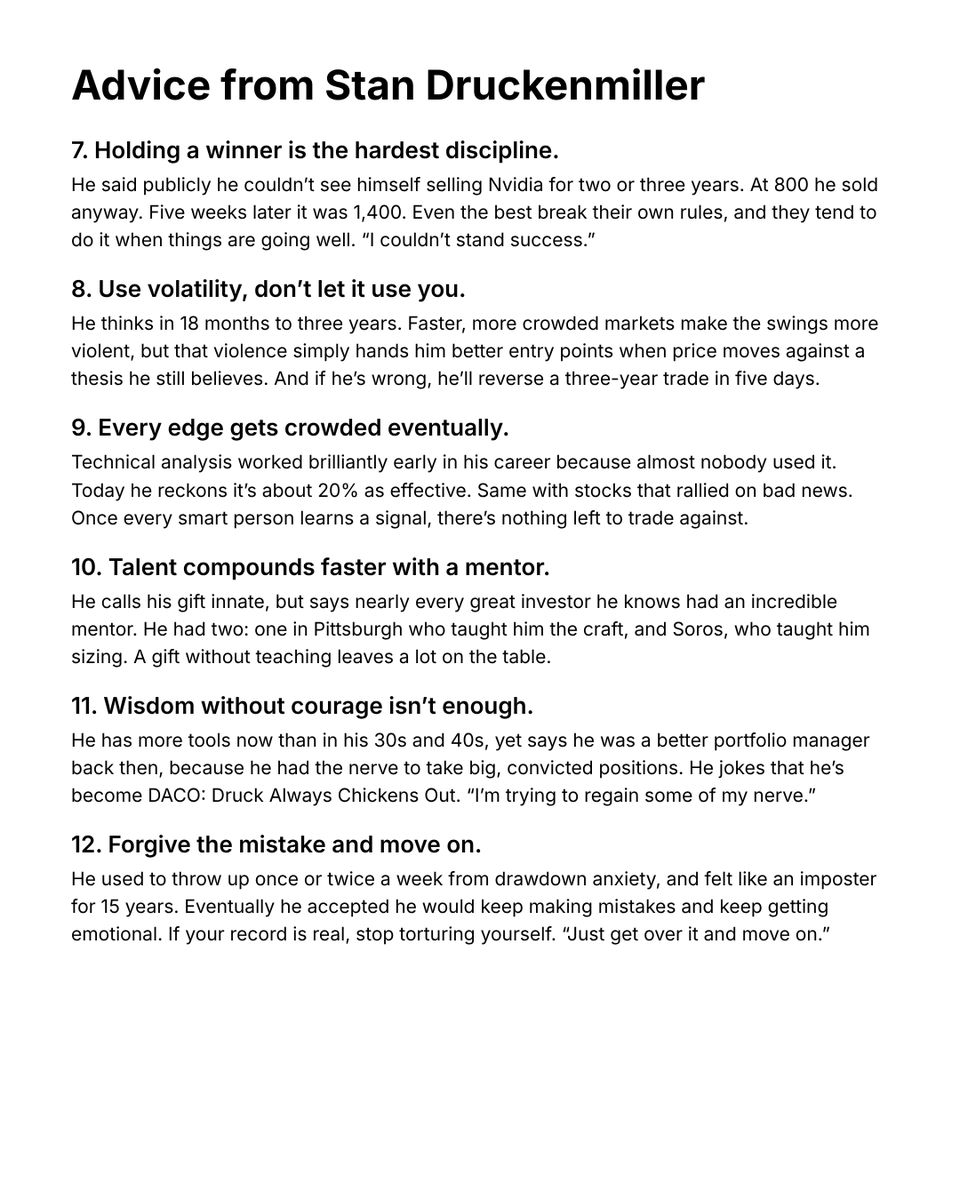
I don’t invest often, maybe a handful of times a year, but almost every good decision I’ve made traces back to a few people. Stan Druckenmiller is one of them. He compounded at roughly 30% a year for three decades without a single losing year. These are the lessons from him I’ve written down, and I read them often to become a better investor.
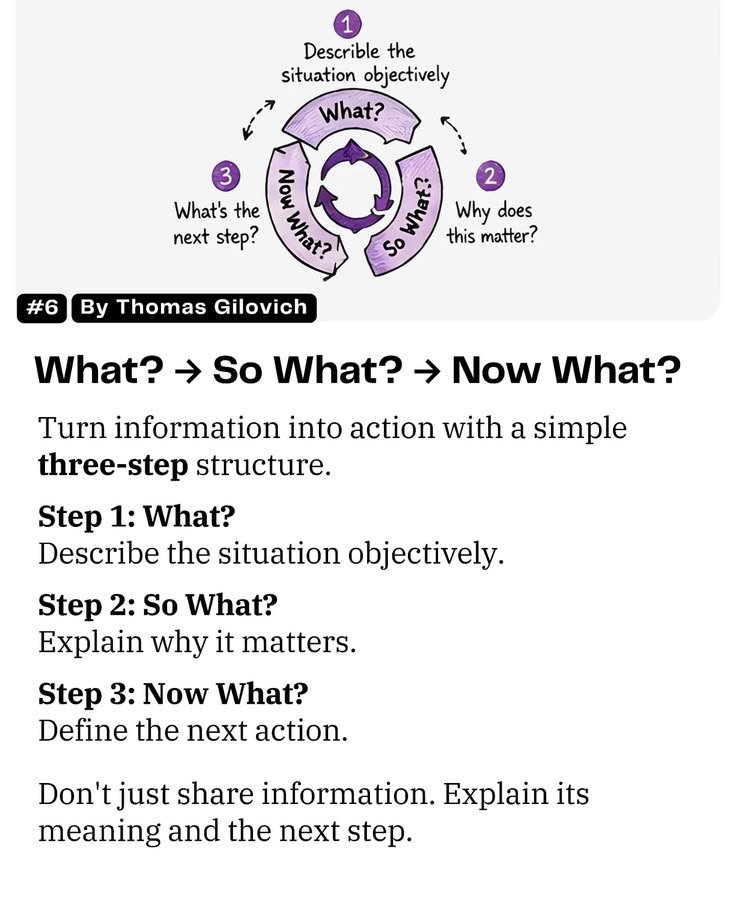
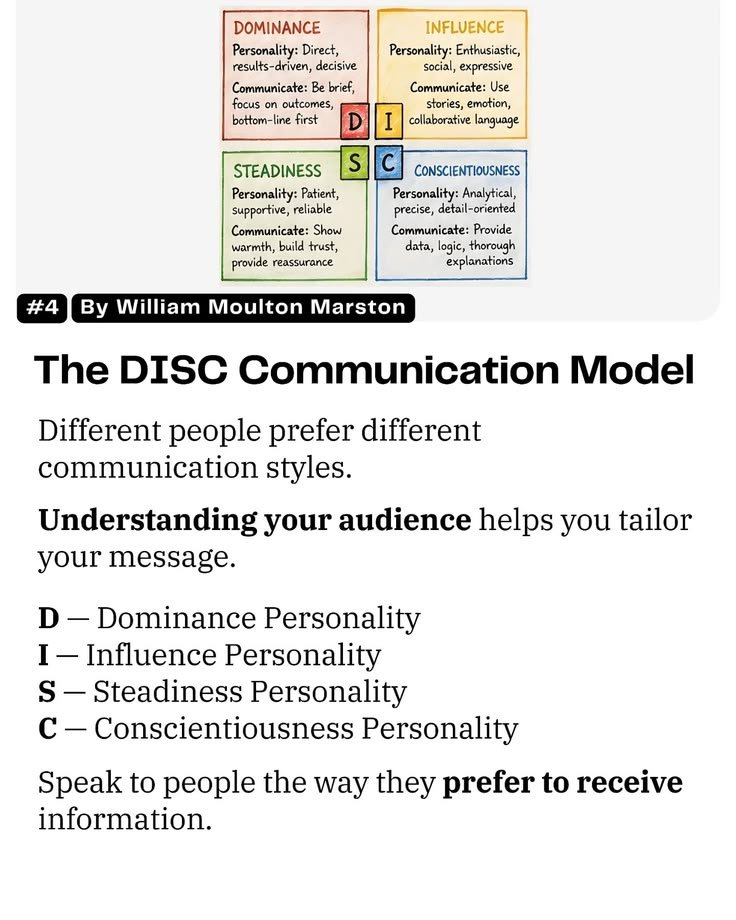
6+ years of trading, tens of thousands of charts studied, and a stupid amount of dumb mistakes... all simplified into 4 infographics I created.
How I long/short, execute & manage risk in ANY market.
This is quite literally my entire approach.
SAVE + BOOKMARK this one!!
Gurdjieff and Steiner both say you're asleep, but they wake you up differently.
Gurdjieff: you're a machine running on autopilot. Wake up by watching yourself in the moment.
Steiner: you're a being with untapped faculties. Wake up by training them step by step.
Try Gurdjieff's way today:
1. Set 3 alarms. When each one goes off, stop and feel your whole body in the room: hands, feet, breath.
2. Watch one habit run without changing it. Your reaction to a text, how you hold your phone, your tone when you're annoyed.
3. Notice how often you're lost in thought instead of present.
Try Steiner's way this week:
1. 5 minutes of full attention on one simple object, daily.
2. Do one deliberate action at the same time each day.
3. Replay your day backward at night, as a neutral observer.
Gurdjieff trains awareness in the moment.
Steiner builds the faculties over time. Start with one, then add the other.
Start with In Search of the Miraculous or Knowledge of the Higher Worlds.
Pick the one you'll actually practice.
George Gurdjieff’s Final Exercise Before His Death
Known as the “I AM” Exercise.
The practice is simple: internally or externally, affirm “I” with all feeling centered in the solar plexus, followed by “am” with all sensation centered in the spine.
And that was all.
The exercise did not have to be performed contemplatively, although it could be. It was incorporated into several other exercises, particularly the Four Ideals Exercise and the Preparation.
Perhaps it is no coincidence that both of these “final” exercises were so simple.
At the end, Gurdjieff brought the rich and diverse content of his system back to its most fundamental principles, relating the inner life to the outer life.
This accords with recollections of Gurdjieff during his final years. Hands recalls that Gurdjieff gave an “I Am” exercise several times. The following is perhaps the most striking example:
“One night Mr. Gurdjieff was talking about self-awareness-how, in whatever we were doing, we should pause from time to time to say “I,” to say “I” not with the head alone but with one’s whole mass. He lifted up his hand and said, “It is like this, even my thumbnail say “I”. The extraordinary thing was that you could almost hear it doing so.”
Remember sitting through family dinners while uncles questioned when you’d get a real job? Or refreshing your inbox, waiting on replies that never came? Those nights counting coins to afford bus fare taught more than any degree. Now they ask for advice. Funny how life repays patience with interest.