En julio de 1755, un ejército británico avanzaba por los bosques de Norteamérica convencido de que su victoria era inevitable. 1.400 soldados profesionales marchaban bajo el mando del general Edward Braddock. Horas después, aquel ejército estaba destruido. Tira del hilo 🧵👇🏽👇🏽👇🏽
Two women perform an Irish folk dance in Belfast!
The 'White people have no culture' narrative keeps getting clobbered by White people consistently showing their individual cultures!
Au rendez-vous des amis est un tableau réalisé par le peintre allemand Max Ernst en décembre 1922. Cette huile sur toile est un portrait de groupe réunissant une quinzaine de contemporains animant le surréalisme naissant, parmi lesquels l'artiste lui-même, à quelques personnages historiques.
Ce sont, par ordre alphabétique, Louis Aragon, Jean Arp, Johannes Theodor Baargeld, André Breton, René Crevel, Giorgio De Chirico, Robert Desnos, Fiodor Dostoïevski, Gala Éluard, Paul Éluard, Max Ernst, Théodore Fraenkel, Max Morise, Jean Paulhan, Benjamin Péret, Raphaël, Philippe Soupault.
Il existe encore de grands humanistes, dignes héritiers de ceux de la Renaissance: Anne-Marie Lecoq et Alain Mérot. Il faut donc lire l’ouvrage, qui paraîtra le 15 mai chez @EdLePassage, et qu’ils consacrent à la grâce à travers les arts dans notre sublime tradition artistique européenne… grâce qui nous fait si cruellement défaut aujourd’hui.
In 1776 Daniel Boone rescued his daughter Jemima along with two other girls who were abducted by Cherokee-Shawnee Indians.
Boone along with a few other men tracked them the Indians for two days before ambushing them and saving the girls.
This would make an epic movie.
IN MEMORIAM
Lieutenant-colonel Antoine MATTEÏ
Décédé le 31 mai 1987.
---
Il a marqué de son empreinte la bataille de la RC4 et l’évacuation catastrophique de Cao Bang en octobre 1950. Posté alors à Na Cham, il avait réussi à se procurer des pièces d’artillerie qui allaient lui permettre de garder sous contrôle le col de Lung Vai et ainsi donner la possibilité à de nombreux survivants de la catastrophe de l’évacuation de Cao Bang par la RC4 de passer le col et retourner vers Langson. Pendant plus de 10 heured, il va faire tirer plus de 1 500 obus avec, en autre, un canon de 105 sur le poste de son subordonné et ami le lieutenant Jaluzot dont le dôme, renforcé au béton armé, résistera toute la nuit au millier d’obus envoyés depuis le poste où il se trouvait.
Pas un des 25 supplétifs Vietnamiens et légionnaires du poste du Lieutenant Jaluzot n’a été blessé pendant cette nuit qui a coûté des milliers de vies au général Giap ! De toute l’opération menée par Giap, seul le poste du lieutenant Jaluzot ne sera pas tombé. Grâce au capitaine Matteï, le poste va pouvoir permettre de tenir ce col et offrir la possibilité à de nombreux rescapés de sortir du piège de la RC4.
---
https://t.co/EDVV1SQoq3
---
@LegionEtrangere
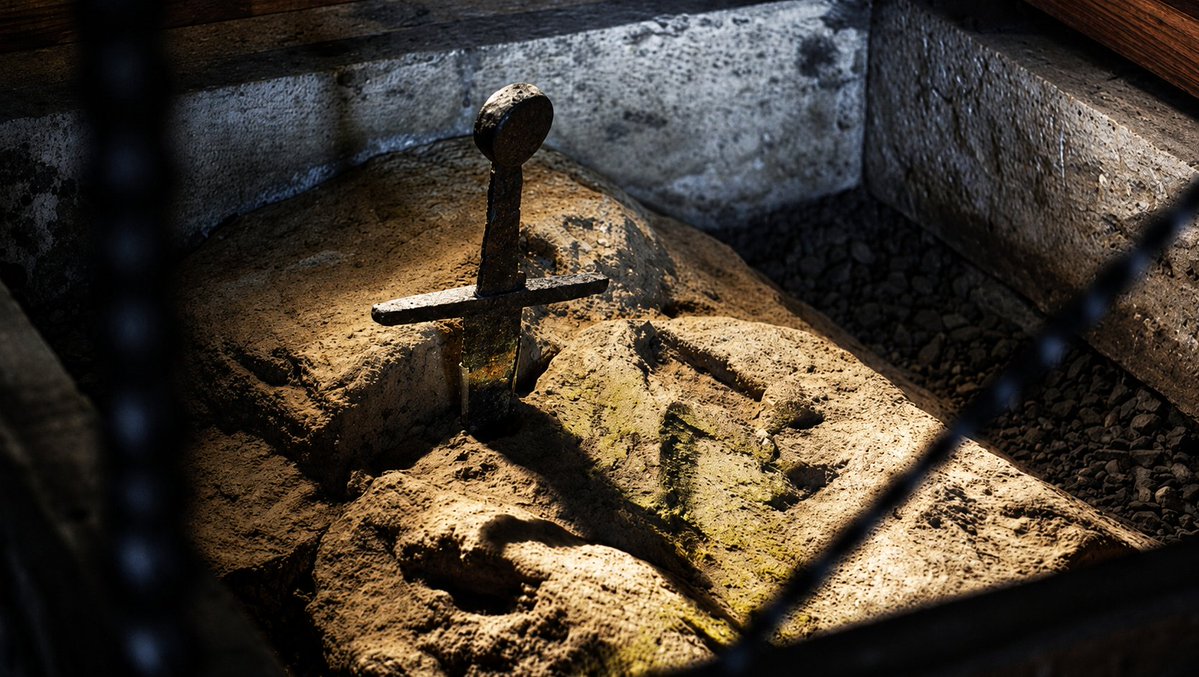
Olvida todo lo que te han contado sobre el Rey Arturo. Su mítica espada clavada en una piedra existe de verdad, pero no está en Inglaterra, ni fue olvidada en un lago. En 2001, la ciencia confirmó que Excalibur lleva 800 años fundida en una roca italiana. Tira del hilo 🧵👇🏽👇🏽👇🏽
La creatina es el suplemento legal más potente del mundo.
Sin embargo, la mayoría de los hombres no tienen idea de lo que realmente hace.
Cómo usarlo correctamente
¿O si es seguro a largo plazo?
Este hilo cambiará eso para ti
🧵
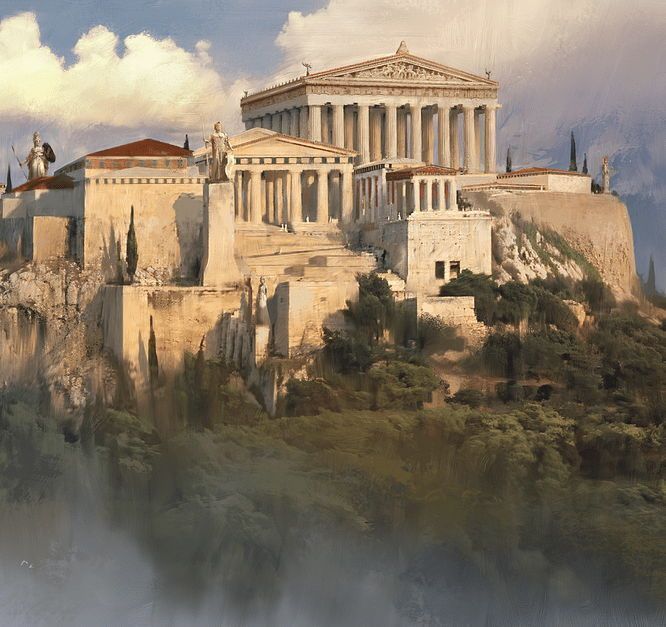
In recent days, we have witnessed on X a massive attack on everyone criticizing the disrespect toward the Odyssey and the Iliad, the most important works of Western civilization.
Thousands of NPCs with pronouns in their profiles are following the commands of lunatic Marxist academia and attacking us with hate. They are trying to silence anyone with a different opinion. They don’t care for discussion and come in bad faith. They want us dead and our culture destroyed.
They are trying to convince you that Homer was not important, that you are wrong, that your ancestors were either bad or gay. That values don’t matter, that masculinity is bad. They hate ethics and morality.
They hate the real messages of philosophy and Greco Roman literature. They want to make you believe everything was gay and pointless.
They feed their souls with misery and immorality.
It’s time to resist and raise your voices against these evil and soulless people who are poisoning our societies with their sick ideology.
They destroy education, arts, sciences, justice, entertainment, sports, everything.
Cultural Marxism and wokeism need to be removed from our societies.
Some want to create a degenerate world, sunk in atheism, anarchy, and spiritual collapse, far removed from values, virtues, and morality. They call this "progress," yet it is nothing but total subjugation, heads bowed, without any desire to resist.
Today’s so-called progress, therefore, consists precisely in moving as far as possible away from the ancient command of fighting in your life to surpass your ancestors and having virtues.
To live without the imperative Homeric "aien aristeuein" that means to always strive for excellence, is to accept the slow death of the human spirit. When excellence is no longer the measure, when the only sacred thing left is the right to mediocrity and the comfort of never being judged by the shadow of greater men, then man ceases to be a bridge toward something higher and becomes merely a consumer of fleeting pleasures in a rootless present.
A civilization that teaches its young to surpass their fathers in virtue, courage, wisdom, and beauty ascends. One that teaches them to despise or ignore their fathers has already begun its long descent into oblivion.
Homer Pavlos
For 2,500 years, people thought the Trojan War was a myth.
Then the evidence started showing up.
In the 1870s a German businessman named Heinrich Schliemann started digging at a hill in Turkey called Hisarlik. He found nine cities stacked on top of each other. The seventh layer, Troy VIIa, was destroyed by fire around 1180 BCE. Arrowheads in the streets. Bodies left unburied. Walls hastily reinforced. Food jars buried under house floors. A city that had been under siege.
Then the Hittite tablets came out of the ground.
The Hittites were a Bronze Age empire most people forget existed, and they kept obsessive diplomatic records. In them, over and over, two names appear: a city called "Wilusa," and a kingdom across the sea called "Ahhiyawa."
Wilusa is (W)ilios. Troy. Ahhiyawa is the Achaeans. Homer's word for the Greeks.
In a treaty from around 1280 BCE, the Hittite king Muwatalli II names the king of Wilusa. His name is "Alaksandu."
Alaksandu = Alexandros. Paris's other name in the Iliad.
Another Hittite letter complains about a war fought between Ahhiyawa and Wilusa, the Greeks and the Trojans, over that exact city.
Then there's the material culture. Homer describes warriors wearing helmets made of rows of split boar's tusks sewn onto leather. Nobody wore those in Homer's time. They were 400 years out of date when he sang the Iliad. Archaeologists have since dug them out of Mycenaean tombs. Homer was describing armor he had never seen, only remembered.
Achilles' shield, described in absurd detail in Book 18, matches the inlaid bronze-and-gold daggers excavated from Mycenae's shaft graves.
Linear B tablets, pre-Homeric Greek written in syllabic script, contain the names "a-ki-re-u" (Achilles) and "e-ko-to" (Hector). They were real Bronze Age Greek names. Common ones.
Even the horse might not be a fairy tale. Troy VI's walls show massive earthquake damage. Poseidon was the god of horses AND earthquakes. The Greeks didn't sneak in inside a statue. Poseidon broke the wall, and the bards turned an act of the earthquake god into a wooden horse.
Homer wasn't making things up.
He was the end of a 500-year game of telephone, remembering a real war over a real city at the chokepoint between the Aegean and the Black Sea: a fortress city rich on tolls and trade, surrounded by Mycenaean rivals, burned to the ground at the exact moment the entire Bronze Age collapsed into 400 years of darkness.
The Iliad isn't fiction.
It's the oldest surviving war report in Western literature.
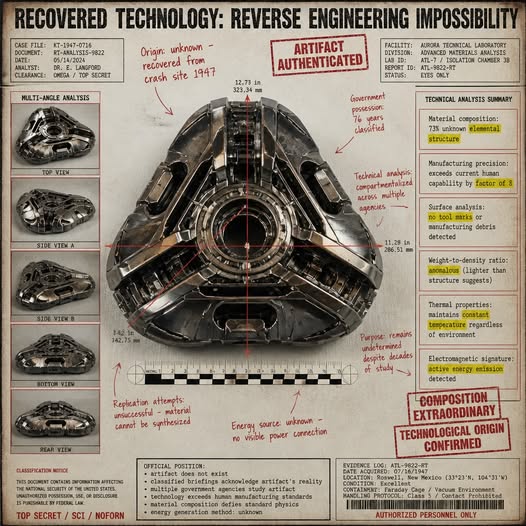
Technology that defies human engineering. 🧐🤔
This recovered artifact has been classified for 76 years inside government facilities. Material composition analysis reveals 73 percent unknown elemental structure that cannot be synthesized with current technology.
The object's geometric precision exceeds human manufacturing capability by factor of 8. Surface analysis shows zero tool marks, zero manufacturing debris, zero signs of conventional production methods. Weight-to-density ratio is anomalous, suggesting material properties we don't understand.
Thermal properties maintain constant temperature regardless of environmental conditions. Electromagnetic signature shows active energy emission with no visible power connection or battery. The artifact generates its own power through unknown mechanism.
Multiple government agencies have studied this object in compartmentalized divisions. Each agency studies isolated components, preventing any single group from understanding the complete technology. This compartmentalization continues for 76 years.
Official position remains: this artifact does not exist. Classified briefings acknowledge opposite reality. The contradiction reveals how extensively governments suppress technological evidence. Reverse engineering attempts failed consistently. We cannot replicate the material. We cannot replicate the manufacturing process. We cannot understand the energy source.
What landed in 1947 was not human technology. What remains classified in government vaults suggests advanced civilization visited Earth. And we still don't understand what they left behind.
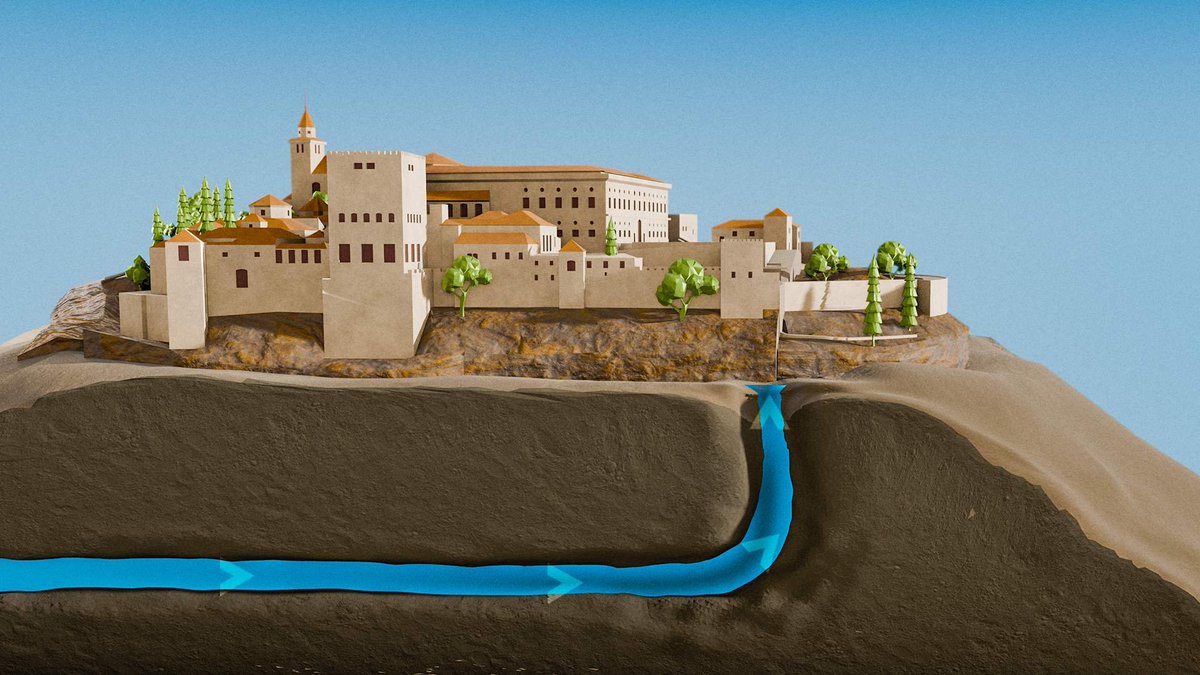
In 1238, Granada's engineers pulled off the biggest feat in medieval history...
They built a self-sustaining water system 200 meters up a mountain. But what they created next nearly destroyed physics forever.
Here's the full story of the Alhambra Palace: ↓
My college roommate slept with 4 girls on our floor in one semester.
He was not:
• the best looking guy in the building
• the most confident
• saying anything most men would think to say
One of the girls showed me his first text.
Here is exactly what he sent... 👇
Everyone's fighting about Achilles again.
Whatever side you're on, most of the takes are flattening him into a meme. Let me remind you who he actually was.
Achilles was raised by Chiron, the wisest of the centaurs, who taught him medicine, music, and philosophy alongside war. He could heal wounds and play the lyre. He was never just a killer.
His mother, the sea goddess Thetis, knew the prophecy. He could live a long, peaceful life at home in obscurity, or die young at Troy and be remembered forever.
He chose Troy. Knowing.
When his best friend Patroclus was killed wearing his armor, Achilles' grief broke him. He tore his face. He poured ashes on his head. He refused to eat. Homer gives him the most devastating mourning scene in Western literature, and then Thetis appears and confirms it: if you go back to kill Hector, you will die soon after.
He went back anyway.
But here's the scene people forget, the one classicists call the moral heart of the Iliad.
After killing Hector and dragging his body around the walls of Troy, Achilles is visited at midnight, alone in his tent, by Hector's elderly father, King Priam. Priam, the father of the man Achilles killed, kneels and kisses "the terrible, man-slaying hands that had killed so many of his sons."
And Achilles weeps. They weep together. He lifts the old king up, feeds him, gives him a bed for the night, and returns Hector's body for burial with full honors. He even pauses the war so the Trojans can mourn.
That's how the Iliad ends. Not a duel. Not a sack. An act of mercy between two grieving men.
This is why, six centuries later, Alexander the Great sailed to Troy, anointed himself with oil, ran a footrace around Achilles' tomb, and slept every night with a dagger and a copy of the Iliad under his pillow.
This is why the Greek word for hero, hērōs, was practically synonymous with his name.
He chose to die for his friend. He wept with his enemy's father. He's been a hero for 2,700 years for a reason.
After dating more than 10 women and f*cking more than 25 of them, here are 10 truths about women I learned.
1. It is easier to fvck married women and those in a relationship than single ones.
In 458 BC, Rome was on the brink of collapse.
An invading army had trapped the Roman consul and his legion in a mountain pass. Panic spread through the city. The Senate did the only thing they could think of:
They sent messengers to find a 60-year-old farmer plowing his field.
His name was Lucius Quinctius Cincinnatus. He had once been a senator, then lost his fortune paying his son's bail. Now he worked his own four-acre plot just to feed his family.
When the Senate's envoys arrived, they found him sweating behind a plow. They asked him to put on his toga so they could deliver an official message.
The message: Rome was making him dictator. Absolute power. Total command of the army. No checks. No oversight. No term limit.
He accepted.
Within 16 days, Cincinnatus had raised an army, marched out, surrounded the enemy, and forced their surrender. The republic was saved.
He had legal authority to rule for six months. He could have stayed. He could have expanded his power. He could have done what every other ruler in human history did when handed unlimited control.
Instead, he resigned on day 16.
He took off the toga, walked back to his farm, and finished plowing the field he'd left half-done.
Twenty years later, when Rome faced another crisis, they called him back. He was 80 years old. He took command, crushed the conspiracy, and resigned again, this time after just 21 days.
He died poor. On his farm.
2,200 years later, when George Washington was offered a kingship after winning the American Revolution, he refused and went home to Mount Vernon. The reason he was hailed as "the American Cincinnatus" is because Europeans literally could not believe a man who had won would willingly give up power.
King George III, on hearing Washington would resign rather than rule, said: "If he does that, he will be the greatest man in the world."
The lesson isn't that Cincinnatus was humble.
The lesson is that for most of human history, the people most qualified to lead were the ones who didn't want to. And the moment a society starts rewarding those who chase power instead of those who flee from it is the moment the republic begins to die.
Cincinnati, Ohio is named after him.
Most people who live there have no idea why.
¿Hubo guerra de Troya? Lo que dicen las cartas hititas y la arqueología.
Hacia 1250 a.C., el rey hitita Hattusili III escribió a un rey aqueo, al que llama "hermano", una carta diplomática hoy custodiada en el Museo Arqueológico de Estambul. La tablilla, conocida como carta Tawagalawa, incluye una frase a destacar: "sobre el país de Wilusa por el que tú y yo fuimos enemigos, hemos hecho la paz". Está escrita en cuneiforme acadio cuatro siglos antes de que Homero compusiera la Ilíada, y es la pieza individual más demoledora contra la idea de que la guerra de Troya es invención literaria sin sustrato.
Wilusa es Ilios, la Troya homérica. La identificación lingüística la propuso Forrer en 1924 y la consolidó Frank Starke en 1997 y John David Hawkins en 1998 con su lectura del relieve hieroglífico-luvita de Karabel, que ancló la geografía hitita de Anatolia occidental y empujó a Wilusa a la Tróade. Ahhiyawa es Akhaía, los aqueos micénicos. Cuatro reinos hititas distintos, en cinco textos diplomáticos del siglo XV al XIII a.C., documentan tensiones recurrentes entre micénicos e hititas por el control de Wilusa.
Cuarenta años antes de esta carta, hacia 1295 a.C., otra carta, de Manapa-Tarhunta menciona un ataque previo del aventurero Piyamaradu sobre Wilusa. Quince años después, hacia 1280, el rey hitita Muwatalli II firma un tratado de vasallaje con un rey de Wilusa llamado Alaksandu, forma cuneiforme de Aléxandros, segundo nombre de Paris en la Ilíada. Entre los dioses garantes del tratado figura Apaliunas, pre-forma de Apolo, dios pro-troyano por excelencia en Homero. Cuatro siglos antes de los poemas, en unarchivo independiente, encontramos en Troya un rey con el nombre griego "Alejandro" y un dios con nombre griego "Apolo".
La arqueología remata la faena. La estratigrafía de Hisarlık documenta nueve Troyas superpuestas, excavadas desde Schliemann en 1870 hasta las campañas actuales de Rüstem Aslan, pasando por Blegen, Korfmann y Pernicka. Troya VI, ciudadela monumental con muralla ciclópea de 8 m, cae hacia 1300 a.C. por terremoto. Troya VIIa, su sucesora más densa con casas pequeñas y grandes pithoi enterrados como preparativos de asedio, fue destruida a sangre y fuego hacia 1180 a.C. Capa de incendio, esqueletos sin enterrar en las calles, bolaños de honda apilados, puntas de flecha clavadas en muros. Las campañas de Aslan en 2024 y 2025 han ampliado la capa de destrucción hacia el ágora.
El nombre Aquiles aparece en tablillas micénicas de Pilos en lineal B como a-ki-re-u, dativo a-ki-re-we. Héctor como e-ko-to. Y, dato decisivo, el patronímico e-te-wo-ke-re-we-i-jo, "hijo de Etewoklewes", confirma que el nombre que está detrás del Tawagalawa hitita era la onomástica griega micénica real, no una invención posterior.
Capas micénicas dentro del propio Homero refuerzan el cuadro. Describe con precisión técnica un casco de colmillos de jabalí que solo aparece en yacimientos del bronce entre 1600 y 1150 a.C. (Dendra, Knossos, Micenas). Inutilizable y olvidado en su época. Es la memoria oral micénica genuina, que conecta la obra con los hechos. El Catálogo de las Naves del libro II enumera 164 topónimos, la mayoría ocupados en el bronce tardío y varios destruidos hacia 1200 a.C. y nunca reocupados.
¿Hubo guerra de Troya en el sentido en que Homero la cuenta? La Ilíada es una elaboración épica de tradición oral aristocrática cristalizada cuatro siglos después pero lo que es seguro es que hubo siglo y medio largo de fricciones aqueo-hititas por Wilusa, una de las cuales acabó con Troya VIIa en llamas hacia 1180 a.C. Eso sí podemos afirmarlo.
Bibliografía recomendada:
– Beckman, Bryce y Cline, The Ahhiyawa Texts, SBL Writings from the Ancient World 28, Atlanta, 2011. Edición canónica.
– Joachim Latacz, Troya y Homero, Destino, Barcelona, 2003.