Important research evaluating the (in)accuracy of nutrient declarations on labels of commercially produced complementary foods @jbadham @AnzelleMulder@MaryChampeny@alissa_pries
https://t.co/NdrKcelN1B
Check out our poster at @ICD2021CapeTown virtual congress. Our research reveals that growing-up milks in Indonesia are inappropriate in the diets of young children. #ICD2021
New ARCH research published in @mcnjournal examines #breastfeeding practices and motivating factors that may influence mothers in Bandung City, Indonesia to use breast-milk substitutes. https://t.co/6zkSXO8iH8
Hot off the press! So excited to see the work we do with @ARCH_Nutrition continue, shedding light on the state of food available to infants and young children. See the latest article on sugar content in growing-up milks here: https://t.co/vtx799p2Ky
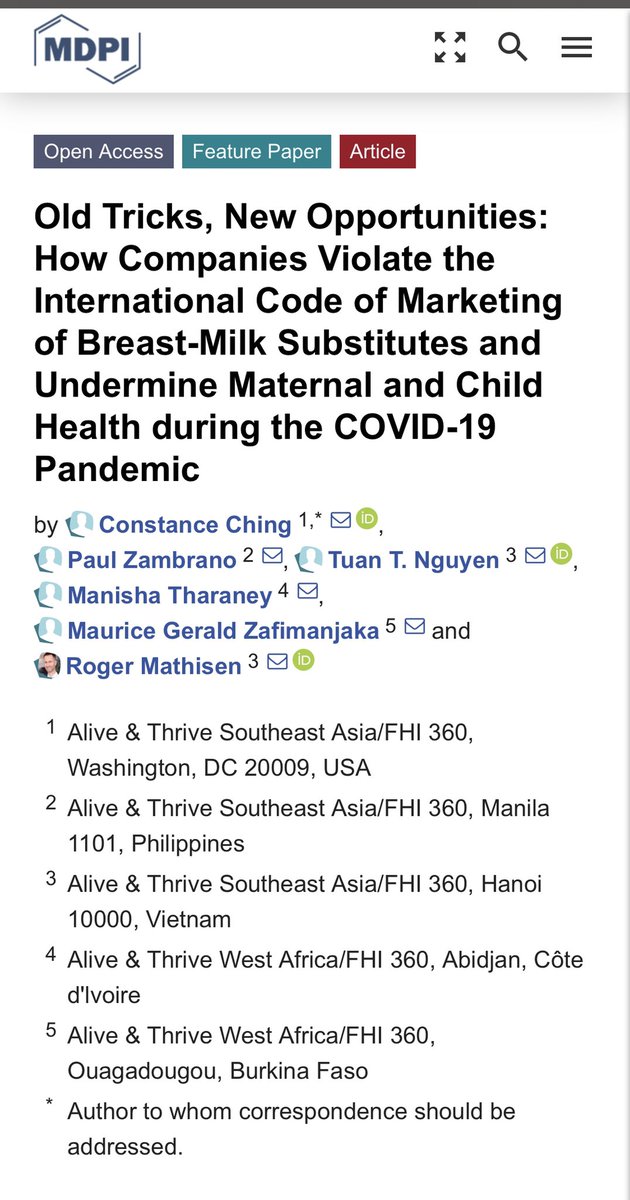
This study identified marketing tactics of formula companies since the start of the COVID-19 pandemic by reviewing promotional materials and activities from 9 companies in 14 countries, and the official Code reporting data from the Philippines. #WHOCode https://t.co/DqPD8UHsmV
Staggering results from our recent study @ARCH_Nutrition exposing growing-up milks in Indonesia to have extremely high levels of sugar. These milks are unnecessary and not recommended. Read the full report: https://t.co/zSUgTKdFyv @jbadham @LaraSweet101@alissa_pries@KatelynYuen
New study on toddler foods and milk drinks available in Australia finds that most toddler milks were highly sweetened and some had nearly TWICE the sugar content of a soft drink.
BMS manufacturers continue to find ways on social media to market their products in a space that is complex to regulate. Researchers in South Africa found violations of national legislation and the Code.
Article in @GlobalHealthBMJ : https://t.co/QEfnzxh7VZ
After strong action from the Royal Government of Cambodia, this formula company has apologized for the damage caused by selling mislabeled products with dangerously low levels of iron and zinc. The products have been recalled from store shelves. https://t.co/MuPqVClB41
690 million people suffer from chronic hunger. As more people go hungry & malnutrition persists around the🌎, achieving #ZeroHunger by 2030 is in doubt.
We must transform our #FoodSystems to make #HealthyDiets affordable.
📙 New UN Report👉🏽 https://t.co/tlnz98Qi5O
#SOFI2020
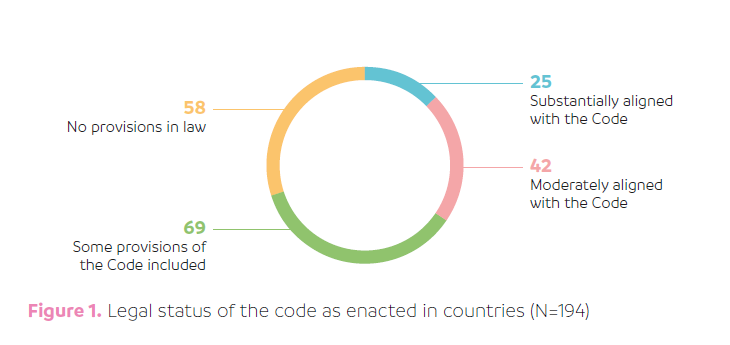
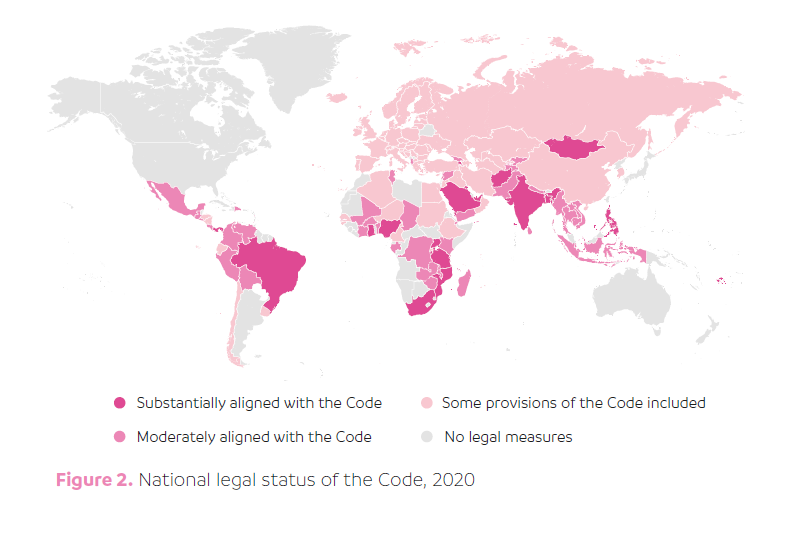
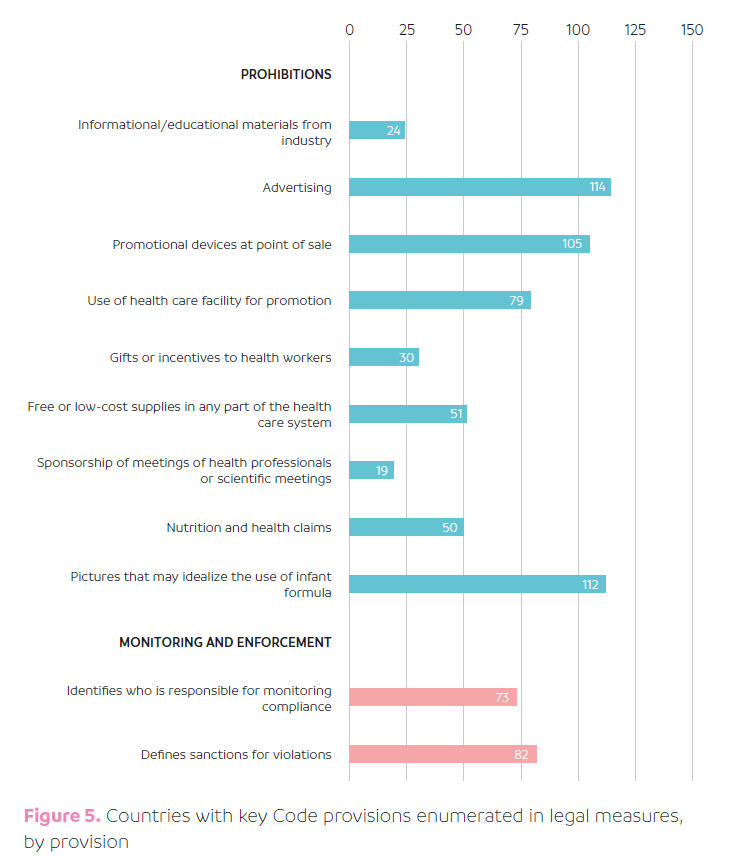
The International Code of Marketing of Breast-milk Substitutes relies on country governments to implement its provisions. As of 2020, only 25 countries have done so in a substantial way. #WHOCode https://t.co/NGz1cqrLUr
Out today: Rudd study finds 60% of caregivers surveyed mistakenly believe infant formulas & toddler milks can provide nutrition not present in breast milk, whole milk or other healthy foods. https://t.co/VBJNd0cyIM
@CityPowerJhb Power is back. Thx for the hard work and updates! We know sometimes things go wrong, but we appreciate the effort to get it back asap. @CityPowerJhb
Unilever, one of the oldest multinational consumer goods companies, pledged this week to stop advertising ice cream to children. By the end of this year, the company will stop marketing and advertising foods and beverages to children (via @lreiley).
https://t.co/ACQ24OJXlV
The @WHO and @UNICEF have stated that "toddler milks" are nutritionally unnecessary and displace consumption of breast milk & healthy foods among vulnerable young children https://t.co/qiSamerxJx
Toddler milks can be a big source of added sugars and offer no unique nutritional value in young children's diets, so why are these products on the rise?
Rewild Earth has been boosting food security in one of Niger’s driest areas in the last 30 years, using and mixing wild plants to make both people and soils more resilient. https://t.co/cFbw4nIWD8 via @foodtank