The Trump administration wants low-income people who have cancer, kidney failure, and other complex conditions to prove they can't work in order to keep their Medicaid coverage. https://t.co/xLi06aZABv
Earlier today, @DrOzCMS claimed that large numbers of Marketplace enrollees aren’t “legit” on the grounds that some enrollees don't file a claim in any given year. Re-upping this thread on why this argument is seriously flawed.
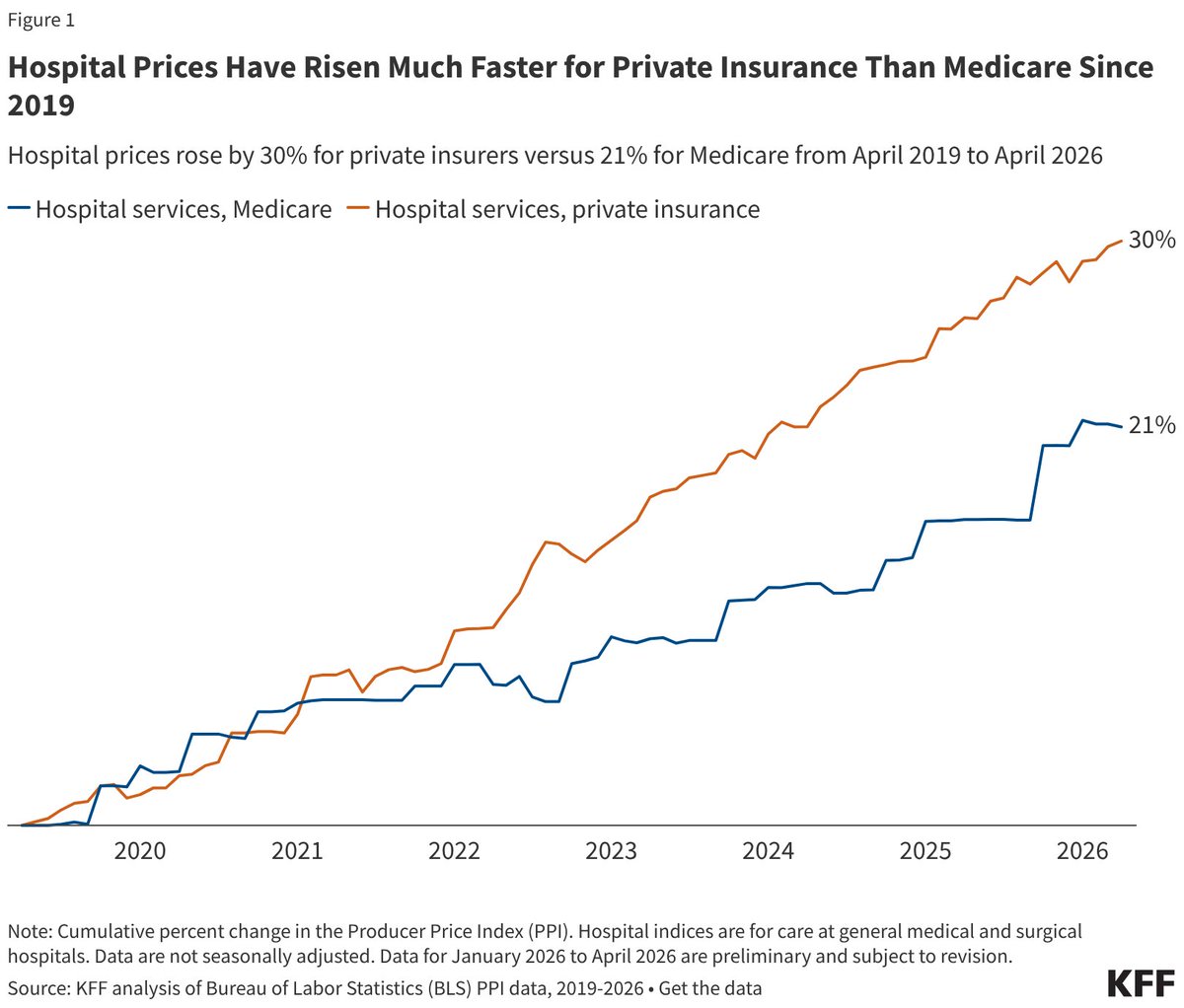
Hospital spending is the biggest driver of health care spending growth, and hospital price increases are a big part of that -- specifically, the hospital prices paid by private insurers, employers, and insured patients.
MedPAC has done a real service continually updating rigorous estimates of overpayments to MA plans.
Recent risk adjustment changes made a real dent, but Medicare is still paying MA plans ~14% more than it would cost to cover comparable beneficiaries in Traditional Medicare.
NEW: The Fair Pricing Act — a groundbreaking state-level legislation to ensure consumers pay the same price for the same service — was advanced by the New York State Senate Health Committee yesterday.
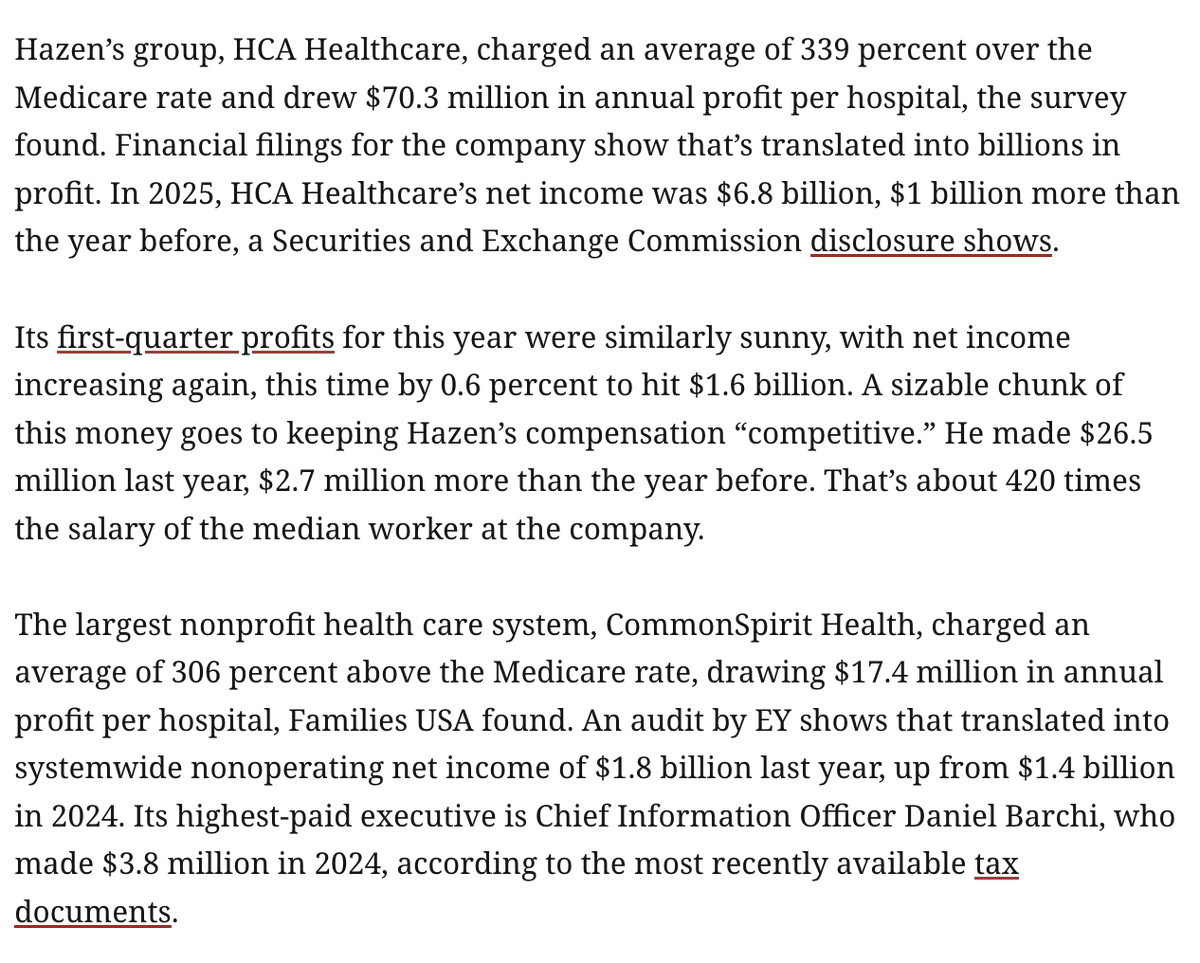
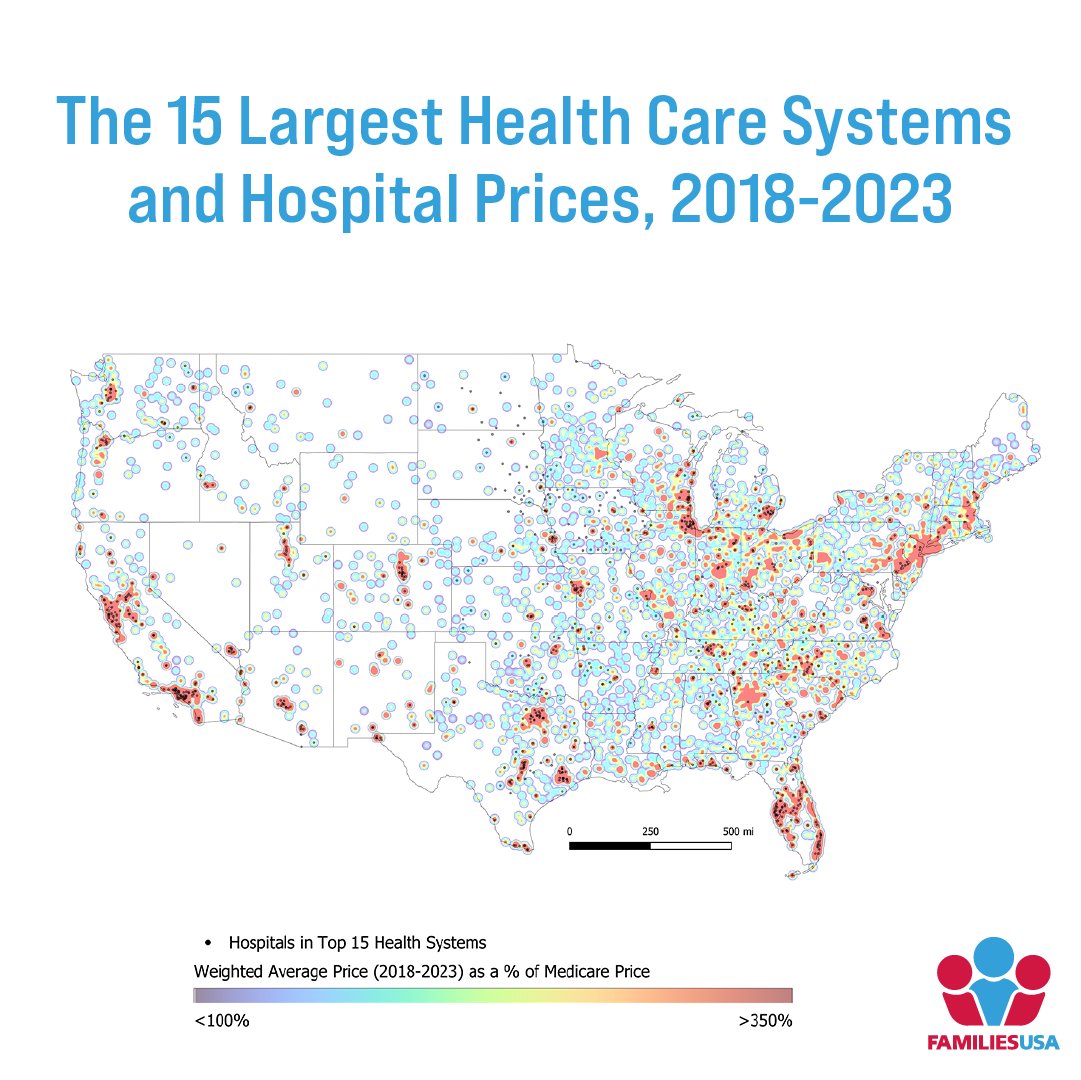
The 15 largest health care conglomerates charged an average of 282% more than the Medicare rate last year, resulting in $22 million in profit per hospital. This is possible because 3-5 corporations control the majority of hospital care in most states.
https://t.co/qsdsMpP0wv
With little competition and practically zero regulations, those at the 15 largest hospital corporations are charging patients almost 300 percent more than the Medicare rate for the exact same service. https://t.co/mPlliZX41w
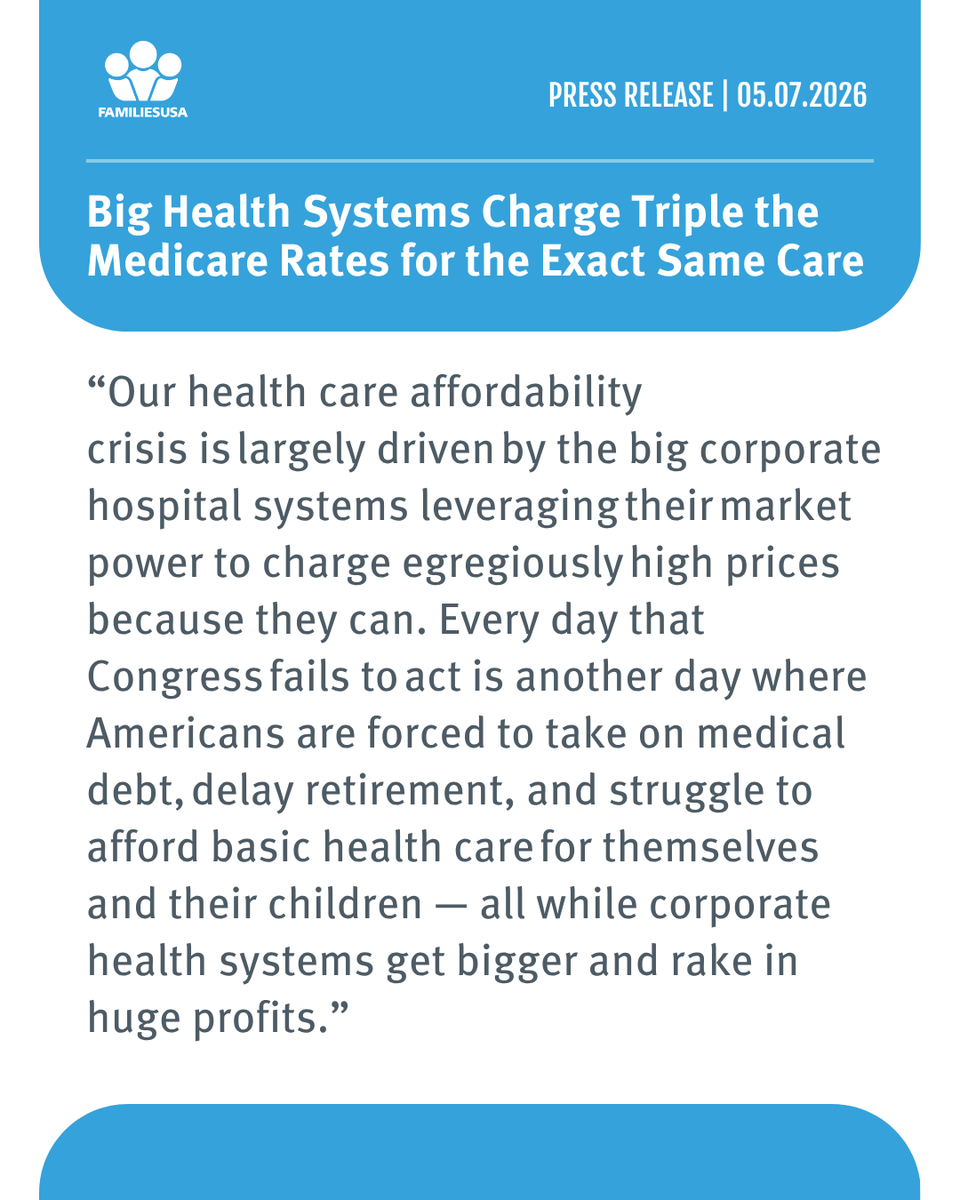
In nearly every state, just 5 or fewer hospital systems control the majority of hospital care — and they're using that monopoly power to charge consumers whatever they want. This consolidation is driving the health care affordability crisis, and consumers are paying the price.
Our new analysis adds to decades of evidence showing a clear and disturbing trend: the more hospital chains consolidate, the higher prices Americans pay, in their premiums and their out-of-pocket costs. Every day congress fails to act, patients and consumers pay the price.
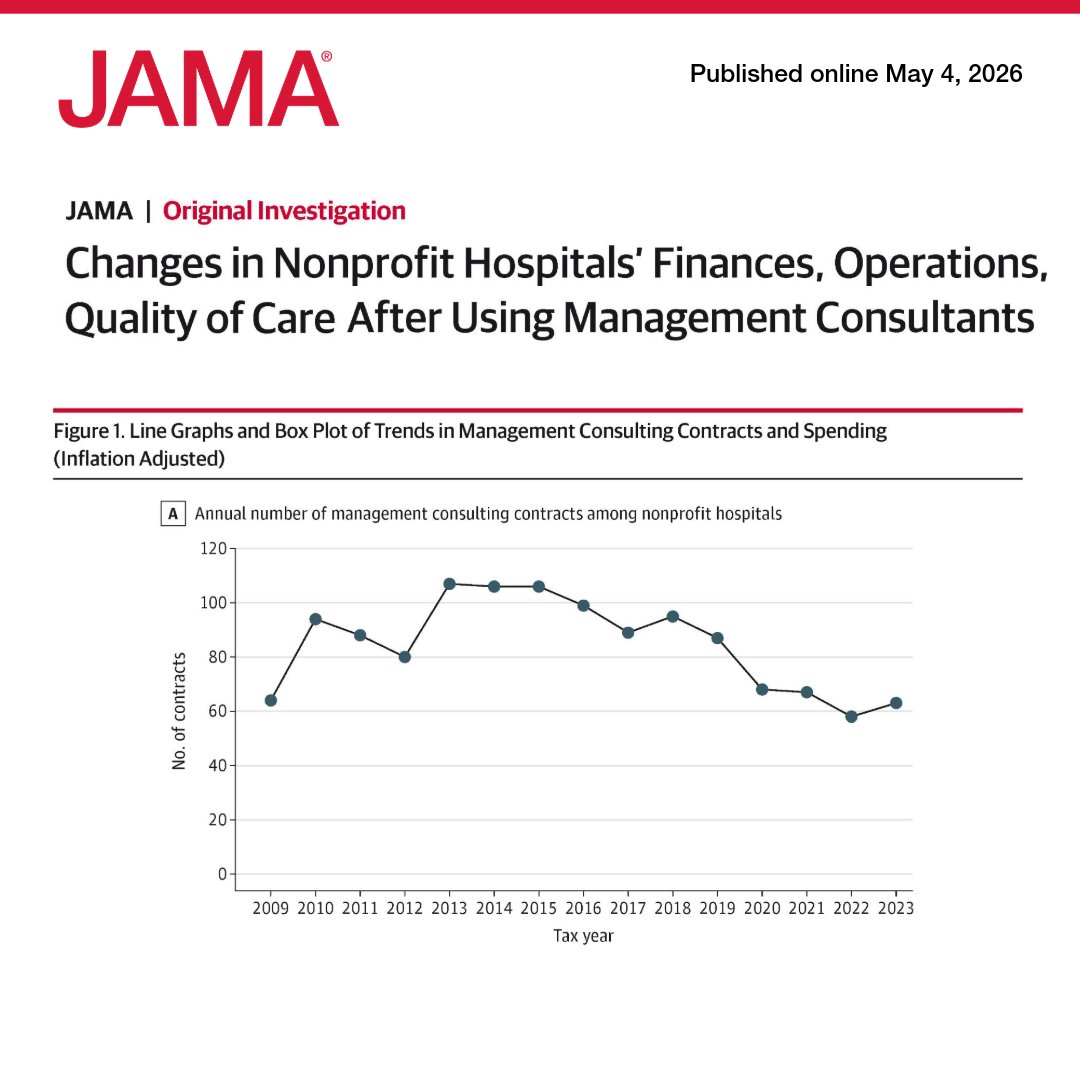
US nonprofit hospitals spent $7.8 billion on management consultants from 2009 to 2023, but contracts were not associated with meaningful changes in finance, operations, or quality of care. 🧵
https://t.co/QQswMYxrG8
Got a new essay out today in the The New York Times . The argument: we should address issues like prior authorizations and care denials, but if we want to lower premiums and health spending, we need to focus on hospital pricing. Cite a a book called The Silent World of Doctor and Patient by Jay Katz that Lainie Ross assigned when I was an undergrad that gets at why it’s hard to both be grateful for care and hold health care providers accountable. Let me know your thoughts.
https://t.co/5csAIqyzFV
Congress has let drug companies rip off Americans for decades.
Lobbyists, campaign cash, and a system that protects industry profits.
But it doesn’t have to be this way.
Drug prices are one of the biggest drivers of unaffordable healthcare & today (Wed) the @USSupremeCourt is hearing arguments on a case that could seriously impact patients’ ability to get timely access to affordable generic drugs.
This is one to watch 👀
https://t.co/DckoTx5eNb
Unbelievable. While these hospitals make billions in profits and margins — some even “non-profit” — they refuse to support commonsense reforms to ensure families don’t get charged 2-3x more for routine services, just because a large hospital system bought their doc’s office.
High hospital prices are the chief reason the U.S. spends so much more on health care than other countries.
If you want to improve health care affordability, hospital costs are a good place to start.
Last year, we found that site-neutral payments would save certain cancer patients OVER $1,000 in out-of-pocket costs annually.
As Washington continues to focus on healthcare affordability, site-neutral payments is a proven way to reduce costs for seniors.
Let's get this done.
That’s why we need Congress to act and pass a same service same price policy to stop hospital corporations from gaming the system & to promote healthy competition $ affordable hospital care. https://t.co/T3iVi9ivl3
Unbelievable. While these hospitals make billions in profits and margins — some even “non-profit” — they refuse to support commonsense reforms to ensure families don’t get charged 2-3x more for routine services, just because a large hospital system bought their doc’s office.
Large hospital systems are profiting off Medicare rules that pay them more for the same service than independent practices.
That means a senior in my district can pay MORE for an X-ray at a hospital than at a local doctor’s office -- and the hospital makes MORE too.
Today I asked hospital system CEOs a simple question: should we equalize payments to lower costs and expand access? They said no.
Americans deserve affordable care, not a system that rewards higher prices.