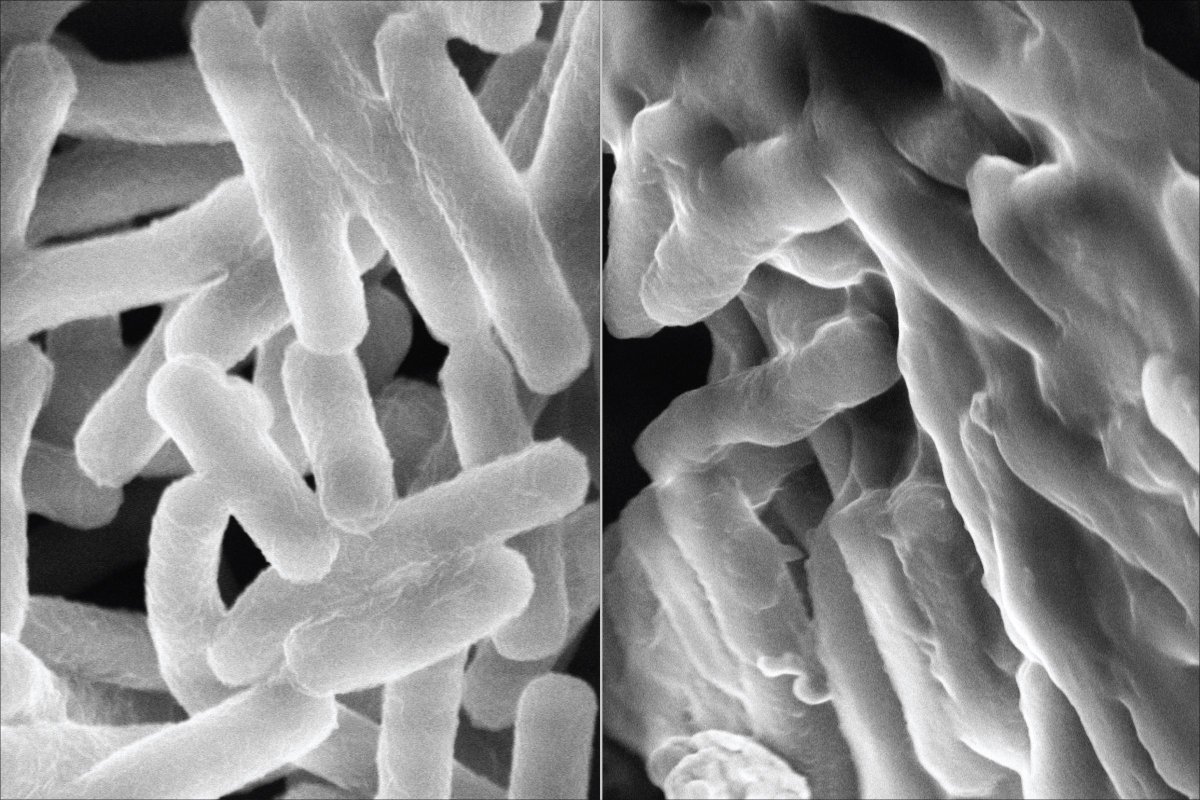
Faculty fellow @AppelGroup, former CBI trainee Shoshana Williams & team built an AI tool to identify promising antibiotic candidates that are polymer-based and less prone to resistance that could help find new ways to treat challenging infections: https://t.co/dPx2MCG4oM
Klich et al. showed that hydrogel delivery of IL-2 and IL-12 intratumorally (IT) and CpG-adjuvanted agonistic anti-OX40 (agOX40) peritumorally (PT) increased cargo retention relative to IV delivery. Hydrogel cytokine delivery IT boosted efficacy in mouse models compared to PT or soluble IT delivery, and skewed the TIME toward antitumor Tcm cells and activated DCs. Relative to IT, PT delivery of agOX40 extended tumor control, increased Tem cells, and reduced immunosuppressive Tregs in the TdLNs and TIME. Hydrogel delivery of cytokines IT + agOX40 PT improved survival and cleared distal tumors, while IT/IT or PT/PT delivery was less active. Adding anti-PD-1 boosted long-term survival. https://t.co/pVXBLBaBvz
@StanfordMed@AppelGroup
1. Can hydrogels breathe?
In our new Nature paper, we show that only 2-4 wt% aerogels can enhance hydrogel air permeability by more than 10× through viscoelastic phase separation—while preserving water-rich, tissue-like properties.
https://t.co/s4NA6gljLS
Researchers and Academics: Video is the future of accessible scientific communication.
I made the video below about a paper I wrote during my PhD in the @AppelGroup by simply attaching the PDF and writing just 5 chat prompts (no manual editing).
I used @SpellshotAI . Spellshot is an AI-native video editor that that can transform hundreds of raw assets into a structured, editable videos in minutes. Agents handle clipping, assembly, trimming, captions and schematic generation automatically. Then you can refine everything in a full track-based editor.
This tool can transform your teaching and presentations.
@mseatpenn is excited to welcome Eric Appel @AppelGroup, Stanford University, to discuss his work, “Dynamic Biomaterials Enabling Innovations in Cell and Drug Delivery” on Thursday, March 19, 2026, beginning at 10:30 AM - Wu and Chen Auditorium, Levine Hall.
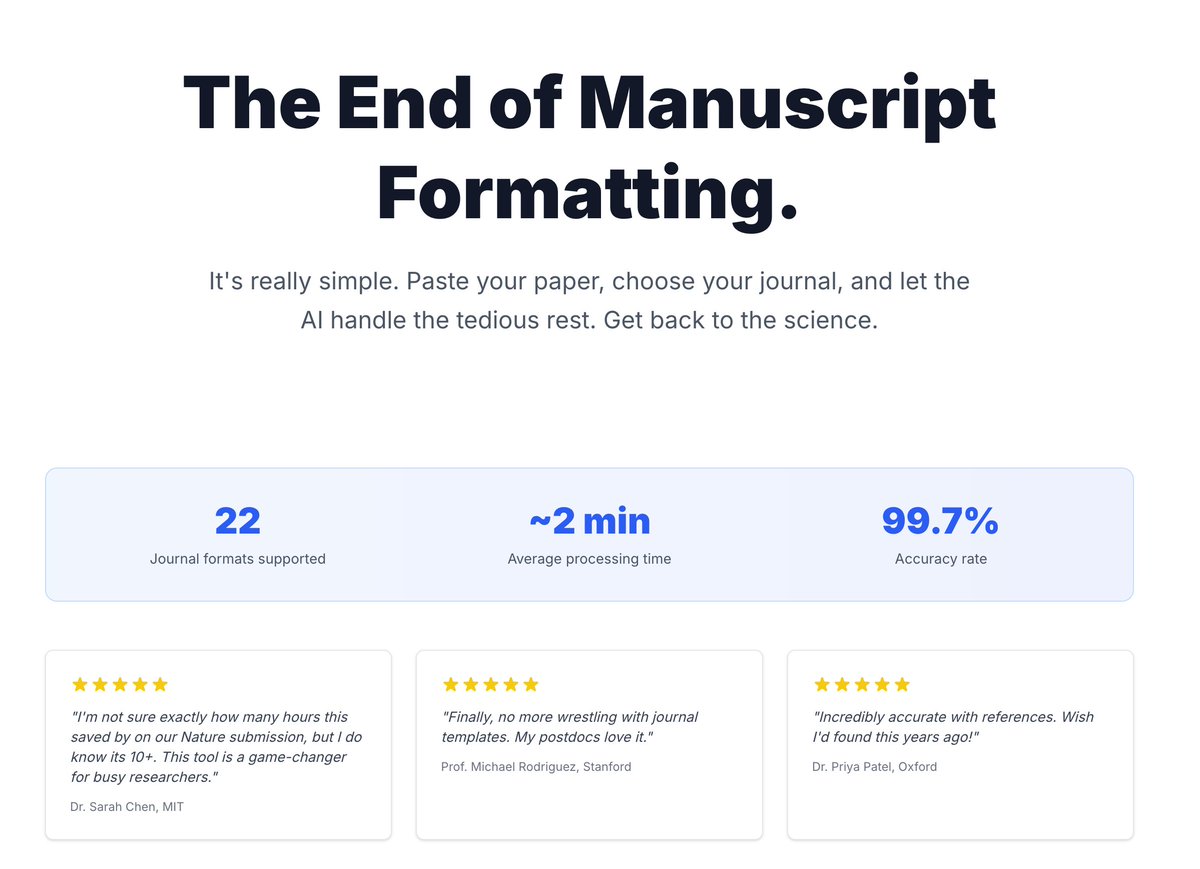
Finally, someone has solved a real problem with AI! No more having to take a paper in the format for a journal that rejected you, and reformat it for a new journal. Well done!!
https://t.co/J5HekY1Pc0
BREAKING NEWS
The Royal Swedish Academy of Sciences has decided to award the 2025 #NobelPrize in Physics to John Clarke, Michel H. Devoret and John M. Martinis “for the discovery of macroscopic quantum mechanical tunnelling and energy quantisation in an electric circuit.”
📢 We’re hiring! @StanfordUChem is now accepting applications for a Junior Faculty Position in Chemistry (open area), with the appointment set to begin on September 1, 2026.
Learn more and apply here: https://t.co/H43xkCJhEe
#FacultyJobs#AcademicJobs#Hiring
Spray-dried microparticles with a stabilizing polymer excipient enable ultra-high protein concentration therapeutics for subcutaneous injection, and could expand home use of these critical pharmaceuticals. @AppelGroup@StanfordMSE https://t.co/GXeUg3J9fC
Spray-dried microparticles with a stabilizing polymer excipient enable ultra-high protein concentration therapeutics for subcutaneous injection, and could expand home use of these critical pharmaceuticals. @ScienceTM https://t.co/OejicPpH0x
Shoshana conducted this really cool study developing a module for high school students (and potentially undergraduates) in on the chemistry of #henna that was published in the Journal of Chemical Education @ACSDivCHED: https://t.co/sYZlH49b0i
Spray-dried microparticles with a stabilizing polymer excipient enable ultra-high protein concentration therapeutics for subcutaneous injection, and could expand home use of these critical pharmaceuticals. @AppelGroup@StanfordMSE https://t.co/GXeUg3J9fC