We have been in solar storms all day.
Anyone have any news on blackouts, electrical glitches, system outages, electrical fires/explosions, etc?
For personal health, highest risk is for cardiac patients, psych patients, auto-immune, migraine and seizure sufferers.
Hundreds of millions of Americans are now looking forward to clear Blue Skies free of toxic metallic Chemicals.
“We will stop the Chemtrail Crime” - RFK Jnr
Pharmaceutical ads are not meant to encourage consumers to buy pharmaceuticals.
Rather, it is protection money.
By financing the mainstream media, they ensure the media coverage favors their industry and hides all its scandals.
Biophotons will define the next century of health.
Some building electronic and photonic medicine in garages will be the next Apple and Google, but won’t wind up like them.
This is an image of a person just by their Biophotons, experts say don’t exist.
(📷 @digijordan)
Suddenly I gained another 500 followers, so for their sake, I'll briefly summarize what the game is all about here. It seems we're going to rewrite the first few chapters of human history.
What started as "let's figure out how the unfinished obelisk in Aswan was made" has evolved in a direction where we can now confidently say the past didn't happen the way we thought.
Our ancestors were apparently capable of chemically altering stones, dissolving them, and then reassembling them. The evidence for this is that countless others besides me have done this, and it works, and it’s not even hard to do.
Unfortunately, there's no need for UFOs or ancient advanced civilizations to transport stone blocks of, say, 20-25 tons, or God forbid, 1000 tons. They weren’t hauling the stone blocks around, but just the raw material. In buckets.
The megalithic structures are masonry works, just that the mortar is a completely different material than what we use today. What could it be?
First Act
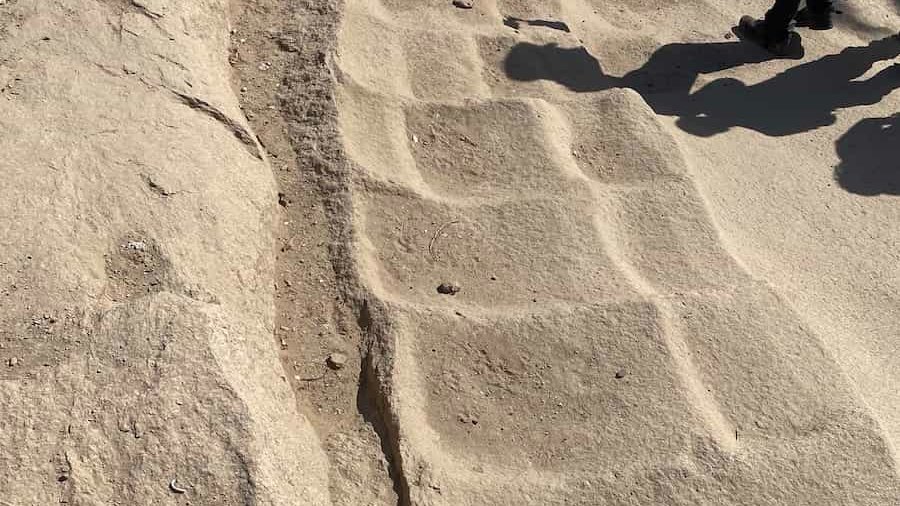
When I started to decipher the secret of the Aswan unfinished obelisk, I naturally had no intention of rewriting the early history of humanity. This realization came later. The mystery of the unfinished obelisk lies in the mysterious scoop marks, approximately 50x50 cm indentations, which look as though someone gouged out the granite with a giant ice cream scoop.
The official explanation is completely wrong, I won’t even go into that, it’s nonsense.
However, my umpteenth experiment was successful, and indeed, I was able to etch the supposedly indestructible granite with simple tools in my own backyard. All it took was a grill chimney starter, some charcoal, and - natron.
As it turned out, modern humanity of course knows that molten natron dissolves granite, or more accurately quartz, and this is used in several industrial processes, from pottery (cracking glazes) to recycling rare metals (liberating metals from circuit boards).
It's just that archaeologists didn’t know.
Which I have no problem with, other than the fact that they know now but still ignore the facts.
Second Act
Now that we've successfully etched the granite, let's see what material is produced in the chemical reaction, because maybe our ancestors could use it for something, considering they didn’t know the concept of waste. What could this white stone foam be good for?
As it turns out, the white stone foam is nothing but waterglass, Na2SiO3. This is fascinating because waterglass is one of the main components of modern geopolymers.
What do our ancestors do if they get their hands on a material with which they can make stone? They make stone with it! And here we reach the point of rewriting history. All those civilizations that were able to produce waterglass were obviously capable of casting new stones from waterglass.
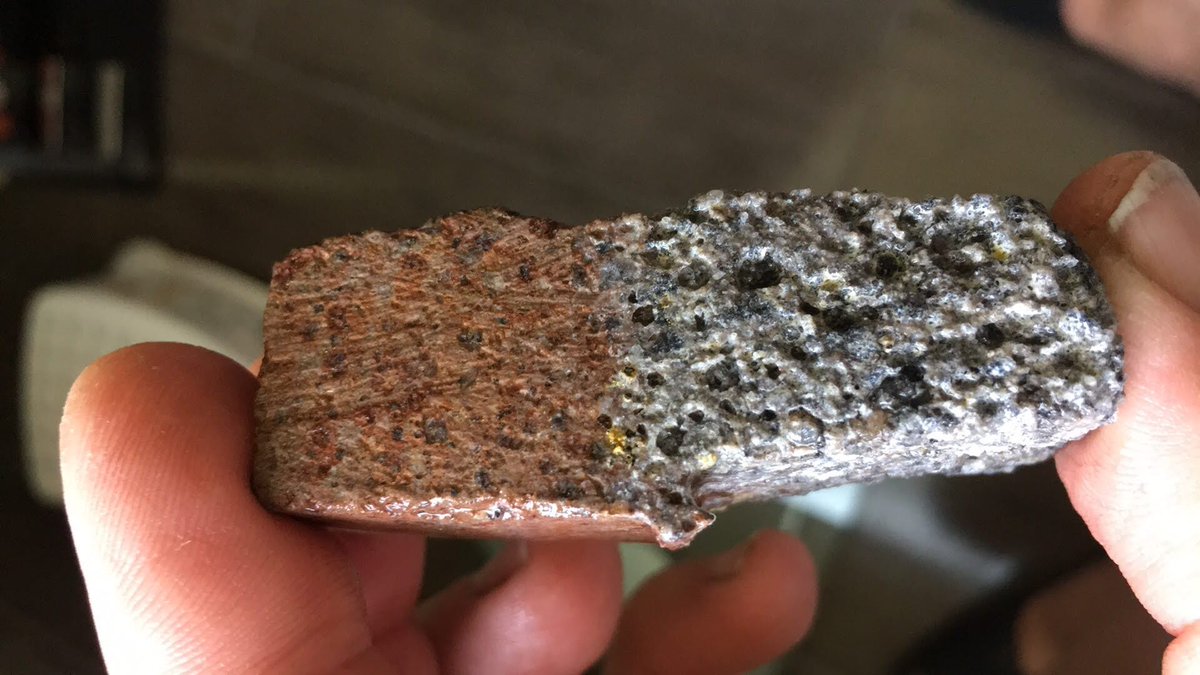
The simplest form of this, when ash is mixed into the waterglass, results in a beautiful black, Inca stone.
The source of the ash matters, it needs to have a significant aluminum content. Such sources include pine trees, tobacco, cannabis, etc. In short, there’s a way to make those ancient, ugly black and gray stones, and of course, many have already tried and succeeded.
The giant stone blocks of Inca walls fit so precisely together that not even a piece of paper can be slipped between them because they were simply cast next to each other, directly into the wall.
Third Act
Where did the Incas get their natron for all this? The place is called Salinas de Maras, a mountainous salt evaporation site where locals have been performing salt evaporation for millennia. Not surprisingly, Salinas de Maras is at the epicenter of all megalithic Inca construction sites. From there, they transported the natron in all directions.
An interesting question is, if the Incas figured this out, did other peoples come to the same realization?
And the answer is yes. I have mapped out and found worldwide that where there are gigantic stone works, whether carving a mountain or a huge structure made from a single piece of stone (Petra, Jordan or a bunch of rock temples in India), there’s always an unlimited source of natron nearby, without exception.
Eventually, I began searching for natron sources next to megalithic structures with the casual confidence of Neo dodging bullets in the Matrix, because I could see everything even with my eyes closed.
I even made a custom Google map showing these connections.
Fourth Act
What makes this all the more interesting is that if a more advanced civilization encountered the same relationship (waterglass + ash = stone), like the Egyptians, they might try to create prettier, not just black stones. They just need to find a material similar to ash but with a high aluminum content, in powdered form.
Modern geopolymer manufacturers use metakaolin for this purpose, which is nothing but burnt (calcinated) clay.
What a coincidence, this material is also found in Egypt, right next to Aswan in the desert! And only there!
Is it conceivable that the Egyptians tried to use burnt kaolinite for stone formation? This is not only conceivable but it would be offensive to the ancient Egyptians if we did not assume this about them. So, they tried it.
And what did they get? Artificial granite.
Or more accurately, a stone eerily similar to granite, but based on aluminum silicate instead of quartz, which is extremely difficult to distinguish from granite without very expensive instruments.
I admit, artificial granite has not yet been created in my lab. However, since this possibility fits seamlessly into the already proven story, and additionally explains a lot of unexplainable ancient achievements, it's probably true.
So here we are. I’m currently working on creating artificial granite, or more accurately, a hard stone that looks like granite, using purely ancient methods. And once that’s done, we can start rewriting the history books!
Here you can find the whole story unfolding:
https://t.co/anM3du9Sv6
Enjoy!