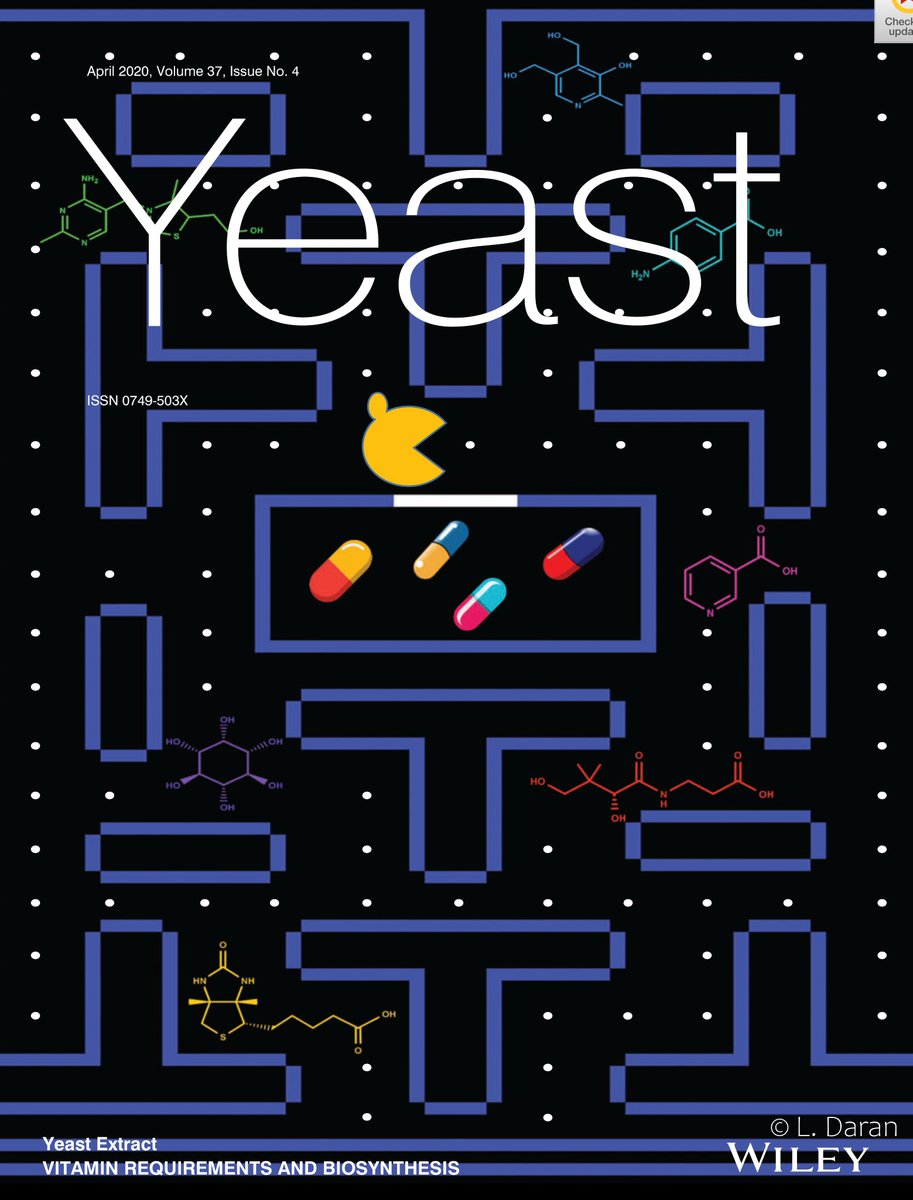
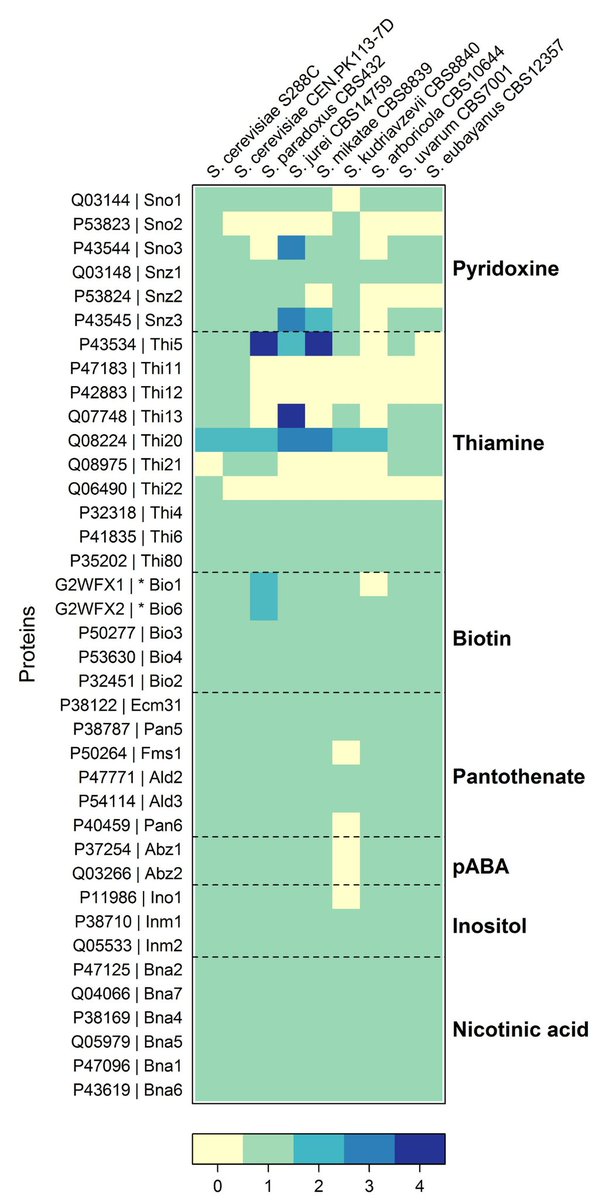
It is end of April and you may need some vitamins. You can start by reading the collaborative hattrick by @aksnorw and @thomasperli, starting with Vitamin requirements and biosynthesis in Saccharomyces cerevisiae https://t.co/3KXVwAgBdK
My latest article has been published on @AppEnvMicro! Check it out, it's #openaccess! @pacmen_itn#MSCA#H2020
Adaptive laboratory evolution and reverse engineering of single-vitamin prototrophies in Saccharomyces cerevisiae
https://t.co/T9DlRTAjxh
https://t.co/gL8DkYqBoW
Check out our new paper that is now available on bioRxiv as a pre-print! Deep generative modeling identifies antigen specific sequence patterns from immune repertoires. #Immunology#DeepLearning#bioRxiv@airr_community
Our educational guide for nanopore sequencing in the classroom is out in @PLOSCompBiol. Introducing bioinformatics students to the realities of data acquisition, an educational collaboration of @StanBrouns at @TNWTUDelft and myself at @EEMCS_TUD.
https://t.co/XS6xhDZQ2B
Always wondered why a mixture of so many vitamins is added to yeast medium? We reviewed vitamin synthesis and its genetics in a broad range of yeasts. Have a look! Thanks to @rortiz_ESR @thomasperli @Jack_Pronk_ @jgdaran1@pacmen_itn and @Yeast_Journal https://t.co/KDNy8Xh7QF
Why are vitamins added to chemically defined yeast media? Was decided in the 40's and not questioned much afterwards. Find answers and perspectives in the latest review of @yeast_journal's yeast extracts series. By @thomasperli and @aksnorw (@pacmen_itn)
https://t.co/SPooTGqJau
Our first paper of the #PeakYeast project is out, revealing the diversity inside the Hanseniaspora genus and the presence of hybrids: https://t.co/JuEiXfbr4o
Pls retweet!
In 2020, we start a postgraduate course in Malting & Brewing Science @KU_Leuven, right in the heart of beer-country Belgium! This one-year program supported by @ABInBev_BE combines teachers from academia as well as Belgian breweries. https://t.co/7krIVIK4QJ
Dankzij een uitgebreide DNA-analyse en een slim algoritme bedacht door onderzoekers van de @tudelft, weten we nu dat de giststammen waarmee al onze pilsjes worden gemaakt, dezelfde voorouders hebben #wetenschapvandaag https://t.co/j7xfDF0x2U
@CilouBertin @BNR@tudelft Haha, zo kan je het ook zien. Bij pilsgist ligt het toch iets gecompliceerder: dat is namelijk een hybride (net zoals de muilezel een hybride is tussen een paard en een ezel). Hierdoor kan de pilsgist zich niet meer sexueel reproduceren, waardoor evolutie iets anders gaat werken.
'All Pilsner yeast strains originate from a single yeast ancestor'. Very interesting work by @jgdaran1, @ThomasAbeel, @Arthur_GdV and others: https://t.co/9bTDmq2Ilj #TUDelft
First chromosome level alloaneuploid assembly ever shows that group 1 and 2 lager yeasts originate from the same hybridization event. With @Arthur_GdV, @an_salazan, and @jgdaran1. https://t.co/BvzWlNhl34
Nowadays, Pilsner is brewed almost exclusively using group 2 yeast. Based on our results, I personally think it is possible that all current Group 2 yeasts descend from isolates made by Dr. Elion. We have made available the DNA sequence of the Heineken-A yeast.
Beer doesn't just change people, people also changed beer: the two groups of yeast that are used to brew lager-type beer such as Pilsner likely emerged due to manmade selection and not due to independent evolutionary origins.
https://t.co/PlzeIa4mP6
In our manmade bottleneck hypothesis, two groups emerged by human selection: Group 1 has long been known to have been isolated in 1883 by Hansen at the Carlsberg brewery. We now show that the Heineken A-Yeast, which was isolated in 1886 by Elion is the oldest known group 2 yeast.