modern parenting in a metro can feel like a very well furnished prison.
I know how that sounds. 3/4BHK (and EMI), cook, car, two incomes. Nobody is coming to feel sorry for anyone. But it still feels heavy.
my parents raised me where almost all neighbouring families knew my name. there was always some neighbour who cared to feed me lunch when mom was late. summers in grandparents' place. nobody was paid for any of it. that was the village. it was free and it was everywhere.
then folks (who are now in their late 30s/40s) moved to Bengaluru/Gurugram/Pune for work, kept the kids, and lost the village.
so now two adults run an operation that a dozen used to share. and the way you run it is : you buy the village back.
nanny, daycare, a school that picks up at 7 30 am and drops the kid back by 3-4pm, the extra bedroom for the grandparent/nanny.
get the drift? a kid in a metro costs more precisely because every hour of care that used to be free is now a line item.
the part I keep chewing on is the double income. it is not greed. it is the only way the math even works. but it comes with its own bill - two people on 9pm calls, family time under attack, and a mental load that no amount of hired help absorbs.
the alternative is one parent pauses. that pause usually lands on the mom. not because anyone sat down and chose it, but because the salary gap, the maternity leave, and the fifteen "who will pick up" moments a week all point the same direction. I don't think that is a choice families are making. it is a default the city hands them.
and the third option - grandparents move in - means two 68 year olds give up their friends, their evening walks, their own city, to be free labour in one they didn't pick.
every version costs someone. money, a career, presence, or a parent's retirement. there is no configuration where nobody pays. we just get to pick who.
Families raising kids in the cities are today one of the most under-served segments of society - they have all the comforts without the care young families need.
Not taking anything away from Naseer, he is a great actor, but Amitabh is much better. Amitabh is underrated as an actor because his immense superstardom and box-office success overshadow the technical brilliance of his performances.
Naseer is like Pankaj Tripathi: he acts great, but his range is limited. He brings the same restrained persona to most characters, with limited variation in mannerisms and dialogue delivery, while Amitabh is the more complete actor because he has delivered exceptional performances across virtually every genre. He could portray simmering intensity in Deewaar, tragic vulnerability in Anand, effortless comedy in Amar Akbar Anthony and Chupke Chupke, an intense romantic in Silsila and Kabhi Kabhie, emotional depth in Black, and many more.
His iconic dialogue delivery, commanding voice, expressive body language, and ability to excel in both larger-than-life and understated roles make him a more versatile actor than Shah. In one line, Shah wouldn't suit most of the roles Amitabh did, but Amitabh would suit any role that Shah did.
For my last post (attached), some wrote in comments as a programmed response "European cities may be hot but they have more greenery." This is the result of psyops and a default low opinion about India in everything. Here's actual HUGSI greenery data. Hope it changes some minds.
In India, the unemployment rate for illiterates is 3%. For graduates aged 15 to 24, it's 40%. The more educated you are in this country, the more likely you are to be jobless. Not because education is worthless, but because it creates aspirations the economy struggles to absorb. 🧵👇
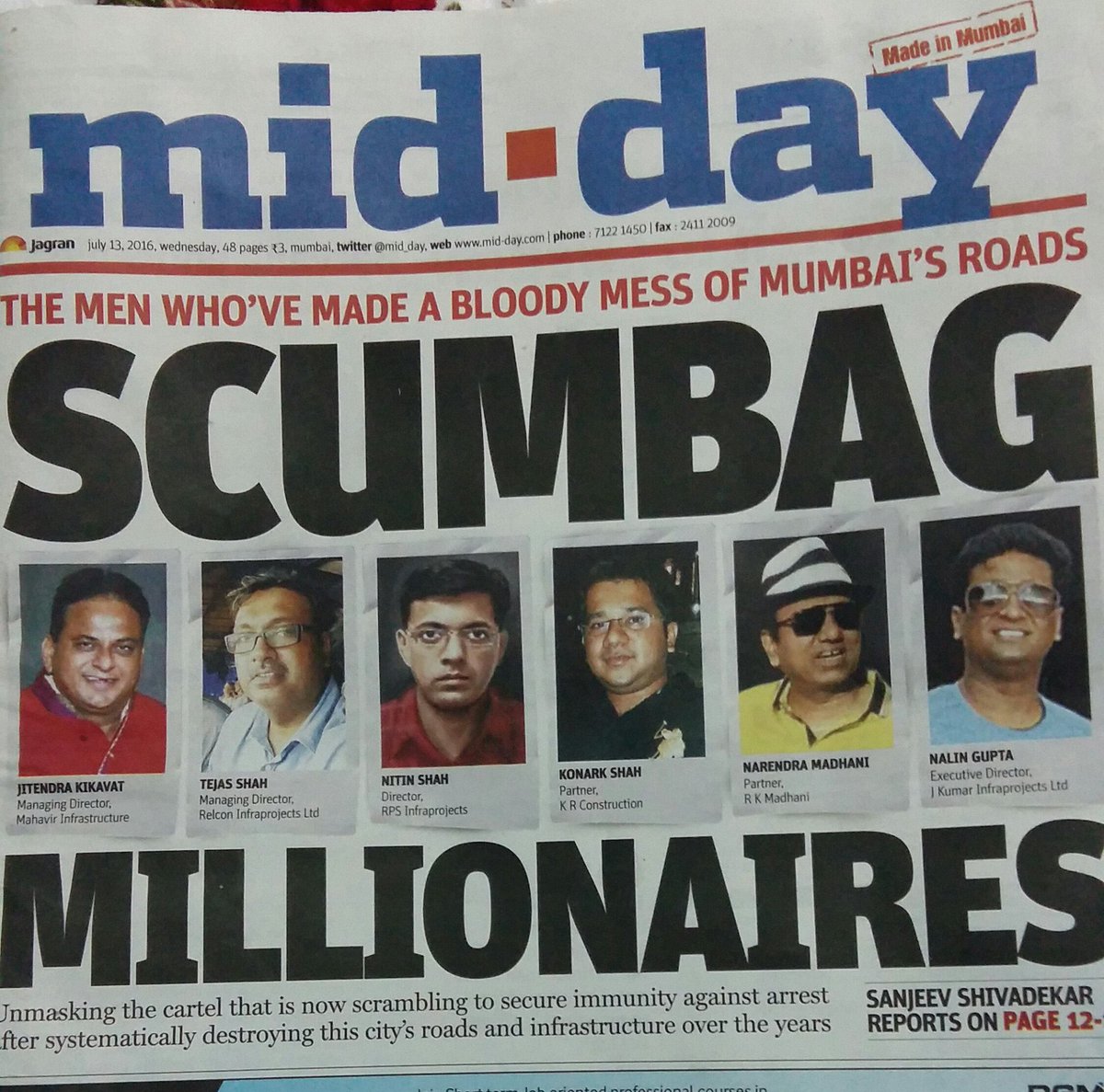
What a front page by @mid_day Awesome! We need the crooks in the Govt and BMC enjoying benefits flowing from these fine gentlemen to also be paraded in this rogue's gallery.
@zoru75
The biggest skill you can develop is the ability to reset fast. Bad conversation? Move on. Bad day? Start fresh tomorrow. Missed workout? Hit it the next day. Poor decision? Learn and adjust. You can’t control what happens to you, but you control how long you let it affect you.
One of the most dangerous risk in entrepreneurship is assuming your family is as invested in the journey as you are. The least compensated stakeholder in most startups is the founder’s family. Don't assume your partners, parents or kids are as patient and as invested in the journey as you are. You're obsessed but they're living with the consequences of that obsession. Entrepreneurship with silent resentment at home is almost impossible. You chose the risk and the downside. Don’t make them inherit it.