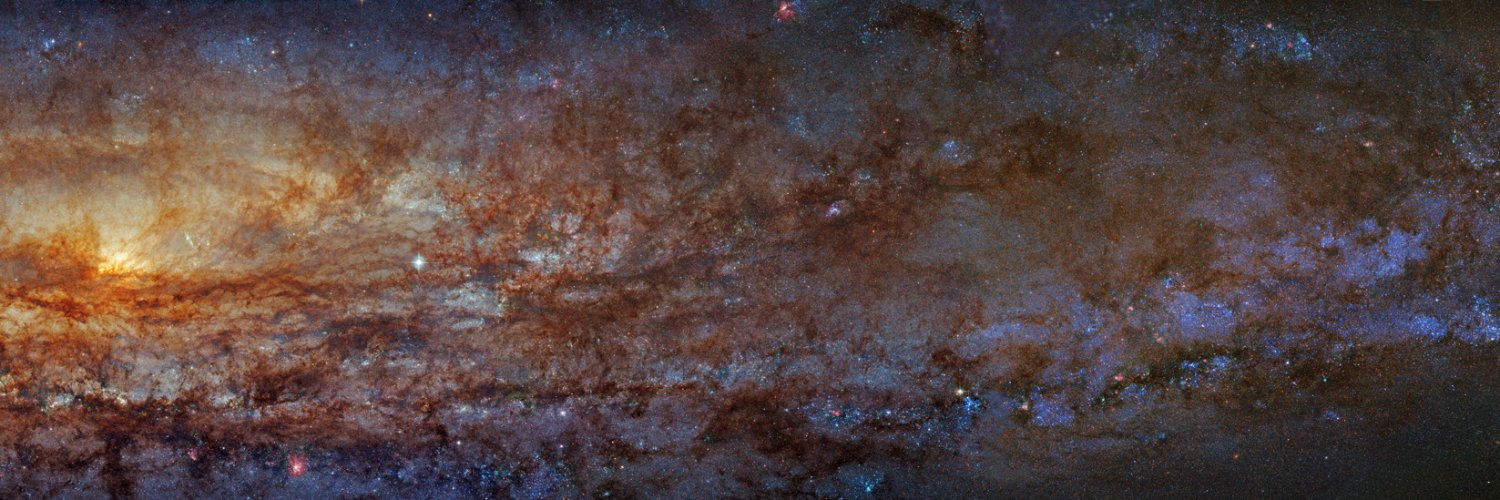
All of these white dots are stars.
12 million light-years away, starburst galaxy M82 sprouts new stars 10 times faster than our Milky Way. Using its infrared vision, Webb peered through dust and gas to reveal never-before-seen detail at the heart of M82: https://t.co/F31oQVUCcH
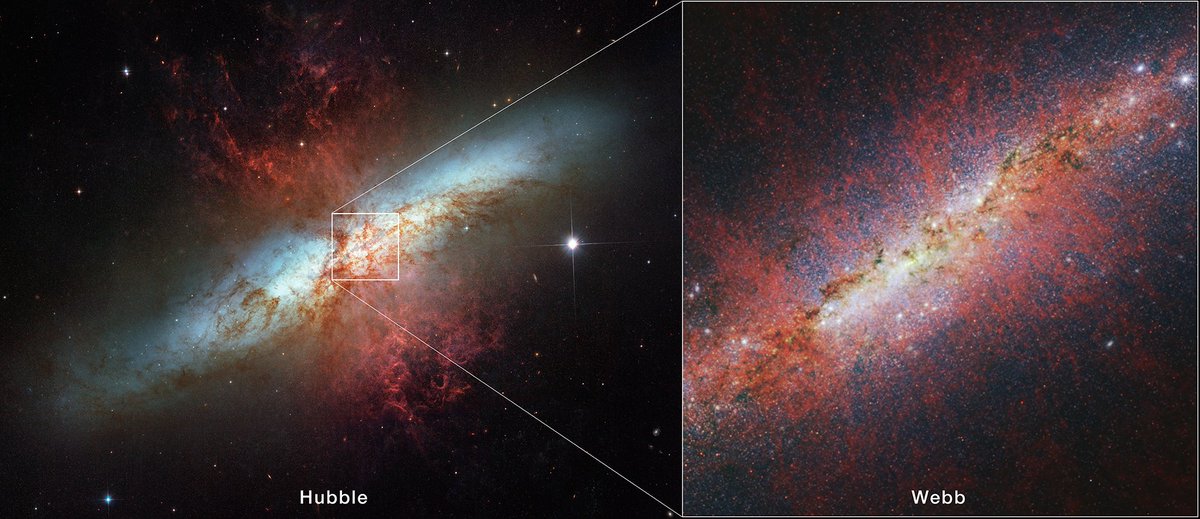
Located 12 million light-years away, the galaxy M82 forms stars at 10 times the rate of our Milky Way Galaxy!
Hubble's sharp, wide view shows the galaxy edge-on, with shredded clouds and hot hydrogen gas.
@NASAWebb is helping astronomers learn even more: https://t.co/2PMnep1Bha
🆕 Webb has set its sights on an extreme starburst galaxy. Messier 82 (M82) is modest in size, but it's sprouting new stars 10 times faster than the Milky Way!
Read more: https://t.co/33CzGNXoRL or 🧵👇
Researchers plan to take spectral data of M82 and study additional starburst galaxies with Webb. These observations will help determine the ages of star clusters and the length of star formation phases in a starburst galaxy — deepening our knowledge of the early universe.
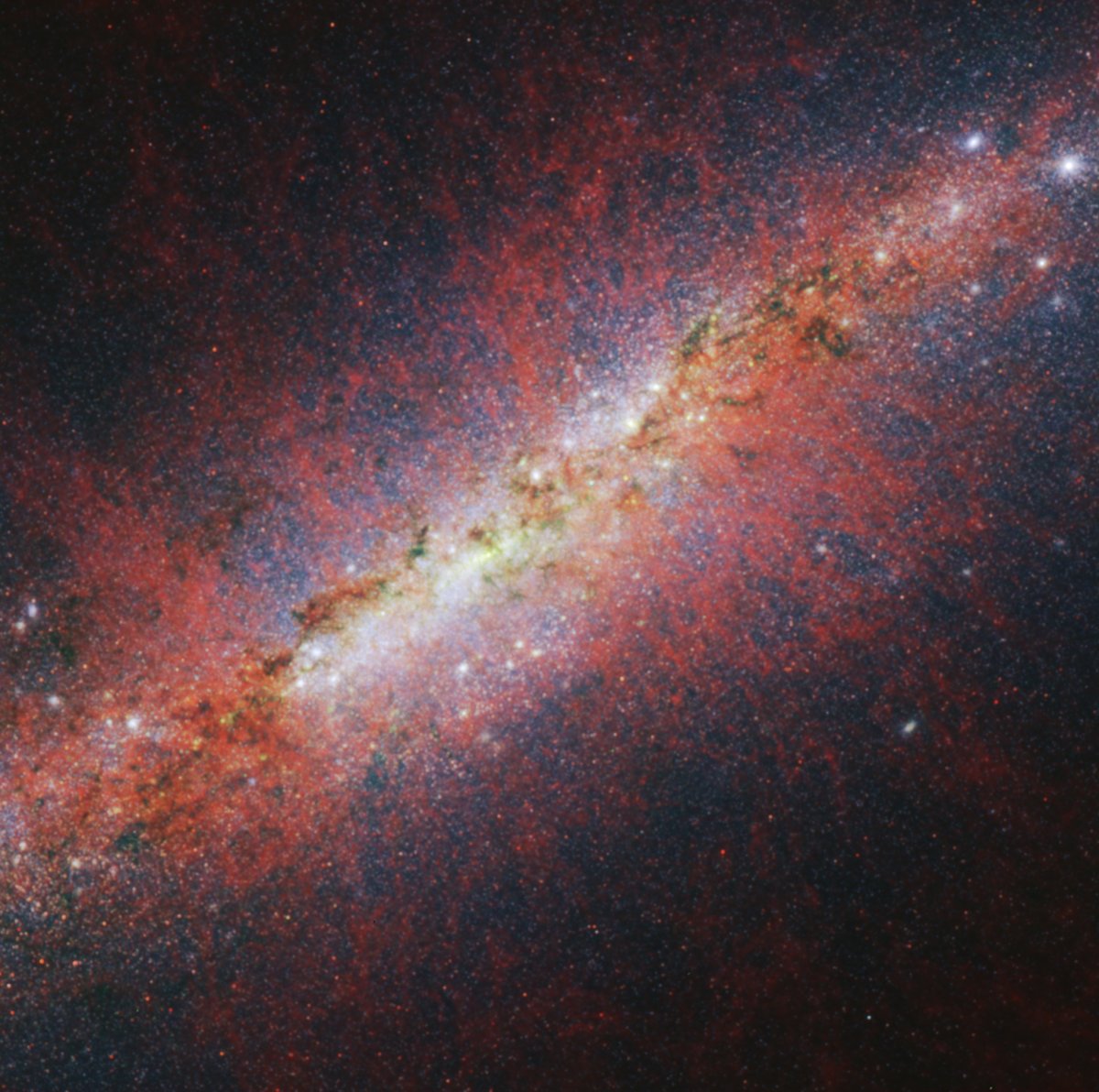
Taken at longer near-infrared wavelengths, this image shows the clumpy red tendrils of a galactic wind caused by the rapid rate of star formation. Webb traced its structure via emission from small, dusty chemical molecules called polycyclic aromatic hydrocarbons (PAHs).
Dark brown tendrils of dust are threaded through M82’s core. Toward the center, tiny specks in green denote concentrations of iron, most of which are supernova remnants. Small red patches signify regions where molecular hydrogen is being lit up by a nearby star’s radiation.
All of these white dots are stars.
12 million light-years away, starburst galaxy M82 sprouts new stars 10 times faster than our Milky Way. Using its infrared vision, Webb peered through dust and gas to reveal never-before-seen detail at the heart of M82: https://t.co/F31oQVUCcH
🆕 This new NASA/ESA/CSA James #Webb Space Telescope image of Messier 82 (M82) shows a galaxy teeming with new and young stars and an intricate substructure.
A team of researchers led by @UMDAstronomy's Alberto Bolatto used @NASAWebb to study galaxy M82 in "beautiful, new detail."
For the first time, images show all of the bumps and wiggles in M82's galactic wind, as well as individual stars and star clusters. https://t.co/MVVbKALFsz
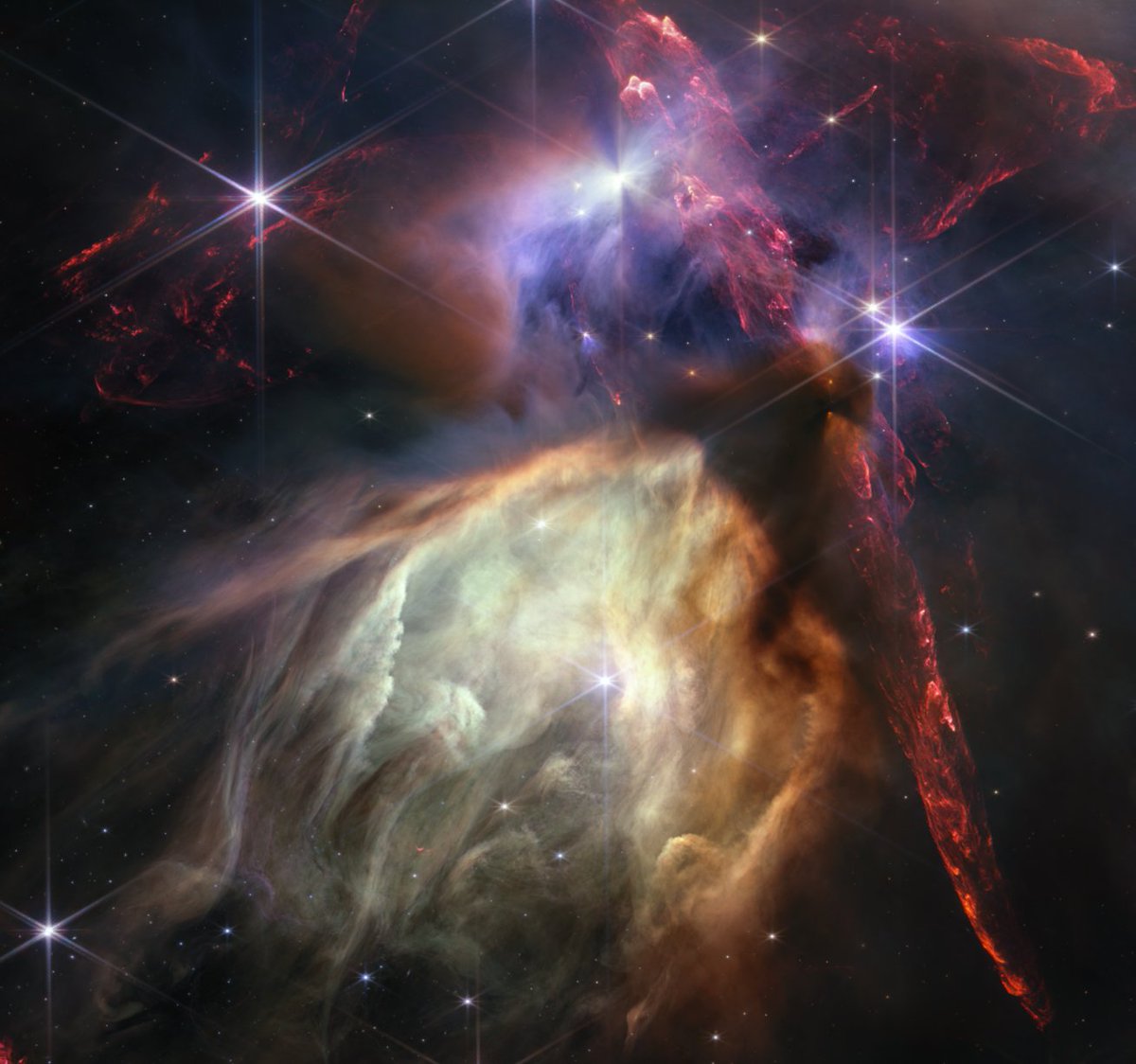
Here it is: @NASAWebb’s one-year anniversary image. Called Rho Ophiuchi, this area shows about 50 young stars in a cocoon of gas and dust. At 390 light-years away, it's the closest star-forming region to Earth: https://t.co/A3e2XLx9Ef
Webb continues to #UnfoldTheUniverse.
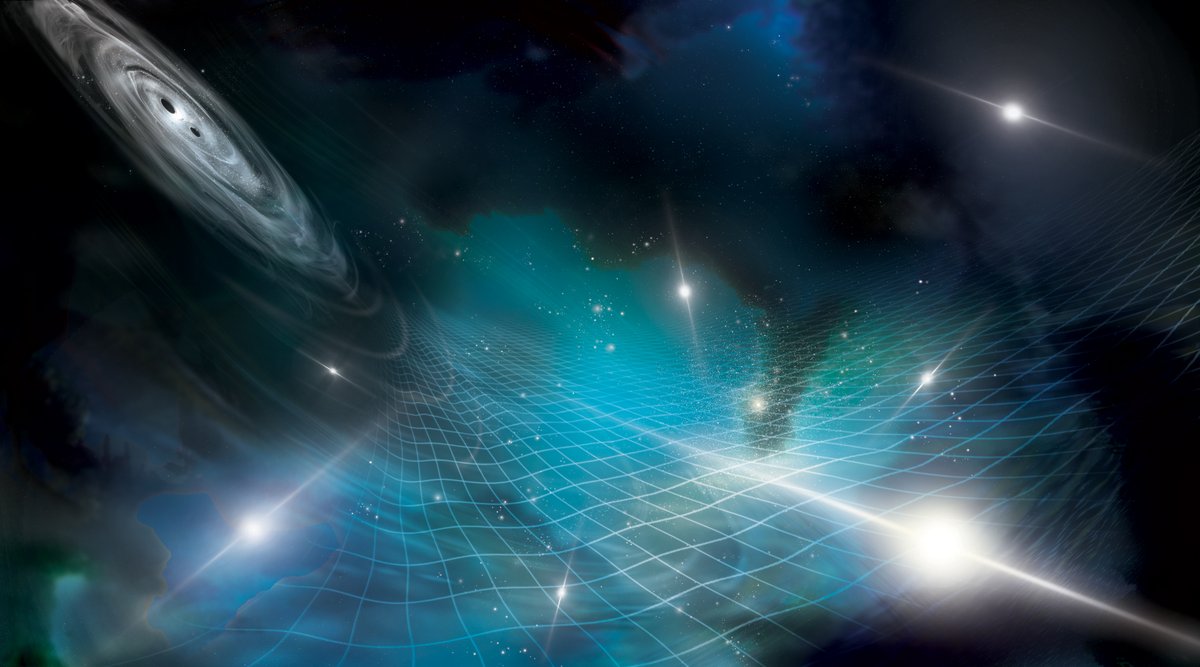
The news is out! The @NANOGrav pulsar timing array collaboration has detected a background of cosmic gravitational waves rippling through our Universe! Let’s talk about it!
(Full press conference tomorrow, https://t.co/7hsBd7IWdO)
1/n
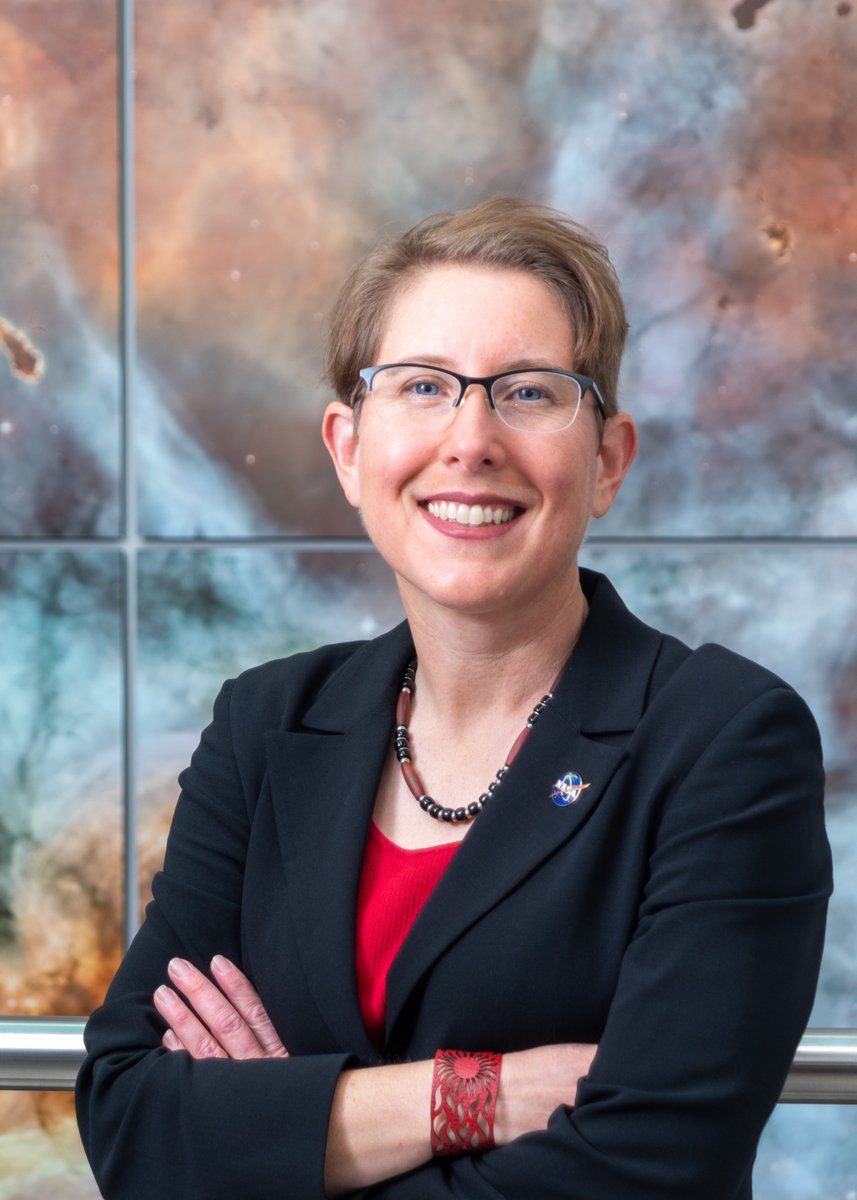
We’re so excited that Dr. Jane Rigby will be the new senior project scientist for @NASAWebb! Jane is an astrophysicist at Goddard and was one of Webb’s three commissioning scientists. She even helped reveal Webb’s first image to the world a year ago!
https://t.co/Qib6uva5tw