The employees of the 12 regional Fed banks are set to join their DC colleagues next year in receiving across-the-board pay raises of 1%—a real wage cut https://t.co/5p3zSUZGpF
The next major cyberattack won't look like a hack, it will look like a configuration error.
Last week we had back to back major failures: Microsoft 365 went down, and the FAA ordered a nationwide ground stop.
In both cases, the official explanation blamed a configuration change. In both cases, the failure was in connection handling. In both, the official word is that the equipment did what it was set up to do. And in both cases, there was no malware.
That doesn’t sound like the hacks most people are used to. No ransomware, for example. Those attacks are loud because they're crude. But a skilled attack doesn’t lock your data, it quietly alters how the system behaves, and lets the system damage itself without being detected. It looks like exactly like a malfunction or human error.
The best example is Stuxnet. As far as the Iranians could tell, nothing was wrong except that machines kept failing. And it was only discovered bc the code spread beyond its target.
Attacks like Stuxnet were rare bc skill was scarce. It required a tailored operation, which meant only a handful of govts had the human talent to build it.
But that’s no longer the case. What used to require teams of elite humans…finding the flaw, writing the custom exploit, adapting to each unique environment, patience, and subtlety…can now be accomplished by a capable model. Skill isn’t scarce anymore, and now it scales so that you can run multiple sophisticated operations at once.
The attacks we should expect in this new AI cyber era are the quiet changes to legitimate systems that make those systems fail on their own and look exactly like configuration mistakes.
We had two major incidents with the same kind of failure, with no malware and no footprints.
I don't know whether either was an attack. But both look exactly like what skilled attacks will look like in the AI cyber era.
And if they were attacks, the obvious candidate is Iran, which has every reason to send a quiet message…"we can disrupt your way of life, and you can't prove it was us”. Iran hasn’t demonstrated this type of capability before, but it’s exactly what AI gives them. Iran, of all countries, knows what it's like to watch your systems fail and blame your own engineers and equipment.
And if it was an attack, they're probably still in the systems.
We are called to seek peace in a world that seems to feed off of hatred of others…
“A gentle answer turns away wrath, but a harsh word stirs up anger.”
-Proverbs 15:1 (NIV)
“Hatred stirs up conflict, but love covers over all wrongs.”
-Proverbs 10:12 (NIV)
“If it is possible, as far as it depends on you, live at peace with everyone.”
-Romans 12:18 (NIV)
“Everyone should be quick to listen, slow to speak and slow to become angry, because human anger does not produce the righteousness that God desires.”
-James 1:19–20 (NIV)
“Turn from evil and do good; seek peace and pursue it.”
-Psalm 34:14 (NIV)
“First go and be reconciled to them; then come and offer your gift.”
-Matthew 5:24 (NIV)
“Blessed are the peacemakers, for they will be called children of God.”
-Matthew 5:9 (NIV)
“But I tell you, love your enemies and pray for those who persecute you.”
-Matthew 5:44 (NIV)
“And when you stand praying, if you hold anything against anyone, go and forgive them, so that your Father in heaven may forgive you your sins.”
-Mark 11:25 (NIV)
“If you are offering your gift at the altar and there remember that your brother or sister has something against you, leave your gift there in front of the altar. First go and be reconciled to them; then come and offer your gift.”
-Matthew 5:23–24 (NIV)
Ok let me get this straight:
- The most charismatic CEO in AI, who happens to be an open source proponent (which is obviously bad for Frontier models), gets ousted because of “surprise” leaks about his affair(s)
- Microsoft suffers a global outage, just a few days after Anthropic unveils an Office competitor
- just as Anthropic is about to IPO
… and none of you think this is weird at all?!!
The Golden Age of Rift ™️ is upon us
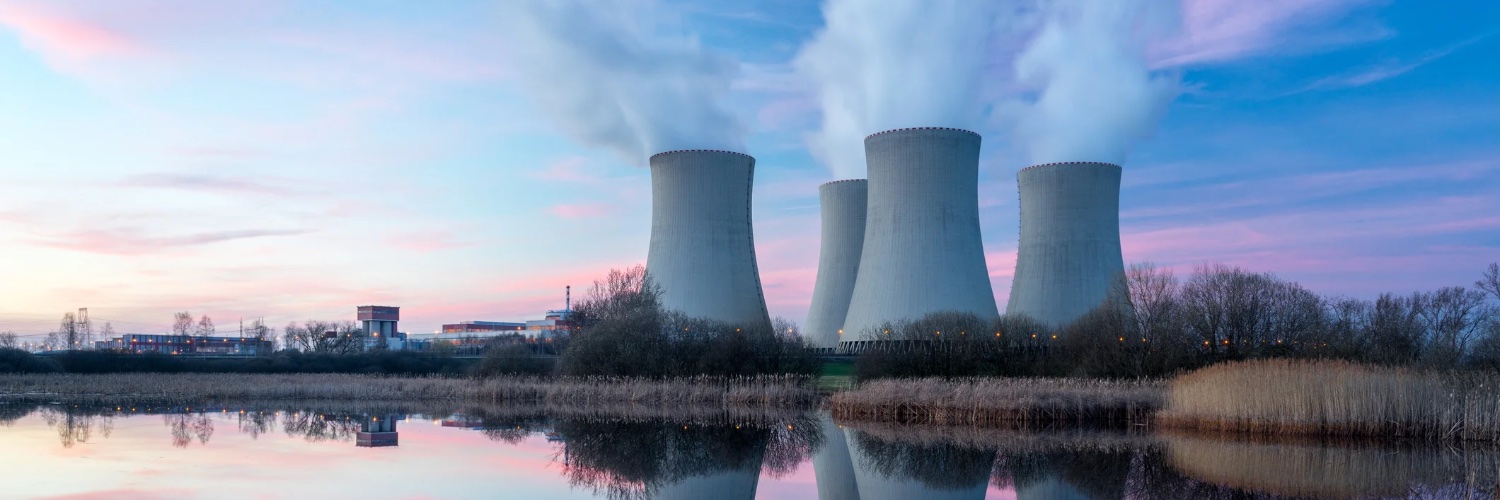
Only 18 months of review and $XE has permission to build four nuclear reactors!
The new NRC is unstoppable 🤘
"the facility will primarily generate high-temperature steam for industrial use at the Dow Seadrift Operations site. Excess electricity will be exported to the grid."
Taiwanese semiconductor analyst Andrew Lu’s take on the recent scandal involving Jensen Huang:
Why the US Seized on the Scandal to Draw Its Sword: Three Strategic Objectives
The purpose of this scandal is by no means to expose an affair. It is to force through three critical objectives that had made no headway in the tech war between the US and China because Jensen Huang opposed them.
The first cut: Completely destroy the legitimacy of Jensen Huang's lobbying against sanctions in Washington
Over the past two years, the loudest and most influential business leader in Silicon Valley opposing a total ban on chip exports to China has been Jensen Huang. He has told the White House the same thing all along: "Cede the Chinese market to Huawei, and the only one that ends up dead is the American tech industry."
But the moment US intelligence labels the woman named as Huang's affair partner "a spy working for China's Ministry of State Security who sought to steer the US toward easing its chip controls," every bit of lobbying he has done for looser controls takes on an entirely different political meaning. It becomes a national security matter, raising the possibility that a foreign spy used a secret relationship to exert influence.
Huang can no longer say a single word in defense of the Chinese market before Congress or the White House. If he does, he will be branded as someone who "fell for an intelligence operation and still hasn't come to his senses."
The second cut: Reverse the H200 export approvals for China and sever the link between Chinese shell companies and Southeast Asian smuggling networks
Look at the timing of the two reports.
On November 8, the very day the Jensen Huang scandal broke, The New York Times published an investigation for which its reporters went in person to dozens of Chinese companies that the US Commerce Department had approved to handle Nvidia's H200 chips. New Matrix in Beijing was one of them. According to the report, the registered addresses of companies approved to buy the chips turned out to be empty "ghost offices," and some of the companies had close ties to entities on US sanctions lists and to firms under contract with the Chinese military.
One exposé says Nvidia's CEO was having an affair with a female spy from Megaspeed, the Singapore company that handled the chip smuggling. The other says the Chinese companies Commerce approved to buy H200s are nothing but shell companies trading on behalf of the Chinese military. The aim of these two reports is clear. They are meant to pressure the Trump administration and the Commerce Department into fully revoking or freezing H200 export approvals for China and, going further, to force a sweeping overhaul of the loophole that let chips be diverted through data centers run by third parties in Singapore and elsewhere in Southeast Asia.
The third cut: Put Nvidia on a national security leash through congressional oversight and an independent investigation
As the world's largest company by market cap and the dominant force in AI, Nvidia has until now enjoyed broad autonomy in how it runs its business. But in the wake of this incident, the three congressional committees responsible for China, foreign affairs, and intelligence have begun examining Nvidia's internal security measures directly. They have even pressured Nvidia's board into forming an independent investigation committee to look into the company's own founder and CEO.
In effect, Washington's national security establishment has planted a watchdog right inside Nvidia's board. From now on, the goal is to make sure that everything, down to where each and every one of Nvidia's high performance chips ends up, conforms strictly to US national security strategy. It also means there is no more room for skirting the edge of the rules or releasing chips with specs specially tailored to regulatory thresholds.
Conclusion
"The scandal was a detonator set off right on cue. The real goal was to plug the holes chips were leaking through."
Jensen Huang made the fatal mistake of letting his guard down in his private life and personal relationships. In the end, he fell into a honey trap, the textbook tactic of intelligence warfare, and was compromised. America's national security and intelligence agencies ruthlessly exploited the weakness his private life had exposed. As a result, they solved three thorny problems in a single stroke: Nvidia's lobbying at the White House to ease restrictions on China, the flow of H200 chips into Chinese shell companies, and smuggling routed through Singapore.
The closed congressional hearing set for November 18 will be the decisive turning point at which the US moves in earnest to tighten its sanctions on China's AI compute even further.