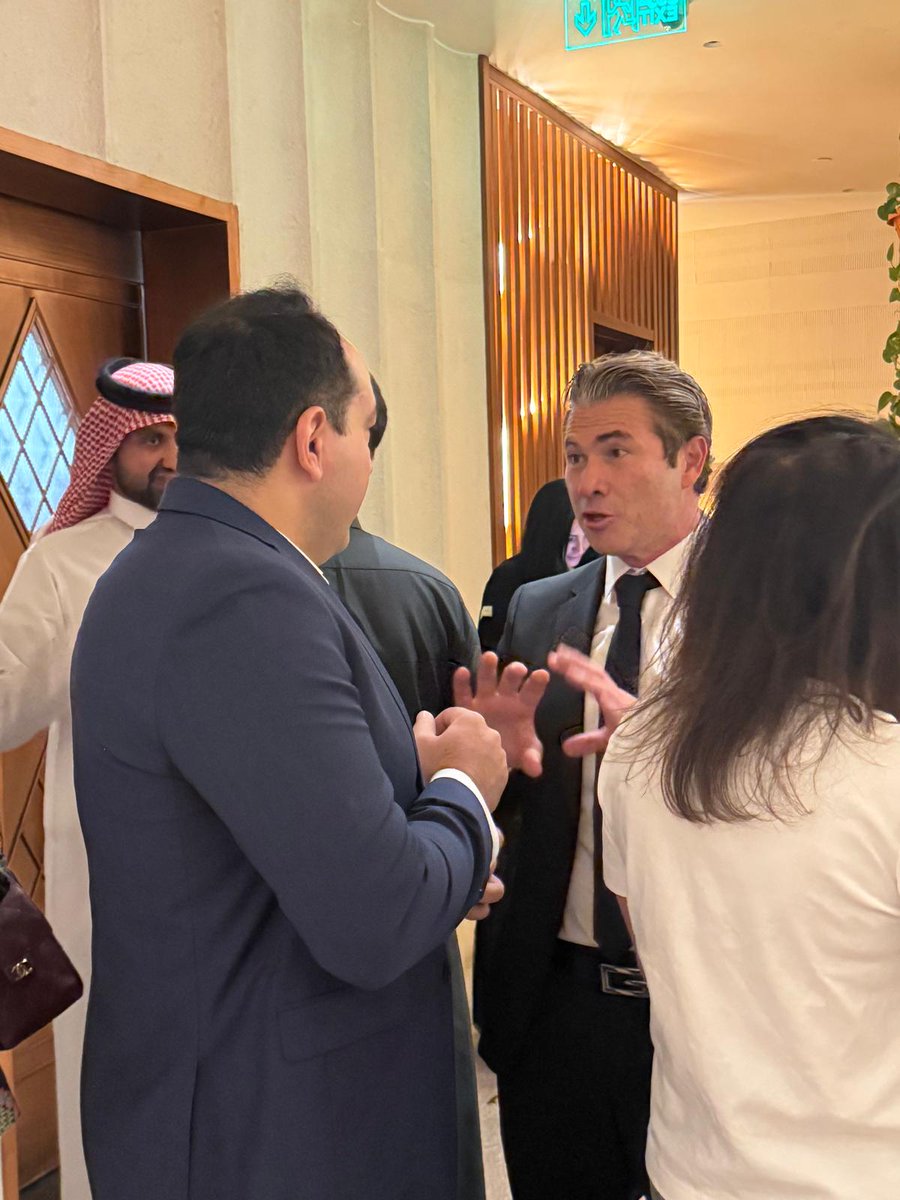
It was an honor to meet @TareqAmin_ , CEO of @HUMAIN, at @LEAPandInnovate in Riyadh this week and to talk through data centers in Saudi Arabia and the cooling challenges that come with them.
What struck me most was how closely our thinking aligned on cooling, and on where @ferveret fits: the form factor, the compatibility with existing infrastructure, and zero water consumption. Cooling is not a supporting detail in the AI buildout. It is one of the constraints that decides how much compute a region can actually deploy.
That is especially true in Saudi Arabia. The ambition here is enormous, and the physics are unforgiving. High ambient temperatures, water as a genuinely scarce resource, and power that has to stretch further than it ever has before. Conventional cooling was not designed for any of that.
This is exactly the problem we built @ferveret to solve: more compute from the same power, no chillers, and no water. In a climate like this one, those are not incremental gains. They change what is possible on a given site.
Thank you also to @ValkyrieFunds, @aramcoventures and to our partners at Gloventures Investments Holding, whose support helped make this trip possible.
Thank you to @TareqAmin_ and the @HUMAIN team for a thoughtful conversation, and to the @LEAPandInnovate organizers for bringing this community together. Stay tuned. We have big plans for Saudi Arabia.
#LEAP26 #AI #DataCenters #Sustainability #SaudiArabia
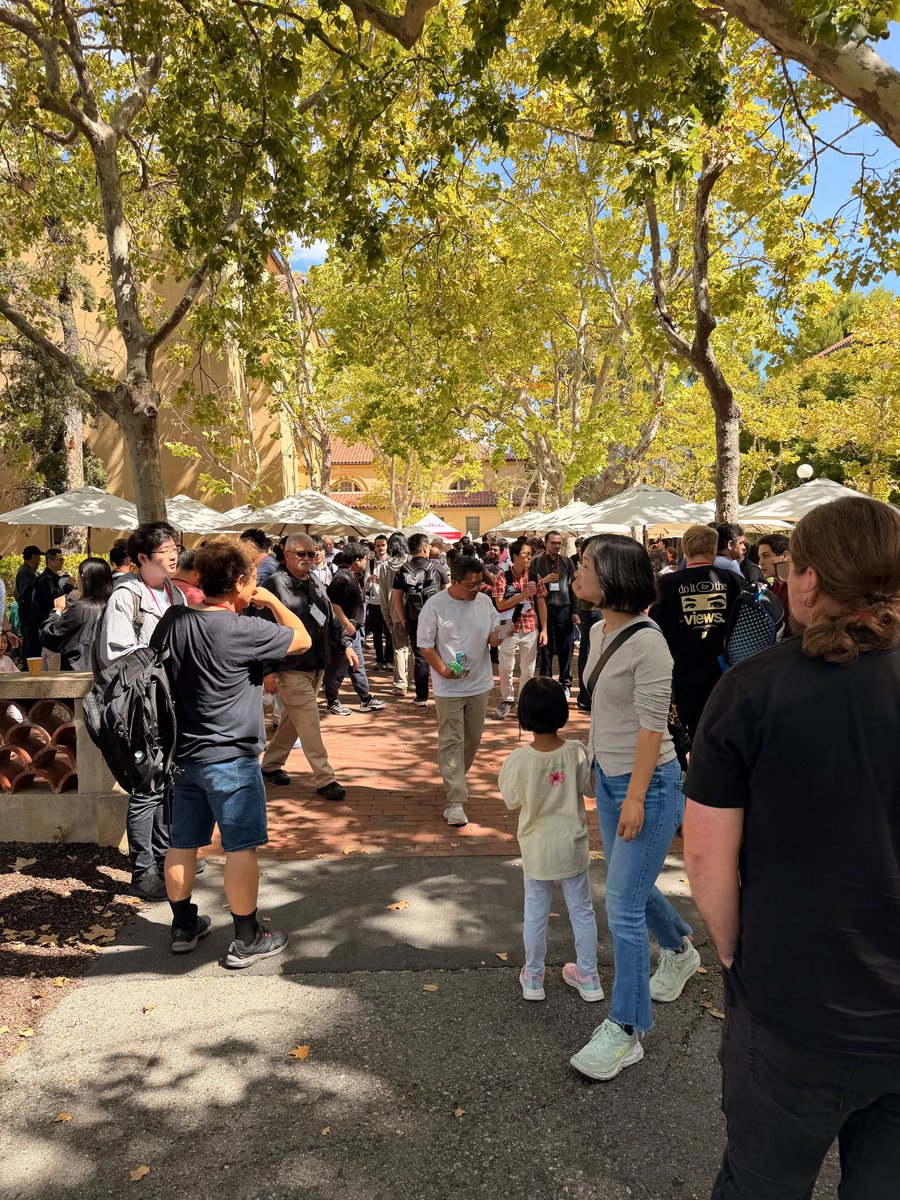
We’re at @hotchipsorg
Bring us your most powerful server
Your hottest chips with the craziest power densities and hot spots
Your toughest cooling problem
We’ll cool it
Challenge us 🔥❄️
Thank you @Sander1Arts for making this happen
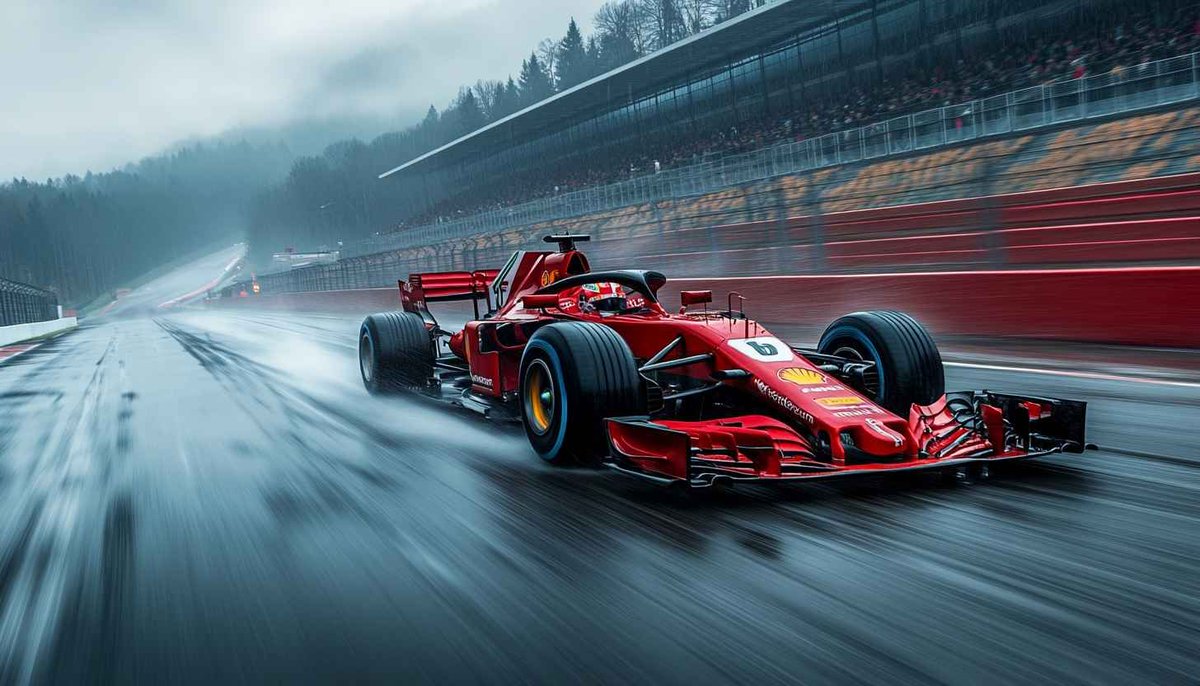
What do @Formula1 and AI chips have in common? More than you'd think.
Last week I had the honor of meeting @junehopaik, Founder and CEO of @FuriosaAI, here in the Bay Area. What struck me most was how closely our thinking aligned on AI and efficiency.
June put it perfectly: "AI chips are about ultimate performance engineering. Given fuel capacity and engine displacement, how fast can you go?"
That lands right where my own analogy lives. In a recent post, I compared it to engine cooling in a car, because the fastest team isn't the one with the biggest engine. It's the one where every part of the stack is engineered to work together.
That's the AI factory we should be building: like a Formula 1 team, where compute, chips, cooling, and software are designed as one system for maximum efficiency.
@ferveret and @FuriosaAI share that vision. Let's build the most efficient AI factory together.
Stay tuned, more news to come on our Formula 1 build-up.
Guerre du froid
L’IA brûle énergie et eau. Nvidia promet 0 eau locale avec un circuit fermé. Ferveret mise sur l’immersion “nucléaire” sans eau et +35% de tokens à puissance égale.
Deux visions, un coût réel encore flou. Qui fixera le standard ?
#IA#DataCenter#Nvidia
Maîtrisez l'IA, ensemble, sur https://t.co/e3abfjAuLi (lien en bio)
I've been reading @DavaSobel's Longitude, the story of John Harrison, the self-taught carpenter who spent 40 years solving the greatest technical problem of the 18th century: how to know where you are on the ocean.
One detail stopped me cold.
Harrison's clocks worked because he found a way to get rid of friction. And to do that, he built the gears out of lignum vitae, a tropical hardwood that gives off its own oil. The wood wasn't new. Shipbuilders had used it in pulleys and underwater fittings for over a century. Everyone in the maritime world knew about it.
Harrison's insight wasn't the material. It was noticing that a wood used on the deck of a ship might solve a stubborn problem inside a precision clock.
That's what fundamental research actually looks like. Not inventing from zero. Taking something well understood in one field and asking whether it can solve a problem in another.
Reading that hit close to home, because it's exactly what we're doing at @ferveret .
The nuclear industry has spent decades mastering heat transfer at extreme densities. The physics, the materials, the engineering intuition, all of it sitting there, refined over generations. Meanwhile, data centers are drowning in a heat problem that's about to define the next decade of AI infrastructure.
We're not inventing new physics. We're taking decades of nuclear thermal expertise and applying it to the densest computing workloads humanity has ever built.
Same pattern. Different century.
Harrison also, along the way, invented the bimetallic strip (now in every thermostat) and the caged ball bearing (now in almost every machine with moving parts). He was aiming at longitude. He ended up leaving behind pieces of modern precision engineering.
That's the thing about cross domain work. You aim at one specific problem. What you actually produce is a set of tools that quietly reshape industries you weren't even thinking about.
What people miss: most of that capex goes to getting power to the chips and heat away from them. The constraint on AI scaling isn't compute. It's the watt that gets to the chip.
US data center construction spending reached a $50.7 billion annualized rate in April 2026, more than the entire country spends on airports, ports, and mass transit combined 🤯
Data centers are the physical backbone of AI
#AIInfrastructure@ferveret