@mralistairgreen Now apologise for that bit where you referenced Infinite Jest in a sketch a few months back. I’m 200 pages in 2/3s into a 1 week holiday now. I don’t even know what I’m trying to prove to who?
A rant on who the fuck is (or isn't) working class:
The way “working class” and “middle class” get flung around in UK politics and media has become completely detached from reality.
It’s no longer about material conditions. Ownership, assets, debt, economic power. It’s now pure cultural vibes: what you eat, how you speak, whether you like hummus or watch Love Island. This isn’t analysis. It’s a rhetorical weapon
Let’s get back to the structural, materialist root. Class has always been about your relationship to the means of production and the security that gives you. Do you own assets that generate wealth even when you’re not working? Can you weather a recession without losing everything? Do you pass on real capital (a paid-off house, a business, savings) to your kids? That’s class. Not your Spotify playlist or your accent.
Sure, cultural capital exists. Tastes, education, social networks, the “right” cultural signals. It’s real and it matters. But on its own it is insufficient to produce meaningful class politics. Your class is not determined by whether you shop in Waitrose or M&S, whether your accent is perceived as middle class, if you have a uni degree, or if you play the harp. Class is first and foremost a relationship of material conditions and proximity to owning wealth, assets, or the means of production. Of course class produces culture, and perceived culture can sometimes prop someone up or hold them back, but vibes do not define your structural position. The vibes don’t pay the mortgage.
Even the more “official” metrics we lean on are flawed. Take the old ABC1 / C2DE social grades (still widely used in polling, media, and politics as shorthand for middle vs working class). These were never designed to measure class. They’re a 1950s marketing tool based almost entirely on the occupation of the “chief income earner.” Managerial or professional roles get you ABC1. Skilled manual gets you C2. They ignore wealth, housing equity, business assets, savings, debt, and inheritance. A highly educated renter scraping by gets labelled “middle class.” A debt-free small business owner with a paid-off home gets slotted as “working class.” The metric flattens real material differences.
Yet today the labels are applied almost entirely on those aesthetics and these outdated occupational buckets. A mid-30s couple in London, Bristol, Birmingham, Edinburgh or other regional cities, both on 40k, paying a massive mortgage or high rent, no inheritance, eating hummus and shopping at Waitrose on a budget, they get called “middle class” and told they’re privileged. Meanwhile a couple in their 50s running a small plumbing business or a chippy, living in an ex-council house they bought for peanuts decades ago, with zero mortgage and built-up equity, they get called “working class” and held up as the authentic voice of the people. One is one missed promotion or interest-rate hike from disaster. The other has real material security. But the second gets the political halo.
This misapplication isn’t harmless pedantry. It’s now the central trick in British political discourse. People whose material conditions are actually precarious, high combined incomes but negative net wealth, renting in expensive cities, no assets to fall back on, routinely get stigmatised as “middle class” or “elite.” The familiar tropes of “champagne socialists” and “luxury beliefs” get thrown at them the moment they raise practical objections about housing costs, tax cuts for the rich, interest rates or policy failures. Even though they rely entirely on their salaries with zero capital buffer, they’re painted as out-of-touch affluent voices.
Conversely, those with real material security, paid-off homes, business ownership, savings, managerial control over their own capital, get elevated as the “authentic working class.” This lends them unearned moral and political weight, even when their lived experience is far more stable than the people they’re contrasted against.
Season 5 is such a downer from the get-go in an entirely different way. It’s all just a lack of state capacity due to budget issues since a new political leader has inherited a huge hidden deficit while print media slips into terminal decline, the most British season of The Wire
“shirking is quantitatively non-trivial. 56.8% of women and
60.7% of men report positive shirking time.” @deserterblog
Who Shirks at Work? An Application of Machine Learning to Time Use Data https://t.co/zRGKCj3PrB via @iza_bonn
@ScarredForLife2 Surely no coincidence that this definition of Willie Nelson appeared in my timeline… could equally apply to wicked Willie no?
https://t.co/j494n0eXOX
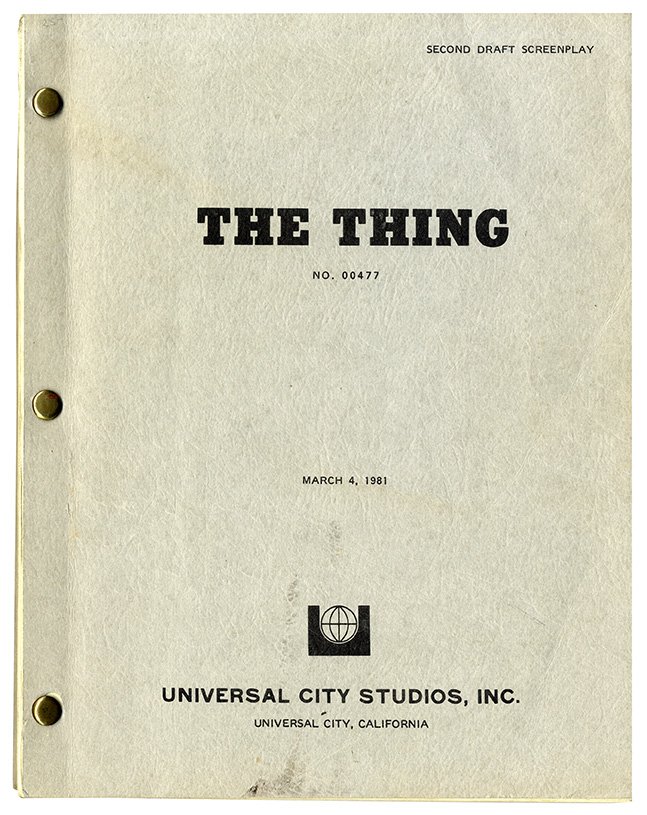
As you may have heard, “The Thing” has been added to the Library of Congress. We made the movie to push against the edges of what we could pull off, and it carries that strain in its bones. Seeing it now treated with the same care and reverence we had making it means a great deal to me and everyone who brought it to life.
I especially want to remember TK Carter, who brought heart and humor into that desolate, frozen place and should be standing here with us today sharing in this recognition.
Thank you to everyone who continues to keep it alive.
While there’s a small class of people who do specialize in thinking about how to change the world, the vast majority of people on our planet are employed in maintaining the world, and often derive their sense of self from that role
For example, a person who earned a living by installing lead water pipes for households in the 1950s didn’t think of themselves as slowly poisoning humanity. Rather, they thought of themselves as maintaining life through a vital water infrastructure
Similarly, an engineer in the oil industry may be predisposed towards believing they’re playing an important role in maintaining energy for their fellow citizens. They may feel wounded when a climate campaigner tells them they’re undermining society
That can quickly shift to antagonism, and there’s no shortage of ideological defenders of our economic system who will exploit that wound and stoke that antagonism
So, if you’re a person who is in the business of changing the world, remember that it’s a specialist role, and you got to be sensitive to the fact that the world you’re trying to change is maintained by many other good people who have a different specialism. Find ways to get them on board, otherwise ain’t nothing gonna change
2026 bank holidays in England & Wales:
1 January - New Year’s Day
3 April - Good Friday
6 April - Easter Monday
4 May - Early May bank holiday
25 May - Spring bank holiday
31 August - Summer bank holiday
25 December - Christmas Day
28 December - Boxing Day (substitute day)
tell you what, someone should open a food hall featuring a range of street food vendors selling everything from burgers to tacos to Indian food, and everything should cost between £11 and £16
Roman concrete is practically wizardry compared to the materials we use today. They mixed volcanic ash with lime and water--plus seawater in their harbors--creating a chemical reaction that actually makes the structure stronger over time, not weaker. So, to keep that massive dome from collapsing on their heads, they also mastered the density. The base is built from heavy travertine and tuff, but as they built upward, they switched to super-light volcanic tuff and pumice stone. It's still the largest unreinforced concrete dome in the world, and it hasn't collapsed in nearly 2.000 years.