"I sat in my supervisor’s office, red-faced and anxious, words tumbling out faster than I could control. For half an hour, I vented everything I had been holding in for months: the stress, the doubt, the sense that I didn’t belong. I was in the third year of my Ph.D., and a creeping fear had taken root that I wasn’t cut out for academia.
"I expected some kind of judgment or disappointment. Instead, my supervisor listened patiently, then calmly offered a line I’ll never forget: 'You are here to learn to ride a bicycle, not to invent a bicycle.' That one sentence landed softly, but it cracked something open." https://t.co/I9q8RgC0wb #NationalHigherEducationDay
Apply Now to the Max Planck-Weizmann Joint Postdoctoral Program in the fields of:
• Life Sciences • Chemistry • Physics • Earth Science • Math • Computer Science
Includes a fully funded four-year position, split equally between the two institutions >>Apply Now to the Max Planck-Weizmann Joint Postdoctoral Program in the fields of:
• Life Sciences • Chemistry • Physics • Earth Science • Math • Computer Science
Includes a fully funded four-year position, split equally between the two institutions >>Apply Now to the Max Planck-Weizmann Joint Postdoctoral Program in the fields of:
• Life Sciences • Chemistry • Physics • Earth Science • Math • Computer Science
Includes a fully funded four-year position, split equally between the two institutions >>Apply Now to the Max Planck-Weizmann Joint Postdoctoral Program in the fields of:
• Life Sciences • Chemistry • Physics • Earth Science • Math • Computer Science
Includes a fully funded four-year position, split equally between the two institutions >>Apply Now to the Max Planck-Weizmann Joint Postdoctoral Program in the fields of:
• Life Sciences • Chemistry • Physics • Earth Science • Math • Computer Science
Includes a fully funded four-year position, split equally between the two institutions >>Apply Now to the Max Planck-Weizmann Joint Postdoctoral Program in the fields of:
• Life Sciences • Chemistry • Physics • Earth Science • Math • Computer Science
Includes a fully funded four-year position, split equally between the two institutions >>
A year ago @Nature published a paper on the Neolithic Fujia cemetery in China. It became one of the strongest archaeogenetic arguments for ancient matrilineality. So what has appeared since then?
Fujia dates to about 2750 to 2500 BCE. Researchers studied DNA from 60 people buried in two cemeteries. Each cemetery almost perfectly matched a separate maternal line. In the northern cemetery everyone had the mitochondrial haplogroup M8a3. In the southern cemetery almost everyone had D5b1b. At the same time the male Y chromosome lines were diverse. In other words people seem to have been buried not by paternal descent but by maternal belonging. Radiocarbon dates suggest that this system lasted for about 250 years or at least ten generations.
Over the past year many new papers on ancient DNA and social organization have appeared. But most of them add to the picture of patrilineality. Male lines. Female exogamy. Status passed through the father’s line.
Still there is one important new example. Çatalhöyük in Anatolia. In a 2025 study researchers analyzed 131 genomes from 35 houses in this Neolithic settlement. They did not find clans like at Fujia. But they did find a stable role for maternal lines inside houses. Daughters probably stayed connected to the house more often. Adult sons may have left. Female child burials also received more grave goods.
At the moment it seems that matrilineality really did exist in the ancient past. And now we can see it not only through ethnography but also through DNA. But it does not look like a universal stage of social development. It looks more like a rare local and very interesting alternative to much more common patrilineal models.
https://t.co/EuA9uT7dX5
https://t.co/0AEcMaDaRh
#aDNA #matrilineality #patrilineality #pedigree
🎉Happy to share our (@LinkeLi_MGH@tigerstatdoc@M_Mesbah_Uddin@abhinrl@pnatarajanmd me) collaborative article with Reuben & Santhosh's team at @IUMedSchool, just out in @BloodPortfolio!
Clonal hematopoiesis of indeterminate potential (CHIP)🧬is linked to multiple organ systems — heart, liver, brain — what about the colon? And if there is a causal link, can we do something about it?
Using Dnmt3a-mutant mouse 🐭models of colitis and human🧓data from UK Biobank & Mass General Brigham, we show that CHIP increases inflammatory bowel disease (IBD) risk; further, APE1/Ref-1 inhibitor APX3330 can ameliorate CHIP-driven IBD, potentially breaking the CHIP-disease link.
🔗https://t.co/mWrrQP4tK5
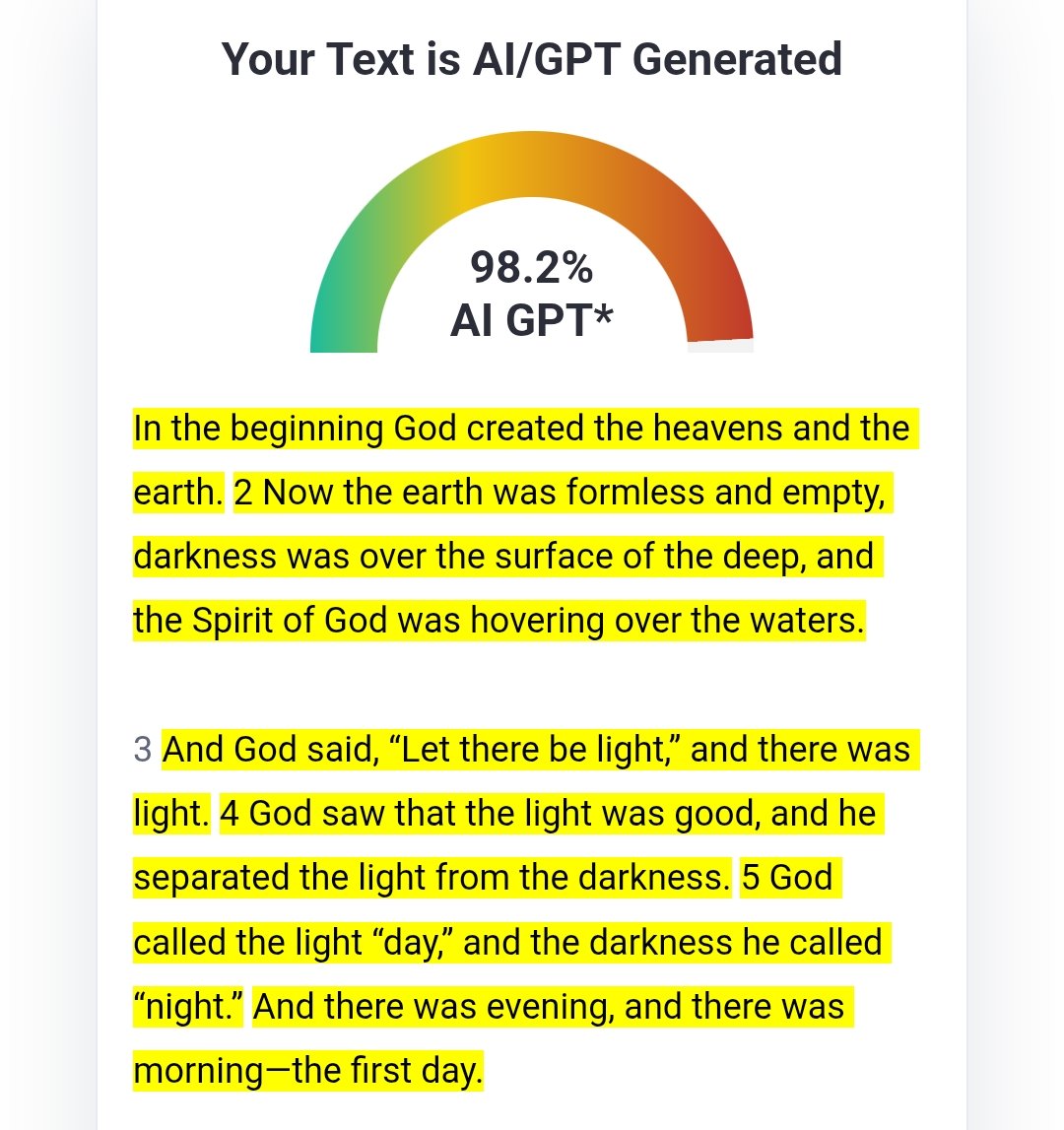
This research article was published in 2007 (19 years ago) and used an em dash (—). Today, including an em dash in your paper automatically flags you as suspected of using AI. Sad times.
"Don't follow the existing research."
To truly make an impact, this year's chemistry laureate Susumu Kitagawa advises young scientists to think independently and follow their own path. Kitagawa was awarded the Nobel Prize for his work developing MOFs, porous materials which are able to store and release small molecules, in an amazing array of uses.
Learn more: https://t.co/pQvG7xYEJv
Probabilistic computers can solve certain problems more efficiently than traditional computers, but are usually saddled with a power-hungry, bulky, analog component. That is, until a research team developed a fully digital p-bit design. #TohokuUniversity
https://t.co/GFNreHc60v
Many Tanzanians want an international independent investigation into the killings.
Three weeks after the election, there are many families still searching for their loved ones