@MacroAlphaHQ Agree, they actually have to raise rates above the inflation rate to make commodities fall in price long term. The CPI represents about half the real inflation using a 1981 measuring stick.
@JoshYoung Dropping the price is only going to drop the stockpile that much faster. Also astounded we are going through another midterm election cycle while using the SPR for price control.
@glennbeck From an oil & gas engineer, it's a small win. Trump mentioned moving 100 million bbls. That is notable but only about 5 days worth in normal logistics. The questions is if the tankers take the risk to come back into the Strait to reload and out again for it to be meaningful.
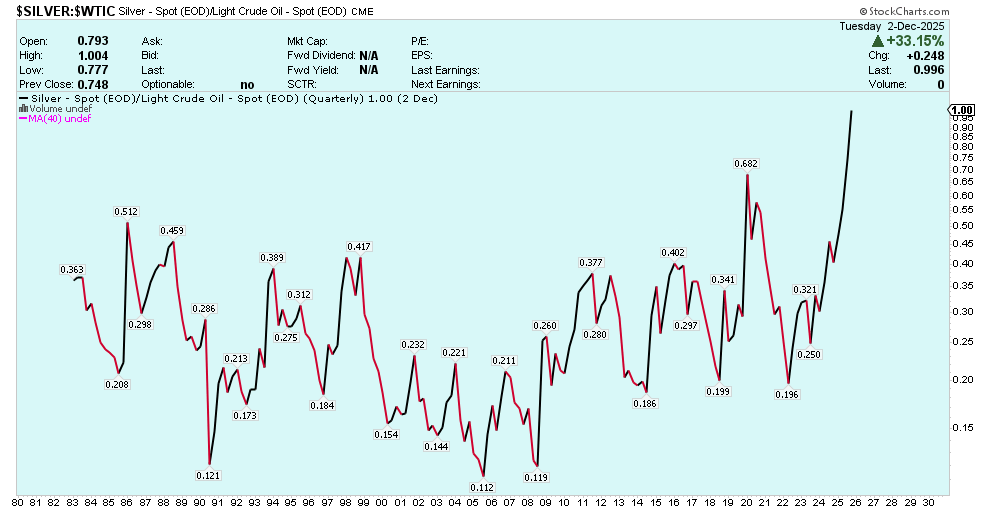
@Macro_Nuvox the 5000 year avg ratio is about 15:1 so think about that and the deficit in silver supply the past 6 years. A ratio based on the oversupply of silver since 1980 is not relevant long term
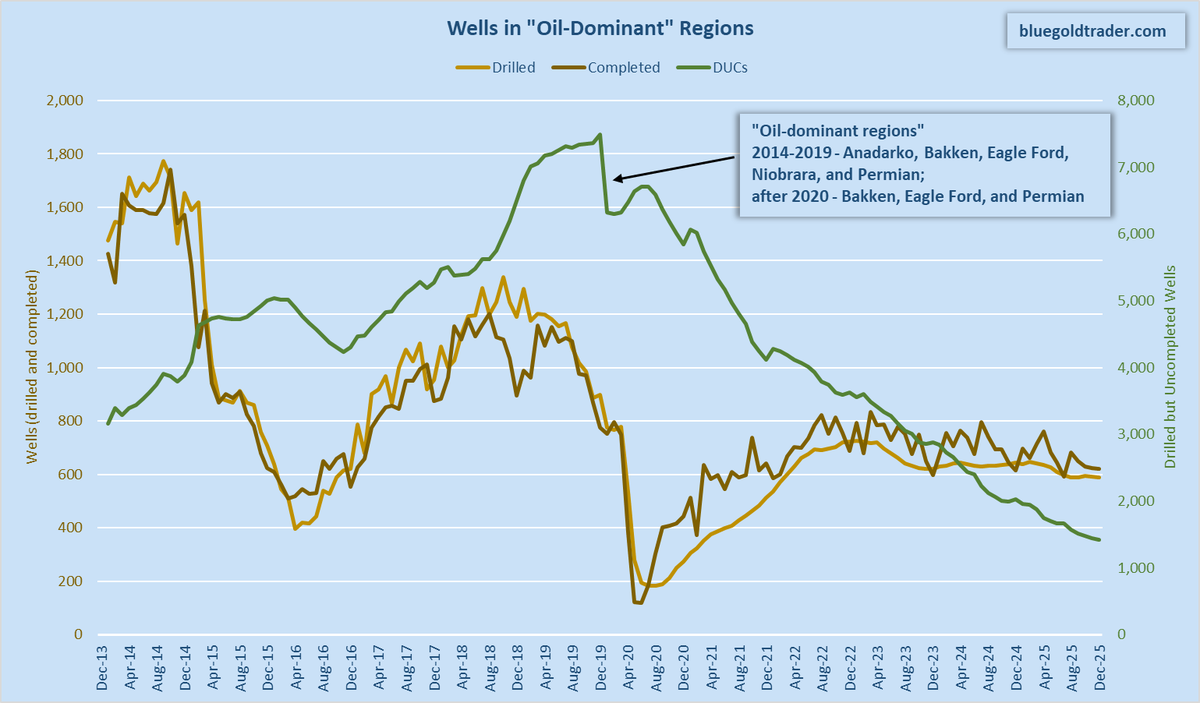
The fact that DUC inventories have hit a 10-year low (in #natgas-dominant regions) and a record-low (in crude #oil-dominant regions) is a major signal that the "easy" phase of U.S. #oil and #natgas production growth is ending. Here is a breakdown of what this means for the industry and the economy.
1. The "Rainy Day Fund" is Empty
Traditionally, when energy prices rise, companies tap into DUCs to boost production without the high cost and time of moving a new drilling rig to a site.
Since the 2020 pandemic, U.S. shale companies have been completing more wells than they’ve been drilling. They did this to keep production high while satisfying investors' demands to spend less money.
The Result: That inventory has now been drained. Producers can no longer rely on this "pre-drilled" stock to maintain output.
2. Higher Costs for Future Production
Completing a DUC is significantly cheaper than starting from scratch because the most expensive part—drilling the hole—is already done.
Impact: Now that DUCs are depleted, any new oil production must come from new drilling. This requires more capital, more rigs, and more labor.
The Bottom Line: The "breakeven" price for oil has effectively moved higher because the cheaper inventory is gone.
3. Increased Vulnerability to Price Volatility
DUCs act as a shock absorber. When prices spike, producers can quickly bring DUCs online to stabilize the market. Without this buffer:
Delayed Response: It will take 6 to 9 months (the time needed to contract a rig and drill) for the U.S. to respond to global supply shortages.
Market Sensitivity: This makes the global oil market more sensitive to geopolitical shocks, as the U.S. "swing producer" can't turn the taps on as fast as it used to.
“One of the more straightforward ways to show debasement is via the price of Campbell’s tomato soup. Rather than relying on a complex set of estimates and substitutions, it’s just a history record of what the same can of soup cost over time.”
BREAKING🚨 JPMorgan Moved it’s ENTIRE GOLD TRADING DESK to Singapore with NO Press Release Last Thursday
JPMorgan recently got exposed for trying to Manipulate $MSTR, Now this… ⬇️
Why don’t elephants get cancer?
Billionaire physician Dr. Patrick Soon-Shiong on Megyn Kelly:
“Elephants have 8 copies of the tumor-suppressor gene p53. Humans have only 1.
Our lab found COVID knocks down p53 — exactly like HPV does before it triggers cancer 5–10 years later.
We’re now seeing head & neck cancers surge past cervical cancer numbers in the US. I’ve personally treated 6 patients with our new protocol… all 6 had dramatic responses.”
Paper incoming. Randomized trial starting.
Is this the hidden mechanism driving a new cancer wave?
Watch the 1:13 clip and decide for yourself