A mindworm that has caused great damage among AI researchers is the implicit, universal assumption that every piece of data is a (random) "sample" from a (static) "distribution". This is a valid way of modeling some phenomena, but it isn't applicable to the vast majority of real-world signals.
The vector of development that the internet and society is traveling leads away from extraordinary people sharing unique beliefs, and toward a tyranny of mediocrity. It is a preference for "normal" so strong that it extinguishes excellence; a ruthless allegiance to the average.
America lost something important today, and hardly anyone heard. The headlines of state-aligned media screech and crow about the nefarious designs of your fellow citizens and the necessity of foreign wars without end, but find few words for a crime against the Constitution.
New from 404 Media: those food delivery robots that are armed with cameras and driving all over sidewalks in LA? They're providing filmed footage to the LAPD, according to internal emails we got. Food delivery robots just became surveillance devices https://t.co/kAxh1tSgZ0
It's clear that we're far from peak LLM performance -- these models will keep getting better. It's also clear that pure generation is just the first step -- we can largely alleviate the LLM reliability issue by using them as information retrieval devices over a knowledge corpus.
Just wait, ChatGPT is only the tip of the iceberg. But don’t be fooled, there is zero real intelligence here. The capacity for it does not exist, not will it for the foreseeable future.
AGI is not coming anytime soon. Don’t just take the word of this one lowly data scientist, trust François. One of the most brilliant minds in the field, and always upfront about the limitations of current ML/AI methods.
So far all evidence that LLMs can perform few-shot reasoning on novel problems seems to boil down to "LLMs store patterns they can reapply to new inputs", i.e. it works for problems that follow a structure the model has seen before, but doesn't work on new problems.
AGI will require wholly different capacities that data more broadly, and AI models specifically, of today are fundamentally incapable of solving. Bigger data and fancier models will not be enough, though the achievements can and will continue to astound.
@calebhicks At least you’re getting some sleep in there. Often for me, when inspiration strikes and I’m really in the flow, it can mean zero sleep at all 🥴 do not recommend.
@calebhicks Long long way to go yet. Not inevitable we get there either imo. What is inevitable though are increasingly stunning abilities that meet — maybe surpass — our expectations of one.
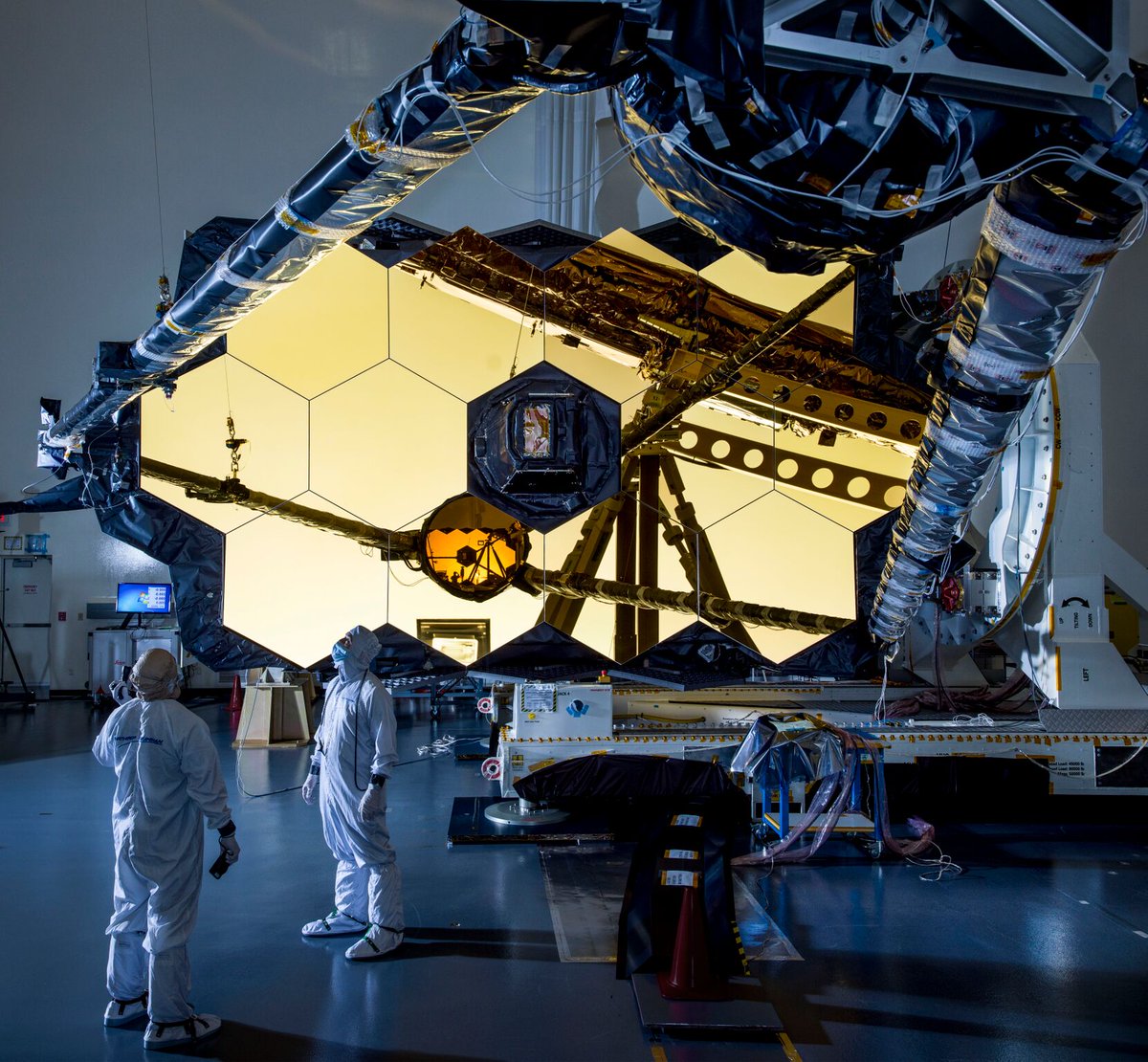
We can't contain the excitement for @NASAWebb's first full-color images!
On Monday, July 11 at 5pm ET (21:00 UTC), President Biden will unveil one of the space telescope's first images of deep space as a preview of what's ahead: https://t.co/kP5JdQEpVz
IME (admittedly zero of which FAANG-like), even at companies *with* data engineers, any data role will be 90% data engineering. Static, tidy data simply does not exist in the real world.
A shocking revelation:
Companies don't have "datasets" waiting for you. It's your job to create and maintain them.
This is time-consuming and hard, but primarily responsible for the success of your machine learning system.
Here are some thoughts:
1 of 7