@Nyborger_Nybo@DebevecTadej Agree - within changes in flow vs baseline cross-sectional compare different things. My point is to not neglect metabolic changes from CO2 or heat (both potent metabolic modulators).
Caffeine in cerebrovascular research: To withdraw or not to withdraw? - Shepley - Experimental Physiology - Wiley Online Library https://t.co/9QWo8KPzKq
This is fantastic.
@sweatscience with an absolute killer opener...and the article follows suit on tearing apart our obsession with supplements and silver bullets.
A must-read: https://t.co/iPGeLEh8qv
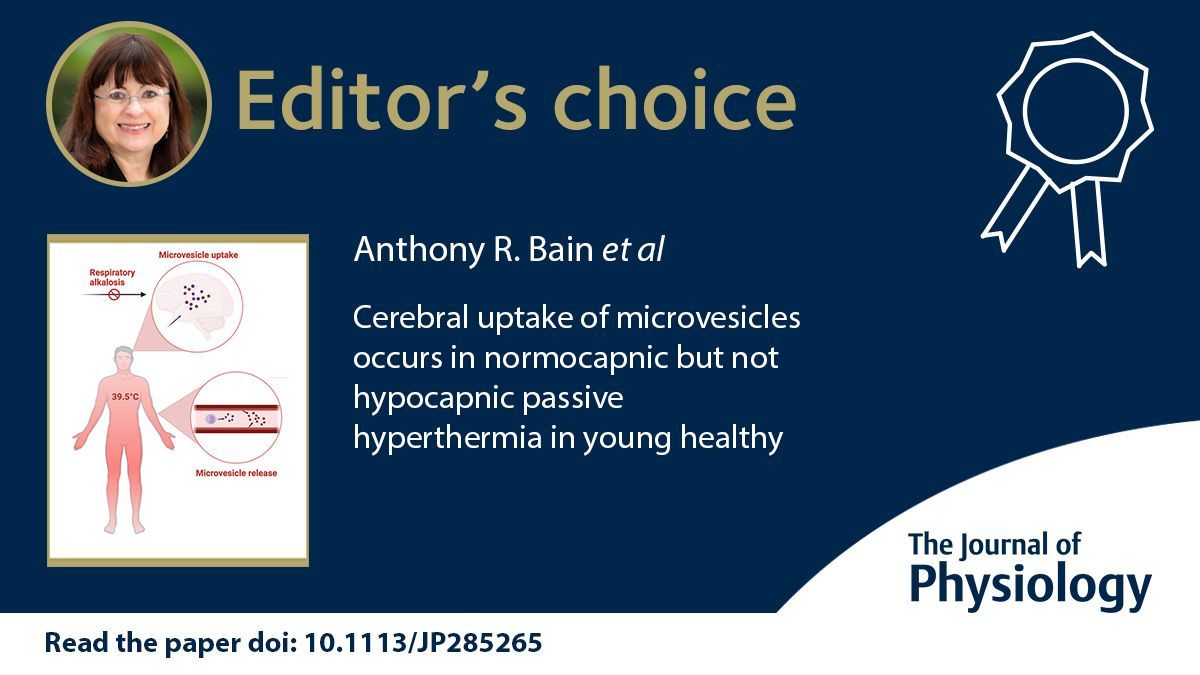
🎓EDITOR'S CHOICE🎓
This study by @BainPhd (@uwinkinesiology) et. al. shows that the hypocapnia protects the brain from elevated penetration by microvesicles, which otherwise might cause cerebral inflammation!
📜https://t.co/7b2sjKxE9X
Cerebral uptake of microvesicles occurs in normocapnic but not hypocapnic passive hyperthermia in young healthy male adults - Parikh - The Journal of Physiology - Wiley Online Library. A potential ‘protective role’ for heat-induced hyperventilation? https://t.co/BjIh25ycNA
We are currently engaged in a large collaborative work spanning various disciplines to drive innovation in human breathing sensing @SimonRondeau@BainPhd