Move over creatine.
Guanidinoacetic acid is taking over.
Creatine's precursor (GAA) outperformed creatine in:
Grip strength
Reducing myostatin concentration
Any may be more beneficial for brain health
I think the people who think a successful $ANT IPO will save the neoclouds and semis are wrong.
The problem with neoclouds was always their business model. They are a phenomenon of a compute shortage and a low-AI financing-debt environment. Without those two conditions, they can't compete with the hyperscalers because building data centers is a scale game, and reaching scale requires funds. $NVDA being the financing bank of the neoclouds has only extended the life of many of the neoclouds, but the problem stays; the business model for most is just bad.
$ANT is also not going to save the space, as $ANT, without a significant uptick in usage (like they saw in 2026, when coding exploded and wasn't expected by them ), will not do pricey spot compute deals. $ANT will do long-term compute deals with heavy discounts and attractive pricing for them, as they are the biggest buyer on the market.
For you to service a long-term deal data center deal with $ANT, their economics require you to have a low cost of capital, and the low-cost capital market is basically closed for the neoclouds. $ANT is also not stupid to make big prepayments for data centers, or if they do that, the economics of these neoclouds will be even worse, as $ANT holds all the negotiating cards.
Also, don't get me wrong; I think $ANT will have a successful IPO, but it won't "save" that portion of the market.
The AI buildout will continue, but at a more normal pace, with the strongest and healthiest companies leading it ( $AMZN, $MSFT, $GOOGL, and $META) and with a semis mix of TPUs, Trainiums, $AMD, $NVDA, and many other ASICs. The chip design layer margin will shrink, and you will get more compute out of your investment.
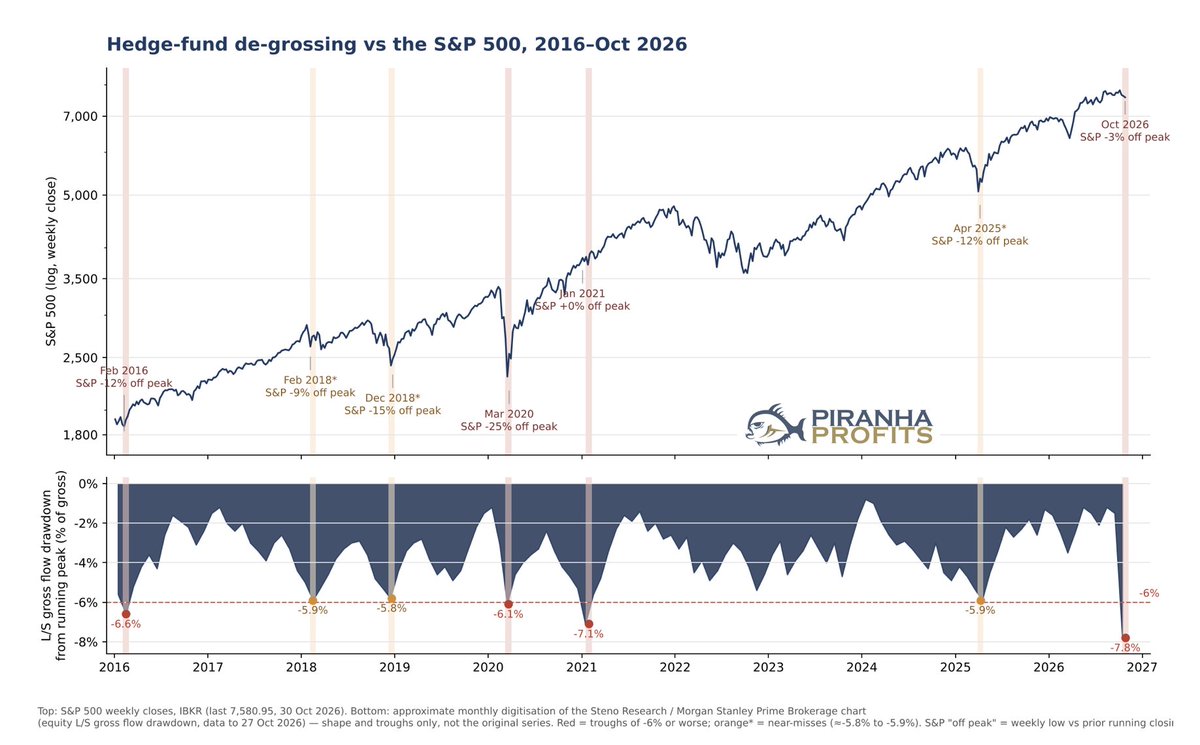
MS: hedge funds have now moved underweight the broader AI trade for the first time since early 2023, and the combined summer and October de-grossing marks "the largest sustained stretch of L/S fund de-risking in over 15 years, as gross exposure never fully recovered between episodes."
MS Prime Brokerage data is brutal: cumulative gross flow is now down 8% from the June peak, the largest sustained de-grossing on record. And yet, the bulk of this week's buying came from short covering, which pushed US L/S net leverage up 5 points to 51%, while gross slipped 1 point to 207% (still in the 92nd percentile since 2010, but just the 10th percentile over the past year).
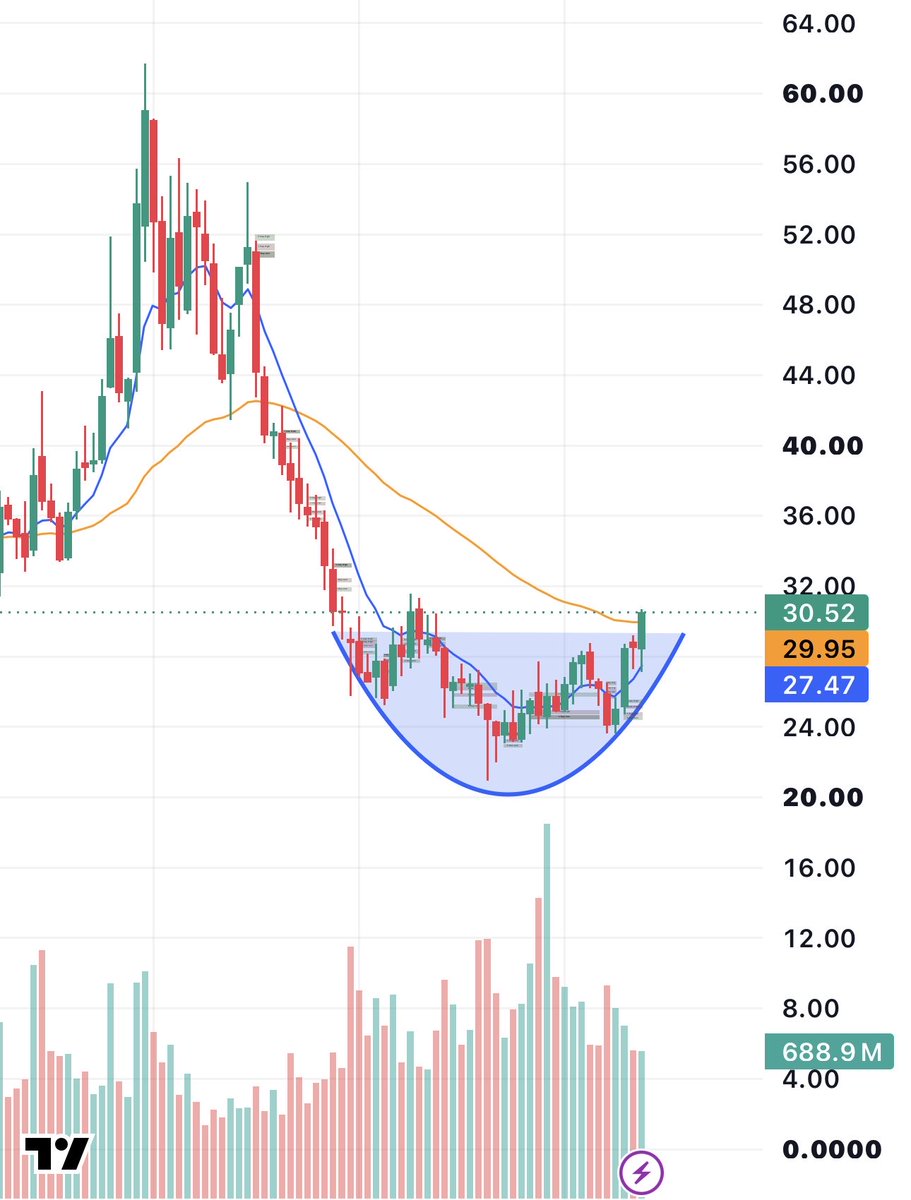
$PFE broke the $30 neckline of a big rounding base.
AI could accelerate drug discovery, improve clinical trials and lower development costs. Healthcare is a long-term theme I want exposure to.
My top five for medical breakthrough potential heading into 2027:
$LLY - Next-generation obesity drugs
$ABBV - Blood cancer and vision-loss therapies
$MRK - Targeted cancer treatments
$GILD - Longer-acting HIV therapies
$JNJ - Oral treatments for inflammatory diseases
I’m been buying $VHT weekly for broad exposure across pharma, biotech, medical devices and healthcare services.
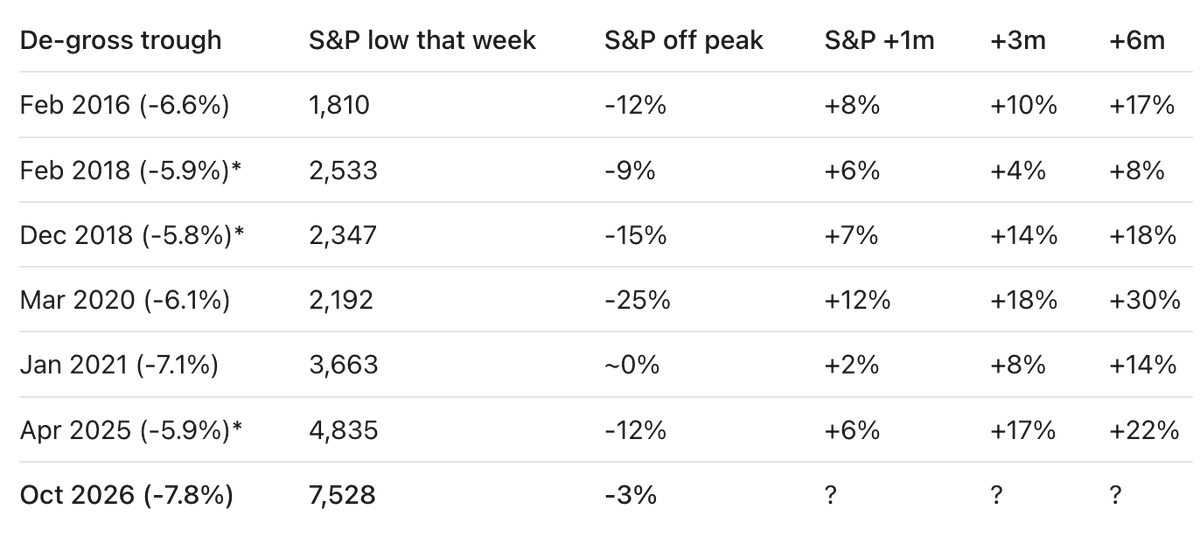
Hedge funds just hit the panic button harder than at any time in the last ten years. Here is why that is good news for you.
Morgan Stanley tracks the total money its hedge fund clients have bet on stocks. When that total drops sharply, it means funds are being forced to cut positions, usually because their losses hit a limit. In the last 2 days, it fell 7.8%, a bigger unwind than the Covid crash, the GameStop squeeze, or the 2016 and 2018 selloffs.
Every time this number fell past 6% (2016, 2018 twice, 2020, 2021, 2025), the S&P 500 bottomed within a week or two and was higher one, three and six months later. Six out of six.
The reason is simple. Once the forced sellers have sold, there is nobody left to push prices down. Those same funds then have to buy back in, and that buying has powered every rebound in the table.
As for me, I am looking for great businesses that got dumped for no reason. That is where the bargains are.
I don't take money from any lab. I'm saying this impartially; the number of people on my feed over the last two weeks saying they are switching over to Anth because of Opus 5.5 is like nothing I've seen before. And even if someone does beat Opus, they have Fable 5.5 ready to go.
@zerohedge How can you have a bubble bursting from oversupply if you have a) compute shortage according to every serious insider b) fight for compute from all the big players c) hampered ability to deliver datacentres to increase supply
🤡
Asking for friend
The SKEW Index has reached an extreme level.
Over the past 10 years, this has happened only a handful of times. In the last three instances, it preceded significant downside pressure on equities—not immediately, but weeks later.
Current price action looks more like 2021. If this analogy holds, we could see a year-end rally before a downturn in January 2027.
*The CBOE SKEW Index measures the perceived tail risk of extreme negative returns in the S&P 500 over the next 30 days, based on the prices of out-of-the-money options (with 100 indicating a normal distribution and higher readings signaling greater demand for crash protection).
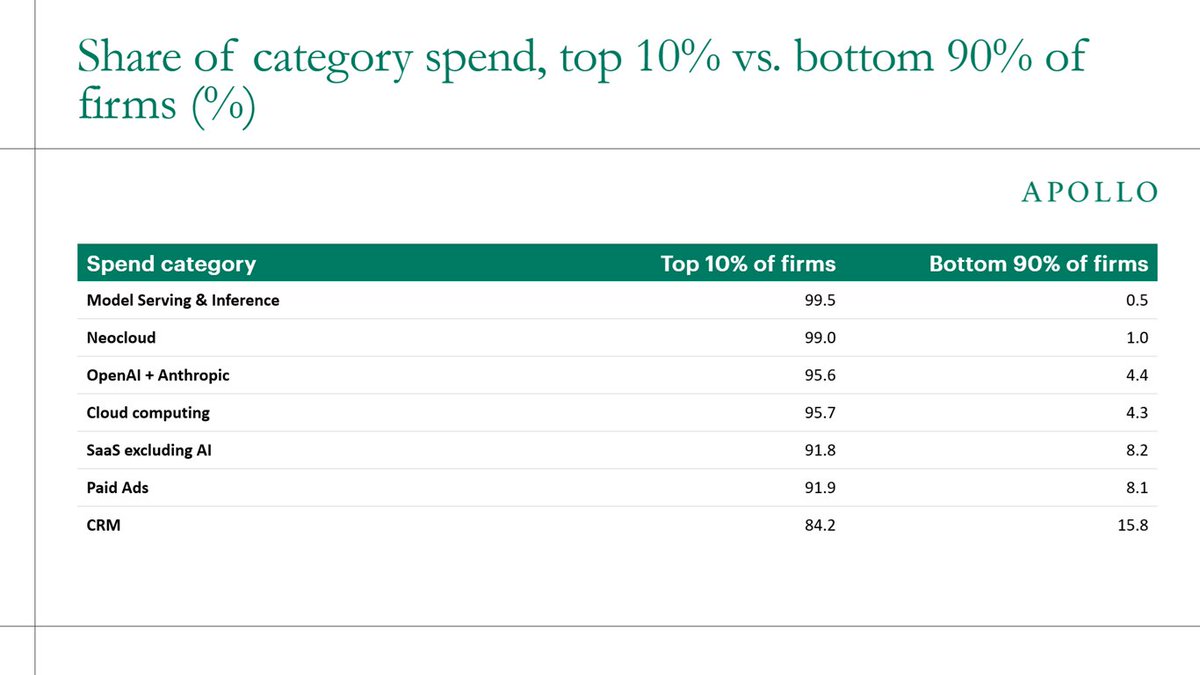
The top 10% of AI customers account for 99.5% of model-serving spend and 99% of neocloud spend, leaving the bottom 90% of firms with 0.5% and 1%: Apollo
Let me get this straight.
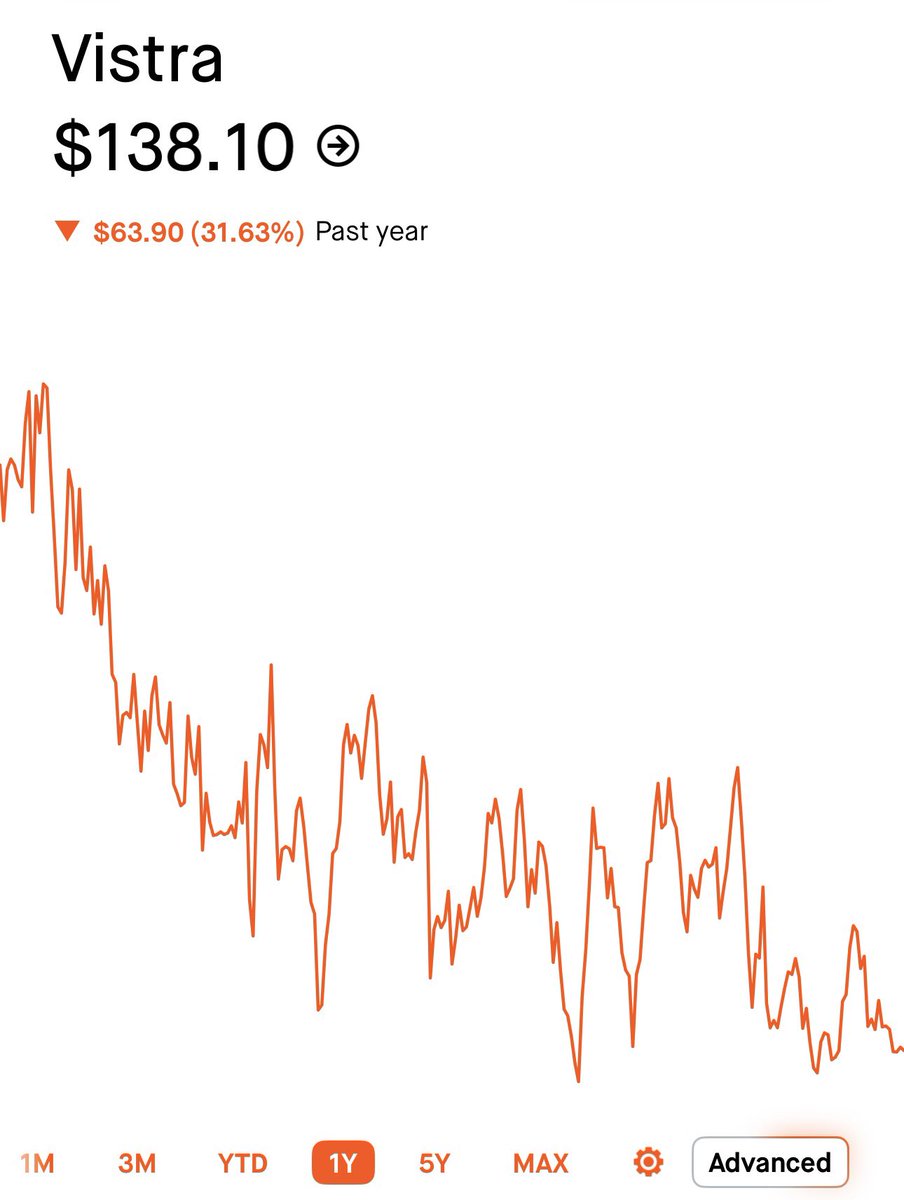
Nancy Pelosi bought $VST around ~$170.
Donald Trump bought $VST around ~$160.
Peter Thiel bought $VST around ~$158.
David Tepper bought $VST around ~$155.
CEO Jim Burke bought $VST at ~$135.
At the same time:
$VST trades at just ~13x forward earnings.
It’s down over 35% from ATH.
It’s secured 20-year nuclear PPAs with $META & $AMZN.
AI power demand is creating a structural bottleneck for reliable power.
FY26 EBITDA & FCF are expected to grow 20%+ YoY.
Today, you can buy $VST below almost ALL of them at ~$138.
Do with this information as you will.
@hkuppy Not sure what data this is but ARR will likely be over $100bn at end of year. Thats 10x growth for anyone keeping count YoY. Tbf you were also bearish ai capex trade etc back then too.
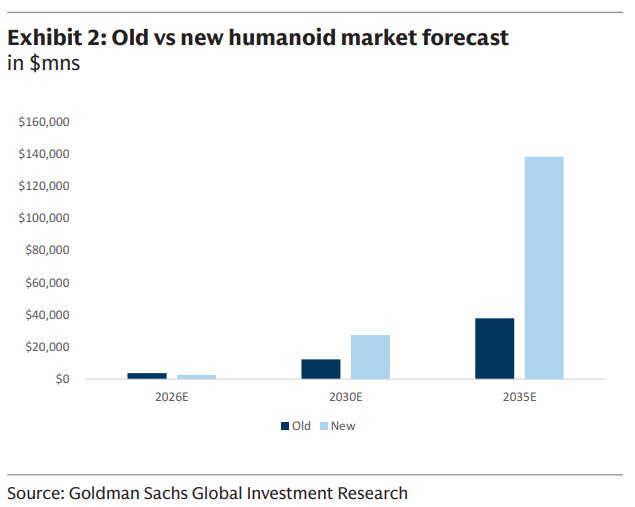
Goldman Sachs just more than tripled its 2035 humanoid TAM to $138B while raising its unit forecast to 6.5M with warehouses and logistics expected to lead adoption.
That growth should pull demand through entire robotics stack:
• Foundry: $TSM, $GFS
• Sensing: $VPG, $NOVT
• Vision: $OUST, $AEVA, $INVZ
• Memory: $MU, $SKHY, $SNDK
• Humanoids: $TSLA, $XPEV, $CCXI
• AI Compute: $NVDA, $AMD, $ARM, $QCOM, $INTC
• Simulation & Training: $NVDA, $ADSK, $CDNS, $SNPS
• Semi Equipment: $ASML, $AMAT, $LRCX, $KLAC, $TER
• Power & Control: $NXPI, $STM, $ADI, $TXN, $ON, $MCHP, $MPWR