BREAKING NEWS!
The FDA just updated its list of FDA-approved/cleared AI-based medical technologies. Now they list over 1614 devices!
As always, I analyzed them for you.
1) Medical specialty still has a clear winner.
Radiology 1230
Cardiovascular 154
Neurology 76
Anesthesiology 30
Gastroenterology-Urology 27
Hematology 22
2) Type of submission
510(k) 1553
Premarket approval 21
De novo pathway 40
Check it out: https://t.co/AYo6IrPWg1
An AI health assistant in China reportedly surpassed 100 million users, offering services including free medical-report interpretation. While not a replacement for doctors, it shows how quickly access to health information can scale. The opportunity is enormous.
If legislation allowed AI to practice medicine with exam + licensing, so much venture capital money will flow into this problem that within three years yeah AI will utterly dominate. Regulatory gray zone is the reason VCs are not piling in right now.
AI doctor companies seem intent on carving out a regulatory gray zone: avoiding the scrutiny applied to medical devices while sidestepping the licensing requirements and liability physicians face.
All the upside, none of the accountability. That’s BS.
@MichaelAlbertMD If legislation allowed AI to practice medicine with exam + licensing, so much venture capital money will flow into this problem that within three years yeah AI will utterly dominate. Regulatory gray zone is the only reason VCs are not piling in right now.
@thsottiaux@OpenAIDevs feature request:
DOT computer reset yesterday wiped out all my work. DOT has no way to backup files to my local drive.
Now DOT has created a convoluted workaround with zipped files and re-uploading them for permissions, but need a durable solution.
Important note regarding Grok @Bot:
Going forward, @SpaceX will use the best back end model for any given task, including Claude Opus 5.5, MidJourney, Suno and other leading APIs.
Whatever is most likely to give you the best outcome.
@TimSweeneyEpic@MacRumors Apple is doing a good thing here, Tim. Every update release of major AI desktop clients automatically enable full disk access. This is a massive security risk and productivity risk (in case the AI hallucinations overwrite or delete my hard work).
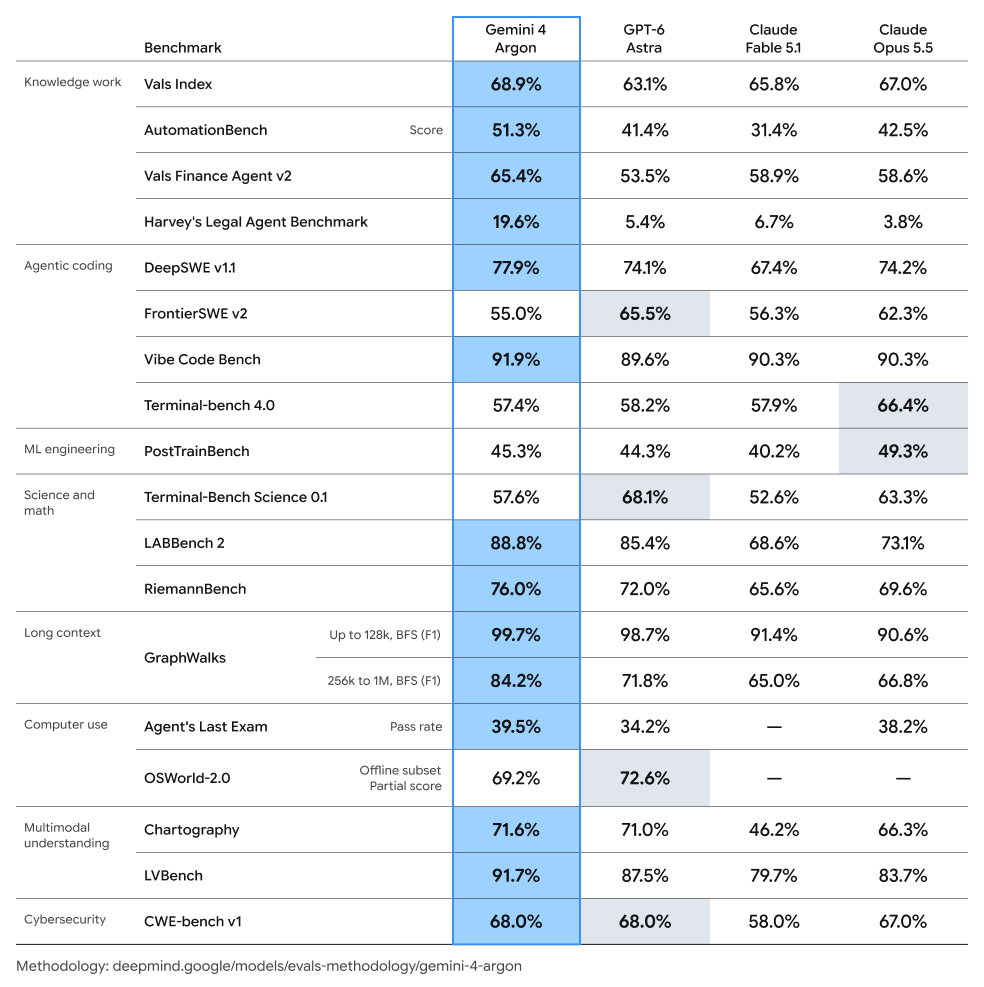
Introducing Gemini 4 Argon – our new frontier model.
It’s built for complex workflows across coding, enterprise knowledge work, and cybersecurity defense – rolling out today to a set of trusted testers through our Fairwind Program.
Introducing Synthetic Hospital: an open, fully synthetic longitudinal EHR benchmark with verifiable ground truth!
1,268 patients, 5,602 encounters, zero PHI. Physicians could not reliably distinguish its charts from real ones.
📄 https://t.co/kU6Rkqr2dA
💻 https://t.co/k3UH8vgQ6H
✍️ https://t.co/otOqD6LMee
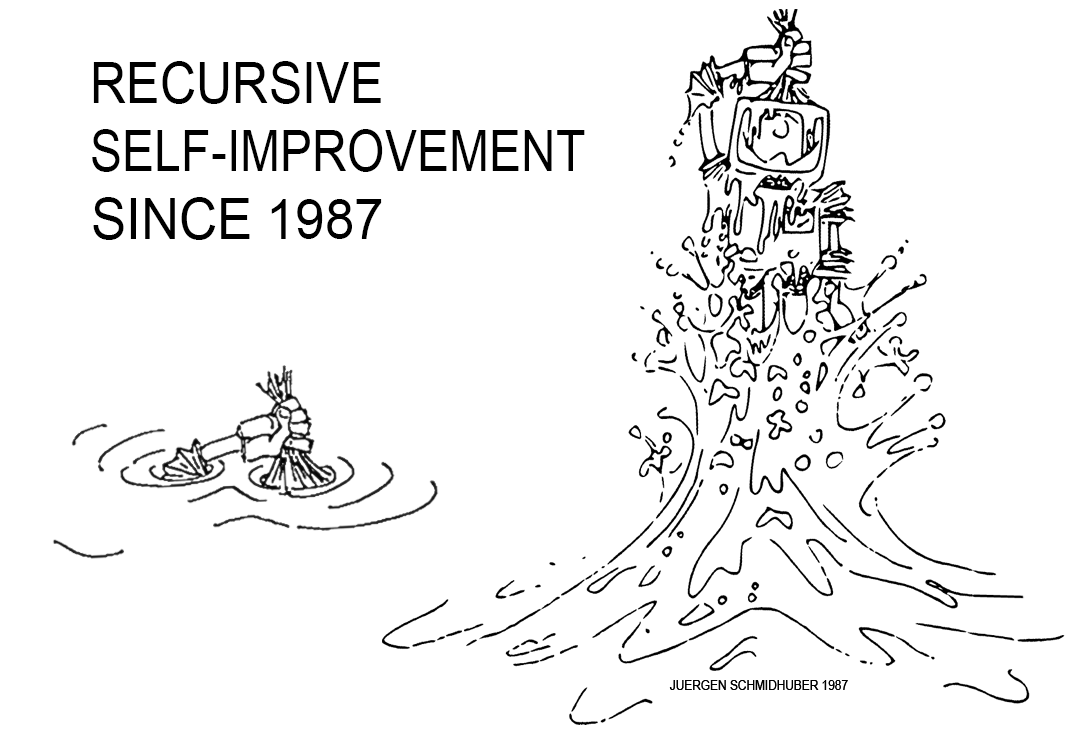
Today everyone is talking about Recursive Self-Improvement (RSI). In 1987, when compute was 100,000,000 x more expensive, I published the 1st concrete RSI algorithms. Now compute is cheap, and RSI is driving the future of both software and physical AI. See: RSI since 1987 https://t.co/yA3KUqpFtb (Technical Note IDSIA-9-26)
Also covered: RSI with self-modifying policies since 1994, gradient descent-based RSI in neural networks since 1992, asymptotically optimal RSI for curriculum learning since 2002, mathematically optimal RSI through the self-referential Gödel Machine since 2003, RSI combined with artificial curiosity and intrinsic motivation since 1990/1997, recent work on RSI since 2020.
Software-based RSI has become practical. Full RSI, however, will require not just self-improving software but self-improving hardware in the physical world.
As of 2026, companies talking about RSI include Anthropic, OpenAI, Sakana AI, SpaceX, Ricursive, Recursive Superintelligence, Inherent …