End of MaDeLaNe workshop 2026. See you next year, and keep recording those brain networks and neurons!! Thank you to all contributors, especially our special guest BCI pioneer @ScottImbrie for the inspiration to push the frontier of Science!
Getting a chance to meet Scott Imbrie, BCI pioneer, at MaDeLaNe together with colleagues. Amazing moment together exploring how neuroscience can help humanity
Day 1 of our MaDeLaNe workshop at Vanderbilt! We are learning about @KiaBanaie 's new spike sorting technique (KIAsort) and applying it to high density data (amongst other topics). More info here, https://t.co/tRTbXS6768
Introducing the International Brain Lab AI Agent: an experimental tool that helps researchers analyze neural activity across the mouse brain using AI coding agents.
Please try it — we would love your feedback!
https://t.co/uy0PRGmSuP
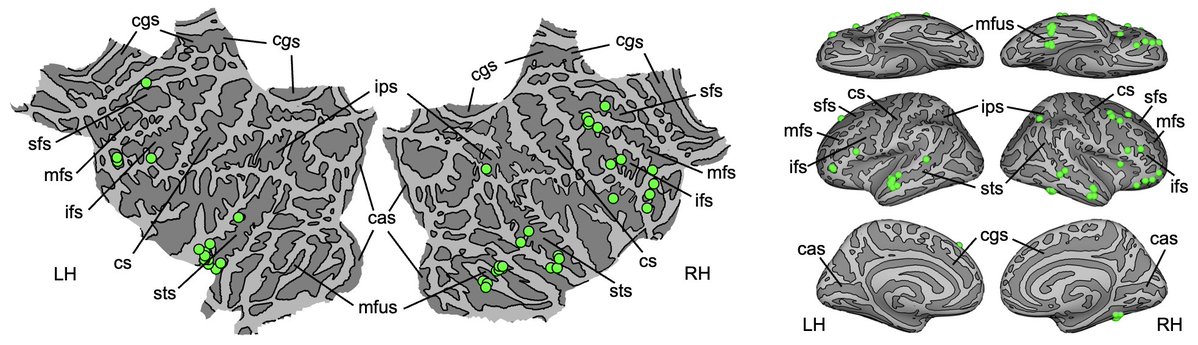
New preprint: "Monosynaptic connections link functionally similar regions in human cortex." We use electrical stimulation + fMRI in epilepsy patients to map whole-brain monosynaptic connectivity at 42 cortical sites. https://t.co/rSSSVsMWCQ 1/n
Jensen Huang just told Stanford to their face that their compute problem is their own fault.
And then he explained exactly how to fix it.
This was the complaint: independent researchers, startups, universities across America can't get enough compute. AI is transforming science but the people doing science can't access the tools they need.
Jensen pushed back hard on one part.
It's not that Nvidia isn't delivering. It's that nobody is placing the orders. You can't show up expecting a billion dollars of compute to be sitting on the shelf.
But the deeper problem is structural. Universities stopped building centralized compute decades ago. Every department raises its own grants, controls its own budget and nobody shares.
"Stanford's not alone. You don't have a budget for a billion-dollar compute. It doesn't exist."
His prescription: Stanford has a $40 billion endowment. Cut $1 billion, give it to a cloud provider and give every student and researcher on campus access to AI supercomputers.
The same logic applies everywhere. The institutions that figure out how to pool compute and make it available to their best researchers will produce the next generation of breakthroughs.
The ones that keep running on laptops and individual grants will fall behind.
The bitter lesson in 26 words:
Don’t be distracted by human knowledge, as AI has been historically.
Instead focus on methods for creating knowledge that scale with computation, like search and learning.
@LocasaleLab Hi @LocasaleLab , are you out of your mind? What's the data that backs up your assertion? In scientific output and discovery, they continue to lead... I get it that you are upset at some aspects of academia that merits critique. But don't throw out the baby with the bath water
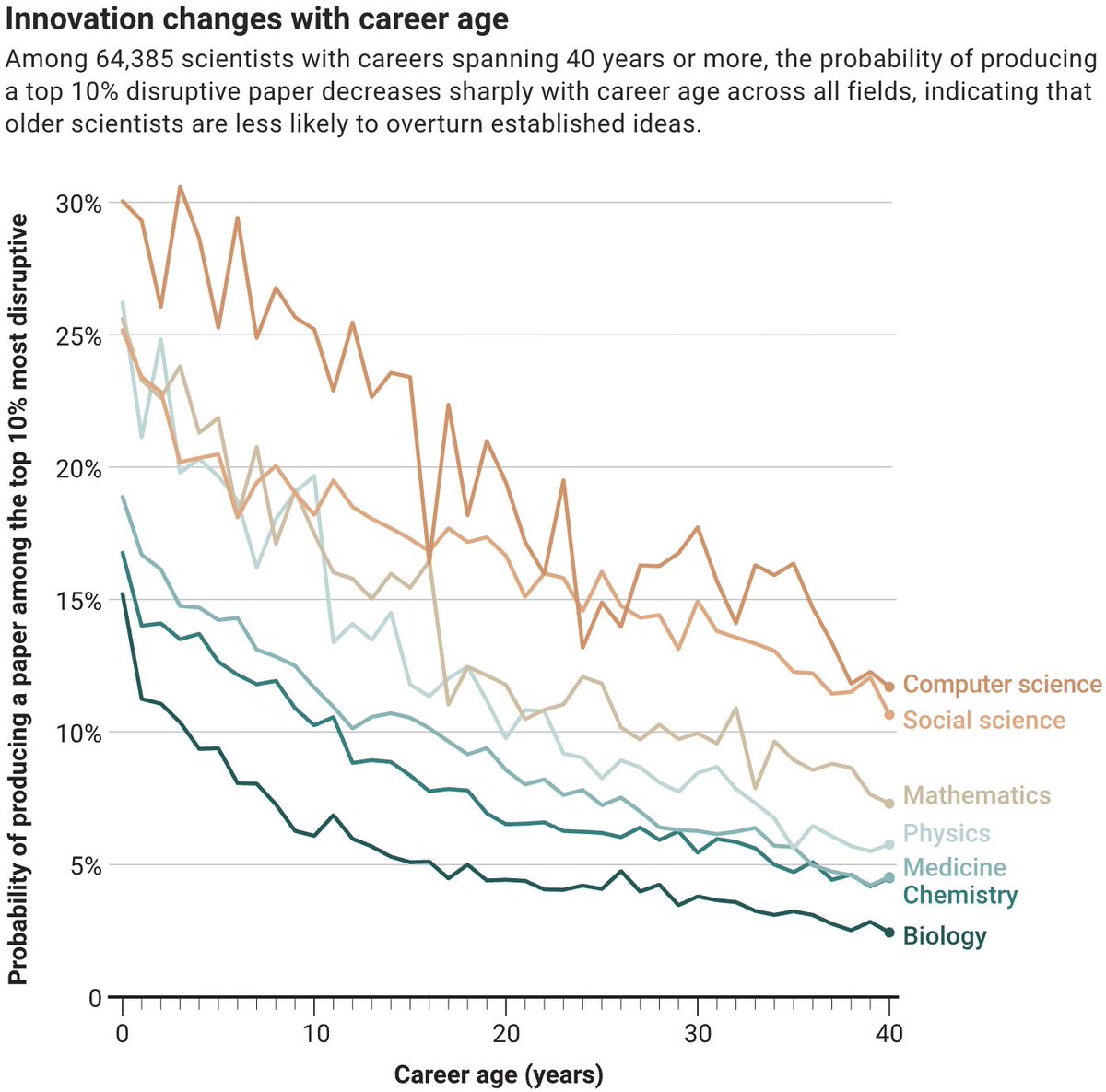
Drawing on a large-scale dataset of more than 12 million scientists, a new #SciencePolicyArticle reports that early-career scientists may be more inclined toward transformative breakthroughs, whereas seasoned researchers excel at synthesizing and extending existing knowledge. https://t.co/qQh8NTg1PZ
I’ve always believed the No.1 application of AI should be to improve human health.
That work started with AlphaFold, and now at @IsomorphicLabs with the mission to reimagine drug discovery and one day solve all disease!
We are turbocharging that goal with $2.1B in new funding.
How can you live a more meaningful life?
In his Graduates Day address to the Class of 2026, @arthurcbrooks challenged students to consider their quest for happiness. 💛🎓
@LocasaleLab You are doing a great disservice to the NSF, holders of the CAREER award, and the American taxpayer with your empty rhetoric here. There are incredible examples of these NSF awards leading to breakthrough science and discovery. Just open your eyes. Your words ring false.
The deadline for the Neurobiology of Cognition Gordon Conference is coming soon. We have an awesome lineup of speakers. We will begin assigning fellowships in mid May, so don't delay, apply now! Spread the word! 🧪 🧠 #neuroscience#cognition https://t.co/PDyRGKEIwa
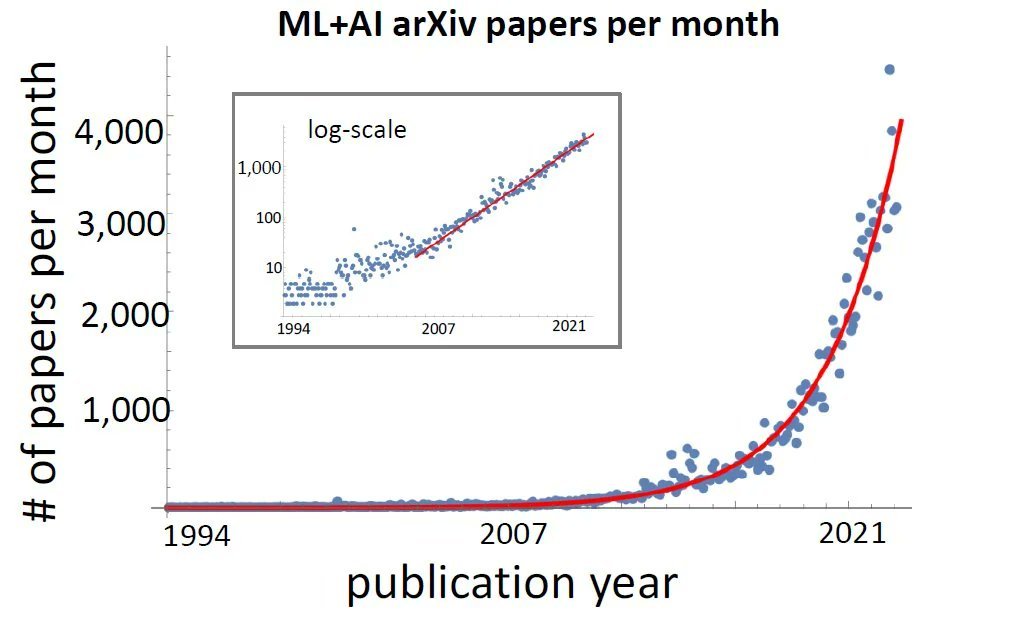
2/ Millions of papers a year, growing faster every year. Most aren't reproducible. Peer review is buckling. And every paper is a lossy compression of the work behind it — months of dead ends, judgment calls, and configuration tricks flattened into a clean story. The format was designed for a world where every reader was human. That world is ending.
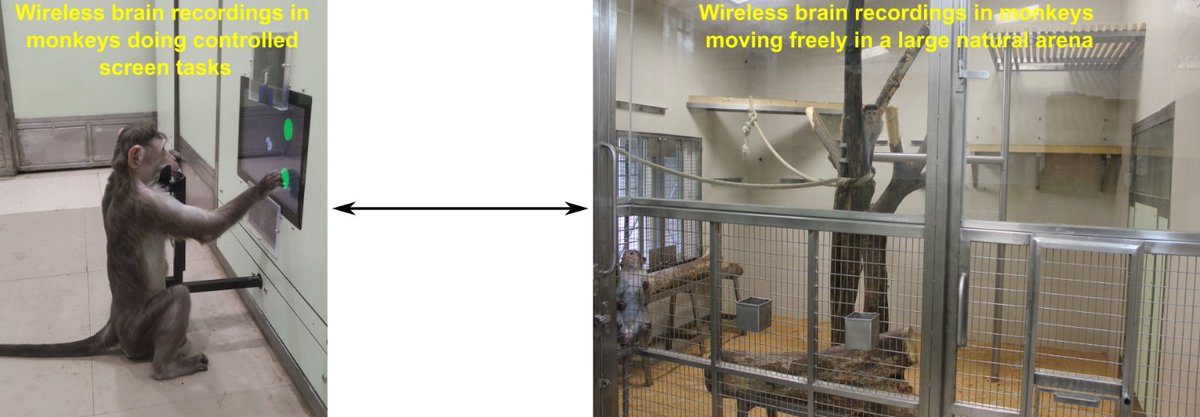
Preprint alert! We've done the first ever wireless brain recordings from the high-level visual & motor regions (IT/PMv/PFC) in monkeys engaged in natural behaviors as well as during controlled screen-based tasks. Read below for a lay summary and the link for details! 1/8