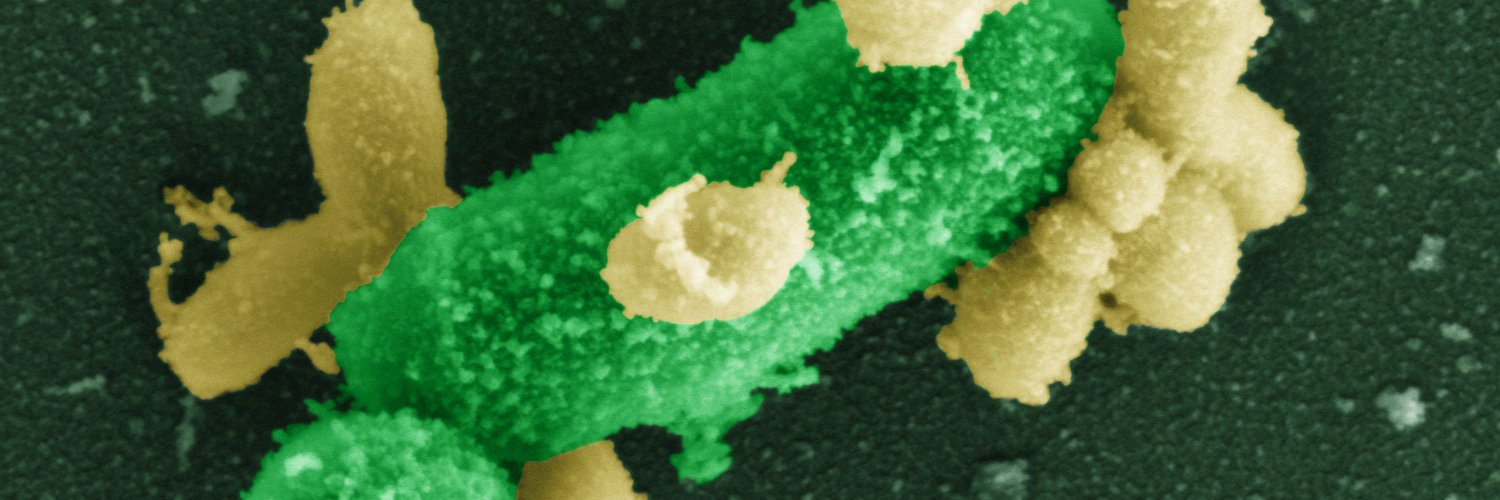
Excited to share our new preprint on the detailed investigation of Type 4 pili in epibiont oral Saccharibacteria! Led by @GrossmanMicrbio from our lab @ForsythResearch, and with @JunLiuLab (Yale), @JMcLean_UW (UW) and @he_xuesong . Check it out: https://t.co/IvgDbnG0jm
For the first time, scientists have performed targeted mutations on an episymbiosis-determining pathway. In a new study on Saccharibacteria, AFI researchers used advanced techniques to observe pili that drive motility and host attachment.
https://t.co/cVDIt31zWC
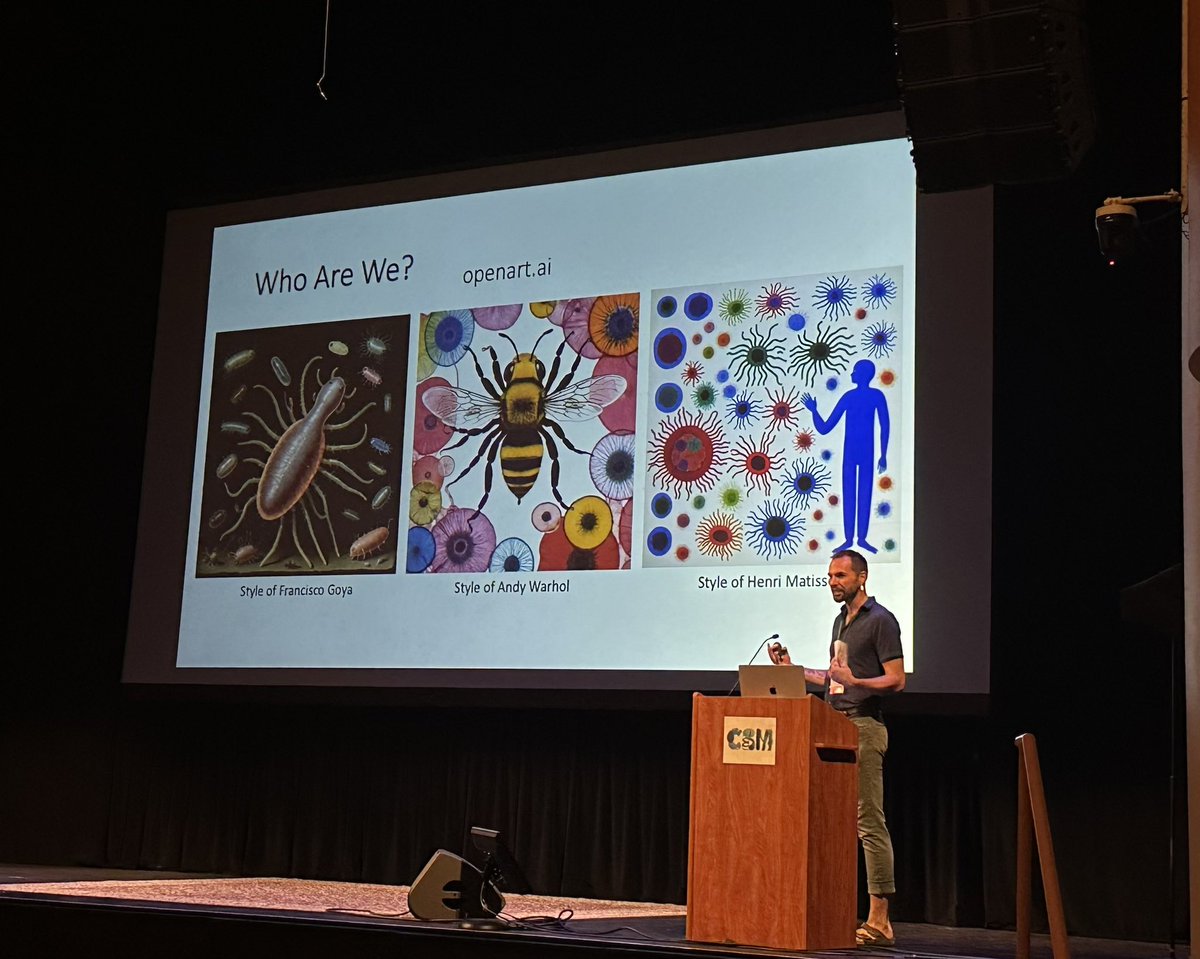
Excited to be presenting at the 3rd Annual Scientific Conference of the Society of Mongolian Researchers in the USA! 🇲🇳🧬 10/11-10/12 in DC. Open to all—please share or join if you're interested! #MongolianScience#ResearchCommunity#STEM https://t.co/GikPbGFYBn
We are thrilled to bring you Episode 1 of Ambush Science—an all-new AFI series where we conduct a “surprise" Q&A with our scientists so you can learn about their cutting edge research in oral health.
Today’s episode features @BatbilegBor !
Learn more: https://t.co/vtDOXAbukG
The enigmatic, ultrasmall and largely uncultivated Candidate Phyla Radiation bacteria represent a treasure trove of potential discoveries, argues this recent Perspective in PNAS🕵️👇 from the Mougous Lab @UW
https://t.co/7I69NhYeGj
Saccharibacteria deploy two distinct Type IV pili, driving episymbiosis, host competition, and twitching motility https://t.co/h9RTP50RJg #biorxiv_micrbio
#ADANow: New research from @ForsythResearch uncovers key insights into hospital-acquired infections. Discover the findings and their implications here: https://t.co/CeUP1PwJw1
Scientists at the ADA Forsyth Institute led by @BatbilegBor found that multidrug-resistant Klebsiella thrives in nutrient-deprived conditions often found in hospital environments. This could lead to better prevention and treatment strategies. Read more: https://t.co/hiEJRIa9Hn
Interested in studying microbial mixed-species biofilms utilizing super-resolution confocal microscopy?
Our group is looking for a research assistant to manage these experiments! Will also help manage day-to-day tasks in the lab as well.
Apply here - https://t.co/mdpb0mXQsg
We are excited to share our work on colonizing oral opportunistic pathogens. Here we looked at the impact of low prevalence, high impact oral pathogens like Klebsiella. Authors: @JettLiu_@bajenak@GrossmanMicrbio@jonbakerlab@he_xuesong. Full article: https://t.co/ZgfDsUIaRa
We love seeing AFI microbiologists @JMarkWelch, @he_xuesong, @BatbilegBor, and Gary Borisy featured in this fascinating NIDCR article about microbes in the oral cavity. Get the full article below. Featured image by @JMarkWelch.
Register now for dentech 2024, the premiere event in oral health innovation! dentech will be attended by a global audience of oral health innovators, the ADA, investors, leaders in academia, and more. Take advantage of early bird pricing and register here: https://t.co/DvONK7tMug
Three’s a crowd: Saccharibacteria episymbiosis modulates phage predation of host bacteria | PNAS https://t.co/Vls68TAbPH commentary by Richard Lamont on our recent collabarative work @BatbilegBor@JMcLean_UW@putingdong@LujiaC@ForsythResearch
Excited to share our work: Episymbiotic Saccharibacteria TM7x modulates the susceptibility of its host bacteria to phage infection and promotes their coexistence @JMcLean_UW@BatbilegBor@putingdong@ForsythResearch@JunLiuLab | PNAS https://t.co/5INzlRXugm
ADA Forsyth scientists, led by @he_xuesong , discover a third player in the phage-bacterial arms race, a nanosized epibiotic parasite, TM7x, which helps its host bacterium achieve resistance to lytic phages. Click here to learn more: https://t.co/yIyMWqbkDZ