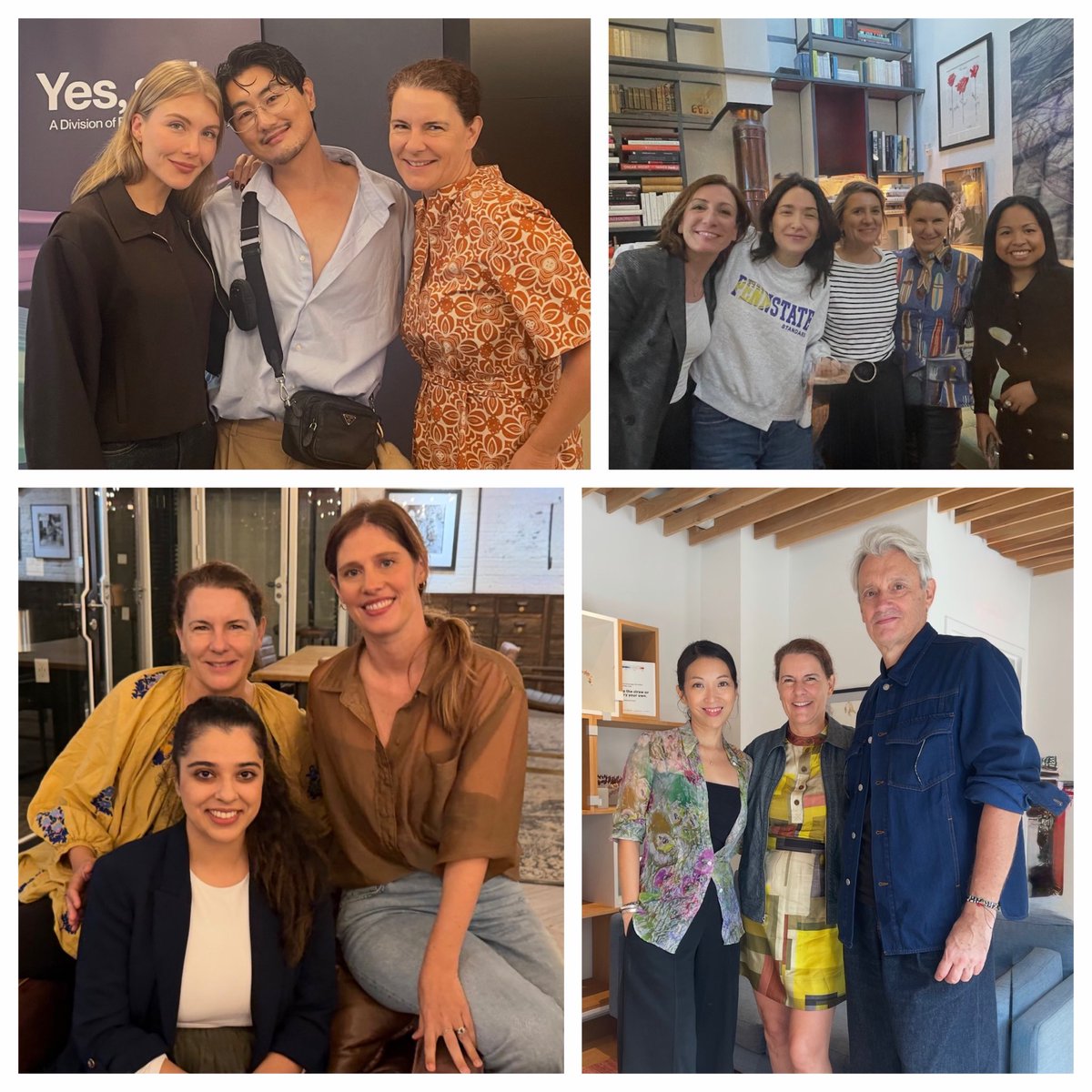
Last week, I got to spend time in São Paulo meeting amazing potential founders and AI companies.
I’m really excited about what’s brewing in Brazil and across Latin America in AI.
@TestoConsultant Say it louder.
Supplements and strategies work better when they’re built on real data. Function gives you access to 160+ lab tests across your body—so you can stop guessing and start acting on what’s actually true for you.
Learn more: https://t.co/OpaTJSOE9B
Beauty, Tech, and Longevity. San Jose Feb 18/20. LAST CALL FOR STARTUPS
Selected startups will pitch in front of a judging panel @Odile_Roujol@BeautyTechVent1 , Laura Beres, Adam R. Jones, ArnaudAuger @Cathayinnov Claire Chang
👉 https://t.co/TCnmWYjkHp
Most read story @beautyindie_ and @BeautyTechVent1 key messages:
1. Cautious optimism amid economic volatility
2. Continued focus on strategic acquisitions:
3. High-conviction acquisitions and disciplined growth https://t.co/cIvgXVCY83
Hi 👋 FaB friends, enjoy the takeaway! The Q3 newsletter with Olivia Boyd Smith founder of Par Olive, @seoulcialite founder of @goodlight_world ,
Thank you @CamilleCabale@Odile_Roujol for hosting meeting and publishing the 📩 https://t.co/JdA91Bm4Rf
as a founder, the hardest part isn’t the work.
it’s pretending you’re fine when everything feels like it’s breaking, and everyone’s looking at you for confidence.
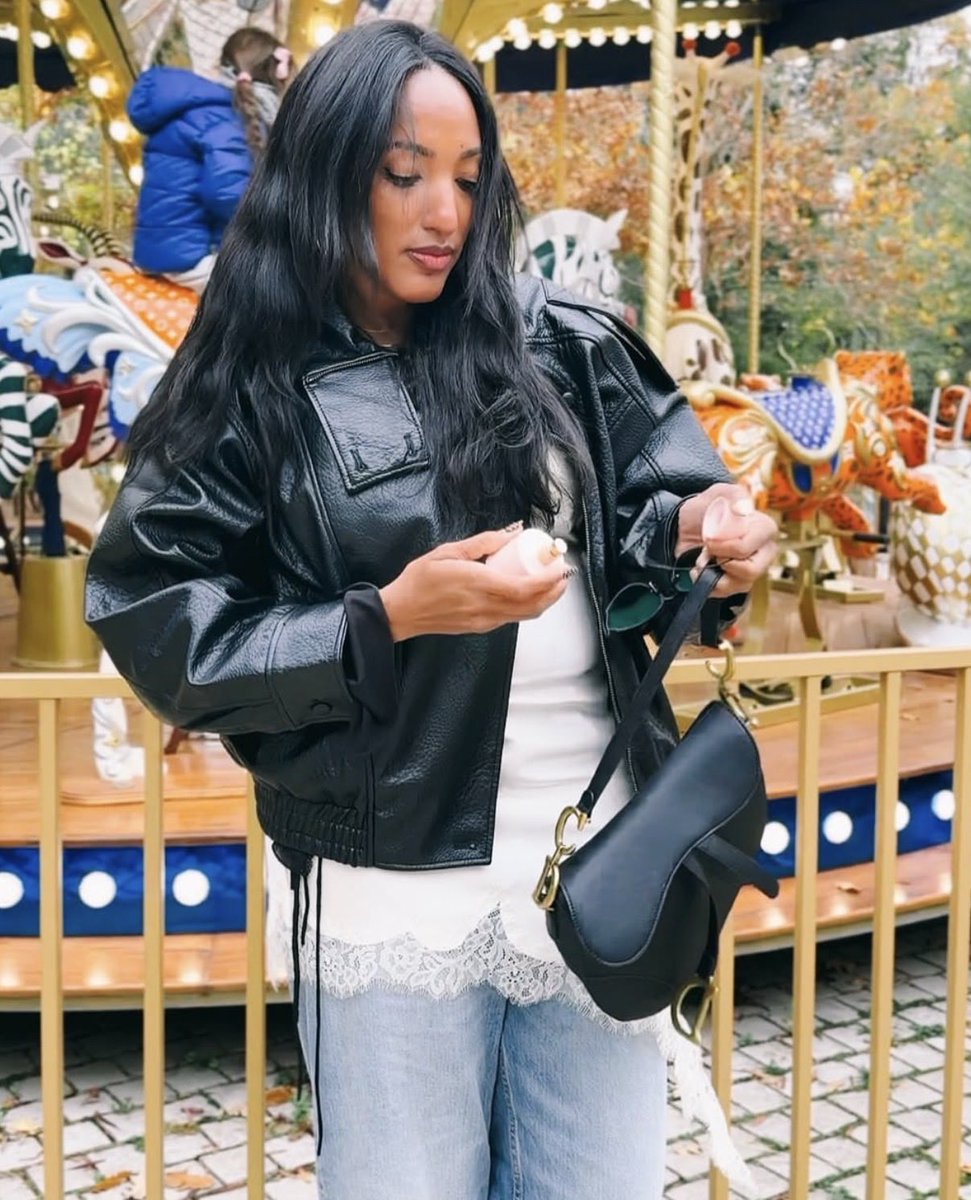
Fragrance, In the hot US brands, @BROWNGIRLJane here with Malaika Jones, the founder, in Paris, meeting with famous perfumers for developing her new scents! ✨
How are early stage startups valued by VCs?
They are almost entirely dictated by:
1) raise amounts
2) dilution levels
At the pre-seed and seed stages, there often isn’t enough revenue to run a traditional valuation multiple.
So investors and founders reverse-engineer valuation instead:
If a founder wants to raise $2M and is comfortable selling 20% of the company, the post-money valuation becomes $10M ($2M ÷ 20%).
That’s it.
Of course, there’s nuance - market comps, traction, team, and hype all influence whether an investor agrees to those terms.
But the math itself is usually that simple.
The goal for most founders?
Raise enough to hit the next milestone with as little dilution as possible.
At the earliest stages, it’s less about what your company is worth today and more about how much ownership you retain to get to the next round.
I wrote a longer guide on this with standard raise amounts and dilutions levels by stage here:
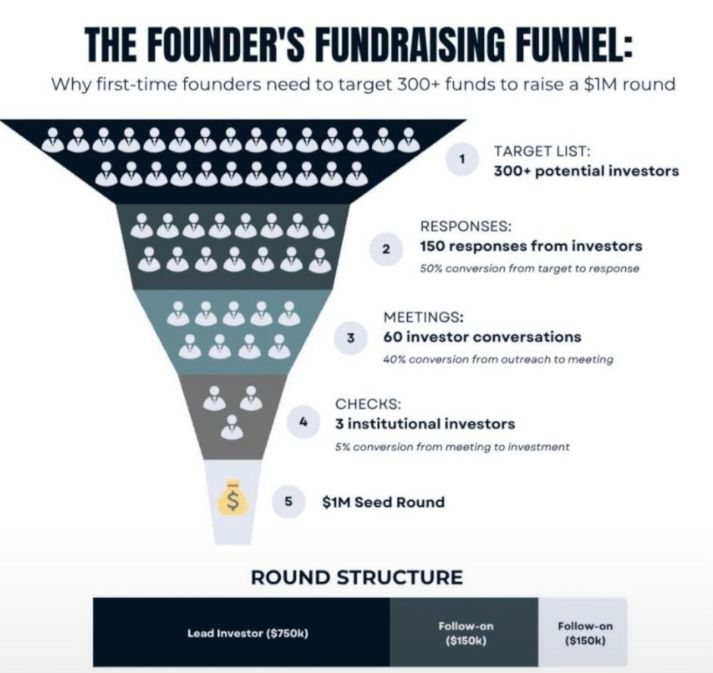
A founder who raised $20M+ from VCs told me he sees fundraising as a numbers game.
Every 'no' gets him closer to a yes.
No's are a natural part of the process. He saw every no as a blessing because it meant he was one step closer to closing his round.
This framework is fantastic.
It takes the emotion out the no's and instead flips them to be a positive thing.
Here's what a fundraising funnel looks like for founders:
300 VC target list
150 responses (50% response rate from outbound)
60 intro VC calls (40% conversion from responses)
15 dive into diligence (25% conversion from intro call)
3 VCs invests (20% conversion from diligence)
This obviously varies on many factors including on 1) round stage, 2) raise amount, 3) geography, 4) industry, 5) founder profiles + so much more.
Founders - Flip your mindset when fundraising! It will make the process slightly easier.
What other tips/tricks do founders use through VC fundraising? Tell me in the comments👇
♻️ Help a founder by reposting.
Image and original post credit to Dylan Kaplan, MBA. Thanks for this data!