It's been great working with the team at @JoinVantage to make it easier for Vantage users to now see all their AI spend through OpenRouter right next to the rest of their infrastructure spend.
Try out Tokenomics in private preview by requesting access below.
5 minutes after checking into my hotel, hear a weird beeping noise, tell the front desk and the front desk lady and I go investigate.
Go up one flight of stairs, alarm is going off. She opens the door. The hotel is on fire.
Okay then.
All clear given - somehow I was the person who caught this before it set off the full hotel alarm as no one was in the room above mine where this all went down.
The hotel workers and I are now pals.
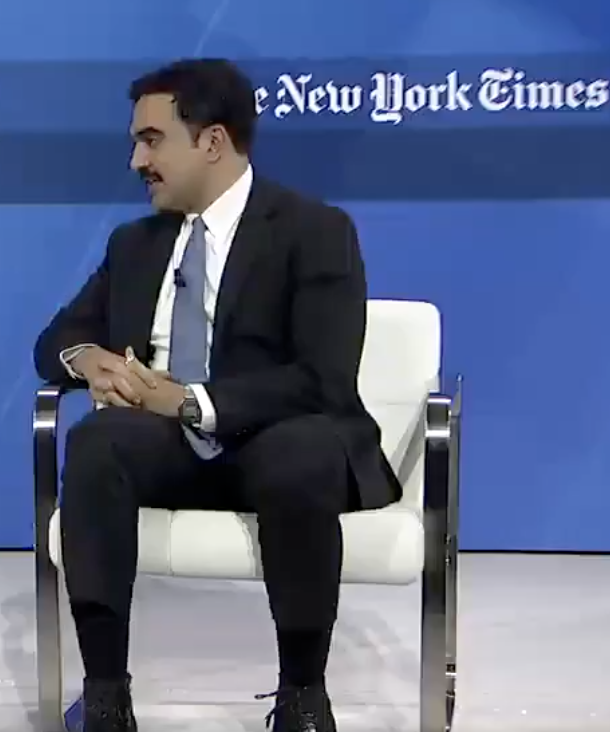
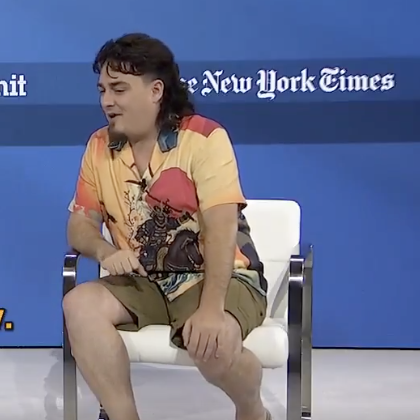
Listened to @PalmerLuckey’s DealBook Summit interview over dinner tonight - honestly respect the heck out of that guy.
Zero BS, highly authentic communication.
We expose a classifier for exactly this kind of analysis. Basically plug in the Github MCP and classify prompts as being tied to a merged or unmerged PR or....whatever your heart desires really.
The PR metric is just illustrative - but you can change it to whatever metric you'd like to see the "cost per task" that you decide on for your organization....and there can multiple tasks tracked vs any single one.
Exciting launch: Today, we're introducing Vantage Tokenomics.
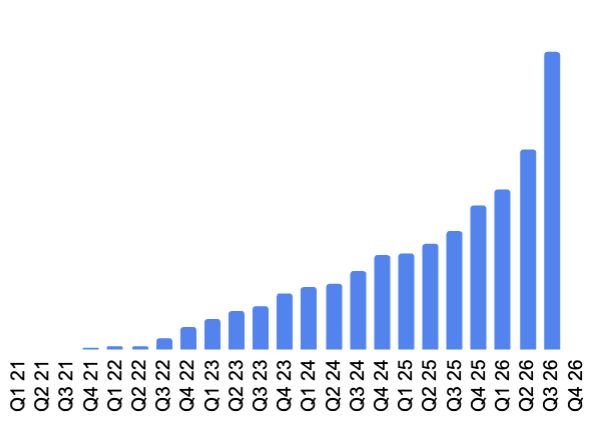
Every company I talk to right now has the same problem. AI coding spend is climbing fast, and they can see the bill, but not what it bought. One engineer might be spending 10x the rest of the team. Are they shipping 10x as much, or using tokens 10x less efficiently? Until now there wasn't a good way to answer that.
Vantage Tokenomics attributes token spend to three things: identity, purpose, and outcome. You're given a full company roster showing everyone generating token spend, ranked by estimated spend alongside key metrics like @GitHub pull requests or @Linear issues they've completed. Click someone's name and you see every task they've finished and what each one cost.
Vantage Tokenomics will also automatically classify each request with tags as it happens with who made it, what it was for, and the PR, branch, repo, or ticket it maps to. You can also customize this based on your organization's own tagging strategy. Nobody has to tag by hand.
As part of this suite, we're also offering Tokenomics reports which brings in efficiency metrics like cost per million tokens, cache hit rate, and input/output ratio, so teams can find spikes and coach better usage within minutes instead of at month end.
It's built on OpenTelemetry, so you can track requests across *all* IDEs and major Gateways out of the box. Cursor, Claude Code, Codex, and the major AI gateways have day 1 support. No applications are required to install on developer laptops, and prompts and completions are never stored - we've taken a thoughtful approach for security considerations as part of this.
This is among the biggest launches we've done and I'm really excited about it. If you're interested in getting access, sign up here: https://t.co/kt9W2zqYJm
Selling Oculus to Facebook in 2014 gave me money for helicopter flight lessons and developing a seastead called SLAB with a 1,000 year design life.
The goal was to be cheaper than land and absent state/local laws that cripple critical American industries like metal processing, medical research/treatment, desalination, oil refining, chemical engineering, and more. Me and a few close friends cashed it up at a $1B valuation back in 2017, and while it still has a long way to go, there has been significant progress towards my goal of reviving manifest destiny and westward expansion. At a time when most of the seasteading community wanted to escape the US and smoke pot, this was the one project explicitly designed to make America stronger, a relief valve for ill considered or outdated rules and regulations.
I am only talking about it now because a few media outlets got wind of me and some friends topping up the coffers and plan on calling SLAB my new floating AI datacenter project. It is way cooler than that, way older than that, and I hate looking like a hype-chasing consensus loser, so now you have to read this tweet.
Launch day: @JoinVantage is launching Inference Allocation!
More teams are running open-weight and fine-tuned models on @baseten, @togethercompute, @modal and Bedrock. Those are billed by the hour, not the token. Your provider bills you for the GPU hours whether the model served ten requests or ten million, so the cost of running these models showed up as one shared line item.
Now Vantage takes the request logs you already send us (via OpenRouter, LiteLLM, Cloudflare AI Gateway, Bifrost, Bedrock invocation logs, etc) and splits each model's full daily cost, idle time included, across the requests it served. You set weights for input, output, cache read and cache write tokens based on the compute they take, and allocations always sum back to what the provider billed.
We put together a quick video on how this works below.
https://t.co/aJovRrUR7B
Vantage is now an observability provider directly available in the @openrouter console!
Very excited by this and have some interesting things coming around it soon.