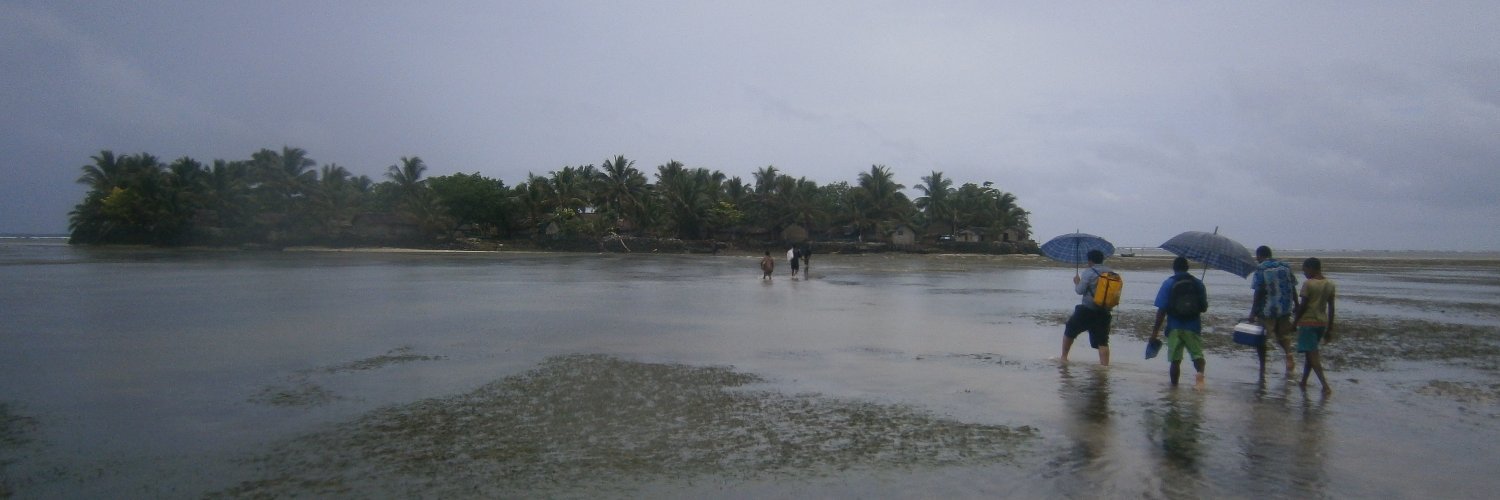
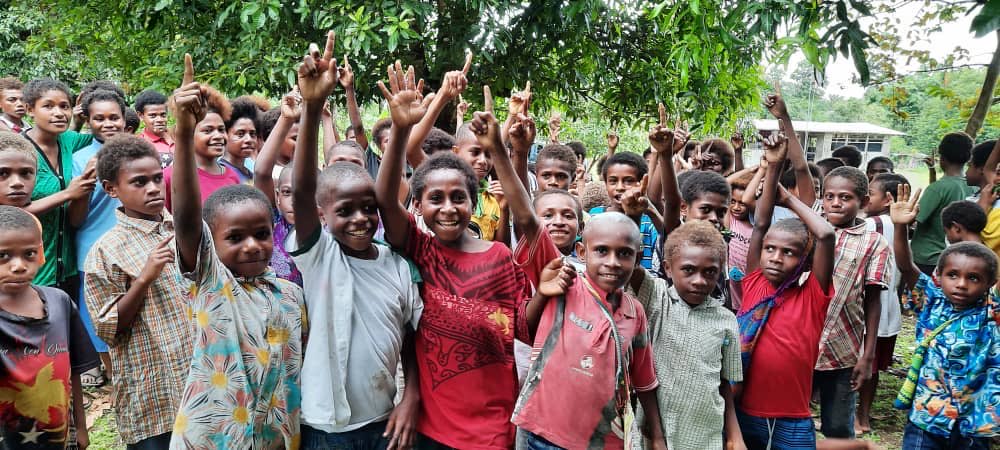
On #WorldNTDDay we're celebrating the @TakedaPharma funded Pacific Integrated NTD Elimination (PINE) Project. Thanks to our partners and the health workers who helped us reach communities in Papua New Guinea & Vanuatu w/ integrated NTD programs. #beatNTDs#UniteActEliminate
Female genital schistosomiasis #FGS getting attention globally! 🌍Fantastic piece in the guardian on the neglect of #FGS in sub-Saharan Africa 🐌
https://t.co/Ymf6SaSoim
@guardian@elimin8schisto
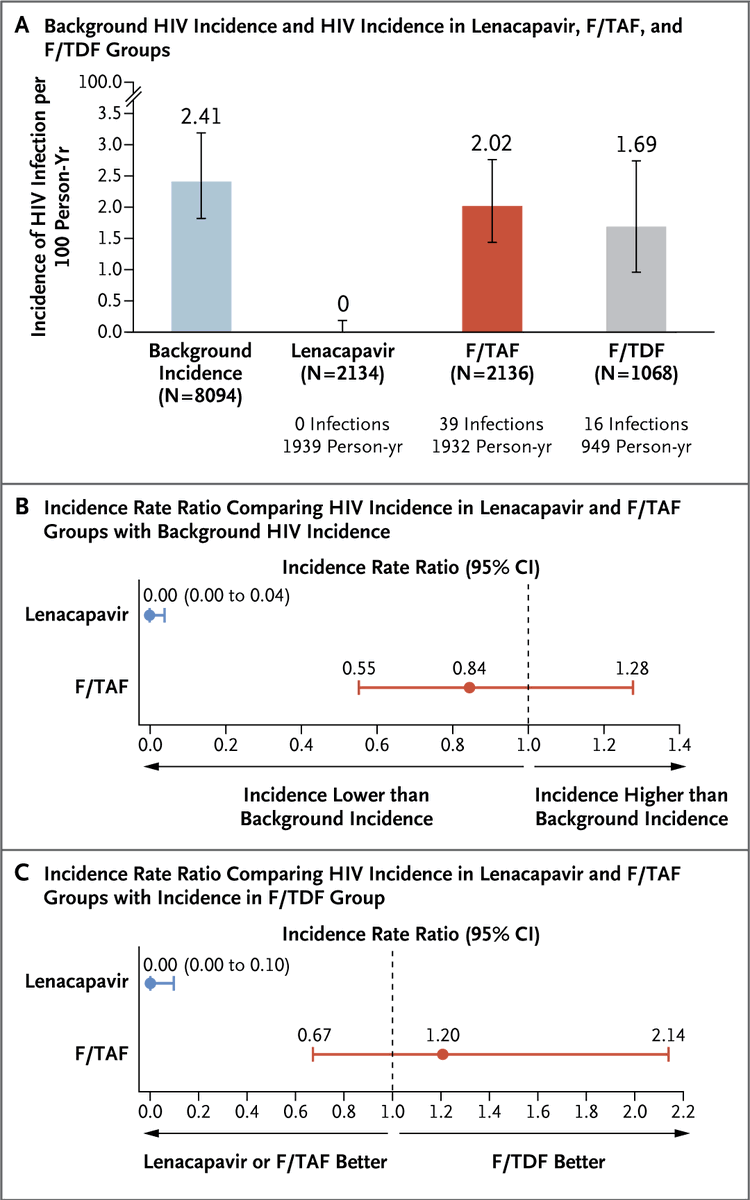
Original Article: Twice-Yearly Lenacapavir or Daily F/TAF for HIV Prevention in Cisgender Women (PURPOSE 1) https://t.co/MMqEYZpszL
Editorial: The Real PURPOSE of PrEP — Effectiveness, Not Efficacy https://t.co/8pbyZQ7uB3
#AIDS2024 | @iasociety
New research in @PLOSNTDs highlights the role of M. sorbens as vectors of trachoma and emphasizes the need for improved understanding of fly-borne trachoma transmission dynamics and vector competence. Learn more: https://t.co/uNEplTSfrH
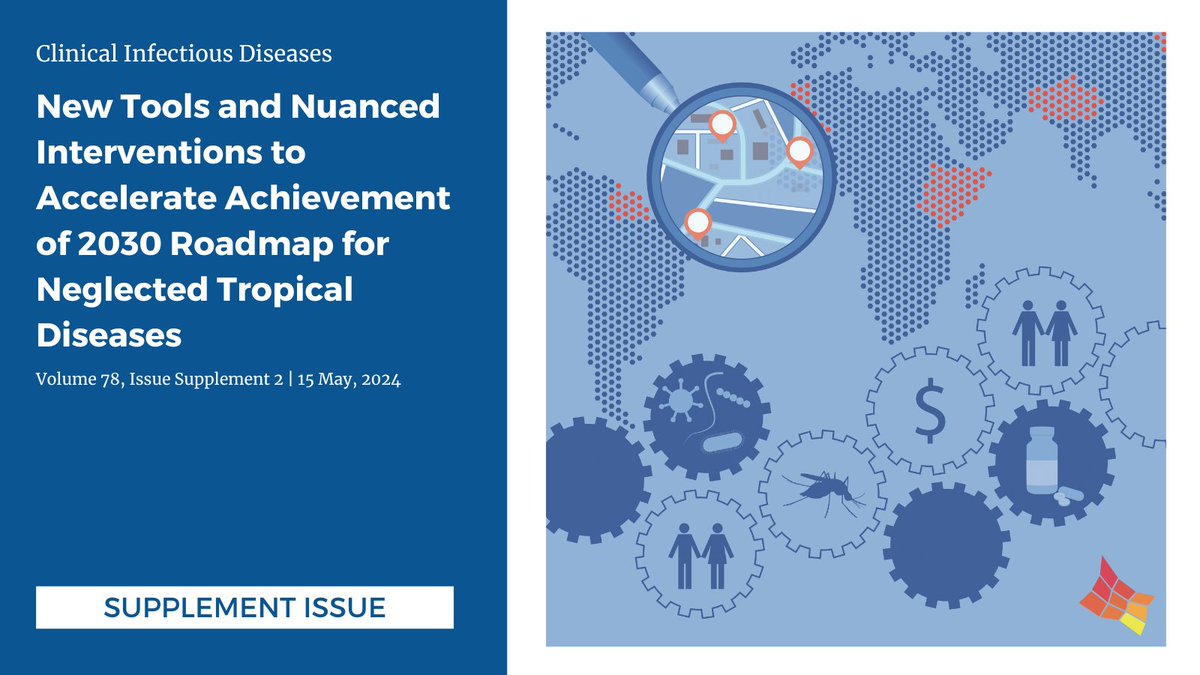
The WHO roadmap for NTDs sets out ambitious targets for disease control and elimination by 2030.
Articles in this supplement present novel ways in which NTD modeling can help accelerate the achievement and sustainability of these targets.
Learn more ⬇️
https://t.co/iSPPwraUPJ
What an incredible image from this recent @ActNTDsWest technical note - trachoma eliminated from vast majority of districts in the region https://t.co/V1JHb3SJ2C
Microbial keratitis (corneal infection) is an ocular emergency and a leading cause of vision and eye loss world wide. Our collaborators @aravind_eyecare have made a brilliant video explaining what MK is and how it is diagnosed and treated: https://t.co/c0pzz1uDKo
The impact of climate change on #NTDs including river blindness & lymphatic filariasis will be profound. Yet a new review from @WHO @RLMGlobalhealth warns these diseases are overlooked in existing research. #StampOutOncho#EliminateLF#beatNTDs Read more: https://t.co/2DwMteXl8u
In case you missed it, @WHO Global Report on Neglected Tropical Diseases (NTDs) 2024 is out describing progress towards the 2030 targets & the battle against #NTDs
More here: https://t.co/L3VSSwSuBw
In Brazil, the Ministry of Health has conducted trachoma surveys reaching more than 3,000 people as part of a new project to advance trachoma elimination with a focus on indigenous populations. Learn more at @pahowho👇.
https://t.co/AEbfxjysRG
In the quest for faster and more portable diagnostic PCRs, here is a new qPCR method called “FlashPCR” by Bustin et al. (2024) that allows a 10-15 min PCR on standard qPCR cyclers.
It could save valuable time in point-of-care medical testing, and importantly could help make future diagnostic PCR devices become simpler and less power-hungry, thereby making qPCR diagnostics more accessible and portable.
And, while it was designed for medical qPCR testing, it’s possible that some of the principles could be applied to other qPCR or standard PCR applications where faster PCR is extremely valuable.
Very exciting! So how does it work?
FlashPCR uses a 15 s denaturing followed by 1 s cycling between 79 °C and 71 °C, and uses high melting point primers and a simple buffer containing PCR enhancers.
The lower-than-usual denaturing temperature and high-melting-point primers allow much faster cycling between steps, reducing the temperature difference between denaturing and annealing/extension (which occur simultaneously).
The qPCR mix contains a very fast DNA polymerase (MyTaq) and optimised buffers containing KCl, MgCl2, 1,2 propanediol (propylene glycol), 1,3 propanediol, ethylene glycol, trehalose, bovine serum albumin, and dNTPs.
Of these components, propylene glycol, ethylene glycol, trehalose, and bovine serum albumin are all PCR enhancers or additives that variously assist with amplification of GC-rich DNA, lower DNA melting temperature, stabilise polymerases, and counteract PCR inhibition. I'm not aware of any published literature on 1,3 propanediol for PCR but presumably it acts in a similar way. So all of these components help allow the PCR to amplify efficiently even with very short step durations.
Together, this combination of parameters allows very rapid ramping and cooling, as well as very short efficient PCR steps.
The authors demonstrated the method works with qPCR, reverse transcriptase qPCR, and digital droplet PCR; and with SARS-CoV-2 gRNA, human breast cancer mRNA, and human fibroblast mRNA.
They also experimented with shorter Pentabase primers that have a higher specificity to their DNA templates, increasing melting points and allowing shorter amplicons to be produced. The authors found that these could provide a marginal improvement to the qPCR.
There's lots more in the article, and an enormous amount of experimental work. You can read all about it here:
Bustin et al. (2024). FlashPCR: Revolutionising qPCR by Accelerating Amplification through Low∆ T Protocols. International Journal of Molecular Sciences, 25(5), 2773.
https://t.co/WUalmS7Bt6
And could FlashPCR be used for amplifying longer amplicons in conventional PCR? It would be really interesting to test some of these buffers and high melting point primers using an approach following Pedlar et al. (2024) (below), to see if even more time could be shaved off conventional PCRs!
Pedlar et al. (2024). Amplifying PCR productivity and environmental sustainability through shortened cycling protocols. Biochimie, 221, 60-64.
https://t.co/IfFMcHLOiC
***
https://t.co/WUalmS7Bt6
The elimination of trachoma in Viet Nam is near.
Going door-to-door in 4 provinces, a recent group of health workers collected data and confirmed the country’s eligibility for trachoma elimination validation. Learn more for #WorldNTDDay https://t.co/xfc8N3RnCE
Neglected tropical diseases, or NTDs, affect more than 1 billion people around the world, especially in poor and marginalized communities.
But NTDs are preventable, and in many cases, can be eliminated completely from countries.
This #WorldNTDDay, @WHO calls on countries to unite and act to eliminate NTDs. #HealthForAll
Yaws could soon be eradicated — 70 years behind schedule
In @Nature@dr_michaelmarks on the potential eradication of neglected tropical disease Yaws by 2030 despite barriers including antibiotic resistance & primate reservoirs 🔬💊
👇https://t.co/uKBhxVe8Tm
Check out our new paper on bringing #FGS out of neglect! 🐌 This review draws together the recent literature on FGS, highlighting the need for economic evaluation of FGS screening strategies
@elimin8schisto
https://t.co/x2ME745hJ5
Congratulations to our Senior Trachoma Advisor Gilbert Baayenda on joining @NTD_NGOs as Vice-Chair!
Through the year, he'll bring his dedication to public health and commitment to #BeatNTDs. All the best, Gilbert!
READ more at https://t.co/guCSSbuCtE
#NNN2024
Important debate in @UKHouseofLords today on the UK's contribution to international development, particularly in relation to the impact of climate change on developing nations, with a number of powerful contributions on climate sensitive diseases such as #malaria and #NTDs 🧵👇
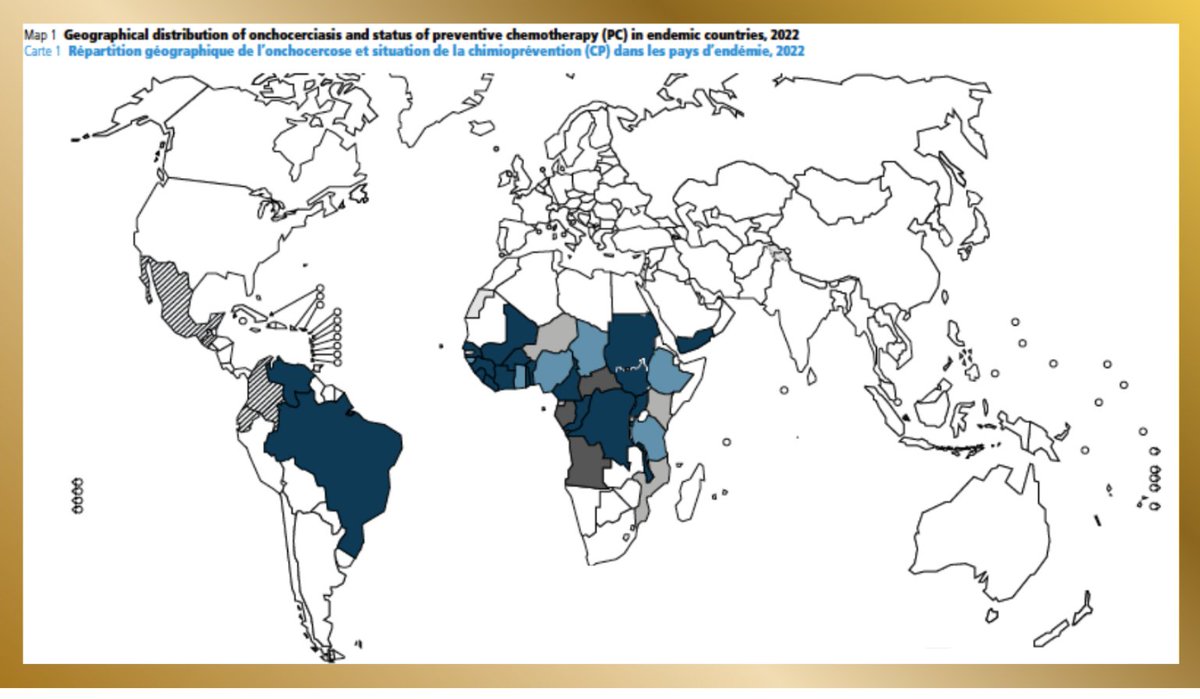
Now available📔Elimination of human onchocerciasis: progress report, 2022–2023. "In 2022, 26 countries reported having treated a total of 160.6 million people for onchocerciasis, representing...an increase of 18.3 million since 2021." Click to view report:
https://t.co/h3Uu8E71MK