I am all in favor of helping kids knowing their math facts.
I also know that math facts doesn't make someone a mathematician.
Teaching phonics/PA is important.
Being a reader is so much more than foundational reading skills.
Thomas, P.L. (2024, May). Teaching English in the “science of reading” era: We teach English in times of perpetual crisis: Selling a story of reading. English Journal, 113(5), 16-22. https://t.co/GDFLFVMERK
Access HERE until open access at EJ: https://t.co/AWT57Hjpcl
ILEC addresses "valid concerns about SOR messaging and the growing reality of negative consequences for SOR-based legislation and mandates" in its response to Reading Science: Staying the Course Amidst the Noise (Albert Shanker Institute) https://t.co/IrxQXm9Sjl
MISSING, PLEASE #SHARE 🚨 Riley Strain's friends told police they lost sight of him after he was told to leave Luke Bryan's bar Friday night. https://t.co/U8AhWFsUpQ
@MissJenMcIntyre I was just talking to parents of a student in your room last night. They were telling me about this. They love it! What a cool experience for your students.
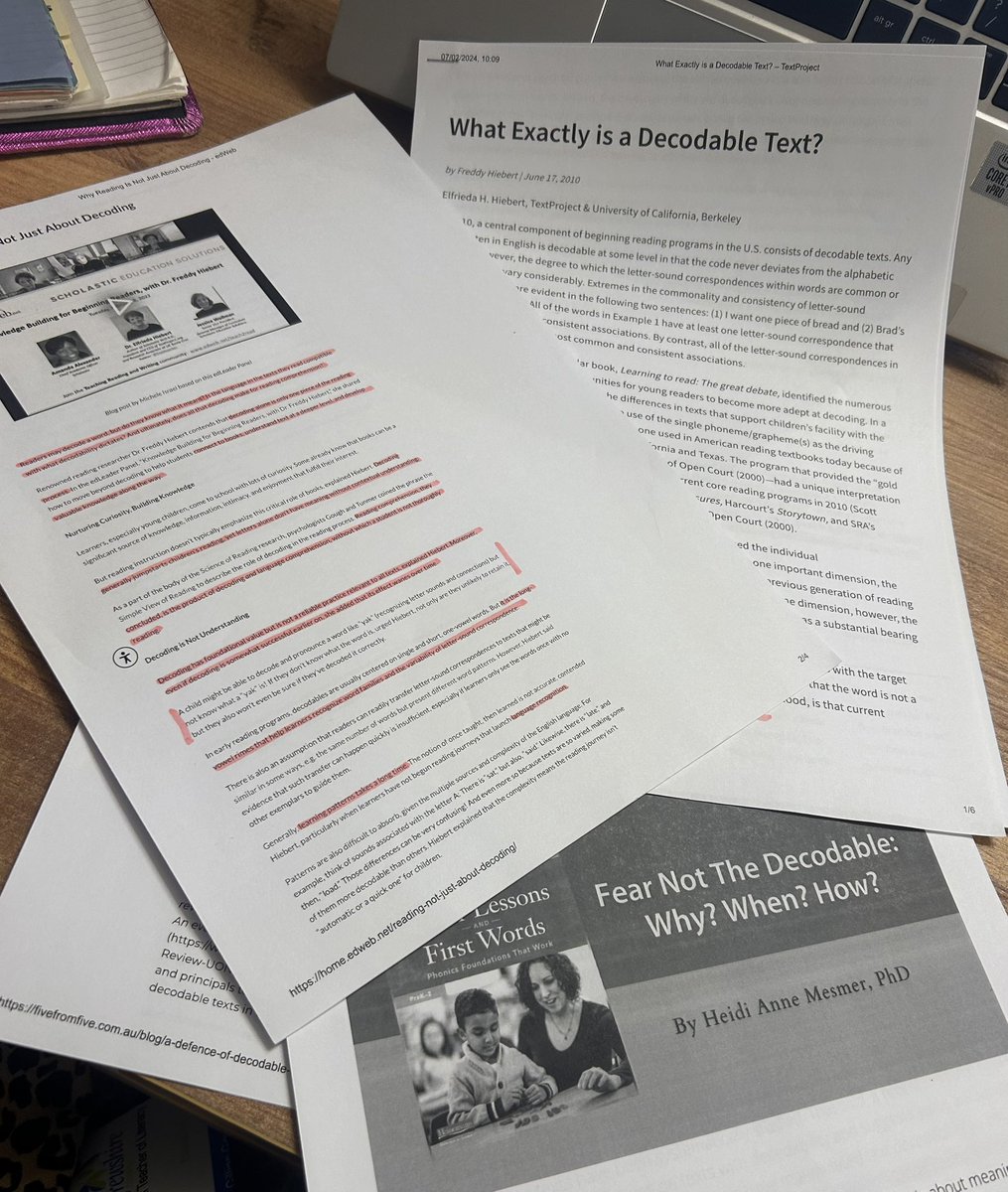
A really interesting coffee and research session with @ILC_RREurope looking at decodable texts. The research tells us that there is a very specific development window when decodables can be useful but if used solely, they can have a negative impact on fluency and comprehension
Starting tomorrow (Wed) every Missouri kid ages 0 to 5 can receive a free book every month from Dolly Parton's Imagination Library @dollyslibrary! How Missouri kids can register for Dolly's free book program. @MOEducation@MoAESP https://t.co/DLZabPaGA2
Thinking about Dr. Marie Clay who also recognized the importance of intentional consistent &
authentic practice for emergent readers & built it into Reading Recovery Lessons &RR ‘homework’. The more I learn abt the research, the more I realize Clay’s work is brilliant & spot on.
As someone who taught reading intervention at middle school in a school that focused on a phonics-centric Science of Reading approach, here are a few concerns I see with this new trend and how it might be applied to older students:
1. I worry that we will focus so much on skill development that we fail to see the need for reading for pleasure in order to develop reading endurance. At the middle school level, one of the key elements in helping students increase their reading scores was the role of endurance.
2. An emphasis on phonics, blending, and phonemic awareness at the middle school level sometimes fails to recognize the role of critical thinking, vocabulary, and prior knowledge in reading comprehension. I’ve seen highly fluent readers fail reading tests for these reasons.
3. The one-size-fits-all systematic approach that rejects balance might work at younger levels but the reasons a 13 year old is behind will often be far more varied.
4. I’m really worried that some of the people screaming the loudest about research haven’t read the research in-depth and seen the limitations in actual studies, the nuances in the finding, and the context of the studies (rarely about middle school)
5. I want to make sure we are paying attention to accessibility. I know many people who are dyslexic and became avid readers once they could use voice-to-text and audio readers. My fear is that readying will be defined solely as decoding written text and certain people who might thrive as readers will be forced to do drills where they lean into their weakness without learning about assistive technology.
I’m no expert in early literacy but I am concerned with prescriptive approaches that treat middle school students in the same way as a second graders. I’m worried about prescriptive, singular solutions.
The What Works Clearinghouse, an investment of the Institute of Education Sciences within the U.S. Department of Education, again confirmed the effectiveness of Reading Recovery during a 10-year review of research studies.
https://t.co/hZC2wbaAts
How to become a better reader, according to students:
- More time to read
- More spaces to read
- A quiet place to read
- Support in finding a book to read
- Support while reading complex texts they want to read
I am noticing a pattern...