WE HAVE LAUNCHED!
Visit https://t.co/tCIHqdhtYi for...
Immersion Biblical HEBREW, Immersion Biblical ARAMAIC, Immersion AKKADIAN, CARTOONS in Biblical Hebrew, audio of ancient INSCRIPTIONS, and more!
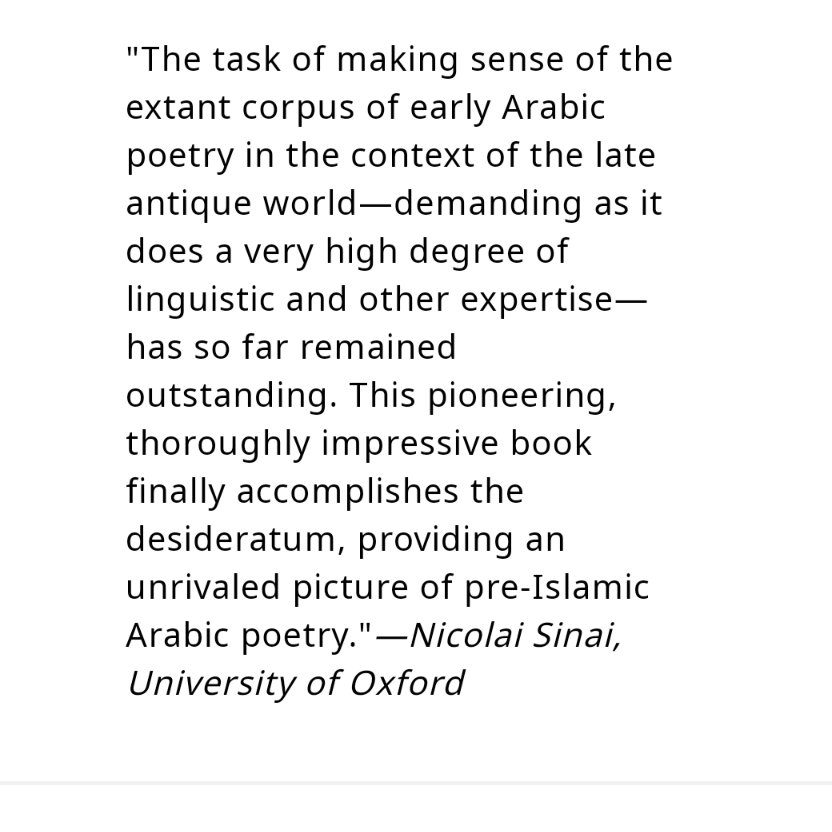
Now you can save 💰 AND read my "pioneering, thoroughly impressive book," The Emergence of Arabic Poetry, which Nicolai Sinai says provides "an unrivaled picture of pre-Islamic poetry" — use discount code PENN-NAMILLER30 at https://t.co/M51JUexXiS — a hardcover now $45 from $65
One interesting thing about working in Biblical Hebrew grammar, medieval Hebrew grammarians/interpreters, etc.
It highlights that sometimes we modern scholars try to reinvent the wheel and miss that medieval grammarians might have already dealt with an interpretive issue we face
Serious question for biblical scholars: considering how many thousands of people have written on every single word of the bible over 2 millenia, does it worry you that, statistically, all of your new theories are either wrong, or not new, or both?
One reason i didn't do "OT"
There's even a lot to be said for the idea that all examples of language exist on various axes of register, dialect, learnedness, L1 vs L2, etc
It's all—one way or another—part of same language world. Soon as we call language 'good' or 'bad' we impose ideology of what *should*be
I don’t wanna hear anyone living in the 21st century say “Their Hebrew was bad” or “their Greek was bad” referring to someone who spoke it as an L1/L2 2000 years ago.
This article now is no longer in pre-publication but has a issue in JSS dedicated to it, so it's easier to cite.
I'm still very happy with this article!
https://t.co/Wp0DxSPTbs
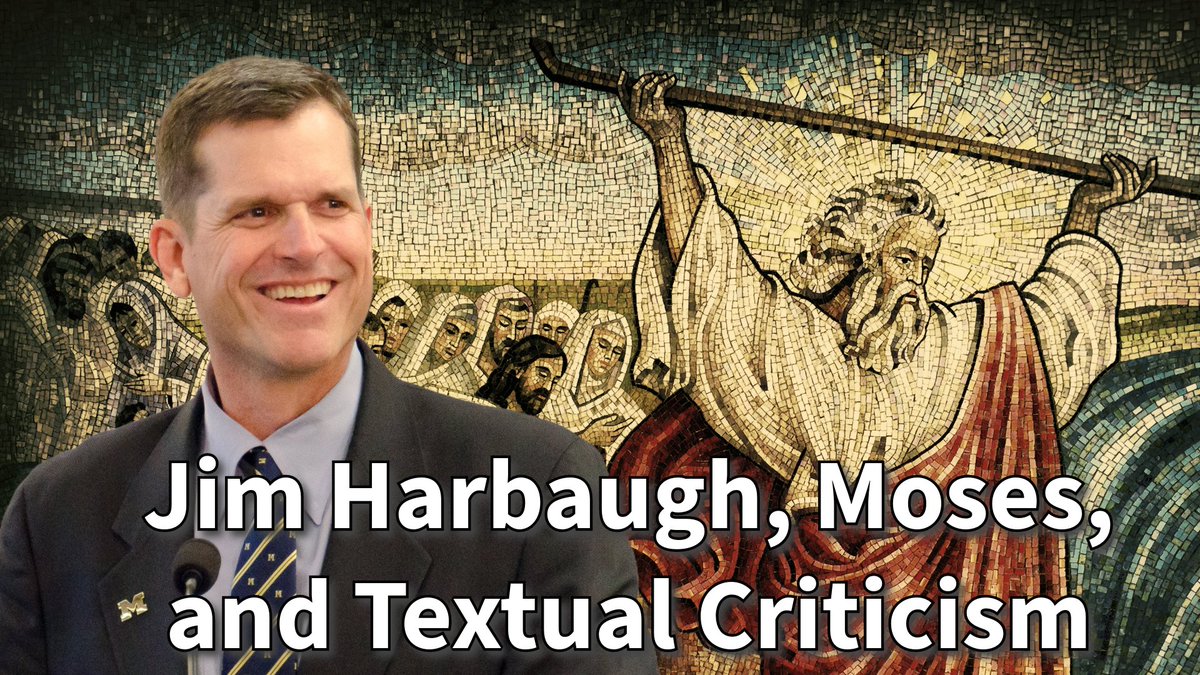
Jim Harbaugh, the head coach of @UMichFootball team, was quoted recently saying:
‘Like Moses I am going to die leaning on my staff’
cleverly praising his asst. coaches before #rosebowl vs @AlabamaFTBL
But did Moses die leaning on his staff? Or Jacob?
https://t.co/ElY3jRzw7y
One of the interesting things that the Karaites used to do in their Hebrew Bibles (besides writing it in Arabic script with Hebrew vocalisation) is to avoid writing God's holy name by writing it as aḷḷāh!
Number 14:41 ويومر موشا لاما زا اتام عوريم اث في الله وهي لا تصلاح
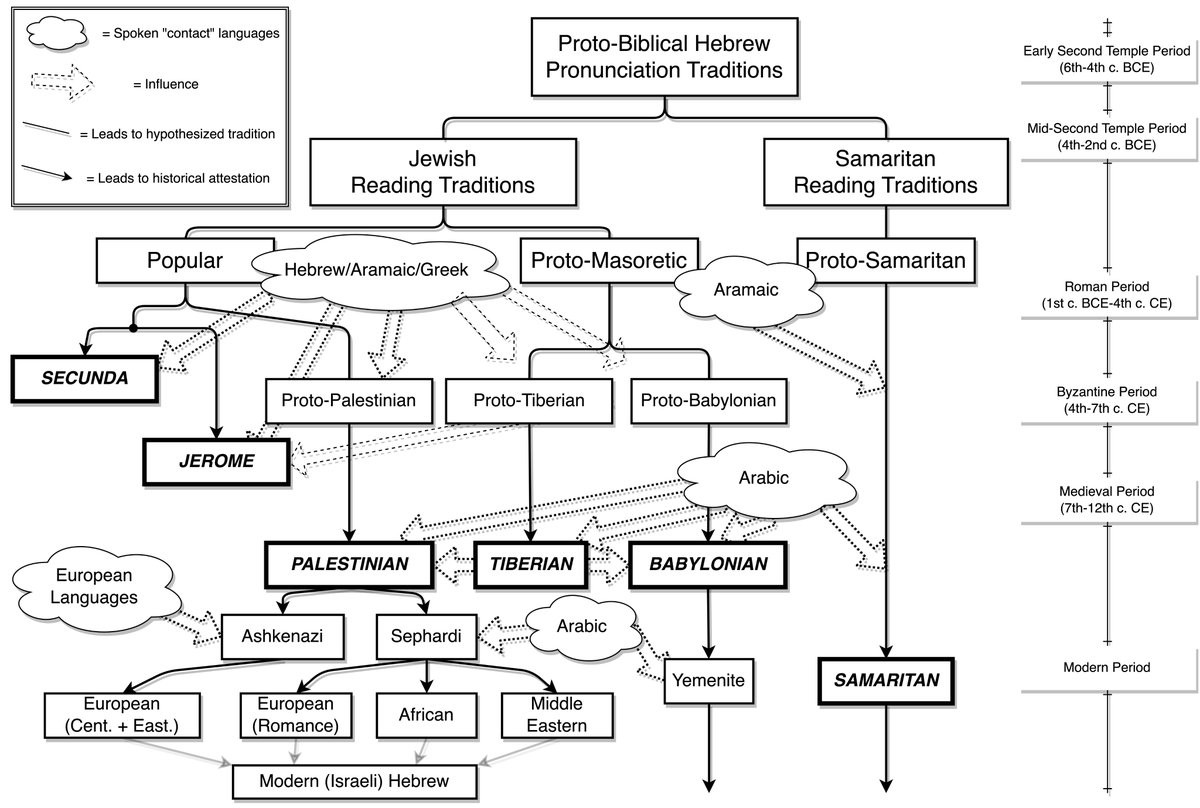
Gave a presentation on the history of Jewish scriptural reading traditions from the Second Temple through the close of the Masoretic period. I count it as a win. I think I managed to convey that this is interesting beyond Jewish Studies and more people should know about it.
Jewish scriptural reading is very unusual on so many levels. The full story of how it got to be what it is is still kind of a mystery in many ways.
📢New Publication Alert!
📒We are thrilled to announce the release of 'The Standard #Language#Ideology of the #Hebrew and #Arabic#Grammarians of the #ʿAbbasid Period' by Benjamin Paul Kantor.
🔗This title is now available at https://t.co/itwvSfHRWM
My NEW BOOK on the language ideology of the medieval Hebrew and Arabic grammarians is out!
It is open-access so you can DOWNLOAD FREE here:
https://t.co/WWn06fplhV
@AlCabbage045@azforeman@Jonassibony To be honest, this is an issue I am actually reconsidering at the moment. I probably should have just did a generic 'r' but I transcribed as a uvular because that was where my analysis lead during my PhD thesis. For what it's worth, though, I am reconsidering this currently.
Calling all publishers. Together with two other Cambridge students, we've produced a rather good vocabulary reader from the Hebrew Bible! We'll all be presenting at #SBL and around to talk. My algorithm identifies the simplest 5 verses in the Bible for each word in the Bible. 1/3
@OlaWikander I saw 'LTR' in a post the other day and couldn't figure out how 'left-to-right' (textual formatting) made sense in the context. Turns out it was short for 'long-term relationships' :)
Sometimes you *can* judge a book by its cover.
If you look closely, the broad findings and conclusions of my new book (https://t.co/D2nEG30lhn) are actually all visible on the graphic of the cover:
@EastonHoule This book was a presentation that was then going to be turned into an article and then got out of hand and became a book :) So it's definitely not comprehensive. A lot of room for future research and refinements. Would be delighted to talk more at SBL