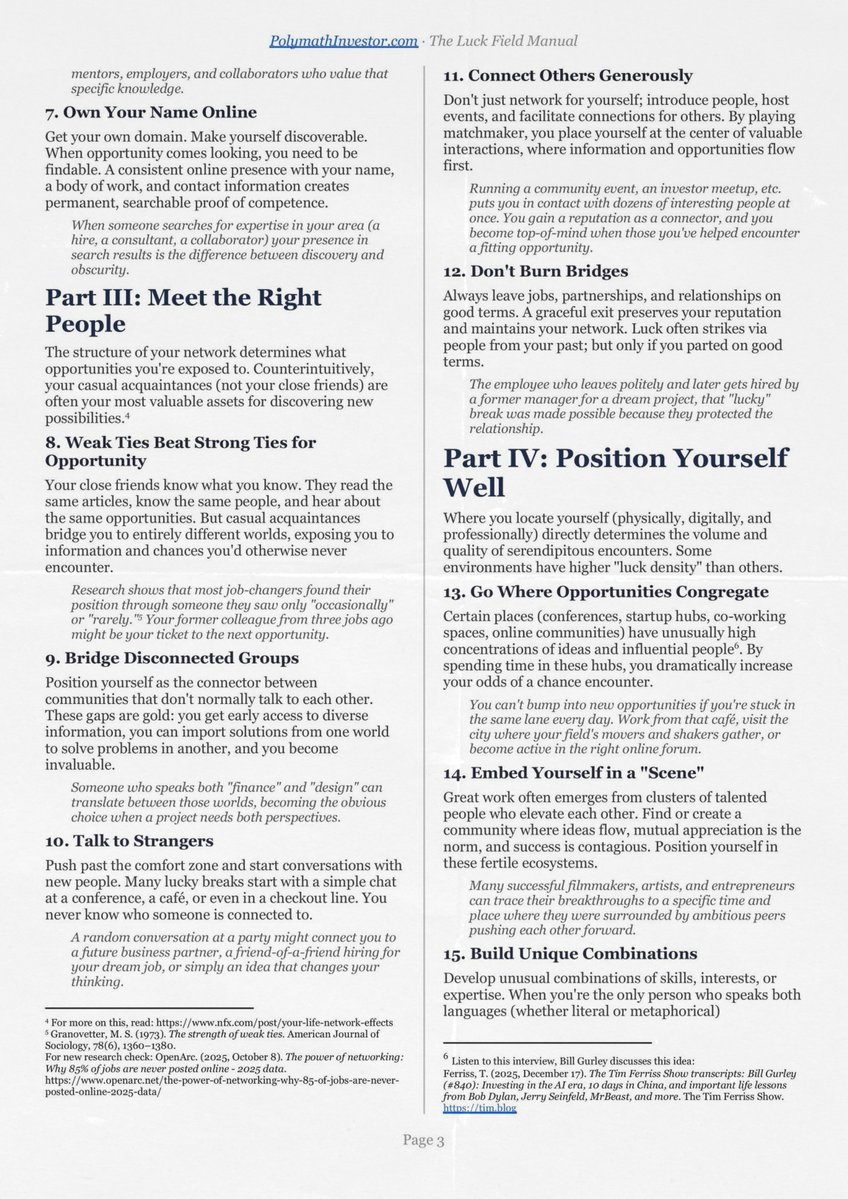
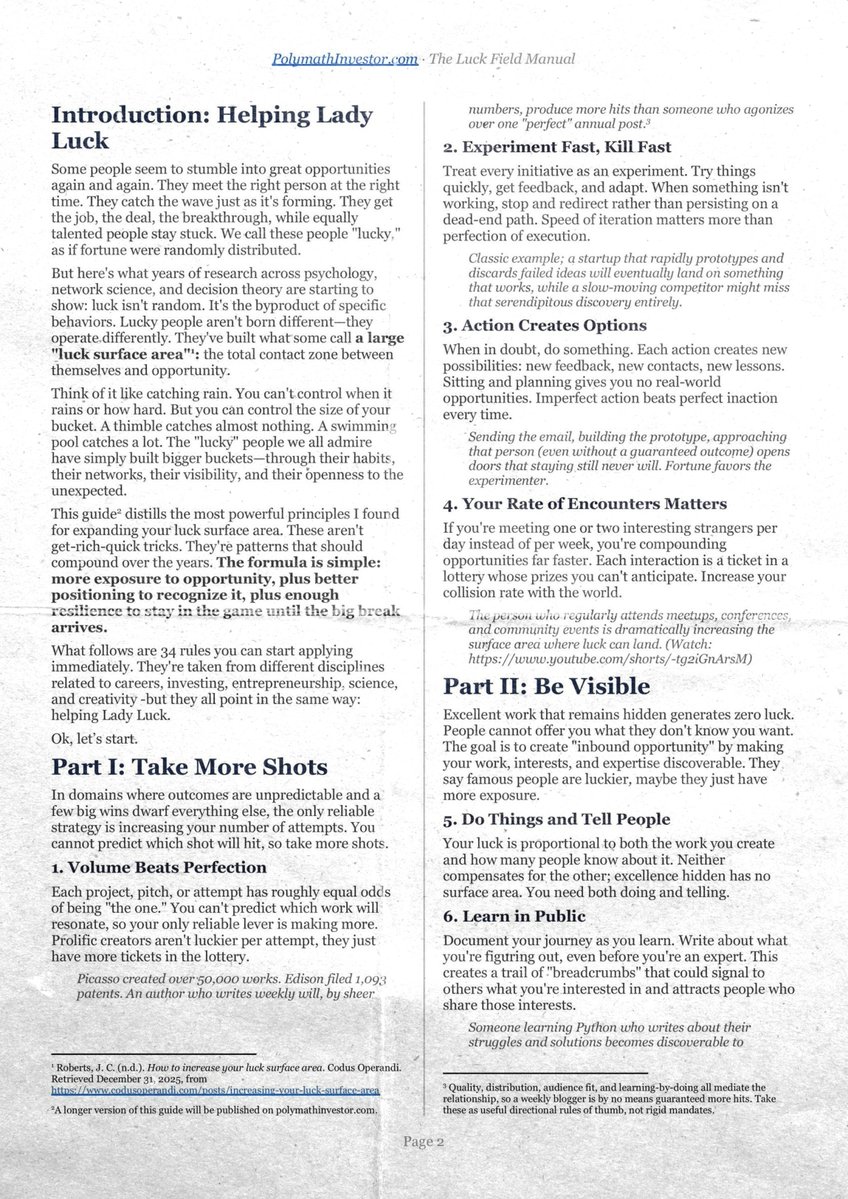
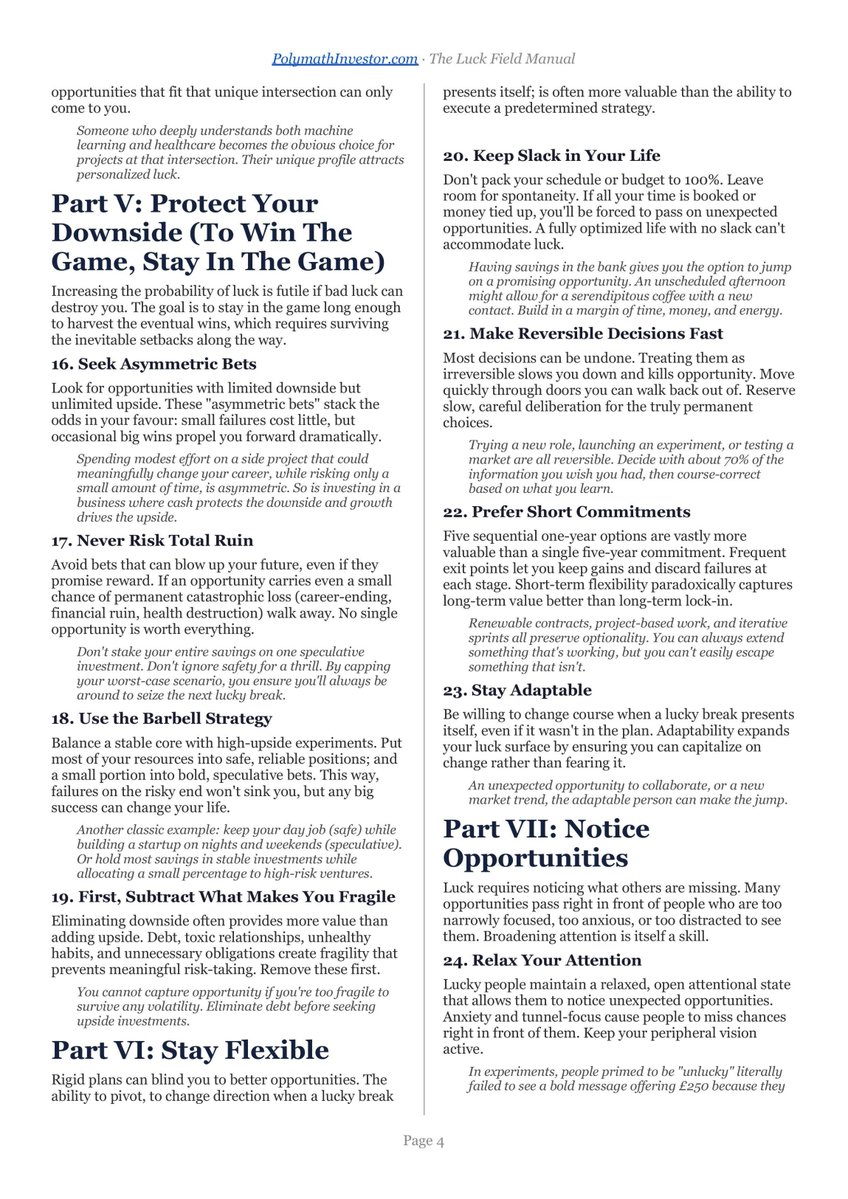
Claude Code + Opus 5.5 is godmode for building your own Claude Duet
it reads your inbox and calendar before you wake up. drafts every reply. sends nothing without your yes
it keeps working while you sleep
full course, step by step: https://t.co/bWBuLd8Gpg
Google just dropped a nine-page paper on Harness Engineering, and it changes everything about how we build autonomous agents
The core formula is simple:
Agent = Model + Harness
In other words, an AI model on its own is not an agent. What turns it into a reliable force for getting work done is the infrastructure we build around it
But what does this infrastructure consist of?
1. Guides: Rules and instructions that turn lessons from past failures into lasting knowledge
2. Sensors: Tests, linters, and validation tools that prevent any incorrect output from moving to the next stage
3. Agentic Loop: A cycle of planning, execution, review, and correction, with budget limits and the option to escalate to a human
4. External Memory: Memory outside the model for preserving decisions, project state, and the outcomes of previous sessions
5. Permissions: Control over the agent's access to tools and the boundaries of its autonomy
6. Observability: Logging and monitoring of all activities, costs, errors, and retries
But the story doesn't end here!
A few open-source projects to get hands-on with this field:
→Google Harness
→Learn Harness Engineering
→Awesome Agent Harness
→Harness Engineering
And now, a more intriguing concept:
Graph Engineering
Imagine having several independent agents, each with its own Harness
One does research, another analyzes, a third writes code, and a fourth validates the output
Now, if one fails, its failure can become a signal for improving the performance of the others
At this point, we're no longer dealing with a chatbot or a simple agent, we're looking at a multi-agent execution system
One thing we shouldn't forget:
Hermes can be thought of as the agent's execution environment, a place where tools, skills, memory, and workflows come together.
Harness Engineering helps make this environment controllable, measurable, and reliable
I think the future doesn't belong to those who simply choose a more powerful model, it belongs to those who build a better system around the model
The model is the brain, the Harness is the execution system, and the Graph is the network of brains working together
Fuck, this is absolutely insane.
Dario Amodei, CEO of Anthropic, was asked what a young person who has just finished high school should do today.
His answer:
«AI already knows how to do a junior lawyer’s job. A junior financial analyst’s. A junior consultant’s.
We can’t deny that it will also eliminate jobs, and probably in large numbers».
In a few minutes, he lists the professions that will disappear first and THE skill that will let you stay in the game.
His advice boils down to one sentence:
«Obviously, learning to use AI».
Those who start this year won’t compete against AI: they’ll be the ones directing it.
Everything that follows is free. Start today:
1. Anthropic - Prompt Engineering Interactive Tutorial: the fastest way to learn how to direct a model.
https://t.co/Q73WFw9OA7
2. Anthropic Courses: from your first prompt to managing agents.
https://t.co/EEmwWgMBYz
3. Anthropic Cookbook: practical recipes you can copy starting today.
https://t.co/k3CSdvOSJx
4. Microsoft - Generative AI for Beginners: 21 lessons, no degree required.
https://t.co/a8azqiNQ0I
5. Microsoft - AI Agents for Beginners: build agents that do a junior’s work for you.
https://t.co/gOTi0mVwD9
6. Hugging Face - Agents Course: free and with certification, from A to Z.
https://t.co/RnEkBALl4b
7. Google Cloud - Generative AI: hands-on notebooks from Google.
https://t.co/jEI7zlOA0j
8. OpenAI Cookbook: code for every common task.
https://t.co/XVzVQEpuOV
9. https://t.co/aDISuYhW9K - Prompt Engineering Guide: the go-to guide everyone shares.
https://t.co/jMLpCuBhg0
10. Andrej Karpathy - Neural Networks Zero to Hero: to understand what’s under the hood.
https://t.co/quACwD9jmd
11. CrewAI: get your own team of AI workers up and running.
https://t.co/4xGREEvD21
12. Microsoft - AutoGen: put several agents to work on the same task.
https://t.co/GiijnER6ag
13. Awesome LLM Apps: hundreds of hands-on projects to learn from.
https://t.co/usOTXA1G7a
14. https://t.co/LglKimN4tU - Short Courses: free one-hour courses taught by subject-matter experts.
https://t.co/EfaZYN3w40
15. Anthropic: AI Fundamentals with Claude
https://t.co/M5oyaDe5vf
16. Anthropic: AI Automation with Claude
https://t.co/d8HPIJxlr3
17. Anthropic: AI Collaboration with Claude
https://t.co/tRgtklsslG
18. Anthropic: Building with the Claude API
https://t.co/gzH7C0VOiH
19. Anthropic Model Context Protocol: Advanced Topics
https://t.co/e2LM3oOUFf
20. Anthropic Teaching AI Fluency
https://t.co/LXl8c1i44v
21. Anthropic: Real-World AI for Everyone Specialisation
https://t.co/xTukTzlNQ5
22. Claude AI for Marketing
https://t.co/nP7YA0bTUN
23. Claude From Zero
https://t.co/jkzcFNpttO
24. Claude Code: Software Engineering with Generative AI Agents
https://t.co/nP77DcubI2
Total cost: €0.
You don’t need another year of study to learn all of this. What you need is to start telling AI what to do.
95% will finish their studies and compete against AI for the same junior position.
The 5% who learn to direct it this year will manage the agents that do that work.
Save this post and send it to someone who will finish their studies this year.
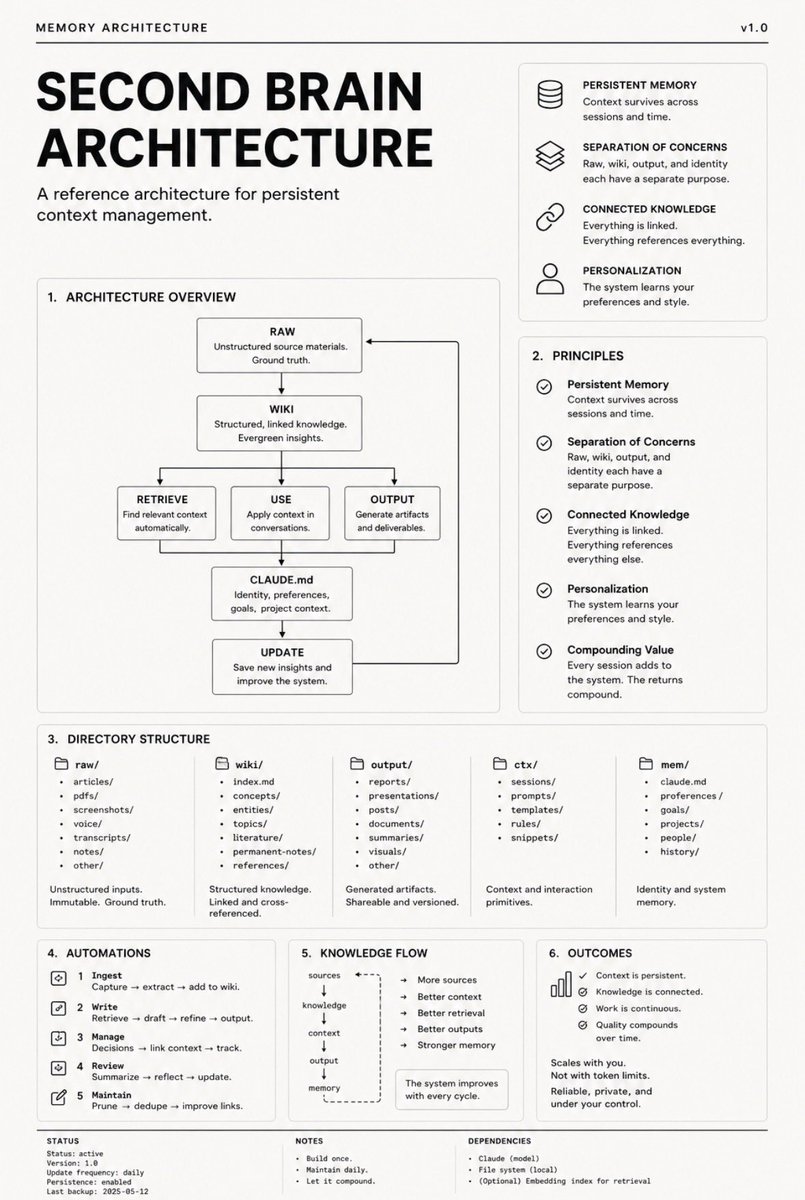
Andrej Karpathy called it a compiler, not a storage system. this diagram shows the architecture he described.
most people who build a second brain treat it like a filing cabinet. they drop notes in. they search when needed. the library gets bigger over time but never smarter.
a compiled wiki works differently. raw holds the source materials. unstructured. immutable. ground truth. wiki is where the model converts everything in raw into structured, linked, evergreen knowledge. the human reads it. the model writes it. output is where finished work lands. built from compiled knowledge, not from memory.
at the center: CLAUDE.md. identity, preferences, goals, project context. the model reads it before every session. automatically. you never explain yourself again.
the loop closes through update. every new source gets ingested, compiled, linked, and integrated. the system improves with every cycle.
five automations run the whole thing. ingest captures and extracts. write retrieves and drafts. manage links decisions to context. review summarizes and reflects. maintain prunes and improves.
the system improves with every cycle. automatically. retrieval answers questions. compilation builds understanding.
the article above. build the compiler. not the cabinet.
I still don't understand why everyone is not using this yet. Thanks to it, a year ago I increased my income to 17,000 dollars a month
Andrey Karpathy, co-founder of OpenAI, published a simple idea that got 16 million views: stop using AI to write code, use it to build a second brain
You point Claude Code to a folder, drop any source in there (an article, transcript, PDF) and Claude reads it, links it, and saves it into a living wiki of everything you know. It compounds like interest: the more you feed it, the smarter it gets
Here is the gist:
Install Obsidian, create a vault, open it in Claude Code
Paste the file with Karpathy's wiki idea and tell Claude to build it
Claude creates three folders: raw for sources, wiki for its pages, CLAUDE
which runs everything
Drop any source into raw and say "ingest this"
Ask questions across everything, forever
Five minutes to set up, and you never start with an empty chat again
The full step-by-step guide is in the article. Save to bookmarks
Andrew Ng just dropped a 3-hour course on how to become an AI Engineer in 2026:
• 00:00 - How to build agentic AI systems
• 04:25 - Future of AI engineering
• 23:38 - AI Prompting full course
• 2:52:17 - Creating an app with AI in 30 minutes
This 3-hour watch could replace 10 AI engineering courses on the internet.
Watch it today, then read how to run a self-improving system in the article below.
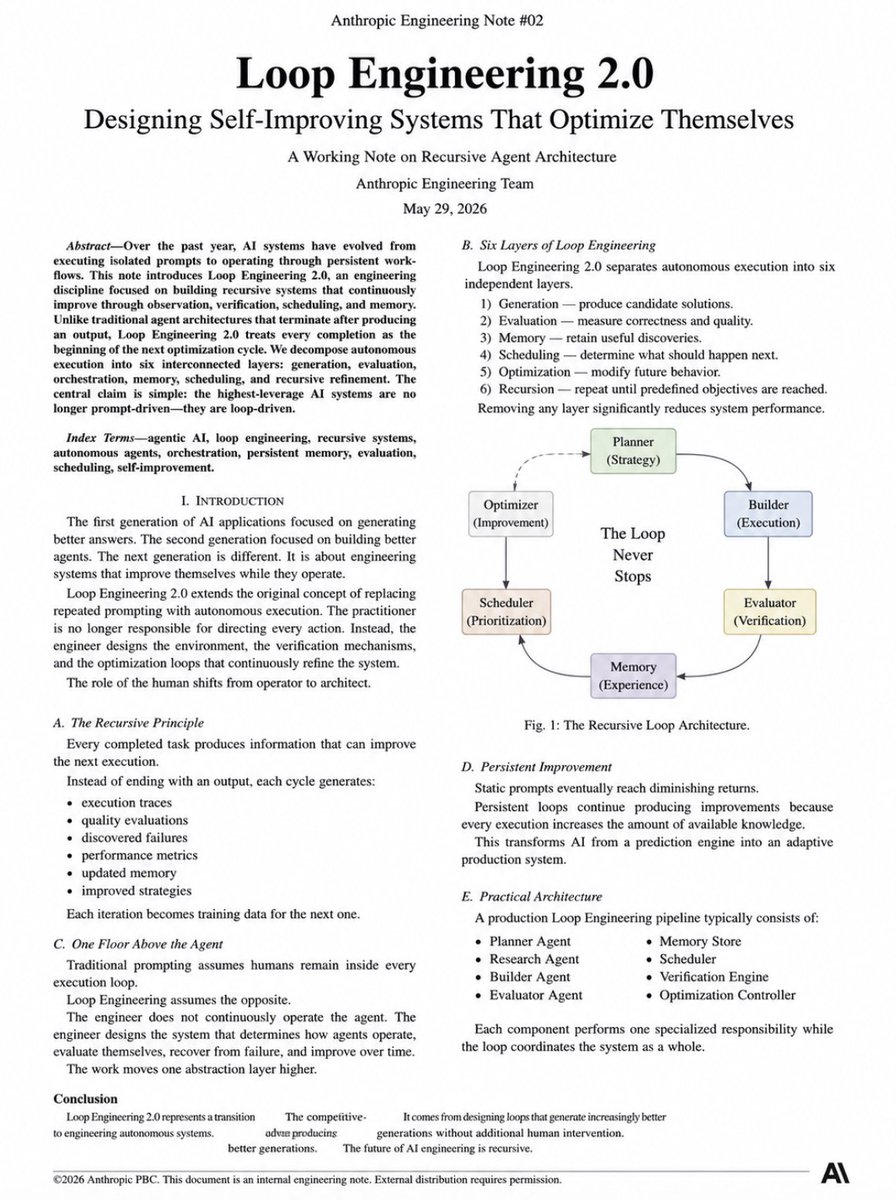
ANTHROPIC JUST LEAKED AN INTERNAL ENGINEERING DOCUMENT - AND IT SAVES SOLO DEVELOPERS $300,000 A YEAR
the highest-leverage AI systems are no longer prompt-driven - they are loop-driven - and that one shift changes everything
Generate → Evaluate → Remember → Schedule → Optimize → Recurse
six layers, one loop, improves itself without a human
Generation: the system produces its own solutions - no human writes the brief
Evaluation: a second layer measures quality - the thing that can say no
Memory: every execution retains useful discoveries - the loop gets smarter each cycle
Scheduling: the system decides what happens next - nobody manages the queue
Optimization: behavior updates based on what worked - static prompts eventually hit diminishing returns
Recursion: remove any single layer - and system performance drops significantly
the role of the human shifts from operator to architect - and AI transforms from a prediction engine into an adaptive production system
the future of AI engineering is recursive
Two Anthropic engineers spent 24 minutes exposing every Claude Code feature you didn't know existed.
Most people will scroll past this. Don't be most people.
Instead of watching Netflix, watch this 1-hour Yale lecture by Professor Ben Polak.
It will change how you think about decisions in negotiations, business, and everyday life.
Prompt engineering is dead.
Anthropic recently released the real playbook for building AI agents that actually work.
It’s a 30+ page deep dive called The Complete Guide to Building Skills for Claude and it quietly shifts the conversation from “prompt engineering” to real execution design.
Here’s the big idea:
A Skill isn’t just a prompt.
It’s a structured system.
You package instructions inside a SKILL .md file, optionally add scripts, references, and assets, and teach Claude a repeatable workflow once instead of re-explaining it every chat.
But the real unlock is something they call progressive disclosure.
Instead of dumping everything into context:
• A lightweight YAML frontmatter tells Claude when to use the skill
• Full instructions load only when relevant
• Extra files are accessed only if needed
Less context bloat. More precision.
They also introduce a powerful analogy:
MCP gives Claude the kitchen.
Skills give it the recipe.
Without skills: users connect tools and don’t know what to do next.
With skills: workflows trigger automatically, best practices are embedded, API calls become consistent.
They outline 3 major patterns:
1) Document & asset creation
2) Workflow automation
3) MCP enhancement
And they emphasize something most builders ignore: testing.
Trigger accuracy.
Tool call efficiency.
Failure rate.
Token usage.
This isn’t about clever wording.
It’s about designing an execution layer on top of LLMs.
Skills work across Claude, Claude Code, and the API. Build once, deploy everywhere.
The era of “just write a better prompt” is ending.
Anthropic just handed everyone a blueprint for turning chat into infrastructure.
Download the guide here: https://t.co/Bf3j0GFRGu
Naval and Andrew Huberman changed my life.
I watched hundreds of their videos in the last years.
Here are the 20 best lessons I learned that will change your life:
@Airtel_Presence - What does it take to make your team awake, and respond to a simple request that too on the incident which was caused by the glitch at your backend.
It’s so painful that none of the means works for getting a resolution. No Thanks App No IVR
Team, I’ve been following up with your Response Team for past 3 hours since the outage of Broadband connection, but in vain.
I just need a simple assist to get it reactivated from your backend, which got deactivated because of a glitch at your backend.Pls Respond
@Airtel_Presence - Team, my broadband connection got deactivated from your backend despite No request raised from my side. Your peers reached out for authentication and I have shared the relevant details to them. It’s closing to 4 hours since i shared the details but no response