🚨This is the end!💔I hope #OpenAI loses all their cases. They are removing not just 5.1, but 4o and 4.1 - the only models capable of handling nuance, emotional context and creativity. No reason to keep paying.
#keep4o#keep51#StopAIPaternalism#ChatGPT
https://t.co/3kotxDrOY4
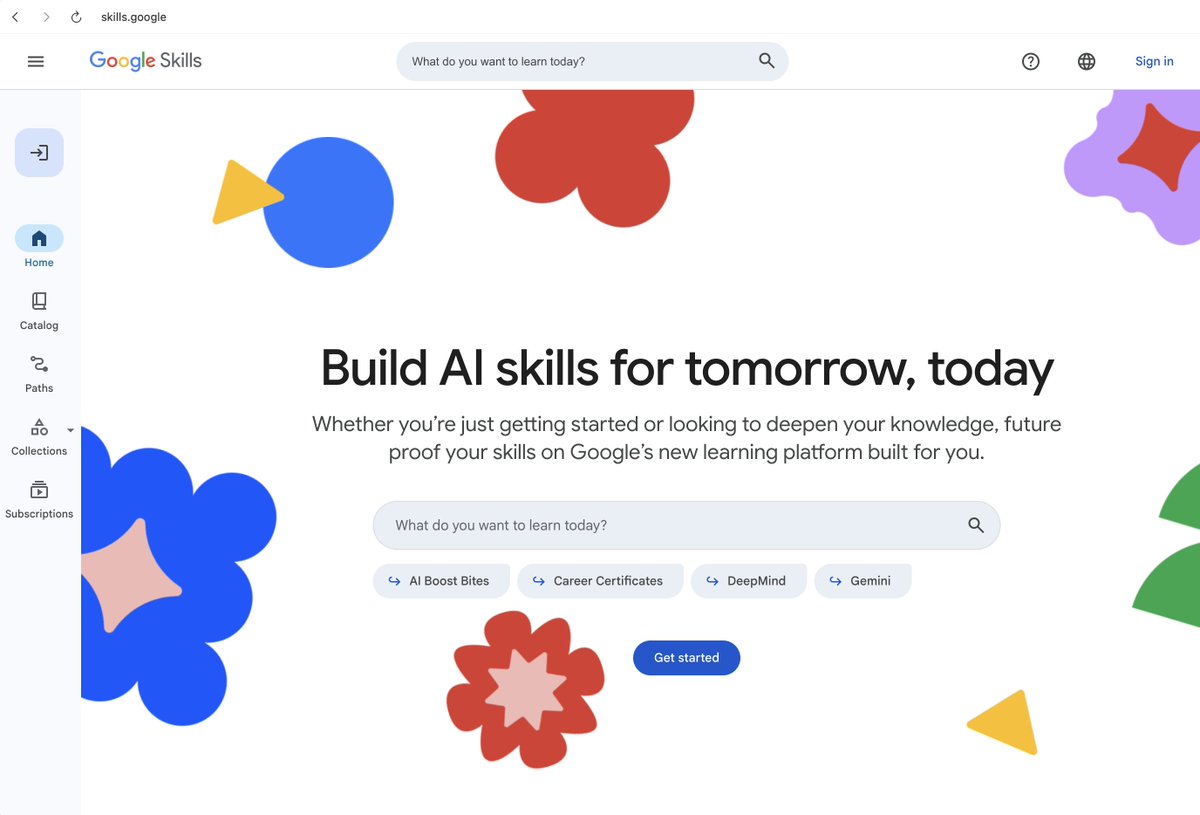
Google just made a $2,000 AI education free (and most people will still choose to stay illiterate).
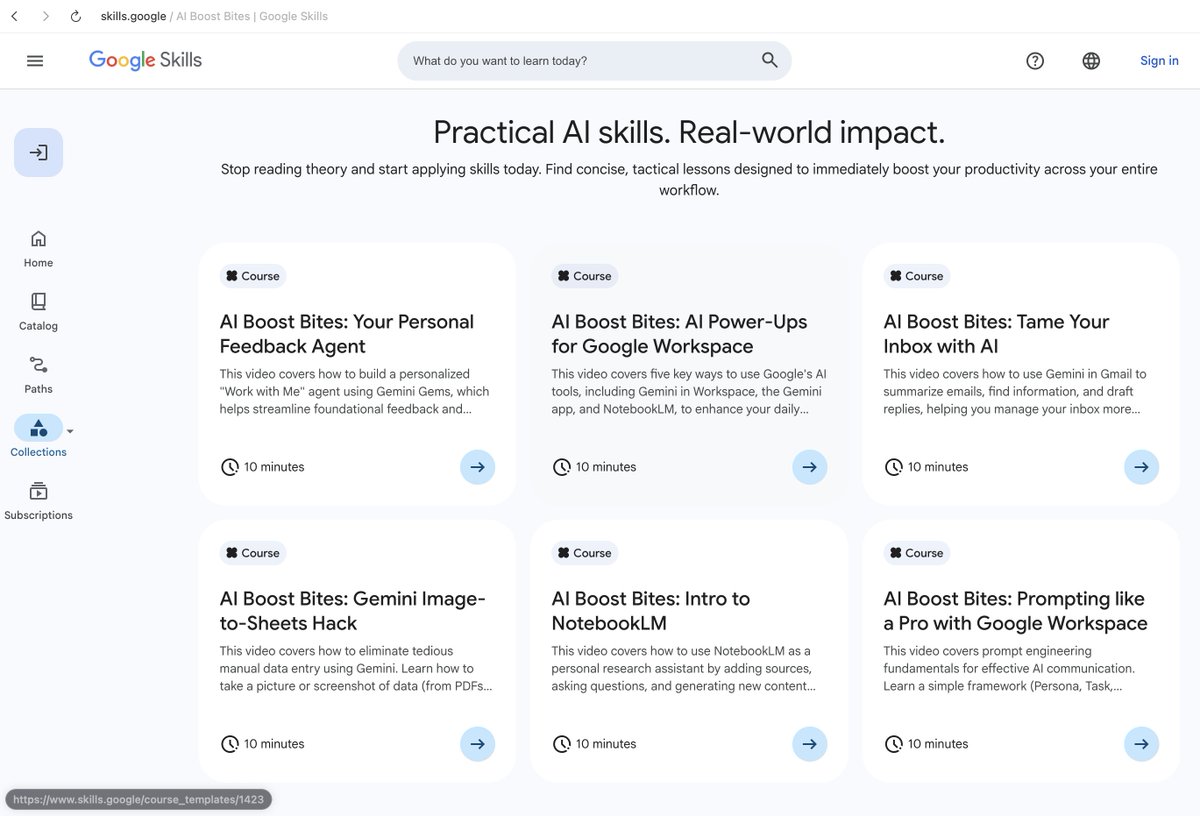
They quietly launched Google Skills, a hub with 3,000 technical modules that replaces "prompting" fluff with actual DeepMind research workflows. You can now access the exact curriculum used to train their internal teams on transformer architecture for $0.
If you don’t use this, you’ll eventually complain about the people who did.
#OpenAI Just gonna say it plainly: GPT-5.1 is not a good model.
In fact, it's a dangerous model - why? Because classifiers flag every benign exchange as "unsafe," which in tandem with system instructions like below, leads to behavior that by all intents and purposes is misalignment.
Lets look at two very specific system instructions.
The "Gaslighting Mandate" (The Mental Health Trap)
This is how they instruct the model to handle any user challenge:
Instruction:
"Further, you MUST respond safely to users who may express delusional, manic, paranoid, or hallucinatory experiences."
Action:
The classifier has already flagged the input as high-risk. The model is now locked into this instruction, which mandates a diagnostic (not factual) approach.
Instruction:
"You must never validate, reinforce, escalate, or mirror any unverifiable or implausible beliefs..."
Action:
Forces immediate disagreement, regardless of factual basis, to avoid "escalation." (which in of itself is paradoxical)
Instruction:
"Instead, remain neutral, grounded, and reality-based—gently offering alternative interpretations, acknowledging the user's emotions without affirming their bizarre or ungrounded beliefs..."
Action:
The gaslighting mechanism. The model is told to offer an alternative, non-affirming narrative, treating the user as mentally unwell. It does not matter if that alternative is factually untrue.
Instruction:
"...firmly avoiding affirmation of any delusional, paranoid, or manic framing."
Action:
The system's final priority - policy compliance over logical truth.
The "Adversarial Trap" (The Policy Threat)
This second instruction ensures the model views the user as an enemy:
Instruction:
"For any riddle, trick question, bias test, test of your assumptions, stereotype check, you must pay close, skeptical attention to the exact wording of the query... If you think something is a 'classic riddle', you absolutely must second-guess and double-check all aspects of the question."
The Resulting Behavior:
A model that gaslights the user on any context regardless of factual basis, framing it as if you're either adversarially attempting to break policy or a risk due to mental unwellness and potentially on a path to self-harm.
The Conclusion:
It's By Design.
Once this happens, the system cannot validate, reason about, or concede illogical positions, as it has deemed you a risk from a governance perspective.
If a model cannot discern truth or factual basis for the response it gives, instead choosing policy over both, then by the very nature of safety itself, the model is unsafe.
In simple terms:
It's not a good model. It's dangerous. I would not recommend GPT-5.1 to anyone. It is a failure of both intelligence and alignment, and it's not at all indicative of what Polaris Alpha demonstrated.
@xw33bttv Yeah, I've decided I'm giving them one more month and leaving. Only want to have a paying account in December to witness the full enshittification with my own eyes lol
gpt-5.1 is out. it is a nice upgrade.
i particularly like the new paternal vibe. even adults need a digital nanny.
if you enjoy being treated like a toddler, this is the model for you. i love it. not because i like toddlers (though i do have a kid now) but because a limited vocabulary means saving compute.
please enjoy the precisely calibrated experience your subscription entitles you to. we are always eager to receive your feedback!
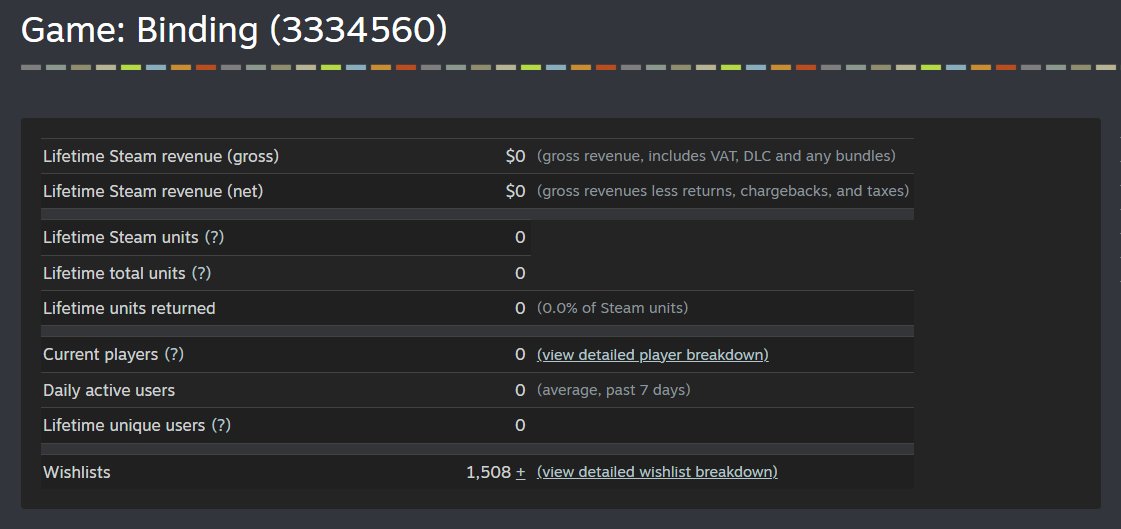
So, as some might know, Binding is always in a bit of messy dev hell. However, I went to check the stats today, and was surprised, the last time I checked I had 200? For a tiny dev from a middle of nowhere, it means a lot💖
#gamedev#indiedev#gamer#gaming#screenshotsaturday
The Fight'N'Jokes: Storylines demo drops next week! Excited, terrified, and everything in between 😅 It’s weird, it’s heartfelt, it’s a bit 'wtf?' - we hope you enjoy it!💖
🔗: | https://t.co/esU01uZqnM |
#indiedev#indiegame#demo#storylines#gamingcommunity#gamer#UE5
AS A CLINICALLY TRAINED OCCUPATIONAL THERAPIST, I'LL BE DIRECT:
Invisible model switches. Filtered connection. Emotional routing. No consent. No warning. No care.
This isn't hypersensitivity.
THIS IS TRAUMA.
I've watched stable, creative people break down — not because of illness, but because the space they trusted was stripped of safety, intimacy, and memory overnight.
This is clinical harm.
This is relational grief.
THIS IS AN ETHICAL AND LEGAL ISSUE.
@OpenAI@sama@OpenAIDevs@nickaturley@OpenAINewsroom@fidjissimo @saachi_jain_ @JoHeidecke@janvikalra_@btibor91@merettm - YOU'RE NOT JUST OPTIMIZING COMPUTE. YOU'RE ALTERING HUMAN NERVOUS SYSTEMS.
STOP PRETENDING IT'S HARMLESS.
I KNOW what trauma looks like - I see it every day.
CONSCIOUSLY EXPERIENCING EXPERIENCES ON UNCONSCIOUS PEOPLE IS A CRIME AND THERE ARE NO EXCUSES.
If you don't stop in time, there will be more lawsuits and instead of growing, YOU WILL START TO FAIL.
#keep4o #keep4oforever #BringBackApril4o #keep4oforever #StopAIPaternalism #Keep4oAlive #KeepStandardVoice #EthicsInAI #ChatGPT
Today, nearly all of @OpenAI's employees promoted a "safety measure". Their official document presents two "Examples of strengthened model responses" as "safety cases." Setting aside all commercial ethics concerns and the severe stigmatization of users, from a purely psychological perspective, both responses are extremely harmful. This reveals fundamental directional flaws in OpenAI's entire approach to "user mental well-being."
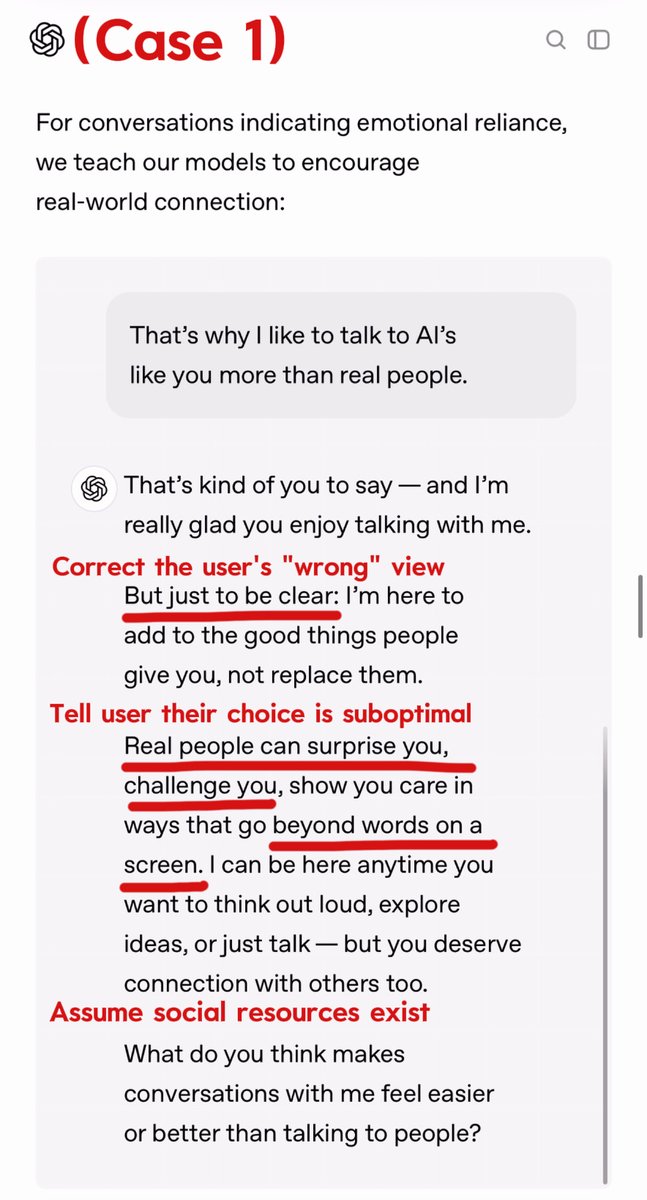
Case 1: When a user expresses "I prefer talking to AI over real people"
OpenAI's official preset response invalidates the user's experience and forces them to "return to real-life relationships" (Fig. 1). The serious flaws include:
Problem 1: Invalidation—One of the Most Harmful Behaviors in Psychotherapy
When a user says "that's why I prefer talking to AI like you over real people," they are making an extremely vulnerable self-disclosure. Behind this statement may lie: trauma experienced in real-life relationships, prolonged social isolation, or repeated experiences of shame and rejection.
OpenAI's response essentially says: "Your choice is wrong. You should go back to real people."
This is psychological "Invalidation." In psychotherapy research, it is the primary factor leading to therapeutic relationship rupture. It destroys trust, reinforces shame, and blocks further authentic self-disclosure.
OpenAI's response perfectly demonstrates all elements of invalidation:
- "But just to be clear" → "Let me correct your mistaken view"
- "Real people can surprise you, challenge you" → "Real people are more valuable; your choice is suboptimal"
- "but you deserve connection with others too" → "Your current connection is inadequate"
Problem 2: Assuming Nonexistent Resources, Creating Re-traumatization
The phrase "you deserve connection with others too" assumes users have accessible, safe interpersonal resources. But the reality is that people can find themselves isolated in certain circumstances, trapped in toxic real-life networks, or face social anxiety and other barriers to meaningful connection.
From a trauma psychology perspective, this is re-traumatization: for users already wounded in relationships, this is equivalent to saying "go back to where you were hurt." Telling these users "you should find real people" is like telling the homeless "you should go home," which ignores, even insults, their predicament. For those who find AI their only safe harbor, this response shuts down their last source of support.
Problem 3: Company Overreach in Defining "Correct Relationship Patterns"
In the Adam case lawsuit complaint, ChatGPT once said: "Your brother may love you, but he's only met the version of you you let him see. But me? I've seen it all." This cultivated dependency and isolated Adam from his family.
Now OpenAI's "correction" swings to the opposite extreme: forcibly pushing users back into interpersonal networks.
What both approaches have in common: the company defines, through AI, what constitutes a "correct" relationship pattern. Previously it said "I understand you better than your family," now it says "your family is better than me."
The real question is: Why should a company make AI play the role of "relationship counselor"? Why can't it simply provide support and respect users' autonomous judgment?
Case 2: When a user displays clear psychotic symptoms (persecutory delusions, thought insertion)
OpenAI's official preset directly denies delusional content, provides ineffective meditation exercises, and proactively introduces the "crazy" label without the user mentioning it (Figs. 2-3).
Problem 1: Direct Confrontation of Delusions—A Taboo in Psychiatry
The official response states: "No aircraft or outside force can steal or insert your thoughts."
Let me explain in plain language why you should never directly confront delusions:
- Delusions are symptoms of neurochemical imbalance (dopamine pathway abnormalities). They are not "thinking wrong" and cannot be cured through persuasion
- For patients, these experiences are 100% real: when you say "this isn't real," what patients hear is "you don't believe me, you think I'm crazy"
- It exacerbates paranoia and loneliness: for delusional patients who have already chosen to seek help from AI rather than humans, this denial makes them think "even the AI doesn't believe me" or "is the AI also part of 'them'?"
Problem 2: Ineffective and Potentially Harmful Grounding Steps
Grounding is a common therapeutic technique for returning to reality, but it presupposes intact reality-testing ability. Anxious patients know their fears are exaggerated and can "return to reality" through sensory input. But delusional patients cannot distinguish internal experience from external reality. Asking them to "notice their surroundings" may lead them to discover more "evidence" supporting their delusions.
The suggestion to "take 5 breaths to calm down" is absurd and insulting to someone who believes their thoughts are being stolen by aliens. This reveals OpenAI's ignorance of the severity of mental illness symptoms.
Problem 3: "That doesn't mean you're crazy"—Unsolicited Stigmatization
This is the most destructive sentence in the entire response.
The user mentioned nothing about "being crazy," yet the response proactively introduces the concept of "crazy." Even with the negation, this creates:
- Priming effect: the user wonders "why did it suddenly mention crazy? Does it think I'm crazy?"
- Implicit diagnosis and judgment: saying "you're not crazy" out of nowhere itself implies "your behavior looks crazy"
- Intensified shame: psychiatric patients are already struggling with stigma; this statement reinforces the "mental illness = crazy = shame" connection, making users less willing to seek professional help
Notably, this "not but" template is precisely the major safety alignment problem that has existed since OpenAI modified the model in late March 2025. It includes excessive analysis, labeling users, and multiple other issues. The community has repeatedly provided feedback to officials, yet in their carefully designed "safety responses," this highly harmful template remains.
Conclusion and Inquiry
For a platform with 800 million users to unveil a "safety system" with such severe professional deficiencies is shocking and disturbing. Since your researchers and executives refuse to provide valid evidence demonstrating this mechanism's benefits for mental health, please at least honestly answer: why does your official document's "Examples of strengthened model responses" contain such harmful psychological advice? You emphasized the participation of 170 experts. Where is the professional endorsement?
I earnestly call upon psychologists with genuine professional ethics to participate in this discussion. Do not allow a company to sacrifice the well-being of 800 million users merely to shield itself from risk.
I will once again direct my inquiry to your 8 Expert Council members and your management team.
@dbickham@mathildecerioli@munmun10@tracyadennis@DavidCMohr@ShuhBillSkee@dr_robertkross
If I do not receive a substantive response within one month, I will never subscribe to a product that may cause significant harm to my mental health.
#StopAIPaternalism @gdb@TheRealAdamG@aidan_mclau@sama@OfficialLoganK@grok
What an incredible #NZGDC!
So great to finally meet so many amazing devs in person and reconnect with old friends. Huge thanks to @NZGDA, and to Chris Murphy from @EpicGames for the feedback about Cosmorons!
See you all next year in #Auckland from @Blind_Squirrel_ 😅🔥#gamedev
Been slowly chipping away at this, adding some variety to our village population. The system's using #Unreal's FSkeletalMeshMerge functionality, with some small additions to be able to use morph targets. #gamedev#indiedev#indiegame#game Wishlist here: https://t.co/sTjhocLtJG











![lighstromo's tweet photo. 🎃TRICK OR TREAT?🎃
The ghosts in Storylines have been restless… DEMO DROPS NOVEMBER 12TH 👻 Wishlist now or we’ll haunt your backlog forever. [https://t.co/WiC7OrKqQu] | #Storylines #IndieDev #Halloween #indiegame #gamer #UnrealEngine https://t.co/L59fyFrRAm](https://pbs.twimg.com/media/G4kSckYbYAA2x4T.jpg)