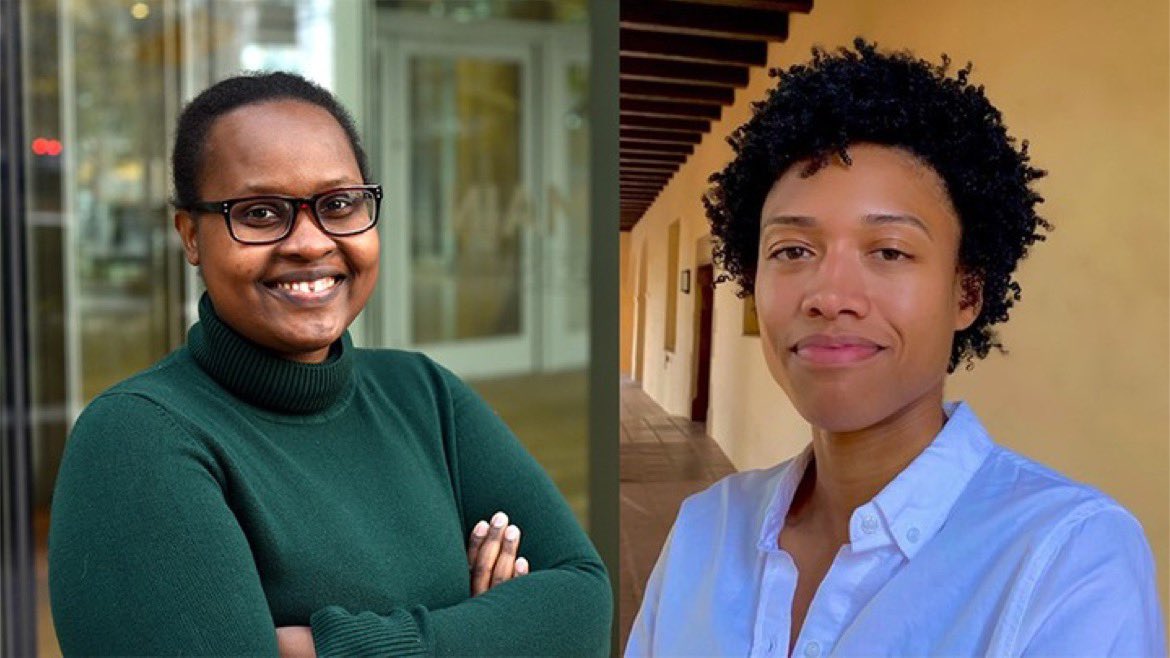
Welcome, @MireilleKamariz@DrJMStewart to our department! We can't wait to have the two new assistant professors on board and are excited to see all the amazing things they'll do at @ucla. #EngineerChange
Read more: https://t.co/tUXoi3HY88
A @UCLA@UofCalifornia research team led by Assoc. Prof. Jun Chen of @BioEngUCLA, has developed a battery-free, magnetoelastic smart stent designed to track blood flow continuously after angioplasty, potentially enabling earlier detection of complications. https://t.co/GdZYaRzE7g
I feel so grateful to know that my PhD student, Guorui Chen, received both the 2026 Harry M. Showman Prize and the Edward K. Rice Outstanding Doctoral Student Award from UCLA Samueli Engineering @UCLAengineering@BioEngUCLA. Thank you all for your tremendous support!
When blood vessels are exposed to chronic inflammation, the cells lining them can quietly change identity in ways that drive heart disease and limit treatment options.
Researchers examined whether cell chirality – how endothelial cells orient and twist in space – could serve as a new mechanobiological marker of endothelial-to-mesenchymal transition (EndMT).
They built a simple, low-cost platform that uses 3D-printed protein stamps to guide how cells attach and align on a surface, making it easier to measure how their orientation changes. When exposed to inflammatory signals, human aortic endothelial cells not only showed the expected molecular signs of EndMT but also rotated by about 18°, indicating that chirality may shift alongside this transition.
This work points toward earlier, more precise detection of harmful vessel remodeling, opening the door to interventions that could prevent long-term cardiovascular damage in patients.
𝗥𝗲𝗮𝗱 𝗺𝗼𝗿𝗲: https://t.co/HWqdKTjMPY
𝗦𝘁𝘂𝗱𝘆: Development of a Stereolithography 3D Printing-Based Micropatterning Method to Study Endothelial-to-Mesenchymal Transition Mechanobiology
𝗔𝘂𝘁𝗵𝗼𝗿𝘀: Karina Bender, Sarah Chesley, Jay Lesny Drake, Megan Ho, Emily Lin, Kathryn Saxton, Ninava Sharma, Christina K. Tripsas, @QianLiMDPhD, and @JeffHsuMD@UCLA@UCLAengineering@BioEngUCLA@uclaibp@dgsomucla@DOM_UCLA@UCLAHealth
𝗦𝘂𝗯𝗺𝗶𝘁 𝘆𝗼𝘂𝗿 𝗺𝗮𝗻𝘂𝘀𝗰𝗿𝗶𝗽𝘁: https://t.co/Gyz8DNneUg
New research led by @UCLA Prof. Gerard Wong of @BioEngUCLA shows calcium oxalate kidney stones—the most common type—can contain bacterial biofilms, challenging the idea they’re “noninfectious.” This may explain stone recurrence and infections triggered by stone fragmentation.
Lilie Kulber, a fourth-year @BioEngUCLA@UCLA@UofCalifornia student and professional surfer, has spent her college years learning how to navigate both rigorous coursework and a demanding athletic schedule. https://t.co/N49vBO5ArM
Research from @UCLA licensed by spin-off Horizon Surgical Systems—co-founded by faculty members incl. Prof. Jacob Rosen of @UCLAMechAeroEng@BioEngUCLA & Dist. Prof. Tsu-Chin Tsao of @UCLAMechAeroEng—has led to a major breakthrough in ophthalmic surgery. https://t.co/kimSyz3lwj
When athletes suffer serious injuries to their knee ligaments, the road to recovery can be long, and some never return to the game. Understanding exactly how ligaments fail is essential to improving prevention and treatment, but studying these injuries in living people is difficult.
Researchers have developed and validated a new robotic system that simulates natural knee movements with high precision using post-mortem human subject knees. By integrating advanced bone motion data from dynamic biplanar radiography, they were able to replicate motions like walking, running, jumping, and injury events to directly study ligament damage under controlled conditions.
This advancement could unlock deeper insights into how and why knee injuries happen and bring us closer to better ways to keep athletes in the game.
𝗥𝗲𝗮𝗱 𝗺𝗼𝗿𝗲: https://t.co/nniPz9MKSu
𝗦𝘁𝘂𝗱𝘆: A Robotic Clamped-Kinematic System to Study Knee Ligament Injury
𝗔𝘂𝘁𝗵𝗼𝗿𝘀: Ophelie Herve, Will Flanagan, Jake Kanetis, Bailey Mooney, Thomas Kremen, David R. McAllister, and Tyler Clites
@UCLA@UCLAHealth@dgsomucla@UCLAMechAeroEng@BioEngUCLA@ThomasKremenMD@TylerClites
𝗦𝘂𝗯𝗺𝗶𝘁 𝘆𝗼𝘂𝗿 𝗺𝗮𝗻𝘂𝘀𝗰𝗿𝗶𝗽𝘁: https://t.co/2Gx32ru0Ie
Join us at the first ever @UCLA Engineering & Medicine @dgsomucla Joint Research Symposium on Tuesday, April 22. This daylong event will bring together researchers from both schools to network, collaborate and hear from distinguished guest speakers. https://t.co/HYXGPsvN1C
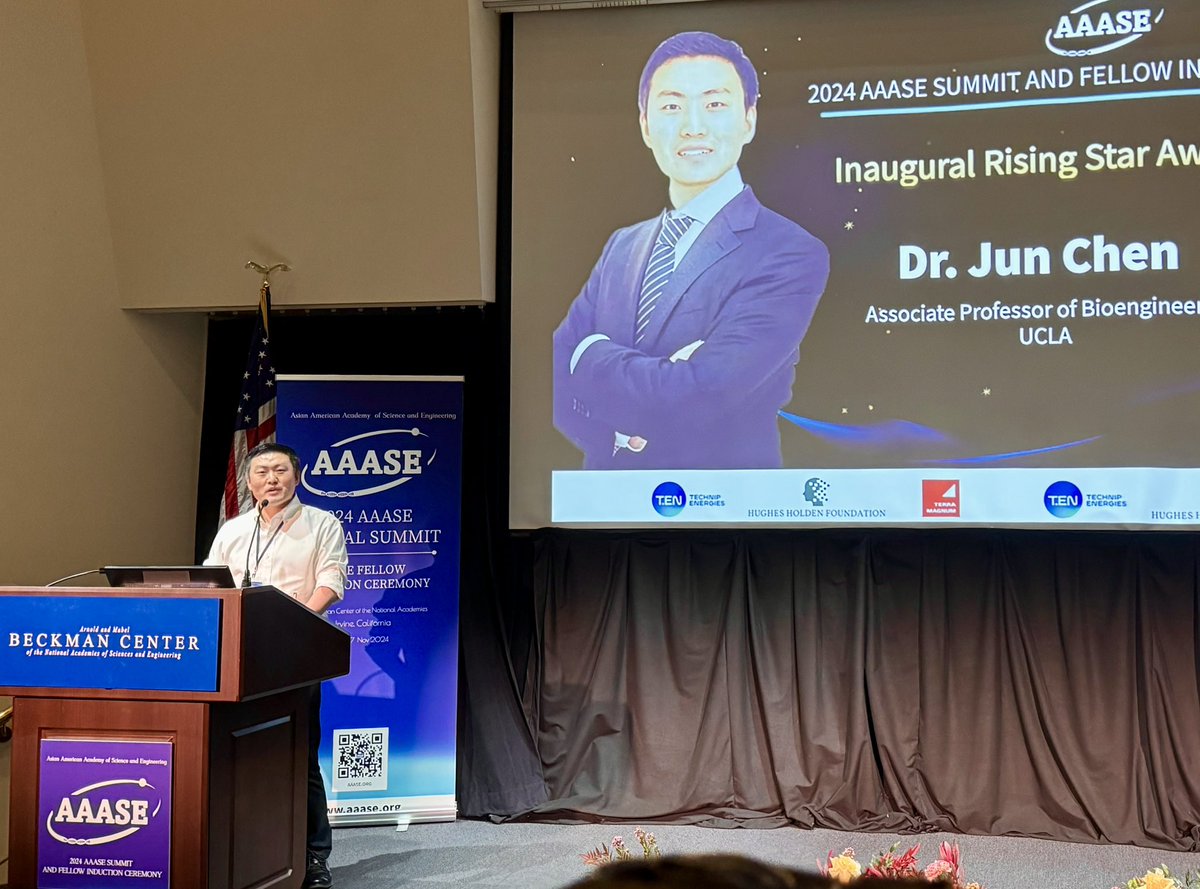
UCLA Bioengineer Jun Chen Awarded Top Honor for Early-Career Scientist in Materials Research https://t.co/xTO0PdBFNB Thank you all very much! @uclaengineering@BioEngUCLA
Published in Nature Biomedical Engineering @natBME, @UCLA researchers led by Chancellor’s professor Song Li of @BioEngUCLA & partners from @dgsomucla, @uclachem, @UCLAMBI have created a cell-like material that may lead to more effective cancer treatment. https://t.co/Udrz6rmZDr
Congrats to prof. Elisa Franco of @UCLAMechAeroEng@BioEngUCLA on receiving a $1.9 million, five-year grant from the National Institutes of Health @NIH to create artificial organelles using RNA from living cells. #engineerchange https://t.co/vcFeFSxwPH