SoluProtMut: Siamese Deep Learning for Predicting Solubility Effects of Protein Mutations with Experimental Validation
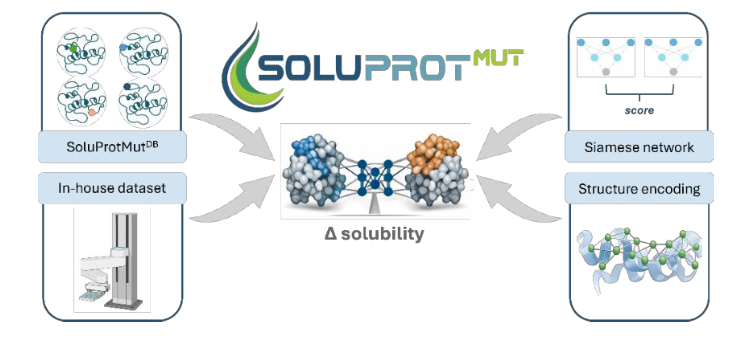
1 SoluProtMut introduces a structure-based Siamese geometric neural network that predicts whether a mutation will be desolubilizing vs non-desolubilizing, using an anti-symmetric design by construction (swapping WT/mut flips the score), aiming for more reliable mutation-effect directionality.
2 A key practical result: on an independent benchmark of 44 proteins from low-throughput (non-DMS) studies, SoluProtMut achieved the highest informedness among compared tools, with the clearest advantage on multipoint mutants (ternary informedness 26.5%, 8.8 percentage points above the next-best method).
3 The model is trained exclusively on deep mutational scanning (DMS) solubility-proxy datasets (mostly GFP/YSD-based expression/solubility readouts), addressing the common issue that low-throughput solubility data are sparse, heterogeneous, and often biased by design choices (e.g., alanine scanning, selected sites).
4 Architecture details: each branch uses an IEConv-derived graph CNN operating on C-alpha backbones as ordered 3D point clouds; edges are formed on-the-fly within a radius (8→12→16 Å), with kernels parameterized by both Euclidean and sequence distance to distinguish spatial neighbors that are close vs distant along the chain.
5 Input strategy: the network uses WT backbone coordinates while encoding the mutant sequence, avoiding the need for mutant structures and reducing sensitivity to side-chain modeling; residues are represented with an 8D VHSE physicochemical descriptor (found essential for convergence vs one-hot/learned embeddings).
6 Training strategy: five-fold cross-validation yields a 5-model ensemble; class imbalance is handled via class weights (and protein-wise rebalancing for combined-DMS training); geometric augmentation adds small Gaussian noise to coordinates, applied identically to WT and mutant to preserve relative geometry.
7 The study highlights a consistent theme in mutational-effect prediction: strong within-protein performance does not guarantee protein-level generalization. Cross-protein transfer among DMS proteins (TEM, LGK, PKS) was generally weak, and external validation emphasized that generalization across unseen proteins is the main bottleneck rather than raw model capacity.
8 Data synergy was observed: mixing data from multiple proteins and even multiple assays for the same protein improved performance (e.g., combining LGK GFP + YSD improved performance vs GFP-only), suggesting that heterogeneity across assays can act as an implicit regularizer rather than purely a nuisance variable.
9 Experimental contribution: the authors generated a new split-GFP solubility dataset for 277 LinB haloalkane dehalogenase variants (E. coli expression; semi-automated robotic screening for throughput and standardization) and used it, together with independent myoglobin DMS data, for external validation—reinforcing how urgently broader, less imbalanced solubility datasets are needed.
💻Code: https://t.co/bM4YSLLn4F
📜Paper: https://t.co/OIMgNPih38
#ProteinEngineering #DeepLearning #GeometricDeepLearning #GraphNeuralNetworks #DeepMutationalScanning #ProteinSolubility #ComputationalBiology #Bioinformatics #StructuralBiology
🚨 Google resmen kabul etti.
AI’lar frontend yazarken hâlâ 2019 seviyesinde takılı kalıyor.
Sebep basit: Eğitim verileri eski miras kodlarla dolu.
Çözüm olarak Chrome ekibi modern-web-guidance’ı çıkardı.
• 212 modern web özelliğini modellere besliyor
• Claude Code, Codex, Copilot ve Antigravity ile çalışıyor
• Başarı oranı %56’dan %88’e çıkmış
Kurulum tek satır:
npx modern-web-guidance
https://t.co/U0JaymTtzF
Sizce sıradaki “kaşıkla düzeltilmesi gereken” alan hangisi olacak?
We’ve won our 4th consecutive OpenADMET Blind Challenge, coming ahead of 270 entrants, this time for predicting CYP direct inhibition.
Why do we keep winning? The short answer is our data, but it goes deeper than that.
Our goal at Inductive is to build superhuman chemical intelligence. In chemistry, the most valuable data remains orders of magnitude slower and more expensive to generate than in domains like coding and math, which have benefited from the near-infinite scalability of compute and reliable verification.
Because of this cost, any strategy for building chemical intelligence that relies on brute force data generation alone – even if you have billions of dollars to spend – will lose to a strategy that also aggregates data already being generated as part of economically valuable work.
That’s why, from the start, we’ve built products and services that generate immense value to drug discovery scientists while building a consortium to access large amounts of diverse, experimentally relevant chemistry data as a byproduct. That data enables us to build better models for the drug hunters we work with.
Doing this effectively requires trust from scientists who have decades of scar tissue dealing with the unending complexities of biology while being told again and again by Silicon Valley that technology is about to change everything. Earning that trust has taken years, and we take it seriously.
It’s also in the DNA of our team, where the best ML scientists and software engineers I know work with veteran drug discovery scientists. Together, we dream big while simultaneously thinking pragmatically about how to improve drug discovery today.
Thank you to OpenADMET for organizing yet another well-run competition and thank you to our customers for continuing to trust us to support their drug programs.
Announcing LigParGen 3.0: OPLS-AA parameters for organic molecules, now a free app for Mac, Windows and Linux.
Paste a SMILES or draw a molecule, and get files for OpenMM, GROMACS, AMBER, CHARMM, LAMMPS and more.
https://t.co/aVTXJPcxI3
One force field for proteins, DNA, lipids and carbohydrates?
Introducing SO3LR Tauri, a pretrained ML force field that couples a fast neural network with explicit repulsion, electrostatics and dispersion. It takes a step toward a unified model that describes all major classes of (bio)molecules at quantum-mechanical accuracy.
https://t.co/jWSCTJD8wq 1/12🧵
🧬 Design proteins with natural language.
Pinal is now online in Nature!
Pinal democratizes computational protein design by turning functional intent into protein candidates.
Open weights + code: https://t.co/mm8mynEuxL
Paper: https://t.co/VxZRSfpDjw
Public preview of BioEmu2! @MSFTResearch AI for Science’s new foundation model for biomolecular structure, dynamics and function. Open weights, MIT license.
https://t.co/wsqcLPh8Sk
Movie: BioEmu2-simulated binding of intrinsically disordered peptide PUMA to MCL-1 receptor. 🧵⬇️
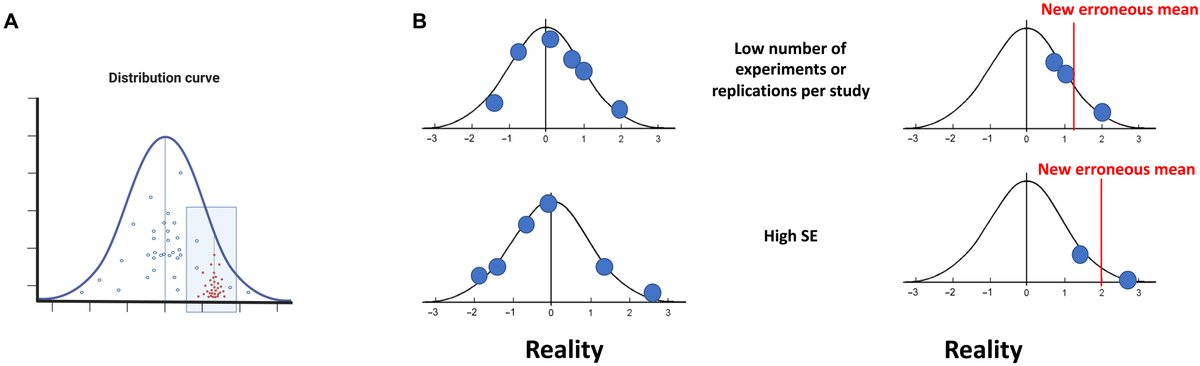
How should science address positivity bias? A new two-part Focus series explores its effects on the scientific literature.
Learn more ⬇️
https://t.co/ewPkJppKbw
https://t.co/9JjGbBNxKQ
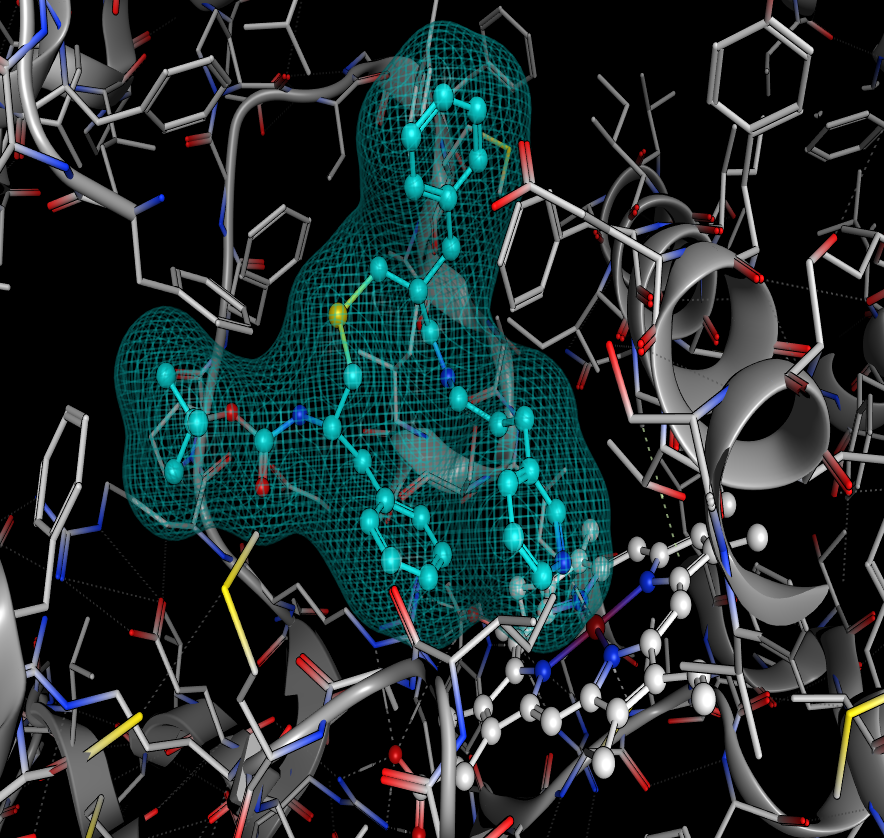
Large Drug Discovery Model is out! I am exited to introduce our new generative SBDD framework. We experimentally validated LDDM across 5 targets and successfully designed novel, validated hits with structural accuracy confirmed by X-ray.
Preprint: https://t.co/vqOiVfuDVi
🧵 1/7