Geographically, Israel is in a profoundly weak strategic position. At its widest point, it is only 71 miles (114 kilometers) across; at its narrowest point, it is only nine miles across. Israel has no defensive space. It has little ability to withdraw, regroup and counterattack. Defensive depth is essential to national security. It determines how much time there is to recover from an initial attack. Space and time are essential to war.
Ignoring the emergence of drones, Israel cannot tolerate a defeat at its border, because a defeat would give it, at most, 71 miles in which to retreat. From this flows a specific military logic. Israel has to prevent attacks by initiating combat, and it has to be able to defeat its enemy early in a war. For Israeli leaders, it follows that the Israel Defense Forces always have to be significantly more powerful than potential enemies. The idea that Israel would never face a force more powerful than its own has always been improbable. During the 1973 attack by Egypt and Syria (which were armed and coordinated by the Soviet Union), Israel came perilously close to disaster. It was saved by the fact that Egyptian, Syrian and Soviet planners had failed to anticipate their dramatic early successes and had no plans to fully defeat Israel and seize its land.
My full analysis of Israel's strategic problem is at @GPFutures. Please read and share: https://t.co/ypzSGHyZSG
The way in which settlers in Judea and Samaria are viewed today—not only by the West, but by much of the liberal Jewish world—strongly resonates with the way in which the "Ostjuden" (the traditional rabbinic Jews, Hasidic and Yeshivish Jews of Eastern Europe) were viewed in the era preceding Nazism. Indeed, liberal and assimilated German Jews often shared the pretensions of the larger society, which regarded these Jews as backward, barbaric, and even dirty and lowly. The Ostjuden, too, occupied the leading edge of antisemitic hatred. In the Ostjuden, the Nazis saw the incarnation of what they imagined "the Jew" to be, while having to periodically remind themselves that even assimilated German Jews must also be cast as "Jews."
Today, too, the "West Bank settler" is the incarnation of what is most hated by the antizionist, the stereotype and image of "the Zionist" in their imaginary.. And antizionists, too, must periodically remind themselves that liberal Jews, despite at times sharing some of their repulsion toward the settler, are themselves also "Zionists." The settler thus functions as the paradigmatic Zionist, much as the Ostjude once functioned as the paradigmatic Jew: the figure in whom the hated category is imagined in its most concentrated and visible form.
Most poker players misplay 200bb Poker
Here are 7 things you need to understand to crush deep stack:
1. 3-bet size goes down OOP and up IP:
If you reach a certain threshold (170-180bb), 3-bet sizing becomes counterintuitive. You want to put less money in if you are OOP because you want to minimize pot growth with infinite SPR behind.
The deeper you become, the worse being OOP is. You are forced to play more streets and make more decisions, so EQR goes down and down.
Vice versa for IP. Here is where you want to grow the pot; the deeper you are, the more favorable IP becomes.
2. Offsuit hands go down in value:
The deeper you become, the more important EQR is. The threshold for getting money in also goes up. At 20bb, a single top pair is getting it in; AQo outperforms ATs.
At 200bb, you need a much stronger range to stack off. You want hands that can cooler people.
3. Nut ability is more important:
Similar to the point before, you want hands that have more ability to make the nuts on all streets. If you x/r the flop, having stronger draws that can cooler weaker ones outperforms.
4. If you have a strong nut advantage, you often want to increase sizing and check more frequently:
The deeper you become, the stronger your range needs to be to stack off, so you often check more in polar spots, increase your size, and use a stronger range.
5. If you are OOP as the PFA, you often size down on very connected, middling, and lower boards:
Your overpairs are worth less and runouts change the nuts too often. You want to be more careful and wait for safe runouts. On the other hand, on boards where you have a strong advantage and want to rush money in (e.g. 223 BTN vs SB), you want very large sizes.
6. x/r frequency goes down:
Hands are worth less the deeper you become. You want a tighter, more EQ-driven range.
7. You want to implement massive sizes:
Especially in spots where you have a strong nut advantage and your range supports getting all the money in, you naturally need larger sizes in your arsenal. This is especially true in spots where action is backloaded (flop and turn didn’t go in much money).
I recommend comparing 100 and 200bb sims to spot changes yourself.
If you have questions, let me know :)
“The timid civilised world has found nothing with which to oppose the onslaught of a sudden revival of barefaced barbarity, other than concessions and smiles.”
Aleksandr Solzhenitsyn
You're a man,
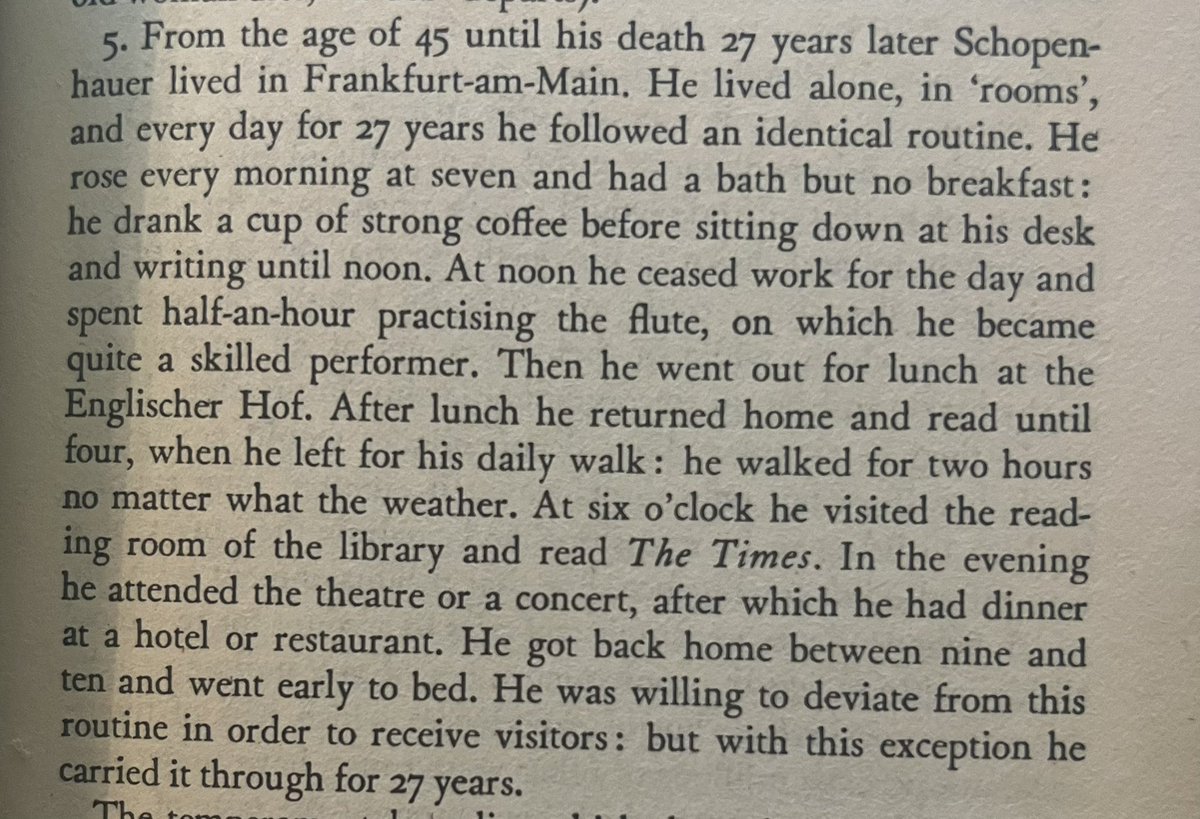
• Wake up; 5 AM.
• Hit 100 push-ups.
• Sit and write.
• Take a cold shower.
• Reconnect with God.
Then go out outdoors.
After 37 years of age, I’ve finally come to realize that, as a man, never stay indoors all day. It's the best cure to depression.