This is one of my favorite Bluebird pictures.
It was taken by a friend of mine, Charles Gammon, a wildlife photographer.
This female Eastern Bluebird just fed a grasshopper to one of her nestlings.
This nestbox is one of 34 nestboxes I monitor on a Bluebird trail in Michigan.
T-12 Hours! Tomorrow, we'll be counting down as the Sun comes up for the launch of NASA's Nancy Grace Roman Space Telescope!
The SpaceX Falcon Heavy rocket is ready to lift off at 7:26 a.m EDT from Launch Complex 39A here at Kennedy Space Center in Florida.
Falcon Heavy is vertical at pad 39A in Florida ahead of Sunday’s launch of @NASA’s Nancy Grace Roman Space Telescope, designed to study dark energy, exoplanets, and astrophysics → https://t.co/oacS4jED83
Tomorrow morning, NASA’s Nancy Grace Roman Space Telescope is scheduled to take flight!
Weather officials with the U.S. Space Force’s Space Launch Delta 45 have predicted a 50% chance of favorable weather conditions for tomorrow morning’s launch, with the primary concern being the Cumulus Cloud Rule.
Named after NASA’s first chief astronomer, this next-generation observatory will set out to answer essential questions about dark energy, exoplanets, and astrophysics. With a field of view at least 100 times larger than Hubble’s, Roman could measure light from a billion galaxies in its lifetime!
The spacecraft itself is an impressive sight. Weighing over 20,000 lbs when fully fueled, Roman is over 42 feet long and more than 14 feet wide when fully deployed. Once in space, Roman will orbit roughly one million miles from Earth at the second Sun-Earth Lagrange point (L2), the same orbit as the James Webb Space Telescope.
At 7:26 a.m. EDT, Roman is set to launch aboard a SpaceX Falcon Heavy rocket from Kennedy Space Center. About 8 minutes after liftoff, listen for the double sonic booms as the two side boosters return to Landing Zones 2 and 40 at Cape Canaveral Space Force Station!
Based here at Kennedy, NASA’s Launch Services Program (LSP) manages the Falcon Heavy launch service for this mission. Roman will be LSP’s 109th primary mission! Roman also marks LSP's 14th primary mission to fly with SpaceX, and 4th to be launched on a Falcon Heavy.
Tesla Cybercabs have officially gone Unsupervised in Austin, TX!
Cybercabs are now driving around the city without anyone in the vehicle. No steering wheel, no pedals.
LETS GO!
T-24 Hours! Roman is slated to liftoff tomorrow at 7:26 a.m. EDT!
NASA will host a Science Briefing today at 9:00 a.m. EDT to discuss the Roman Space Telescope mission followed by a Prelaunch News Conference at 10:30 a.m. EDT to discuss tomorrow morning's launch!
Starship has now been loaded onto a semi-submersible ship to begin the several month journey back to Starbase. Congratulations to the entire SpaceX Recovery team for battling through challenging conditions to give our engineers access to a wealth of data to continue rapidly developing Starship
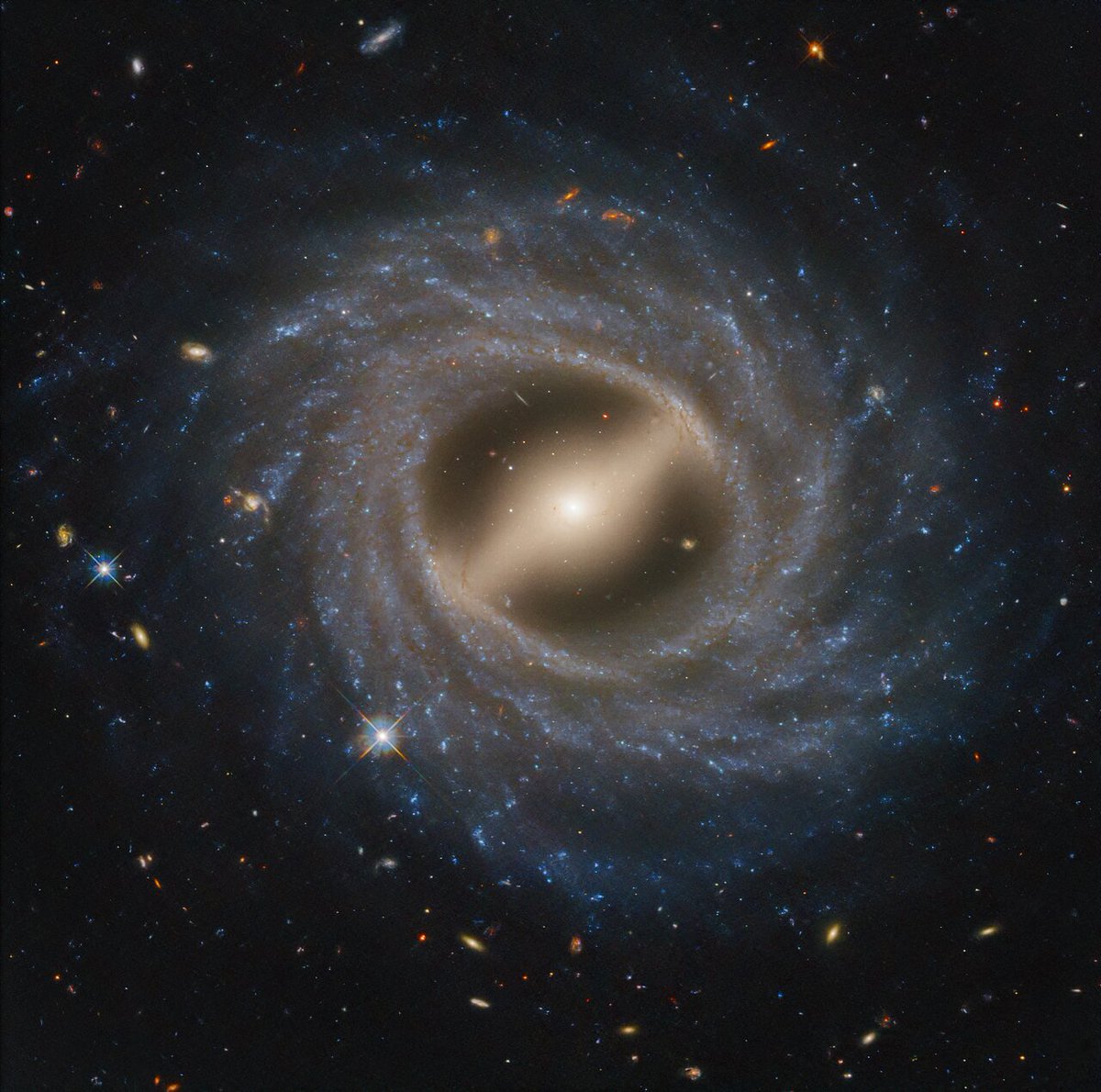
Our #HubbleTopImage features a barred spiral galaxy!
NGC 5335 is categorized as a flocculent spiral galaxy, with patchy streamers of star formation across its disk. There is a striking lack of well-defined spiral arms that are commonly found among galaxies. 1/2
Running up that hill!
Today, NASA’s Curiosity rover reached the pinnacle — so far — of its 14-year mission on Mars, when it marked an elevation gain of 1 kilometer in its ongoing journey from Gale Crater up the slope of Mount Sharp. 1/2
Here’s another view of Starship loaded onto the carrier ship Forte at Christmas Island, ready for its journey back to Starbase, Texas.
📸 Chris Bray Photography
BREAKING: SpaceX has just announced a massive $100 BILLION Starship launch site in Louisiana, the largest capital investment project in the state’s history.
The new high-cadence site in Vermilion Parish will:
• Create 3,000+ direct jobs and thousands more indirectly
• Support Starship launches at massive scale
• Include propellant production and power generation
• Have vehicle processing facilities, an airport and deep-water shipping capabilities
SpaceX says the goal is for Starship to eventually launch thousands of times per year, making rocket launches as routine as airplane travel.
Another major step toward scaling Starship and making humanity multiplanetary.