🚨NEW: @krakenfx, the U.S.’s second-largest crypto exchange, has just done something no other crypto firm has done before: secured coveted access to the Federal Reserve.
According to a report by the @WSJ released this morning, the exchange’s banking arm, Kraken Financial, has been approved for a Federal Reserve master account by the Kansas City Fed, marking the first time a crypto-native company has gained direct, albeit limited, access to the Fed’s payments system. The approval comes five and a half years after Kraken filed its application with the Kansas City Fed in October 2020.
The account gives Kraken a direct line into the Fed’s payments rails, but not access to Federal Reserve lending facilities. Under the limited-purpose, or “skinny,” master account framework floated by Fed Governor Christopher Waller, the firm can hold reserves and settle in central bank money, but it cannot lend, access the Fed’s discount window, or operate as a traditional commercial bank. Governor Waller is seeking to finalize his skinny master account proposal by the end of this year. The Kraken approval, sources tell me, is designed as a “pilot” program to trial the skinny master account concept. The skinny master account is in line with payments-only accounts provided by central banks in the United Kingdom, the European Union and Switzerland.
The decision marks a historic shift for an industry long shut out of the traditional banking system and signals a softer tone at the Fed, which critics had previously described as hostile to crypto under the prior administration. The decision also impliedly recognizes that the Fed believes Kraken has sufficient anti-money laundering and sanctions compliance practices to curb illicit finance risk, and that Wyoming’s regulatory framework for special purpose depository institutions (SPDIs) is in line with Federal banking standards.
This could kick off a surge of Fed master account applications from other crypto firms. On the horizon: Wyoming’s @custodiabank, which has been chasing access nearly as long as Kraken and has been engaged in litigation against the Fed since 2022. @Anchorage, an OCC-regulated trust bank, and @Ripple's U.S. banking partner have also applied for master accounts.
More to come.
For the record.
Jamie Dimon says he wants a “level playing field” for stablecoins. What he really wants is to make sure nobody can offer you a better deal on your own money than tradtional banks can. The president is right to call the banks out on this.
We’ve seen this before. In the 1970s, money market funds started paying real yields while banks were locked under deposit caps. Banks cried “unfair” and “unsafe,” lobbied furiously, and lost. Policymakers chose competition over protection; savers got paid, and banks had to adapt instead of suffocating the threat.
Today’s script is the same, just with better technology. Stablecoin issuers now operate under licensing, 1:1 high‑quality reserves, liquidity and risk rules, audits and strict AML standards. This is not the Wild West. Yet Dimon still talks as if they exist with “no reserves, no compliance, no oversight.” He’s not describing reality; he’s describing a story that justifies shutting down a rival funding system.
The Clarity Act is the real battlefield. On paper, it’s about integrating crypto into U.S. market structure. In practice, the big banks are fighting to ensure that anything that looks like a deposit with yield must either become a bank product or be regulated into irrelevance. “Level playing field” in their vocabulary means: everyone wears the bank straitjacket, or no one plays.
Why? Because yield‑bearing stablecoins blow up the quiet cartel behind record profits. Banks live on deposits that pay close to nothing even when risk‑free rates are high. They earn a clean spread and interest on balances parked at the Fed, while passing little of it through. Savers get crumbs; banks get the margin; inertia does the rest. A credible, regulated stablecoin that passes through money‑market yields detonates that racket: with a few clicks, your cash can leave the cartel.
The president’s critique goes straight at this arrangement: Americans should “earn more money on their money,” and banks should not be allowed to undermine laws designed to make that possible or to stall a market‑structure bill so the whole “powerful Crypto Agenda” decamps overseas. He’s not attacking banking; he’s attacking a model that treats low‑yield deposits as an entitlement and regulation as a weapon.
Crypto‑native firms, for all their flaws, behave like they live in a real market: they build new instruments, disclose, and pay up to attract capital. The banks build talking points and hire lobbyists. Stablecoins don’t just threaten their funding; they threaten their chokehold on payment rails and transaction data.
Call this debate what it is: not a fight over “safety,” but a fight over whether a protected deposit cartel gets veto power over technologies that finally let savers earn something closer to the risk‑free rate. In the 1970s, policymakers chose competition.
In the 1970s, banks were forced to stop hiding behind regulation and compete. If Jamie Dimon wants a level playing field, he should stop complaining and start doing the same.
New: At the White House meeting today between crypto and bank reps, WH gave a deadline of end of Feb to reach a deal on stablecoin yield, sources familiar said.
Hard to see how the market structure bill could have a chance of passing this year if the issue isn't resolved by then.
There will be future meetings, which will be smaller. Banks are pretty adamant about "closing the loophole", though, aka preventing companies like Coinbase from offering users rewards on stablecoin holdings. And Coinbase hasn't shifted on its insistence that it should be able to.
Keep in mind that none of my posts are intended as financial advice, not that anyone would want to take financial advice from someone who sold 40,000 ETH at $1.05 and 100 BTC at $750.
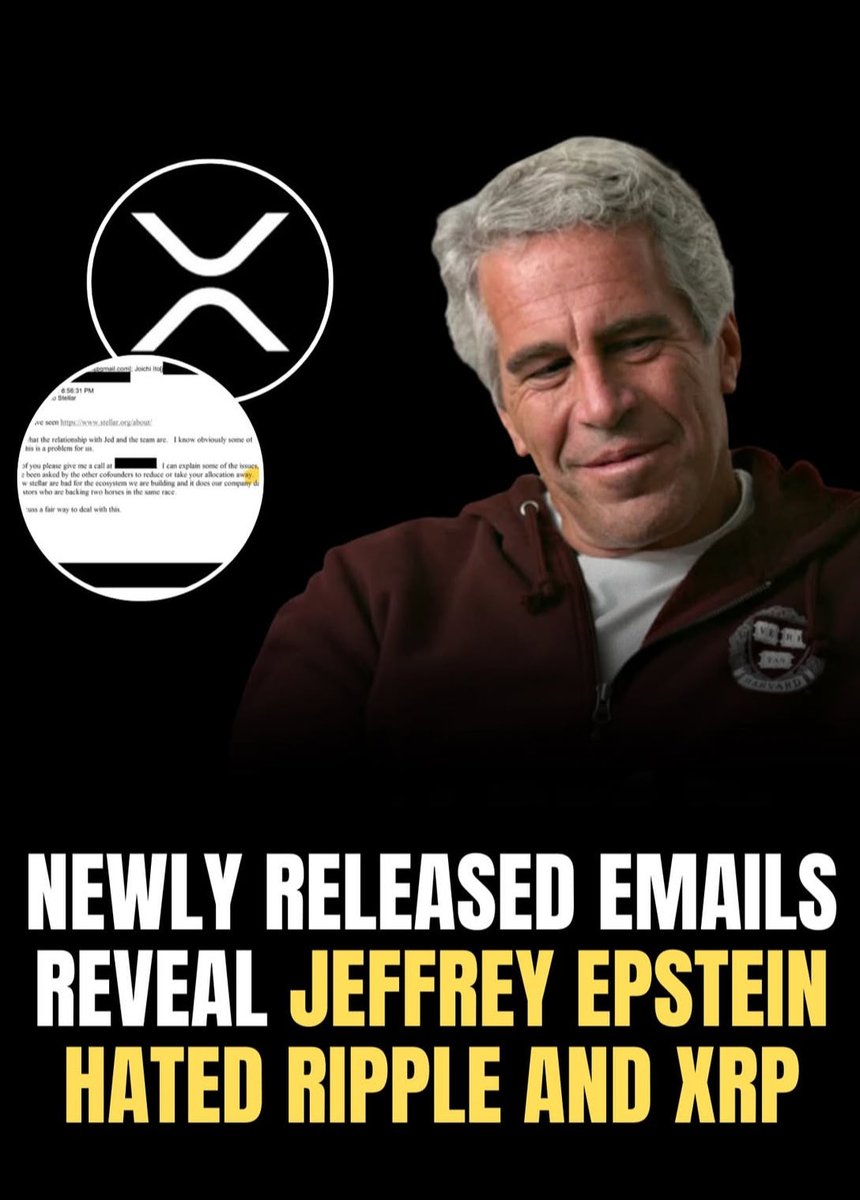
So you mean to tell me Epstein hired Jay Clayton & Gary Gensler to suppress Ripple/XRP with a 5 year SEC lawsuit because it was a threat to BTC and its failed technology??
BTC failed as a payment system
XRP was always the one and Epstein knew it
The Truth will be hard for them to swallow
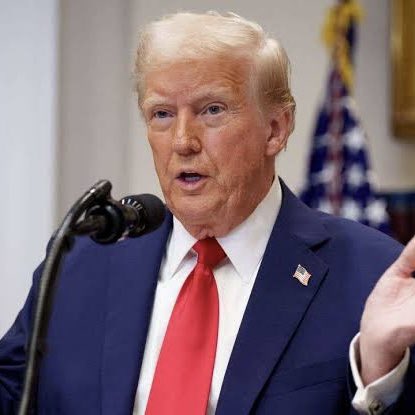
🚨BREAKING: TRUMP MEETING WITH CRYPTO GIANTS STARTS NOW 🇺🇸🔥
Right now at White House, Donald Trump (@realDonaldTrump) is officially sitting down with senior policy leaders (@BlockchainAssn, and others) tied to @Ripple, @Coinbase, and @Krakenfx — alongside Wall Street banking reps including the American Bankers Association. 👀
This is where the future of U.S. crypto policy starts getting decided in real time. 🚀
Keep an eye on my posts. I'll keep updating.