HOLY SH*T! Now its Morgan Stanley...
Morgan Stanley's $8 billion North Haven fund just got hit with massive redemption requests.
Their response? Deny most of them.
Sound familiar? It should, because Cliffwater did the same thing yesterday.
BlackRock and Blue Owl before that. Blackstone before them.
One after another, shadow banks are slamming the gates shut on investors trying to get their money out
But here's what should really get your attention:
JP Morgan just revalued collateral.
That's the kind of move that tightens the flow of money through the entire system.
It restricts who JPM will lend to and how much anyone can borrow.
And as others follow Jamie Dimon's lead, the squeeze only gets worse.
Now layer in oil ripping toward $100 a barrel despite governments dumping strategic reserves.
The U.S. alone is releasing 172 million barrels over four months. It's not working. Prices keep climbing.
And this is where the 2008 parallels get uncomfortable.
Back then, we had the same ingredients:
a credit bubble reversing,
fund managers swearing their fundamentals were "solid,"
officials claiming everything was "contained,"
and an oil shock that had central bankers chasing inflation that was never going to materialize, while completely ignoring the deflationary credit crisis unfolding right under their noses.
The ECB literally raised rates in July 2008. After Bear Stearns. On nothing more than oil prices.
As former Goldman CEO Lloyd Blankfein put it this week: "It sort of smells like that kind of moment again.
I don't feel the storm, but the horses are starting to whinny in the corral."
Jamie Dimon himself said it: "We did see this in 2005, 2006, 2007, almost the same thing.
Everyone was making money. People were leveraging to the hilt."
Now, does this mean we're guaranteed a repeat of 2008? No. The scale isn't the same. Not yet.
But the direction is the same. And the range of outcomes is narrowing toward territory nobody wants to visit.
That's exactly why I'm hosting a live webinar on Thursday, March 26 at 6:00 PM Eastern.
→ Click here to reserve your spot https://t.co/Ebs1EG2fDU
The people who got burned in 2008 weren't the ones who panicked. They were the ones who waited too long to pay attention.
Don't be that person.
Age verification is what happens when a legitimacy-starved system mistakes control for care. It cannot build a healthy society, so it builds checkpoints inside daily life and calls that protection.
🚨PREPARE FOR A -20% MARKET DROP:
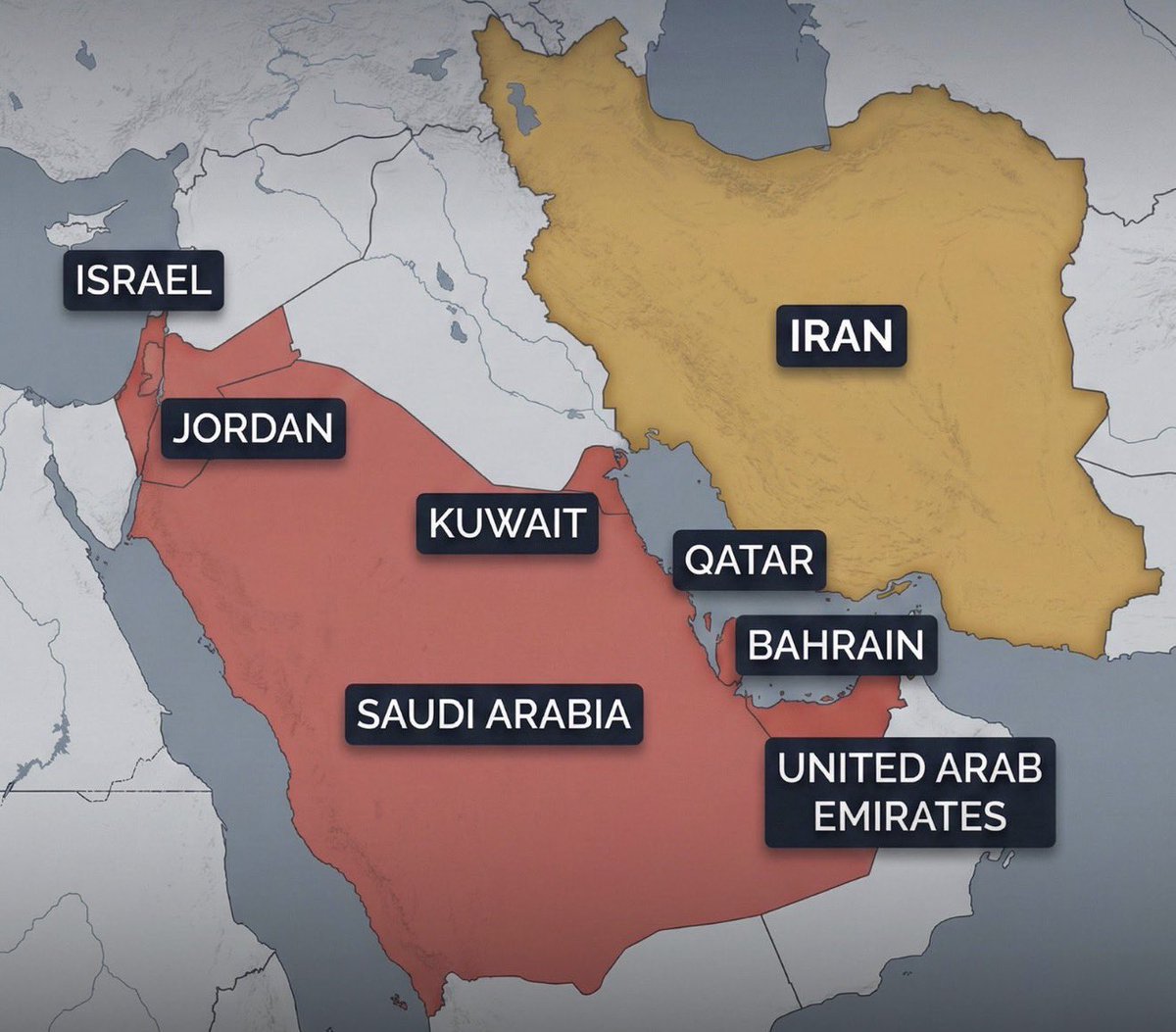
Everyone thinks the Iran conflict is an oil story.
It’s not. Let me explain what this is really about.
The Strait of Hormuz has been closed for 8 days.
Markets are focused on crude prices. That’s the wrong variable.
The real cascade nobody’s mapping:
92% of the world’s sulfur comes from refining oil and gas.
Close Hormuz, you don’t just lose 20 million barrels of crude per day.
You lose the feedstock for sulfuric acid m, the single most produced chemical on Earth.
Sulfuric acid is how we extract copper. How we extract cobalt. Without it, you can’t make transformers, EV batteries, or the substrates inside every data center on the planet.
One chemical. One feedstock. One 21-nautical-mile chokepoint.
It gets worse.
Qatar ships 30% of Taiwan’s LNG through Hormuz. Taiwan has 11 days of reserves.
$TSMC, the company making 90% of the world’s advanced chips, draws 8.9% of Taiwan’s entire electricity grid.
No gas → no power → no chips.
Then food. 33% of global nitrogen fertilizer feedstock moves through that same strait. Half of all humans alive exist because of synthetic nitrogen.
Sulfur. Semiconductors. Food.
Three supply chains. One chokepoint. Zero domestic alternatives at scale.
The economic math from here:
Oil holds $80-100+ per barrel if closure persists beyond weeks. Inflation climbs 0.5-1% above baseline. Fed delays rate cuts, 1-2 reductions instead of 3. GDP growth slows to 1.5-2%. Stagflation risk over the next 3-6 months is real.
S&P/Nasdaq: 5-10% correction base case. Tech/growth down 10-15% on higher yields and risk-off. Energy and defensives up 5-10%.
Market is currently pricing a 4-week conflict duration.
If this extends? 15-20% drawdown.
What I’m watching:
The US objective isn’t just degrading Iran’s military. It’s economic strangulation, destroy the refinery infrastructure, induce blackouts, impair logistics, accelerate regime instability without a full ground invasion.
The short-term pain is intentional and accepted. The strategic calculus: weaken Iran’s ability to project power, sever proxy support, and neutralize a nuclear threat permanently.
China feels this differently. Iran was supplying 1M+ barrels daily of discounted sanctioned crude. That’s gone.
Now Beijing is forced into costlier alternatives while already under U.S. economic pressure.
This isn’t about oil. Oil is just the vector.
The real targets are the supply chains that run through it.
How I’m positioning into this:
If this escalates and markets reprice, here’s my expected drawdown map on BETA stocks:
> $ASTS, -15 to -35% (beta amplification, rate sensitivity in space telecom)
> $IREN, -20 to -30% (rising energy costs crushing margins)
> $CIFR, 15-20% (rising energy costs crushing margins)
> $AMPX, -15 to -30% (cobalt + sulfur supply chain disruption hits batteries hard)
> $RKLB, -10% to 25% (higher yields compressing aerospace valuations)
> $ONDS, -10% to 25% (industrial wireless demand slowdown in tight credit)
> $NBIS, -5% to 20% (AI cloud risk-off but lower beta buffers the downside)
> $KRKNF, -5% to 15% (low beta, robotics holds relatively well)
> $OSS, -5% to 15% (hardware stability, limited tech sector contagion)
I still hold cash. That cash exists for exactly this scenario.
My plan: I don’t hold enough cash as of now, which is why my strategy will be to buy the hardest-hit names on the way down, DCA monthly through the pressure, and let the timeline work.
If this plays out as I expect, escalation through summer, then resolution, the relief rally sets up Oct/Nov.
That’s 7-8 months of accumulation before the market re-rates.
The biggest mistakes in geopolitical dislocations are panic selling and waiting for the all-clear.
By the time the all-clear comes, the move is already over.
Note: This is not financial advice.
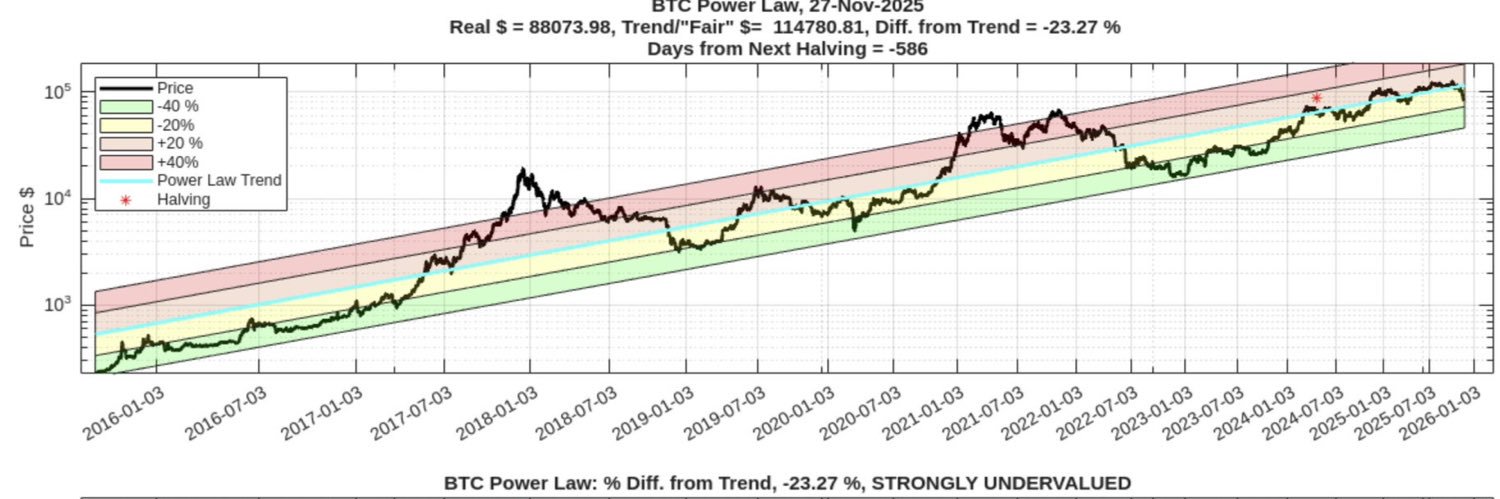
It's all relative. Tether holds nearly 0.5% of all the bitcoin that will ever be in circulation and that percentage only grows as they accumulate more. They're gold holdings relative to total supply are closer to 0.06% and to maintain that percentage or grow it, they must accumulate at least 0.06% of all future mined supply until the end of time.
JACK DORSEY ACABOU DE CRIAR UM PROBLEMA PRA TODO DITADOR DO MUNDO
E o primeiro teste é em 7 dias.
Na Uganda. O país vai às urnas dia 15.
Museveni governa desde 1986. Em toda eleição, corta a internet. Literalmente toda vez.
→ 2016: blackout total
→ 2021: 4 dias offline durante a votação
Oposição não consegue coordenar, verificar votos, documentar nada
Aí veio o Bitchat.
400.000 ugandenses baixaram o app em uma semana.
1% da população.
O app usa Bluetooth mesh. Mensagens pulam de celular em celular. Sem internet. Sem servidor. Sem torre.
O regulador de telecom foi pra TV dizer que tem "a maior concentração de engenheiros de software do país" pra bloquear o app.
O desenvolvedor respondeu no X:
"Você não pode parar o Bitchat. Você não pode nos parar. Free and open source. Unstoppable."
Ele está tecnicamente correto.
Pra bloquear o Bitchat, o governo teria que desligar o Bluetooth de todo celular do país. Ou confiscar os aparelhos. Ou proibir ugandenses de ficarem a menos de 100 metros uns dos outros.
O regime ordenou Starlink suspender operações. Controle de satélite. Controle de fibra. Controle de torres.
Nenhum desses controla Bluetooth.
40 anos de investimento em censura.
Derrotado por ondas de rádio de curto alcance que existem desde 1994.
E o Bitchat ainda manda transações de Bitcoin offline.
Bobi Wine, líder da oposição, pediu pra população baixar antes do apagão. Dessa vez eles vão pro escuro armados.
15 de janeiro.
Se o Bitchat derrotar Museveni, todo ditador do mundo acorda com um problema novo.
@LukeGromen@EmporosResearch@sunny051488 @Honors_btc @ZachSawatz3599@alexstanczyk@StephenM Central banks. They won’t buy Bitcoin but always run back to gold. They centralized & demonetized gold, now they’re driving this 5 year bull run vs bitcoin. If they’re attacking Bitcoin, they’re emphasizing the superior properties of Bitcoin & illustrating why it will beat gold.
Oh, wait, the European Commission doesn't like our new law? Why not? We're just protecting the First Amendment, what's the problem with that?
Oh, the Commission's problem is with the First Amendment. I see.
@GrantCardone Central banks. Two questions, same answer:
1. What institution demonetized gold?
2. Who is driving the gold bull run?
Gold’s physical properties are a centralizing attack vector. A rug pull as old as commerce itself.