Dad. Associate Professor @eth_en, studying stress, behavior, hippocampus, noradrenaline and the mighty locus coeruleus
Here to learn, share, laugh and rant.
We just released the largest amount of stress profiling data from our (any?) lab so far!
How does the molecular stress response adapt as an acute stressor becomes chronic?
Multiomic profiling in the 🐭 hippocampus, led by @RebeccaWaag and co-last author Pierre-Luc Germain! 💪
@LecoqJerome@BohacekLab Yes, but the suprising detail is that the population pattern of activation by norepinephrine did not correlate with the population pattern of activation arousal (which is thought to be mediated by norepinephrine for astrocytes).
Very excited to share our new preprint! We explore the link between the locus coeruleus (LC) and arousal for astrocytes, pyramidal cells, interneurons in the hippocampus. A fantastic collaboration with Sian Duss @BohacekLab, and many others: https://t.co/xzEibyWIXn 1/5
How does your favorite gene respond to stress? Check out our updated “Stressome-app”!
In a new @NatureComms paper we extend our interactive app with loads of bulk and single-cell transcriptomics after acute and chronic stress.
https://t.co/xf1Hl9dF7v
👇
https://t.co/qEIs480sy0
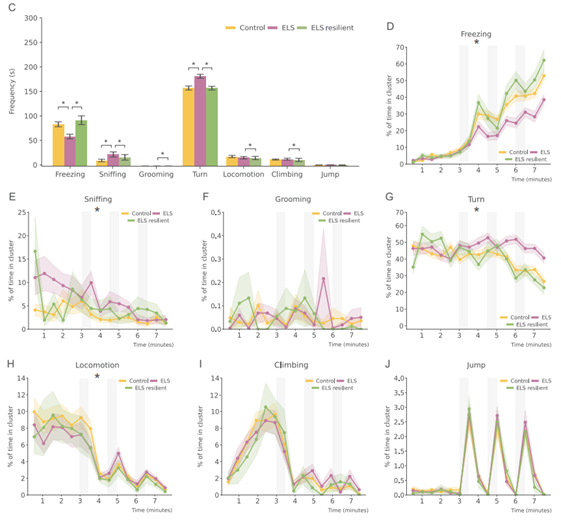
6/ But is ELS always like this?
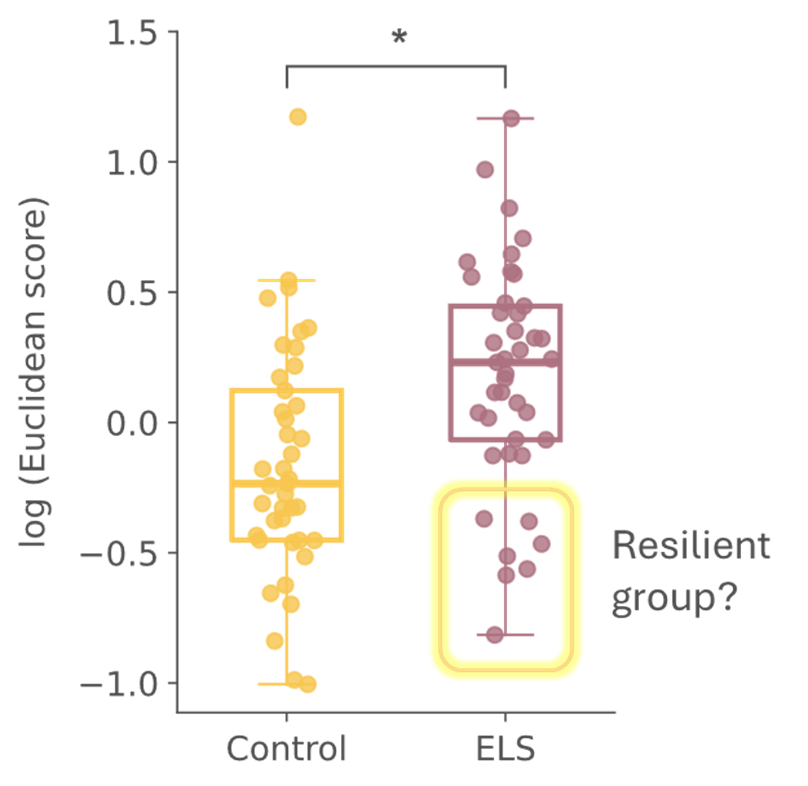
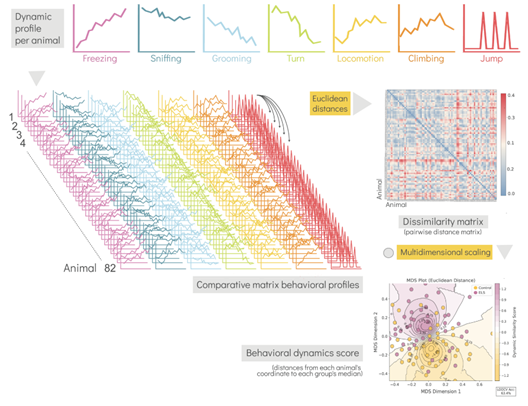
We mapped each mouse into a behavioral similarity space (@BohacekLab), with a behavioral score of how ELS or control-like each animal behaved. About 30% of ELS mice looked like controls with richer, flexible repertoires: resilient individuals?
Our study describing a role for the circular RNA circRERE in the regulation of silent excitatory synapses is finally out @NatureComms! https://t.co/GVDPOvfNyd
Stellar women-only (💪) panel on stress and development, loaded with cutting-edge multiomic data kicking off the European Stress Conference #ESC2025 in Innsbruck, Austria
@umochitju The 3R hub is in the business of helping to generate data and technical solutions to advance animal welfare. We, the scientists, are the ones who have to do the lobbying (unfortunately). Would be great if we actually had lobbyists on our side too...😳
Most importantly: We developed an automated, portable pain and welfare monitoring system (combining "mouse grimace scale" and full-body pose-estimation with behavior flow analysis).
Brilliant work by @osturmscience, the @ETH_en 3R-Hub and our collaborator Katharina Hohlbaum. 💪
How much analgesia is needed to manage pain levels in mice after brain surgeries?
A single dose of meloxicam seems to be enough. Even the addition of opioids cannot provide a clear benefit (in line with recent work from others, see refs in our preprint):
https://t.co/Ztrjfybfqj
Note: Modest grimace pain levels remain detectable for 24hrs after surgery. Neither meloxicam (5mg/kg) nor the combination of meloxicam(5mg/kg)+buprenorphine(0.1mg/kg) could eliminate these remaining pain levels.
We detect strong side-effects from opioid treatment (hyperactive).
@CarlosEAlvare17 @RebeccaWaag Thanks! It would indeed be interesting to run a similar profiling of the stress response in genetic models of anxiety. There are mouse strains with high anxiety and also lines that have been bred for high trait anxiety. I think genetic risk factors in humans have small effects.
We just released the largest amount of stress profiling data from our (any?) lab so far!
How does the molecular stress response adapt as an acute stressor becomes chronic?
Multiomic profiling in the 🐭 hippocampus, led by @RebeccaWaag and co-last author Pierre-Luc Germain! 💪
And saving the best for last: We integrate these results with previously published bulk and single-cell data from our lab and make these data freely accessible and searchable through an interactive app (https://t.co/dSeZGEtA0P). We hope people like this resource - please RT! 🙏
On a single-cell level, we reveal blunted chromatin accessibility changes after chronic stress for cAMP signaling, and a damped response that returns to baseline much faster for glucocorticoid receptor binding. This again points to two parallel mechanisms of habituation.