Ben Horowitz on the infrastructure behind the AI economy:
"Crypto is the natural money for AI because it’s internet-native money."
"AI is global. Crypto is global."
"There needs to be not just a ledger of money, but probably a ledger of truth for AI to really fulfill its potential."
"I think people are probably underestimating how crypto and AI work together to form the AI economy."
"Networks and computers tend to grow together, and I think that AI is obviously a new kind of computer and crypto is a new kind of network."
@bhorowitz on Moonshots with @PeterDiamandis
The Foundry is a two week builder residency in NYC from March 16th to 27th
Foundry brings together ambitious founders to build relationships, co-work in person and level up together
Applications below 👇
Congrats to @KINETK_AI users on securing 50 million pieces of content in the first month
Learn more about AI-powered content protection, and KINETK's new campaign here: https://t.co/PZ6QltRwJQ
New course: Document AI: From OCR to Agentic Doc Extraction, built with @LandingAI, where I'm executive chairman, and taught by David Park and Andrea Kropp.
Much of the world's data is locked in PDFs, JPEGs, and other documents. This short course shows you how to build agentic workflows that process documents accurately: breaking them into parts, examining each piece carefully, and extracting information through multiple iterations.
Traditional Optical Character Recognition (OCR) captures text but loses context from table headers, chart captions, or reading order of columns. After exploring OCR's limitations, you’ll use LandingAI's Agentic Document Extraction (ADE) framework to process documents. ADE treats pages as visually -- as images -- to parse information and extract fields.
Skills you'll gain:
- Build agents to convert unstructured files into structured Markdown/HTML and JSON
- Use ADE to parse complex data like forms, handwriting, or equations
- Map extracted information to named fields using a specified schema, with bounding boxes for grounding and validation
- Deploy RAG applications with event-driven document processing
Come learn about the best tools for processing documents like financial invoices, medical records, or academic papers intelligently:
https://t.co/PYjgnoaD2K
Build by the community, for the community.
Excited to welcome @midnightexplr as an ecosystem collaborator 🤝
Strong, community-built infrastructure like this will make it easier for builders to ship, users to explore, and the ecosystem to grow with transparency from day one.
Full announcement 👇
How to build a Monad React Native app in 12 minutes!
You'll learn how to :
- Build a mobile app using Expo
- Integrate Monad testnet
- Use Privy embedded wallets
First slow, then all at once 💥
Real adoption for decentralized identity comes from solving real problems.
And today's real problem is clear: enabling data reusability for regulated use cases to reduce user friction and minimize data duplication.
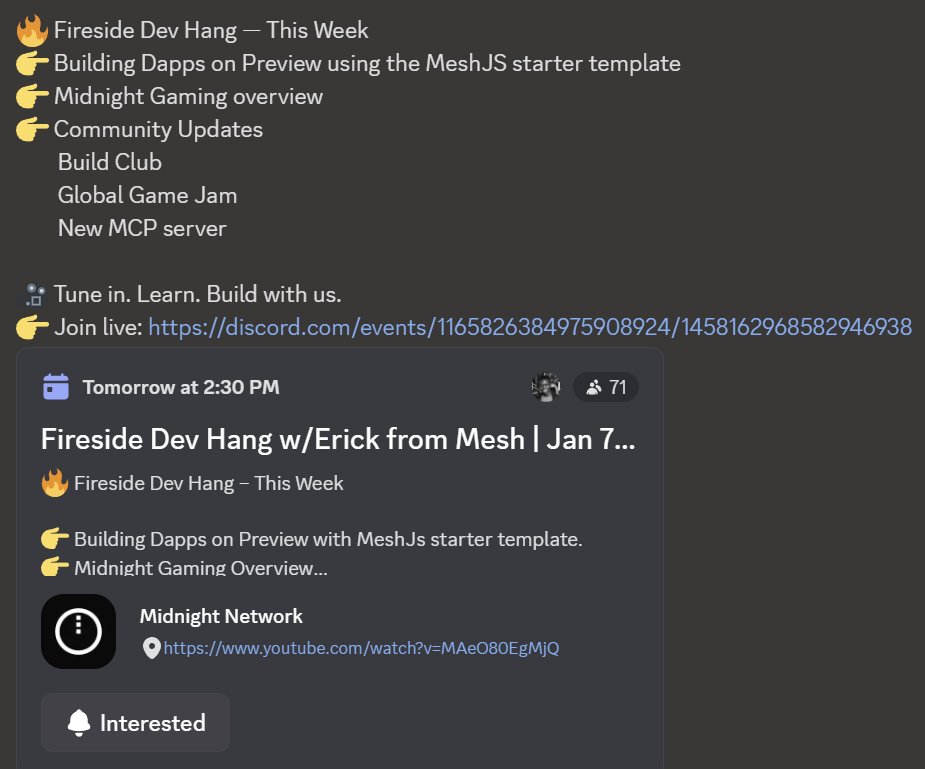
Want to build amazing things on @MidnightNtwrk? 🛠️You cannot miss tomorrow's fireside! 🔥
We’re diving into the @eddalabs_io Starter Template. The setup we use daily ⚙️ How it works ⚡ How YOU can build faster.
🚀 Let's build. @midnightfdn@meshsdk
https://t.co/gaxojBSqkX
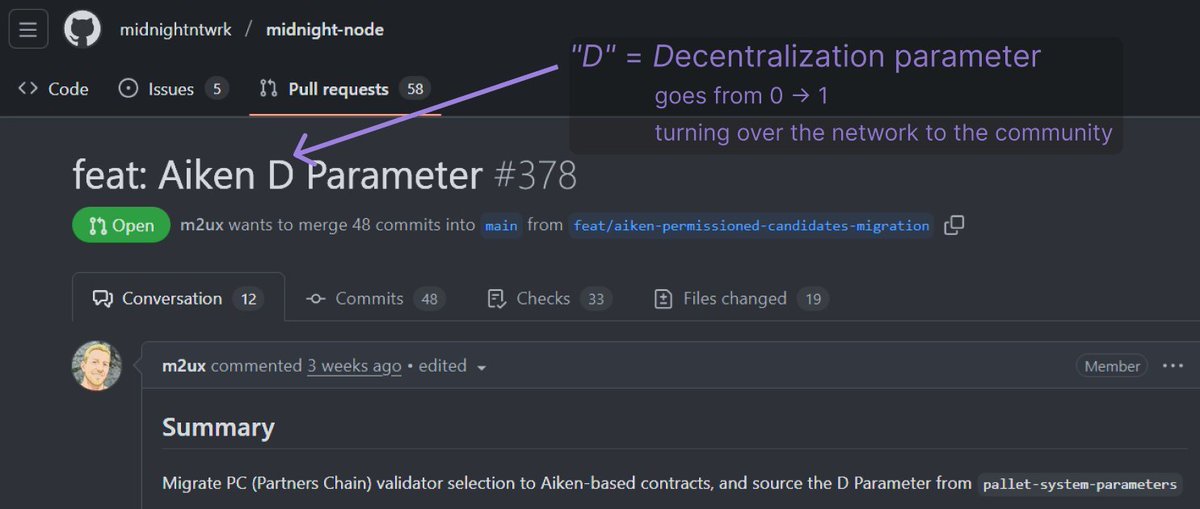
🚨BREAKING: MIDNIGHT'S DECENTRALIZATION PLAN IS CRYSTAL CLEAR – D PARAMETER FROM 0 → 1!
As CTO Sebastien Guillemot shares: Midnight features a "D" = Decentralization parameter that grows over time, handing network control to the community – ensuring smooth launch as block producers come online!
True privacy network going fully decentralized – 2026 is the year of Midnight community!🚀
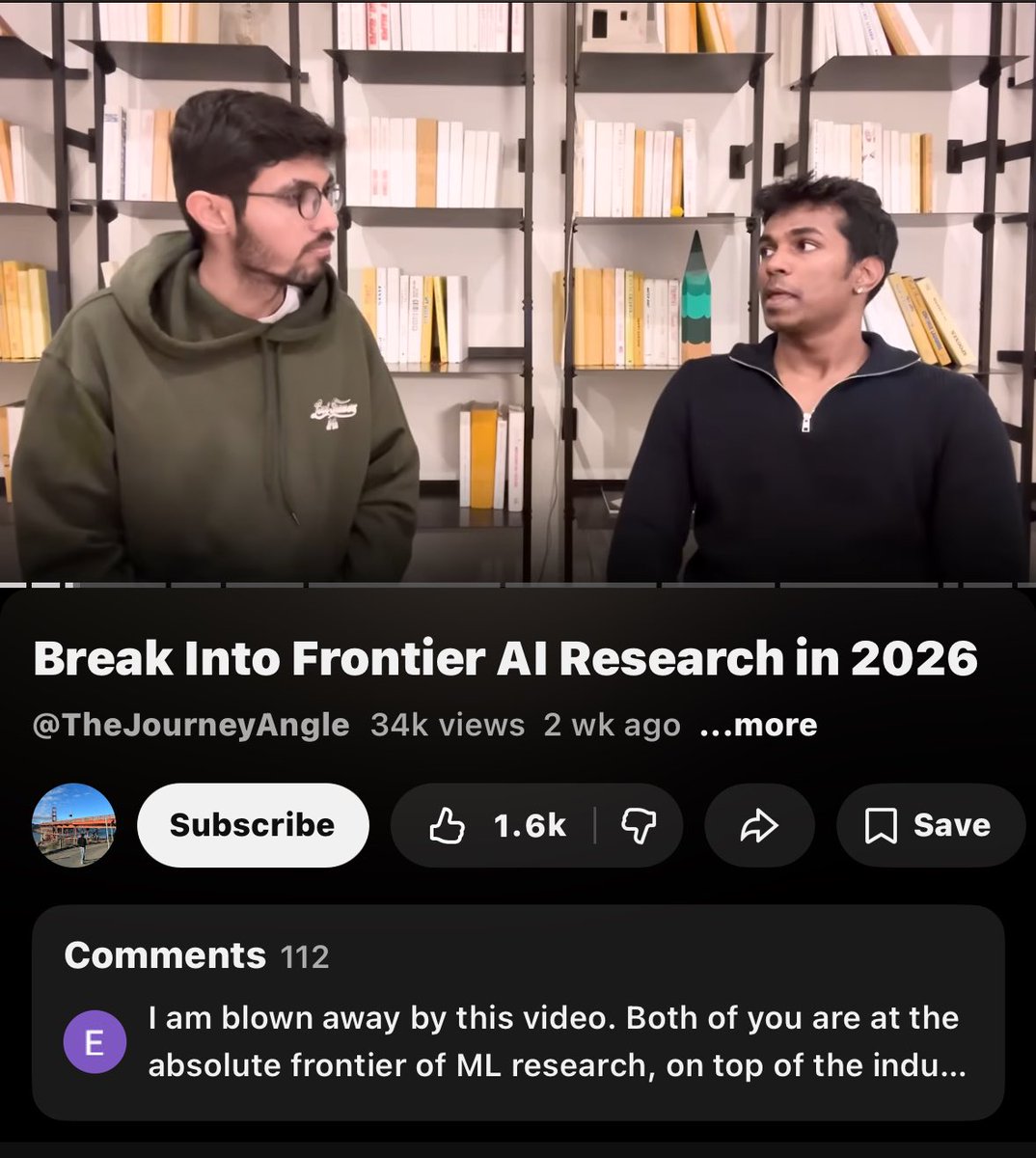
he’s a research engineer from the Google Gemini team and he explained practically everything to know about breaking into frontier AI research in 2026 in just 40 minutes. here are the main points:
> how to get started?
take courses on ML and DL. could be uni or online. learn undergrad level math. no need to master all at once, you’ll keep visiting them. then switch to reading papers. this helps you build a “mental map” of the field.
> how to read papers efficiently:
it’s a skill you get better at as you read more papers. start with the abstract, then jump to the main section.
> how do you find related papers when researching about something?
read a well cited paper on the topic, then go to its citations to go back in time, or find papers that cite it to go forward in time.
> how to jump from reading to starting your own research?
find a related paper that has public code. download the code and the dataset and play with it a little. try new parameters, benchmarks, etc.
it’s not about implementing papers from scratch, but building on the work of other authors.
> how much math do you actually need?
you need math but not all at once and not all of math. if you’re a theoretical researcher you must know advanced math. empirical researchers mostly need math to understand.
> reach out to more senior phd students, professors, or authors of related papers to seek guidance/mentorship or if you can contribute to any of their projects.
> finding research roles is a lot about recommendations more than other roles.
> industry job without PhD?
AI residency is a great intermediate for this. you can get hands-on experience and get your career started.
🚨BREAKING: Over 150 million $NIGHT tokens from the Glacier Drop and Scavenger mines have been claimed.🔥
There are just over 60 days left until the end of the first unlock period for eligible individuals who will be randomly allocated.😱
We’re making great progress with our Gemini Robotics work in bringing AI to the physical world - a critical aspect of AGI. As part of our next steps, super excited to announce our partnership with @BostonDynamics, combining our SOTA robotics models with their world-class hardware
Terence Tao says the math behind today’s LLMs is actually simple. Training and running them mostly uses linear algebra, matrix multiplication, and a bit of calculus, material an undergraduate can handle. We understand how to build and operate these models.
The real mystery is why they work so well on some tasks and fail on others, and why we cannot predict that in advance. We lack good rules for forecasting performance across tasks, so progress is largely empirical.
A key reason is the nature of real-world data. Pure noise is well understood, perfectly structured data is well understood, but natural text sits in between, partly structured and partly random. Mathematics for that middle regime is thin, similar to how physics struggles at meso-scales between atoms and continua.
Because of this gap, we can describe the mechanisms but cannot yet explain capability jumps or give reliable task-level predictions. That mismatch, simple machinery versus hard-to-predict behavior, is the core puzzle.
----
Video from 'Dr Brian Keating' YT Channel (Link in comment)
Midnight has a clear plan for decentralization 👍
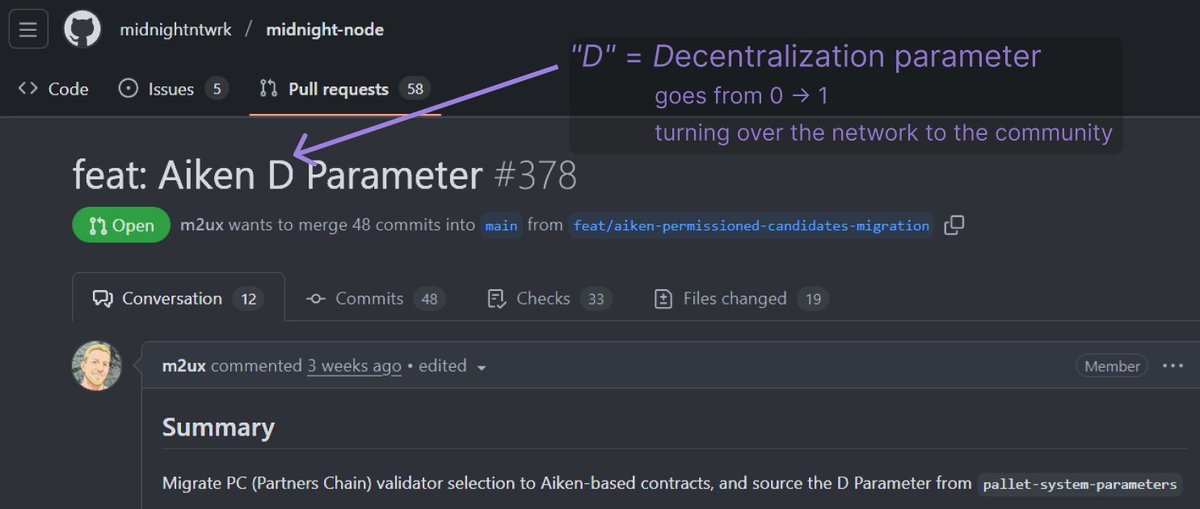
Midnight will with a "decentralize" (D) parameter. It grows over time, turning over network control to the community
It ensures a smooth network launch as block producers come online