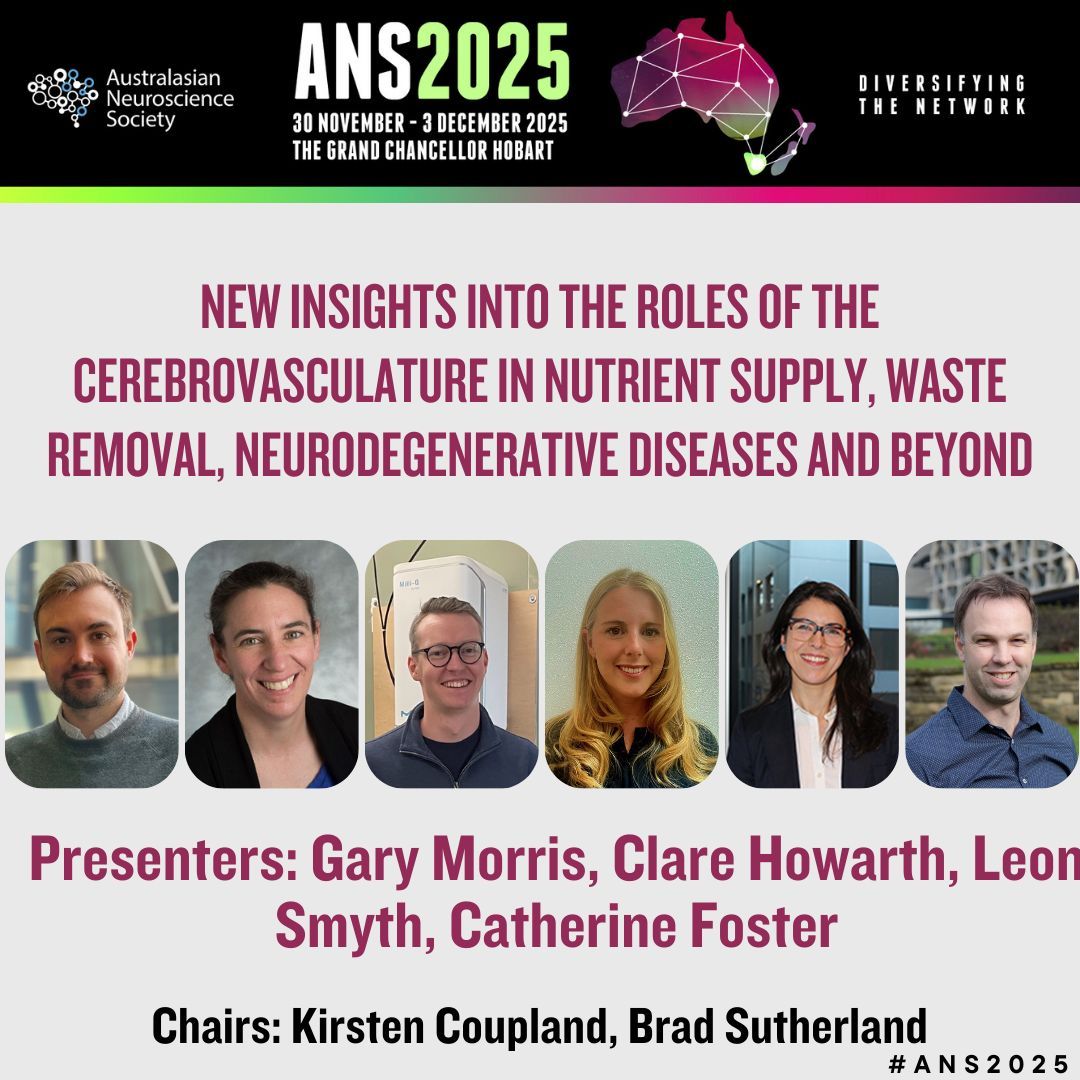
Find out more about #ANS2025 symposia for the Hobart 2025 ANS meeting including "New insights into the roles of cerebrovasculature in nutrient supply, waste removal, neurodegenerative diseases and beyond" here: https://t.co/9ztAE2SgYi
🗣️Calling all ANS members to nominate symposia and speakers for the #ANS2025 conference to be held in Hobart, Tasmania, from 30 Nov-3 Dec!
Symposium guidelines: https://t.co/urIErpDeVy
Submit porposal here: https://t.co/rw2MBsHIqZ
But hurry! Submissions close 5pm, 24/03/2025
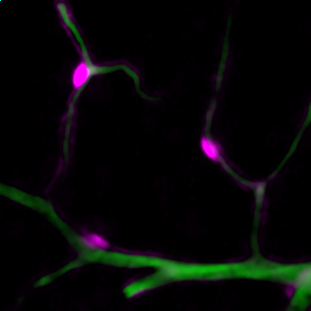
🧠🔬 Exciting #HotTopic: microglial "plugs" found at blood vessel contacts in the brain!
This opens a new path to understand how microglia interact with the vasculature in health and disease.
Don't miss it: https://t.co/6WRsQlU25V
#JCBFMhome#ISCBFM#BrainResearch
Our new paper published in @BrainBehavImm shows ablating pericytes in mice causes hypoactivity🏃, motor impairment, vessel dysfunction🩸, and widespread gliosis🌟. Another reminder of how important pericytes are for brain function.
@BradASutherland@LabGlial (1/3)
Excited to share that our work showing the #mTOR inhibitor #rapamycin (Sirolimus) can reduce #brain#pericyte constriction following #stroke, is now published in Translational Stroke Research! https://t.co/4ZPiiKKf5o
I am pleased to launch the Multiple Sclerosis Centre of Research Excellence, funded by the NHMRC. I look forward to working with Bruce Taylor, @williamreay96 , Ingrid van der Mei, @aydzhouyuan , @BradASutherland , Jake Gratten, @NatashaJStevens , Leonid Churilov & Chris Gumley
Numerous pharmacological studies modulating pericyte contraction are currently being published! 👀
This interesting @biorxivpreprint shows that #Rapamycin (#mTOR inhibition) relaxes #pericytes, mitigating capillary dysfunction after stroke reperfusion 🧠
https://t.co/m555pRjAdj
Excited to share our new preprint showing that the #mTOR inhibitor #rapamycin (Sirolimus) can reduce #brain#pericyte constriction following ischemia in vitro and #MCAO#stroke in vivo. https://t.co/xAxfD2f2Io.
Check out our new work on how microglia interact with the vasculature through astrocyte end feet using the @AllenInstitute#MICrONS cortical mm^3 dataset!
Had a great time working with @Gazz4_Science, @BradASutherland and @SorenGrubb to produce this work!
1/ 🔥 Exciting findings from our collaboration between @UTAS_, @SeattleChildrens, and @uni_copenhagen! We've discovered a new way #microglia interact with 🧠 vasculature, which could reshape our understanding of their role in #brain health and disease. 🧵 https://t.co/iaNFHuURPg
Our latest publication was just released in Stem Cell Research and Therapy, showing gene expression and functional differences between neural crest and mesoderm iPSC-derived pericytes (iPericytes). Check it out here: https://t.co/qFq68LshlL