UNDERSTANDING GaN vs. SiC
Lately investors new to semiconductors and new to power electronics have been asking me about "GaN vs. SiC." There is no GaN vs. SiC.
Power semiconductors are defined by two variables: voltage blocking capability and switching speed. These trade off against each other, and different applications sit at different points on that curve.
SiC is the right material for high-voltage, high-power applications where switching speed matters less than raw blocking capability. Utility-scale solar and very large (larger than 50 MWh) battery systems should often be served by SiC because their value driver is primarily the energy content.
This is also why traction motors (like EVs and locomotives) can use SiC –– the computation environment is relatively simplistic so the slow speeds are acceptable. SiC devices today block up to 10 kV and switch cleanly at those levels. Nothing else does.
The most interesting area of power development, though, is in projects where the value driver is a mix of energy, power, capacity, and harmonics. Like a data center. Or a grid-supporting 5 MWh BESS. Or V2X devices that link electric cars and trucks up to the grid. This requires deft computational power handling.
These are ~all of the interesting next-gen power applications. You serve your local need well (charging the car, powering the data center); but you are also performing ultra high-speed grid support activities.
GaN owns the sub-3 kV space, and it owns it decisively. At voltages below 1.2 kV — consumer fast chargers, server power supplies, EV on-board chargers, microinverters — GaN switches at frequencies an order of magnitude higher than SiC, in a fraction of the package size, at a cost that follows a steep downward curve driven by HVM in consumer electronics. The 140-watt USB-C laptop charger uses GaN switching at a million times per second. A comparable 1990s power supply was four times larger and ran hot enough to need a fan. That cost and density curve is not stopping.
The framework is simple. If your application is above 3 kV and switching speed is secondary to blocking voltage, use SiC. If your application is below 3 kV and you need speed, density, and cost efficiency, use GaN. Between roughly 1.2 kV and 3 kV is contested territory where the answer depends on the specific thermal, cost, and frequency requirements of the design.
The cost trajectories of the two materials reflect their origins. SiC crystal growth happens above 2,000°C at a rate of roughly 100 to 300 microns per hour — a thousand times slower than silicon. Each step up in wafer diameter, from 4-inch to 6-inch to the 8-inch transition now underway, requires reinventing the thermal field and crucible design from scratch. 6-inch SiC substrates fell roughly 30% in price in 2024, driven by Chinese overcapacity, and the move to 8-inch wafers should cut per-die costs another 30 to 40% once yields stabilize — but those gains come hard and slow.
GaN's cost curve is of different stuff entirely. Because GaN-on-silicon grows on standard substrates, it inherits the economies of the silicon ecosystem. 150mm GaN-on-Si wafer prices have fallen roughly 40% since 2020. Prices have crossed below $1 per transistor for high-volume GaN devices. The industry is now moving toward 300mm GaN-on-Si, which will yield 2x more chips per wafer than 200mm. That cost curve is being pulled by billions of consumer electronics units and the grid gets to ride it for free.
GaN does have a ceiling. At medium-voltage grid applications — like 34.5 kV — GaN cannot block the full line voltage directly. This is where GaN challengers go wrong. They presume that the only architecture possible is a direct, centralized, single-device approach to handling large voltages. Not so.
The more interesting path is to keep GaN operating within its native voltage range — below 12 kV — and build the medium-voltage function from an array of GaN-based modules. Each module runs at GaN's switching frequencies, which are high enough that the transformer inside each module shrinks to the size of a paperback. The aggregate system handles medium-voltage grid connection without exposing any single device to voltages it can't block. What you lose in architectural simplicity, you gain in speed, redundancy, cost, and manufacturability — because you're building from parts that already exist in billion-unit volumes on a known transistor cost ramp.
Stacking GaN will do something consequential: bring semiconductor switching speeds to grid scale. And thus bringing a cost profile that follows true high-volume manufacturing economics rather than industrial green-metal-cabinet economics.
But the putative "competition" between these semiconductors isn't a reflection of reality. There isn't a winner, really. The grid needs both materials deployed where each is strongest.
While our greatest environmental impact is achieved by our software, not every challenge can be addressed digitally. Sometimes we need to clean up our local environments the old fashion way!
A new map from @wattTime in collaboration with @ProjectDrawdown and @nature_org uses Climate TRACE data to show where new #renewable energy facilities can do the most good for the #climate.
Watch to learn more:
https://t.co/ZEp58WBCp1
Thank you to everyone who voted for Climate TRACE, making us a @TheWebbyAwards winner for the best of the internet in the category of Sustainability and Environment.
https://t.co/pWSiYdhO2B
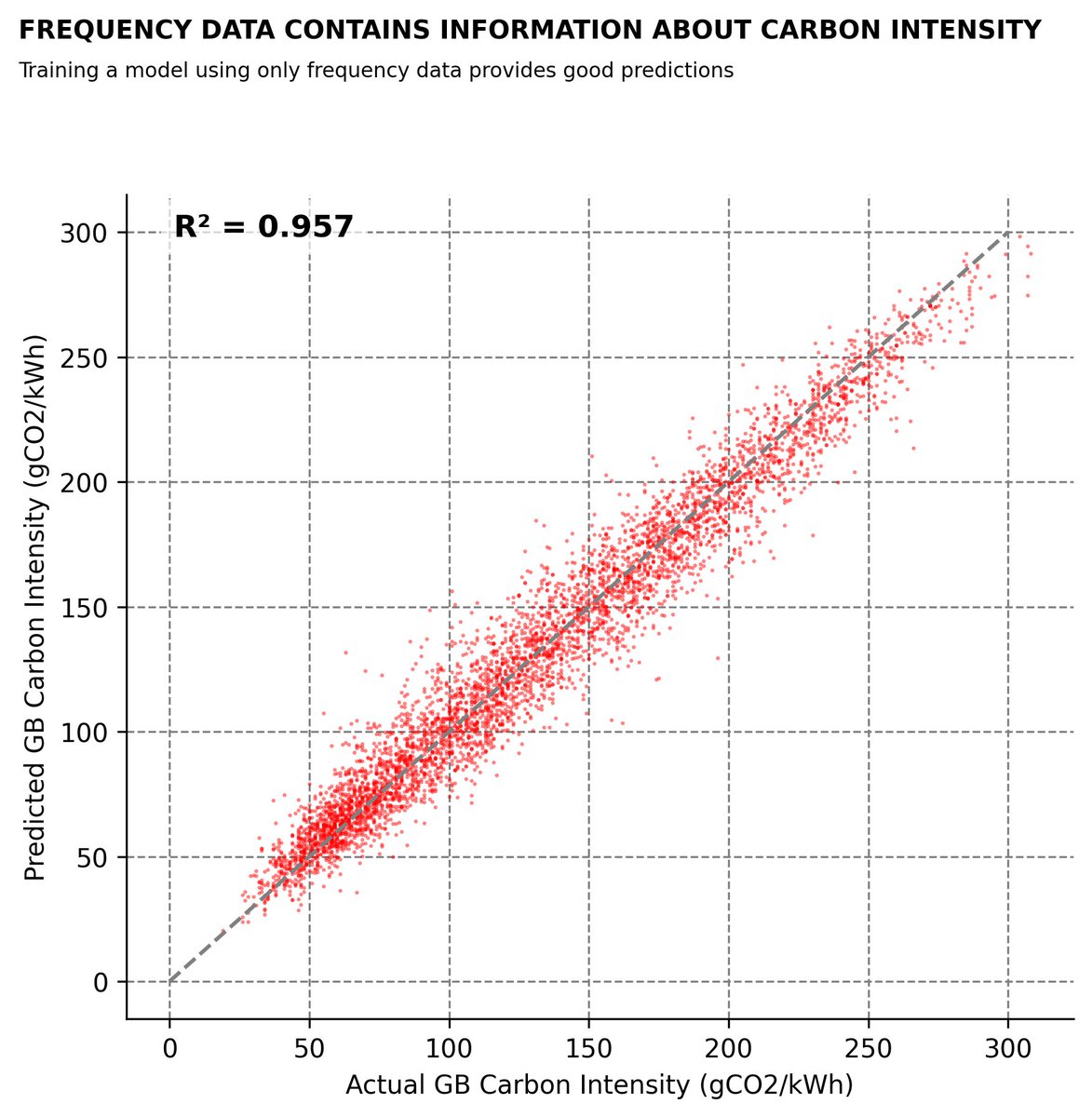
Damn, this is super interesting. You can accurately infer the carbon intensity of the grid just by measuring its frequency.
Prob means you can infer other things as well.
A new report from @McKinsey finds that not only does an emissionality-based approach to RE procurement reduce more #emissions, but it also expands renewables more cost-effectively (i.e. faster) compared to an hourly-matching approach to procurement. https://t.co/rasoPYgTmA
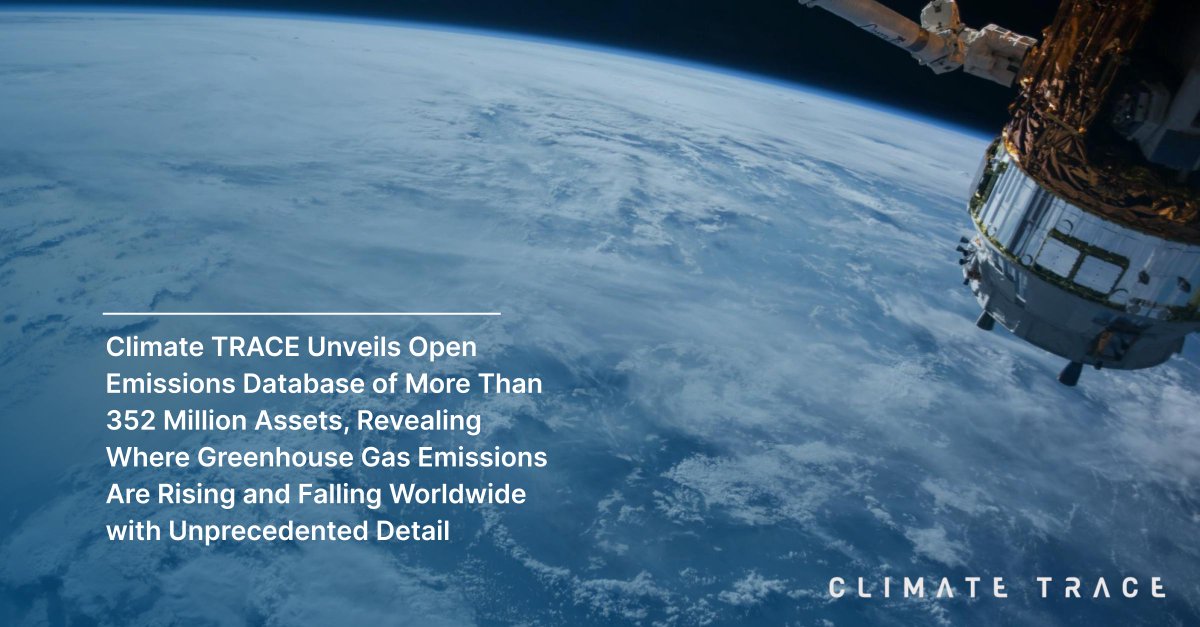
We've worked tirelessly toward this moment. Our expanded database is here, featuring GHG #emissionsdata for more than 352M assets — a 4,400x increase compared to the previous inventory.
Read more: https://t.co/nzQenU4B6W
Explore the data: https://t.co/NmqqEf8qPZ
#climatedata
“Climate TRACE is filling a vacuum that is... devoid of accurate information. We can break down exactly where emissions are coming from, facility by facility. If the problem is GHG emissions, it only makes sense to find out where they’re coming from.”
🔗https://t.co/nibMgdMwXr
Join us online or at #COP28 as we release our latest global #GHGemissions inventory covering 2022 data + millions more individual assets.
@algore + Gavin McCormick will present:
-Dec. 3, 10am GST
-In person: Al Hairat Plenary Hall
-Livestream/more info: https://t.co/pquXr6SH0e
This @UtilityDive/@DNV_Group playbook details "relatively modest measures" that can push utilities & large corporations toward #decarbonization goals.
DNV uses WattTime #marginalemissions data to enhance their view of decarbonization opps for customers.
https://t.co/3647P3aBGN
We are less than a week away from Experience POWER in Savannah! Join GridPoint's Jamie Rotbert as he discusses the future of energy and how #demandresponse programs can bridge the gap in requirements between utilities and commercial businesses.
https://t.co/CRfYZUZWb0
This is a big big deal folks, and all to NEVI standards with CCS and NACS connectors and made in the US:
Seven major automakers are teaming up on a North American EV charging network https://t.co/RCc56prUiW via @Verge
Did you know that commercial buildings account for approximately 18% of total energy consumption in the U.S? Check out some of the top reasons you should consider retrofitting your building for #netzero operations here:
https://t.co/raTV105xq8
@Brenthollenbeck Thanks, Brent! We're excited to see how TimberRock's solution evolves and how EICs (Emissions Impact Credits) might change the way companies tackle their emissions reduction targets.
.@REsurety analyzed the emissions reduction potential of 3 proposed #carbonaccounting approaches to determine compliance w/ #IRA production tax credits for #cleanhydrogen. Annual CO2 matching beat both annual energy matching & local hourly energy matching https://t.co/XSqNWNCBgY