How can candidates reach voters on health care? Show they care? Have a plan? Not so much.
Some surprising clues from polling in my new column: https://t.co/vxWgamZgtN
“The primary driver of healthcare costs is prices,”says @HealthCostInst president and CEO, @kemartin611. "If we’re going to address underlying healthcare costs, we have to address prices.” #txlege
https://t.co/io4vHXybYX
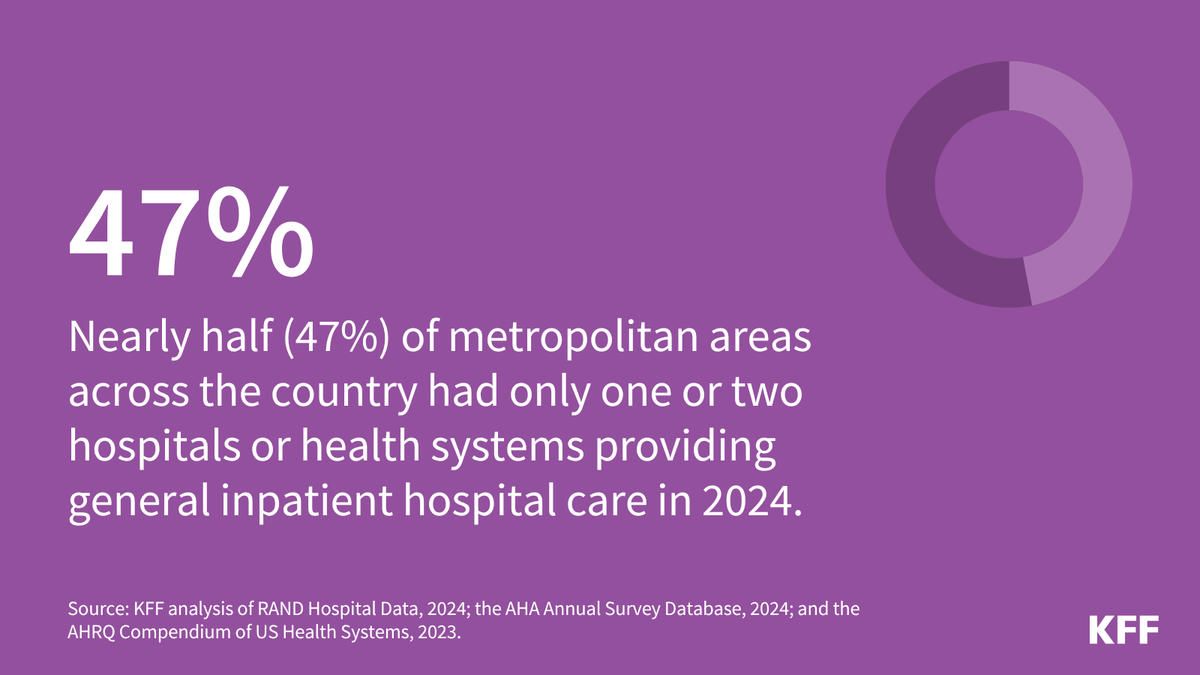
Just one or two hospitals or health systems controlled the entire inpatient hospital market in nearly half of metropolitan areas across the country.
In case you missed it, our analysis explores the competitiveness of hospital markets amid a continuing wave of consolidation: https://t.co/JOFC7g3KCG
High hospital prices are the chief reason the U.S. spends so much more on health care than other countries.
If you want to improve health care affordability, hospital costs are a good place to start.
The greatest problem in healthcare ? Hospitals, even market dominant hospitals, won’t walk away from the big ins companies that underpay, late pay, clawback, deny claims, waste their time in denial appeals, and require them to pay up to 8 pct of revenue to RCM consultants so they think they are getting what they are owed.
Here is the crazy part. The ins companies ARE NOT THE ONES ACTUALLY PAYING THEM on commercial plans. Employers are.
60 pct of employees get their insurance from their self insured employers. The ins carrier is just a middleman that pretends to add value.
All the clinical “value” they add, the hospital could do better, for both medical and pharmacy.
Most hospitals have no idea whether they make or lose money with their big ins contracts. They are just afraid to lose patient flow.
But. They actually know which companies their patients are coming from. They actually know or can find out, how much more the employers are paying the ins company, than what the ins company pays them (the spread, just like in pharmacy )
And to make it worse, those ins companies negotiate their rates as a discount from the “charge master “, which is like WAC in pharmacy. Just a made up list price.
Because the hospitals are afraid or too uninformed to walk away from these deals, the hospitals use the inflated charge master prices as the basis to charge uninsured , or out of network , or insured but not covered for their care, at charge master rates. Which of course the patients can’t afford. And it crushes their finances or they go without care
I’ll summarize. Employers , and their members , are paying far more than they should to companies they don’t like working with , that effectively rip off both the employer and hospital , and they could eliminate the middlemen if they went directly to to the employer.
It’s so simple. Sell your services to the employers that use your services at a price that is less than what nine companies charge for your services and you will make MORE money and employers will save a ton
And if they did this, they could dump the chargemaster and reduce the price they bill patients when they are at their most vulnerable
But they don’t want to change. And don’t get me started on how much hospitals over pay for drugs and devices because of the GPO deals they do. It’s just stupid.
Which in turn leads to the hospital being a bad actor with 340b , facilities fees and afraid of their doctors who demand they pay more for things like glue and implants so they can get vacations.
If you are a politician and reading this. Now you know why this is so fucked up and it’s not about capping rates. The insurance companies are smarter than you. They will just move the money to other places. It’s not about giving money to patients. You can’t shop for care from hospitals that are too gutless to walk away from the ins companies that distort all of healthcare economics
Go to your local hospitals , particularly those at risk of closing and ask for their profitability by carrier. Fully burdened. Ask how much they spend on RCM and consultants. In many cases they could survive if they ran like a real business and hired execs that could do the work rather than just manage consultants. They could work out contracts in their communities rather than with ins companies and benefit everyone.
The middlemen are not needed. Get rid of them
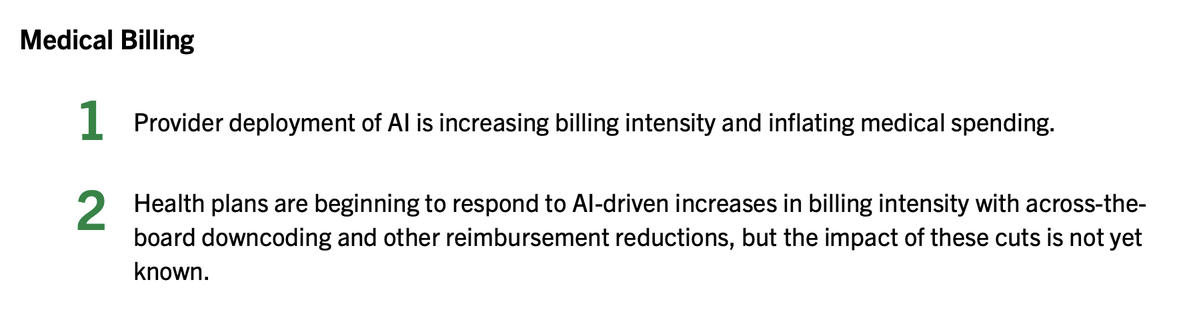
Sounds like AI deployment in health care is going well.
@Peterson_HTI reporting higher billing intensity, more denials in response, back and forth bot wars...
Reporting shows hospital monopolies are growing across the country, especially in rural states. Fewer choices can give large systems more power to raise prices, adding to affordability pressures for patients, employers, and working families. Read here: https://t.co/q2boNlz8AJ
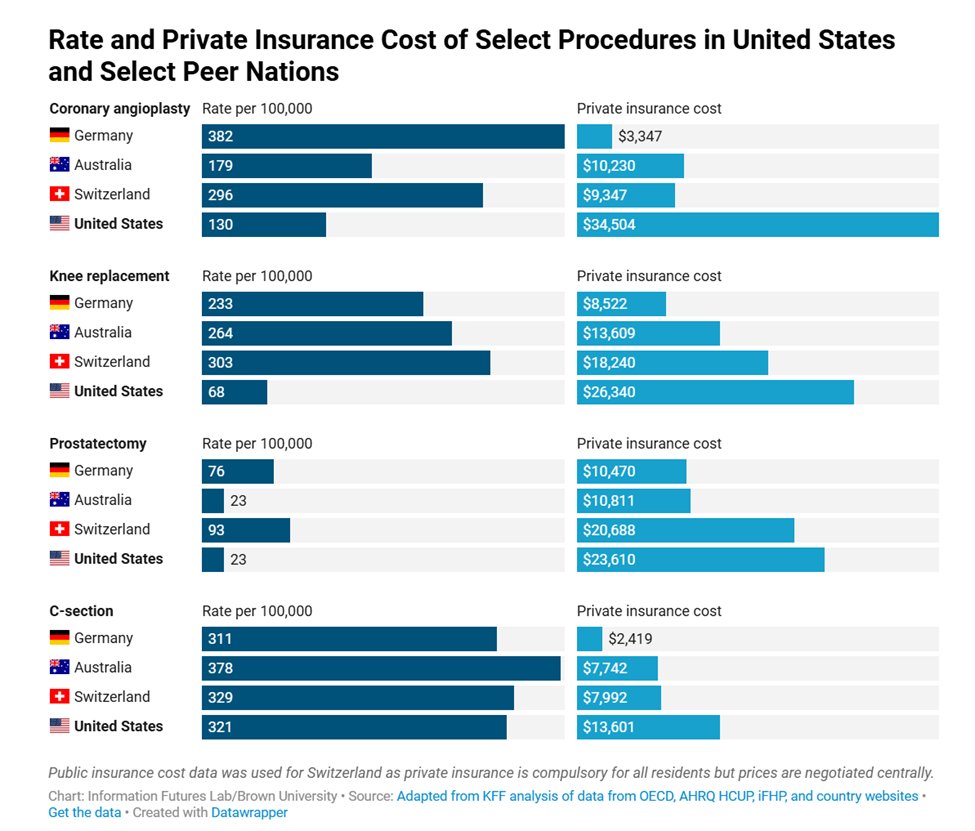
If you ever wonder whether we have a utilization problem or price problem in US healthcare
This chart should help
Here are four procedures by rates and prices, in the US, Australia, Switzerland and Germany
We don't use more healthcare
We just pay much higher prices
The FDA’s action to simplify #biosimilars development process will help lower barriers & accelerate patient access to high-quality, lower-cost treatment options. Read more: https://t.co/363J8MSF7L #pharma#benefits#affordablehealthcare
Why do we spend twice as much on healthcare in the US compared to other wealthy countries?
To quote my late friend Uwe Reinhardt, "it's the prices, stupid"
The reality is that we don't use more healthcare services
We just pay a lot more for each service
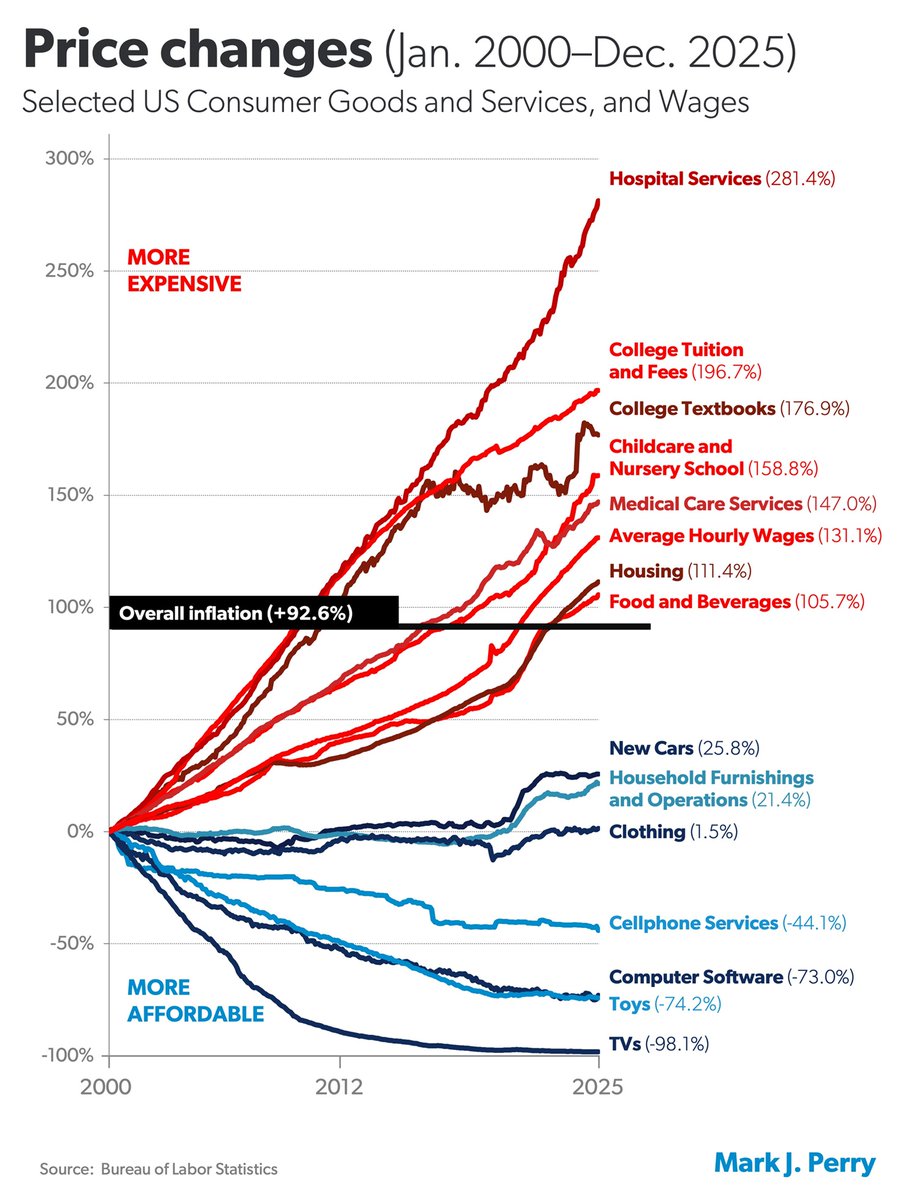
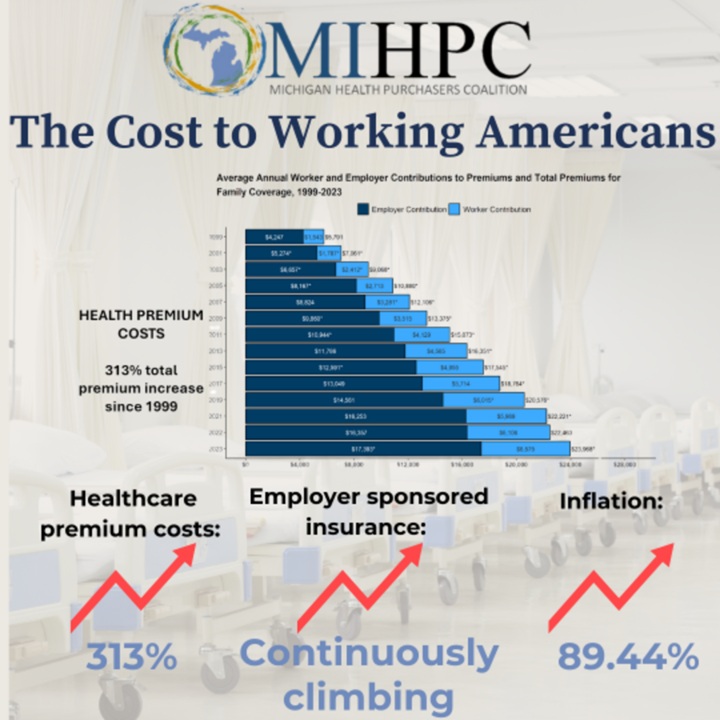
Between 1999 and 2024, workers’ contributions to family health insurance premiums increased by 308%, while total premiums rose 342%. Over the same period, workers’ wages increased by only 119%, and overall inflation grew by 64%. #txlege
https://t.co/Wpo0A3sWYo
Why do people panic over the price of eggs? We should all be panicking over the price of health insurance! Mine @PostOpinions@KFFHealthNews. https://t.co/Uc2CW95oax
"Inflation in America is in part a health care affordability crisis in disguise. If we want to bring down the costs of goods and services, we can start with reforming the health care system that drives up costs across the economy." #txlege
https://t.co/ms4uc0vNwq
@detroitnews I already miss the walkable areas. They were a draw for me to come downtown. The street seating is also a draw. It would be a shame to take that away, too
@DrugChannels @mercer Employer groups have been advocating for Federal PBM reform for some years. This is absolutely a top priority. Feel free to contact me or @sgremminger or @JamesGelfand to learn more.