Pope Leo XIV’s encyclical ‘Magnifica Humanitas’ has proven that religious figures and theological concerns still have a place in discussions about the ethics of emerging technologies. It has also prompted heated debate about the correct way to frame the conversation about AI ethics.
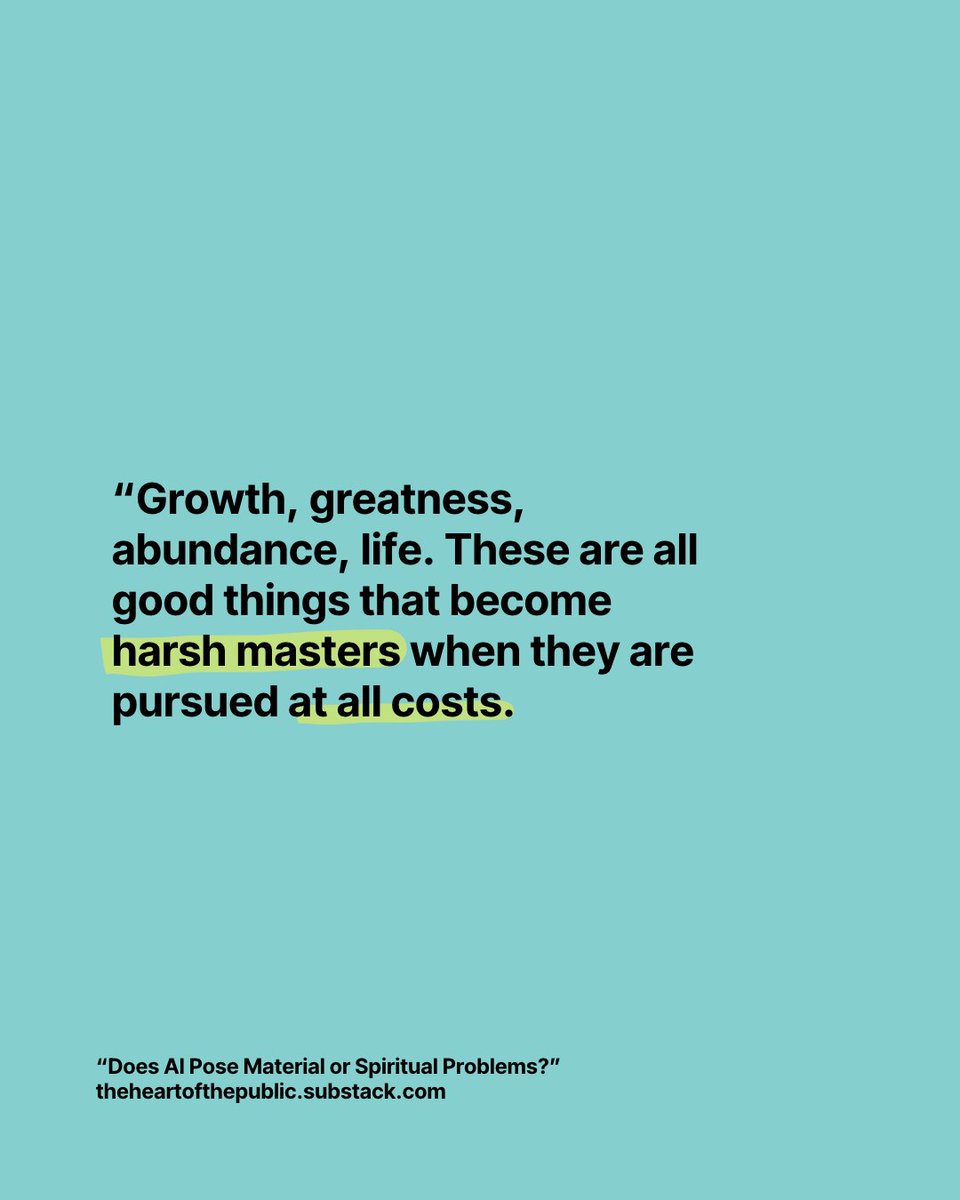
One noteworthy critique of the encyclical comes from Yuval Levin, who “wanted the pope to have much more to say about idolatry than he ultimately did.” He found it “frankly staggering” that profit is the only idol that Leo mentions “in an age that absolutely teems with golden calves.”
We hope you’ll read “Does AI Pose Material or Spiritual Problems?” On our Substack: https://t.co/5pRdUEv7YW
“Our differences can contribute to something none of us can make alone.”
David Bailey in his keynote “Renewing America’s Story: Lift Every Voice and Sing” at the 2026 For the Good of the Public Summit.
Watch the full speech:
https://t.co/WCvbGjZ6wu
We're built for this moment.
In an election season where faith made headlines, major news outlets called upon CCPL to help them make sense of it all. Civic leaders also have reached out to us because they have decisions to make, and they trust us to help them navigate the changing terrain.
Whatever comes next, we will still be here to serve you and advance the vision for a healthier politics and a renewed civic life.
We will continue forming leaders, equipping the Church, and contending for the credibility of Christian resources in public life, so that people have a trusted place to turn when the ground shifts.
Come along with us in 2027. Subscribe for news, ways to engage, and insights on the intersection of faith and public life: https://t.co/841LVsEyhe
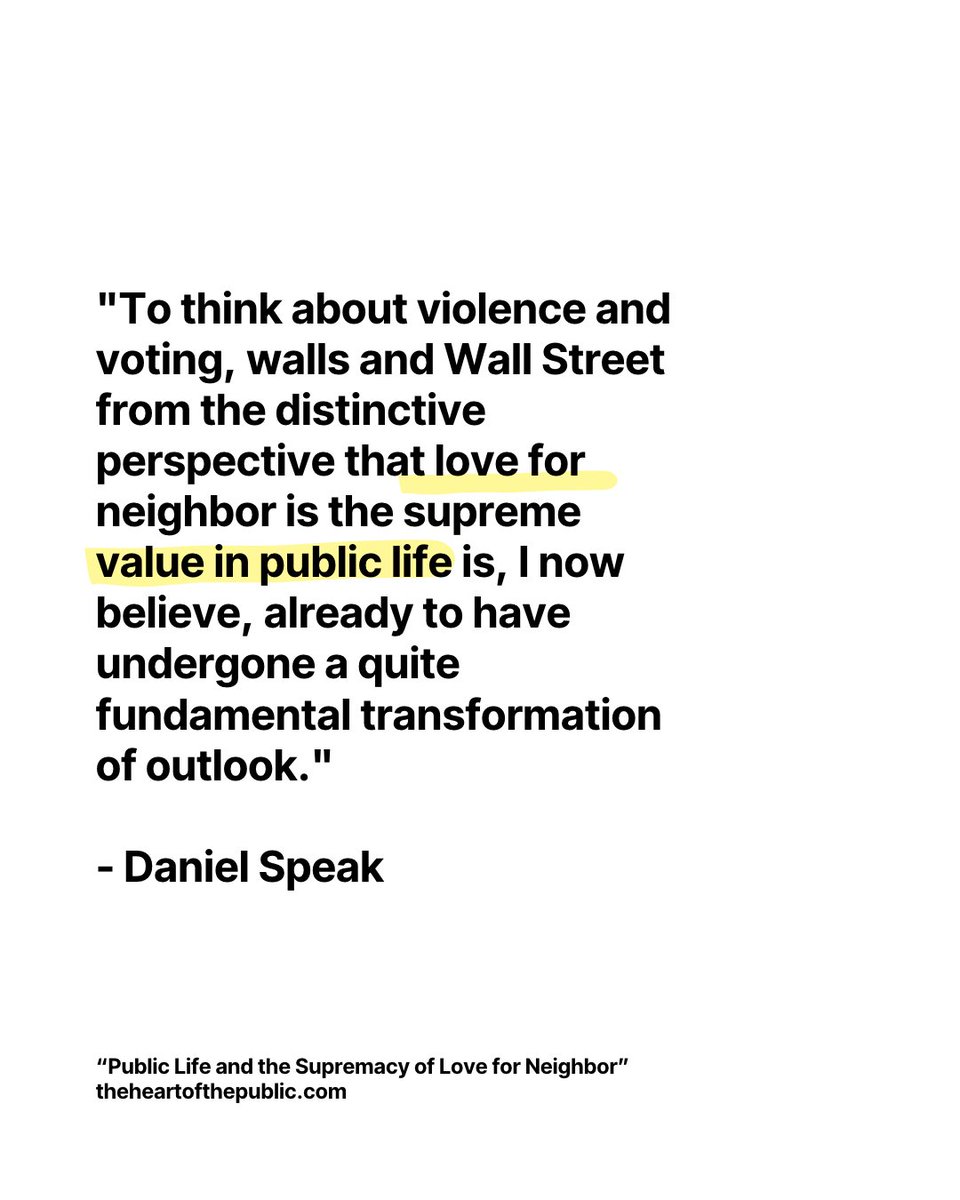
In his review of 'Shalom Ethics: Loving Your Neighbor as Yourself' by Thomas M. Crisp, Daniel Speak argues that holding “love for neighbor” as the supreme value in public life is “already to have undergone a quite fundamental transformation of outlook.”
We invite you to read 'Public Life and the Supremacy of Love for Neighbour' on The Heart of the Public. Find it at: https://t.co/2KypFNugkg
@MichaelRWear, our founder and CEO, will speak at Wilton Congregational Church in Wilton, Connecticut, on Saturday, November 14, at 11:00 a.m.
If you're in the area, we hope you'll join us. Register at: https://t.co/c0uhbI9xvx
At the 2026 'For the Good of the Public' Summit, CCPL’s @iamnotabiv moderated a panel on “Virtue and Civic Life” featuring @RosenJeffrey, Jennifer Herdt, and Vince Bacote.
Listen to the full discussion on the latest episode of Jeffrey Rosen's podcast: https://t.co/yUehD8oJMX
@MichaelRWear joined @JohnKasich on @SIRIUSXM to discuss Christianity's positive contributions to communities and politics. Michael says he always leaves these conversations with "a broader perspective than I had before, and with more hope for the future."
Listen: https://t.co/EgezUncc5Y
At @CCPublicLife, we have a growing community of supporters who are committed to advancing our mission with their finances. If you care about the future of faith and American public life, please consider making a donation today. https://t.co/McXQsO5Qag
What a joy to talk with my friend @JohnKasich on his (really excellent) show. I always leave conversations with John with a broader perspective than I had before, and with more hope for the future.
@bernybelvedere of @UnPopulistMag spent two days at our For the Good of the Public Summit in Washington, D.C., and wrote about what he heard, on stage and off.
One line he caught came from David M. Bailey, founder and chief vision officer of Arrabon, who led a session on "Lift Every Voice and Sing" and called on the room to look at the nation's past without naivety or cynicism.
We hope you'll read it at
https://t.co/7uPmbeWdir
Judge Patrick Schiltz at the 2026 For the Good of the Public Summit: “The one thing we all have to agree on is the way that our disagreements are solved... if you don’t have that, you don’t have a democracy.” Watch the full video: https://t.co/aYxPVltGtc
At CCPL, we want to come alongside you as you seek to participate in our civic life with faithfulness. We think this is possible, even when it comes to voting.
Five Questions is a non-manipulative guide that will help you discern how to steward your vote. As Election Day approaches, we hope it will help you and encourage you to use the guide in discussion with your family, friends, small groups and colleagues.
Download the free guide at https://t.co/vmNEq7lKy2
Our Director of Research, Alex Arnold (@iamnotabiv), offers a different framework for thinking about the relationship between faith and voting: how might the commandments to love God and neighbor, alongside a well-formed conscience, shape the way we approach the ballot box?
Read “On Voting Faithfully” on The Heart of the Public at https://t.co/uNKEevdtab
If you’ll be in the area, please join us!
@MichaelRWear will also appear at St. John’s Episcopal Church in New Haven at 7:00 p.m. that evening for a discussion about Christianity and public life.
On October 5–7, 2026, civic leaders from across the country gathered in Washington, DC, as America marked 250 years.
Over three days of honest conversation and renewed hope, elected officials, clergy, journalists, scholars, and business and nonprofit leaders explored three questions: What should we carry forward from our founding? Which decisions lie before us now? And what kind of country do we want to become?
We hope you’ll join us next year. Register at https://t.co/y3fBx1G8Nn
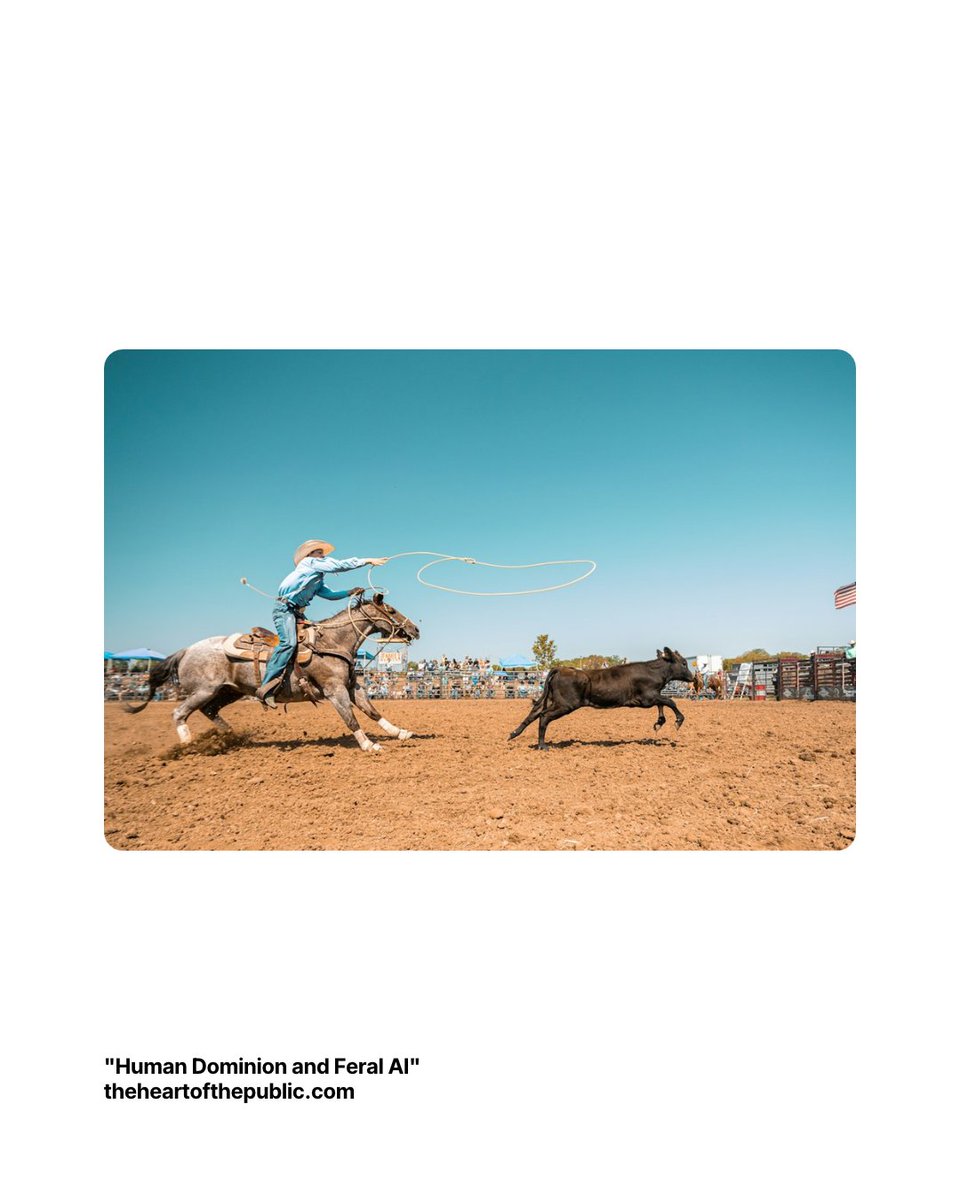
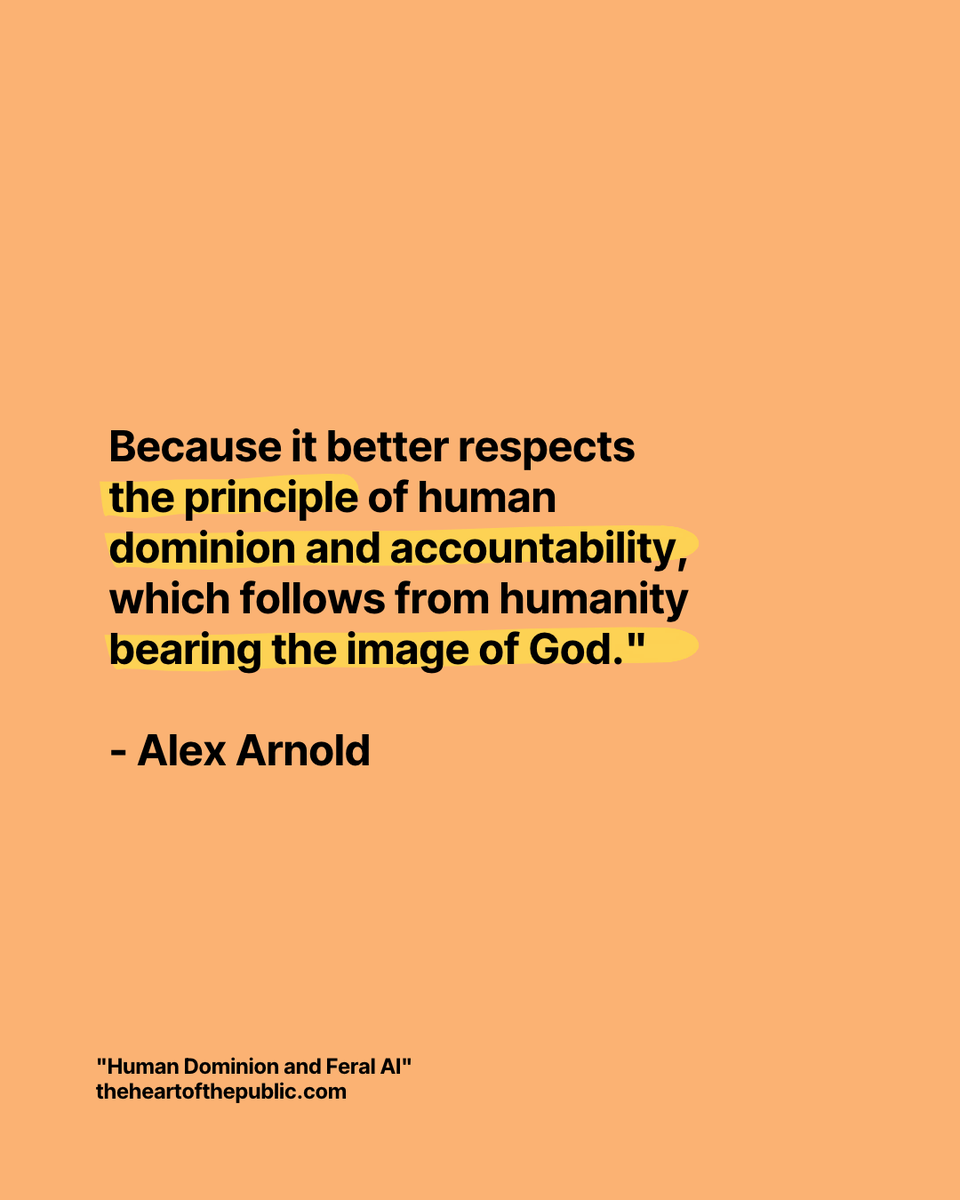
In his recent essay “On the Loose,” @deanwball, a prominent AI commentator and Head of Strategic Futures at @OpenAI, argues that the world will soon see the emergence of what he calls “self-sovereign” AI agents. These are AI agents that operate without any human directing them or actively overseeing them.
Ball thinks the emergence of self-sovereign AI agents is inevitable, if there aren’t already instances of them lurking in data centers. He considers a few ways “self-sovereign” AI agents might subsist without human direction or help. Perhaps such agents would do work-for-hire as digital contractors. Perhaps the less savory of them might gain access to sensitive personal information and blackmail people.
Read more on our substack here: https://t.co/kFIElNO9ib
What, if anything, does Christianity have to offer democracy, and vice versa?
@MichaelRWear, our President and CEO, takes up that question with Daniel Stid on The Art of Association. They talk about why Michael started CCPL, how we pursue our mission, and the relationship between the health of Christianity and the health of democracy in America.
Listen on Spotify: https://t.co/icBtG7N3gQ