Delivering real healthcare services through the power of IT|Exploring “IT × Healthcare”|380+ companies|Partnered with 700 expert doctors|Contact us here ↓
Has the idea of living to 100 started to sound less like a dream… and more like a challenge?
Thanks to advances in medicine, we’re living longer than ever. But there’s still a gap between lifespan and healthspan—often around 10 years.
Those are the years when many people lose their independence, and that affects not only individuals, but society as a whole.
Treating disease after it happens is no longer enough.
The future of healthcare is about building systems that help people stay healthy in the first place—using technology and data to make healthy living almost effortless.
A future where people can stay independent, keep thinking clearly, and continue contributing to society throughout their lives.
At Doctors Inc., we’re committed to turning that vision into reality.
Health is shaped more by small daily habits than by one big effort.
Finding just one healthy habit you can stick with may be one of the best ways to support a longer, healthier life.
🚨 Myth: Longevity demands massive overhauls.
Truth: The strongest predictors of how sharp, energetic, and healthy you’ll feel in 10 years come from stacking tiny daily habits.
People who nail the small things age better than those chasing extreme protocols.
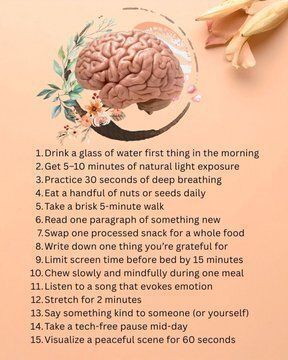
Here are 15 micro-habits that compound powerfully for brain health, inflammation control, circadian rhythm, and mental resilience:
1. Drink a glass of water first thing
2. Get 5-10 min natural light
3. 30 seconds deep breathing
4. Handful of nuts/seeds daily
5. Brisk 5-min walk
6. Read one new paragraph
7. Swap one processed snack for whole food
8. Note one gratitude
9. Cut pre-bed screen time by 15 min
10. Chew one meal mindfully
11. Listen to an emotional song
12. Stretch 2 minutes
13. Say something kind (to others or yourself)
14. Mid-day tech-free pause
15. Visualize peace for 60 seconds
Longevity isn’t one big change—it’s 15 tiny ones done consistently.
Which one are you committing to start today? 👇
#Longevity #HealthHabits #BrainHealth
心臓が血液を送り出す能力のわずかな低下が、心不全と診断される以前から、記憶に関係する脳領域の微細な組織変化と結びついている可能性
脳萎縮や認知症が明らかになった後ではなく、通常の画像診断や診断名では捉えにくい段階にあります。心不全の診断基準を満たしていない人でも、心臓の拍出能力と、記憶に関わる脳組織の状態との間に関連が見られました。
特に興味深いのは、心臓と脳の関係を、単に「脳へ送られる血液が減る」と説明して終えていない点です。血流調節、慢性炎症、心臓由来のストレス関連ホルモンなど、複数の経路を考える必要があります。認知症を脳だけの疾患として調べるのではなく、循環器系を含む全身の変化として捉える研究の一例になっています。
また、記事は研究者本人だけでなく、研究に参加していない脳卒中神経内科医の見解も載せ、因果関係を断定していません。一般向けの記事として、結果と限界の区別が比較的明確です。
「Heart issues tied to ‘microdamage’ in the brain might raise risk of memory loss, study hints」
媒体:Live Science
公開日:2026年7月6日
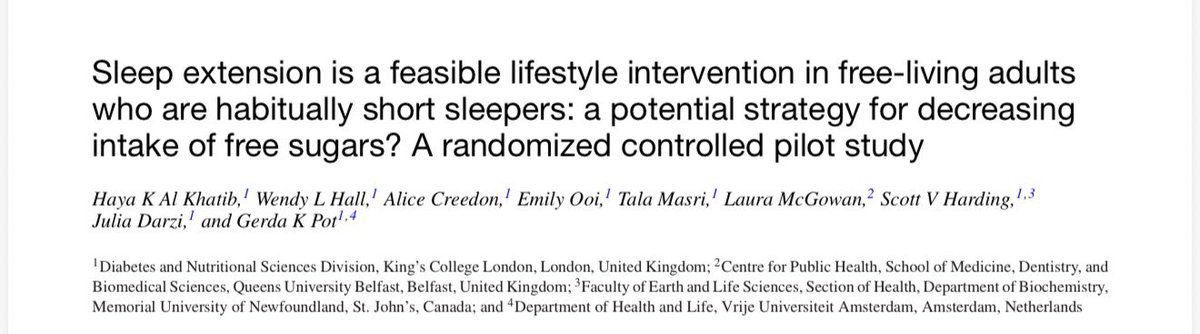
Dormir mal hace ganar grasa… pero no por el motivo que crees.
Dormir 21 minutos más al día hizo que las personas consumieran 10 g menos de azúcar al día.
Tu cerebro también tiene hambre de sueño.
A drink can make you feel relaxed almost instantly.
That’s because alcohol temporarily slows down activity in your central nervous system, making stress feel easier to handle.
But that feeling doesn’t last.
Over time, regular drinking is linked to poorer cognitive function and a higher risk of mental health problems.
Don’t trade your long-term brain health for a few hours of relief.
Your 40s are not middle-aged. The average life expectancy is 77 years, so middle age is 38.5. If you want to live past 77, you need to prioritize your health now.
Do you think your future self will thank you for the lifestyle you’re living today?
With 1 in 5 people estimated to have prediabetes, sugary drinks and sitting all day can quietly become one of the biggest threats to your long-term health.
You don’t need a complete lifestyle overhaul.
🚶 A 10-minute brisk walk each day.
🍽️ Cutting back on carbs after 10 p.m.
Small habits, repeated consistently, are one of the best investments you can make in yourself.
New research reveals that listening to music can slash dementia risk by 40%.
A landmark Monash University-led study involving more than 10,800 participants has discovered a powerful connection between music and cognitive preservation in seniors. Researchers found that consistently listening to music after age 70 is associated with a staggering 39 percent reduction in dementia risk. For those who play an instrument, the risk is lowered by 35 percent, indicating that both active and passive musical engagement can serve as a potent shield against brain decline.
Lead researchers Emma Jaffa and Professor Joanne Ryan emphasize that these findings offer a vital, accessible strategy for maintaining brain health in an aging global population. Beyond reducing dementia risk, regular musical engagement was linked to sharper episodic memory and improved overall cognition. As medicine continues to extend human lifespans, integrating music into daily life represents a simple yet transformative lifestyle choice that may delay the onset of neurodegenerative conditions where cures remain elusive.
source: Jaffa, E., & Ryan, J. (2025). What is the association between music-related leisure activities and dementia risk? A cohort study. International Journal of Geriatric Psychiatry.
AI, smartphones, and robot vacuums were once ideas that belonged only in science fiction.
Today, they’re part of everyday life.
It may take time for technologies like this to reach practical use, but it’s this kind of basic research that lays the foundation for the innovations of tomorrow.
🚨 SCIENTISTS JUST CREATED BATTERIES POWERED BY LIVING BACTERIA!
What sounds like science fiction is becoming reality. Scientists are developing tiny batteries that generate electricity using living microbes. As the bacteria break down organic material, they release electrons that can be captured and turned into power.
The technology is still in its early stages, but it could one day power sensors, medical devices, and remote equipment without traditional batteries. The biggest mystery? Some of these systems can even generate energy from ordinary soil.
It may not charge your phone yet, but it could change the future of clean energy.
Source:
Fraiwan, A., & Choi, S. *Bacteria-Powered Battery on Paper*. Biosensors and Bioelectronics.
Lee, H., & Choi, S. *An Origami Paper-Based Bacteria-Powered Battery*. Nano Energy.
That overwhelming afternoon slump?
It might not be a lack of motivation. It could be a blood sugar spike.
When your blood sugar rises and crashes after a meal, your brain pays the price. Focus drops, thinking gets slower, and even problem-solving becomes harder.
More coffee or just “pushing through” only treats the symptom.
The real fix starts with small daily habits:
🥗 Eat your vegetables first.
🌾 Choose low-GI foods when you can.
Those small choices can be the difference between a productive afternoon… and spending the rest of the day just trying to stay awake.
🧠 Scientists May Have Found a New Way to Fight Alzheimer's
What if the brain doesn't need to destroy harmful proteins... but simply remove them?
Scientists found that a copper-based compound called Cu(ATSM) helped the brain clear toxic amyloid-beta proteins, reducing them by 42% and improving memory by nearly 44% in mice. Instead of attacking the proteins directly, it restores the brain's natural waste-cleaning system.
It's still early research and hasn't been proven in humans yet, but this surprising approach could change the future of Alzheimer's treatment.
Source:
Monash University. (2026, June). Study published in ACS Chemical Neuroscience.
The truth is, scrolling on your phone during a break isn’t really giving your brain a break.
We consume more information in a single day than people did in the past over months—or even years. Even when your body is still, your brain is constantly switching between tasks and processing new input.
Over time, that mental overload can chip away at your focus, decision-making, and even your mental well-being.
Some of your best ideas don’t come when you’re consuming more.
They come when your mind finally has room to breathe.
Every now and then, do absolutely nothing.
Even if it’s just 20 or 30 minutes once a week, put your phone away and give your brain some real quiet.
It’s encouraging to see that something as simple and accessible as blueberries may have benefits like these.
Perhaps the biggest advantage is that they’re easy to incorporate into your daily diet and stick with over time.
As a physician, this blueberry study still impresses me. 🫐🧠
A six-month study of adults aged 65 to 80 found that daily wild blueberries significantly improved brain processing speed, helping you think and react faster.
Even better: the improvements were especially noticeable in those with mild cognitive concerns, helping restore performance closer to those without issues.
Simple, delicious, and powerful. Add a handful of wild blueberries (fresh, frozen, or powder) to your routine — your brain will thank you.
What’s your favorite way to eat blueberries?
Reference:
Cheatham et al. (2023). Nutritional Neuroscience. DOI: 10.1080/1028415X.2022.2117475
#BrainHealth
#Blueberries
#CognitiveHealth
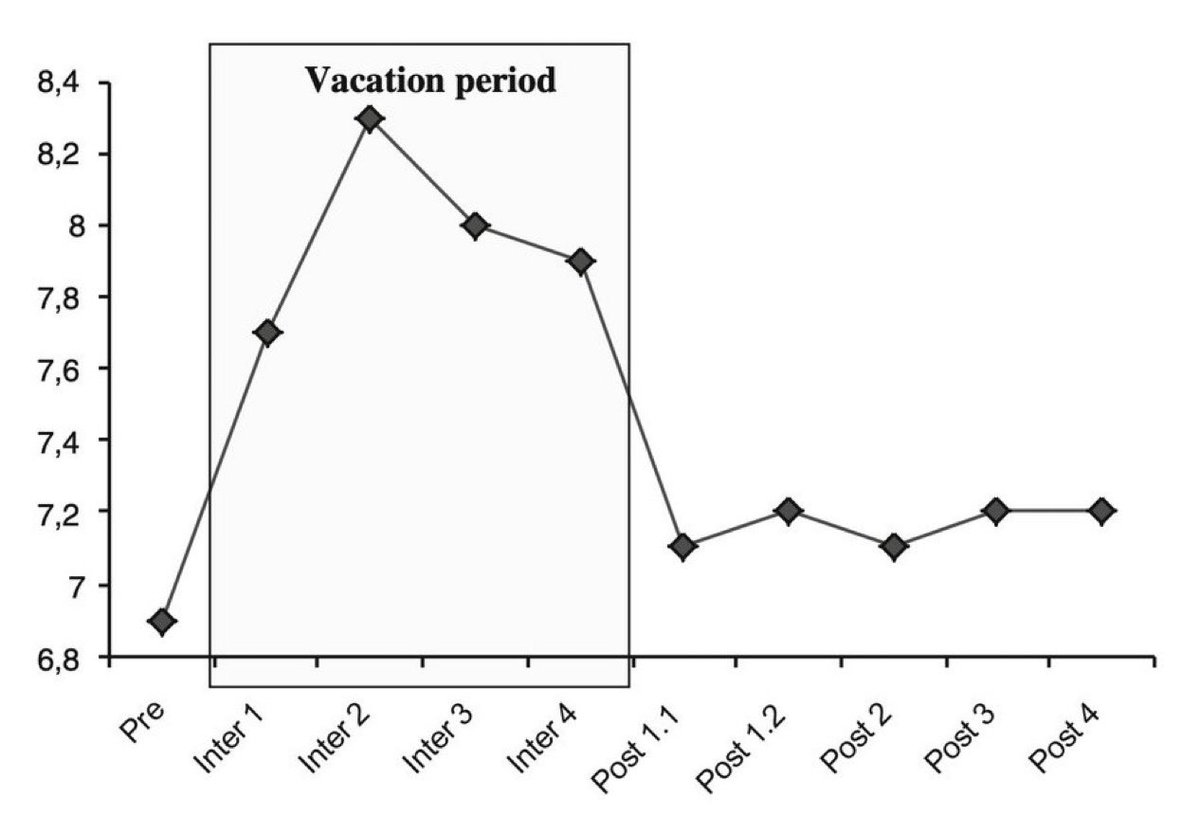
🚩¿Vacaciones largas o varias vacaciones cortas?
Un estudio encontró que:
✅ El bienestar alcanza su pico en el día 8.
❌ Más días no aportan grandes beneficios adicionales.
📉 En menos de 7 días tras volver al trabajo, el efecto desaparece.
Por eso, hacer vacaciones más frecuentes podría ser una mejor estrategia para mantener el bienestar.
Sitting for long hours may be more harmful than most people realize.
Some research suggests that prolonged sitting can have health risks comparable to smoking in terms of its impact on longevity.
Staying in the same position for hours can quietly affect blood flow and metabolism, increasing the risk of heart disease and even some cancers over time.
Many people think, “I hit the gym on weekends, so I’m fine.”
But weekend workouts can’t fully undo the effects of sitting all week.
The real solution is to build movement into your workday.
Set a reminder to stand up at least once every hour.
Your body—and your brain—will thank you.
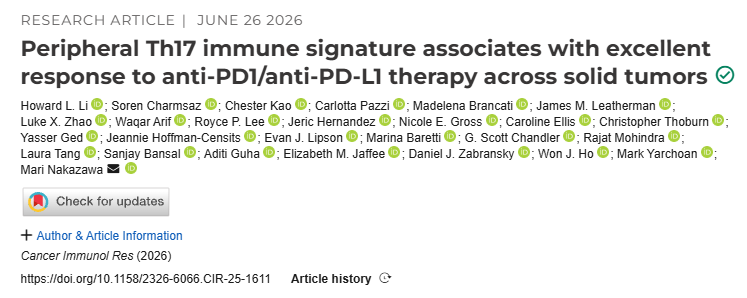
New work from our group @mnakazawa7@howardli123 using the JH ICI biobank:
Exceptional responders to ICIs - the “tail of the curve” - are marked by activation of the CD4/Th17 pathway
https://t.co/vNYu6y7Rzm
@hopkinskimmel
Ever notice your headaches seem to get worse when it rains?
You’re not imagining it.
Research suggests that a drop in atmospheric pressure of around 6–10 hPa may increase the risk of triggering a migraine.
The mistake is brushing it off as “just a coincidence.”
If you get recurring headaches, try keeping track of both your symptoms and the weather. You might start seeing a pattern.
Muscle naturally declines with age.
That’s why the goal isn’t just to build muscle—it’s to keep from losing it.
Rather than chasing intense workouts, consistently doing strength training and getting enough protein may be one of the best investments you can make in your future health.
Muscle loss after 40 is a silent thief stealing your independence.
Most people lose 3-5% of muscle mass per decade starting in their 30s or early 40s. That adds up fast.
Less muscle = weaker heart protection, higher injury risk, more falls, and frailty that can trap you later in life.
But here's the empowering truth, doc-approved: It's optional.
Building and keeping muscle supports your heart, sharpens balance, keeps you independent longer, and breaks the vicious cycle of
Weakness → Less movement → Faster decline.
Start small today:
1. Lift (bodyweight moves count)
2. Walk daily—hills for extra wins
3. Fuel with protein + whole foods
Aging strong isn't luck. It's a choice. 💪
What's one muscle-building habit you'll start this week? Drop it below!
#HealthyAging
#MuscleIsMedicine
#Longevity