It sucks when your science is rejected from top journals
It sucks more when your results are high impact but the editor couldnt see it
Helping publish >250 papers in 5yrs, I found that the addition of 1 sentence reduces desk rejects at top journals
Learn how🧵
#AcademicChatter
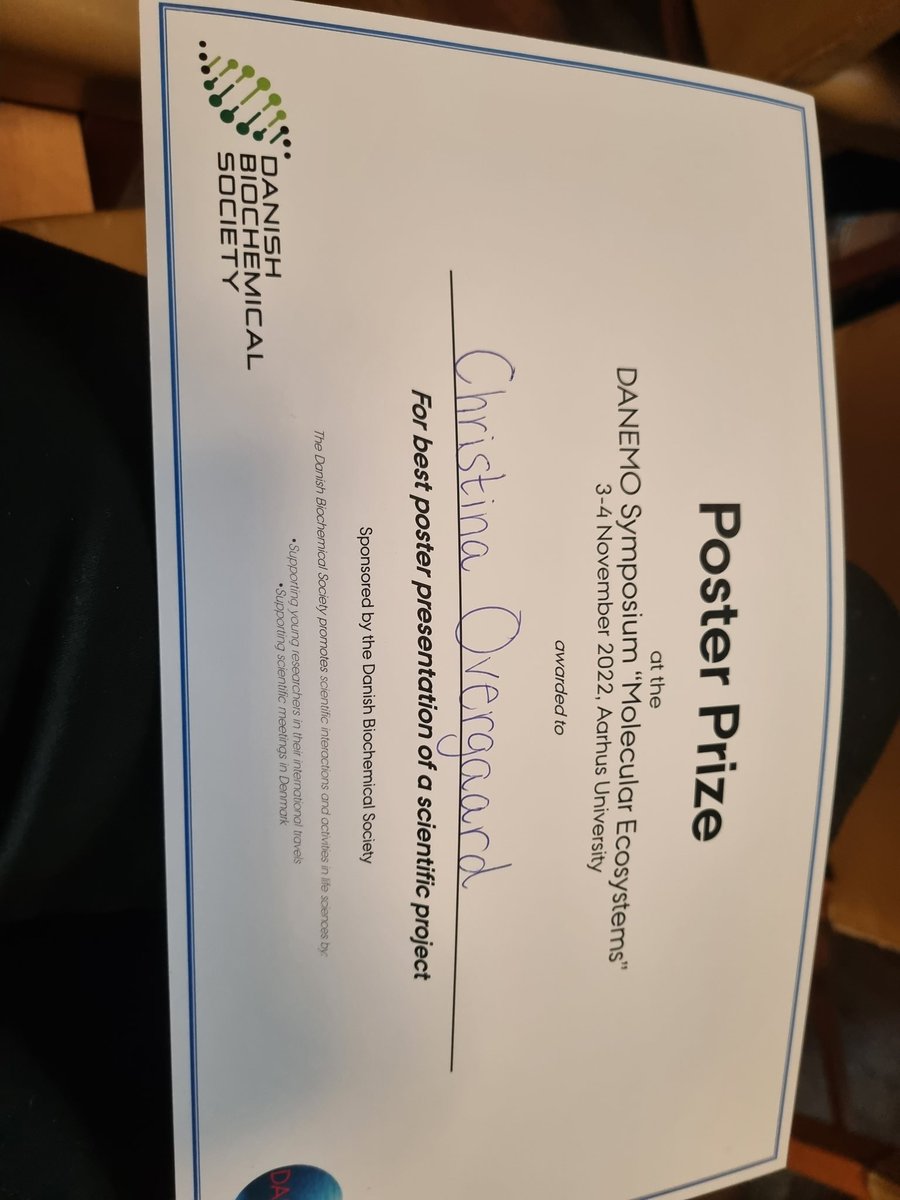
What a week!🥳 My first paper got publish and I received the poster prize at the first #DANEMO2022 symposium. It has been such an inspiring two days with a lot of exciting topics being presented and discussed. Thank you so much again to all who has worked on this project with me!
My first article is out! Many thanks to my supervisor @msdueholm and all my co- authors for making this happen!
Check it out to find out how we increased taxonomic classification of soil prokaytoes and how you can do it for other ecosystems 🌍
https://t.co/ccYbnNOYCg
In a great collaboration with @CEMAarhus, we have used high-throughput @nanopore metagenomics to recover the first closed genomes of the enigmatic "Cable bacteria"! A thread, 1/10 https://t.co/Nl8zED7w1Q
My lab @SystBio_UU is hiring, several positions (two PhDs and one postdoc) available in connection with the @ERC_Research CoG PlastidOrigin. Links to the ads and information here: https://t.co/HO0g3SsNOO
I would greatly appreciate sharing broadly this information, many thanks
Dear all, we are happy to announce that the official publication of the #SeqCode is now live. Please circulate this paper among your colleagues, and let's open together a new chapter in the prokaryotic nomenclature...
https://t.co/14tEpUE2f3
Tired of only family level classification of your ASVs?
Then come visiting my poster (149) at #ISME18 to hear about how an ecosystem-specific database can increase taxononic classification to species level. If you are not at ISME18 you are very welcome to contact me on Twitter.
Tired of only family level classification of your ASVs?
Then come visiting my poster (149) at #ISME18 to hear about how an ecosystem-specific database can increase taxononic classification to species level. If you are not at ISME18 you are very welcome to contact me on Twitter.
Come by #ISME18 poster 369 and discuss how Morten is using @nanopore to diagnose sepsis in hours instead of days using bacterial cell-free DNA in blood samples.
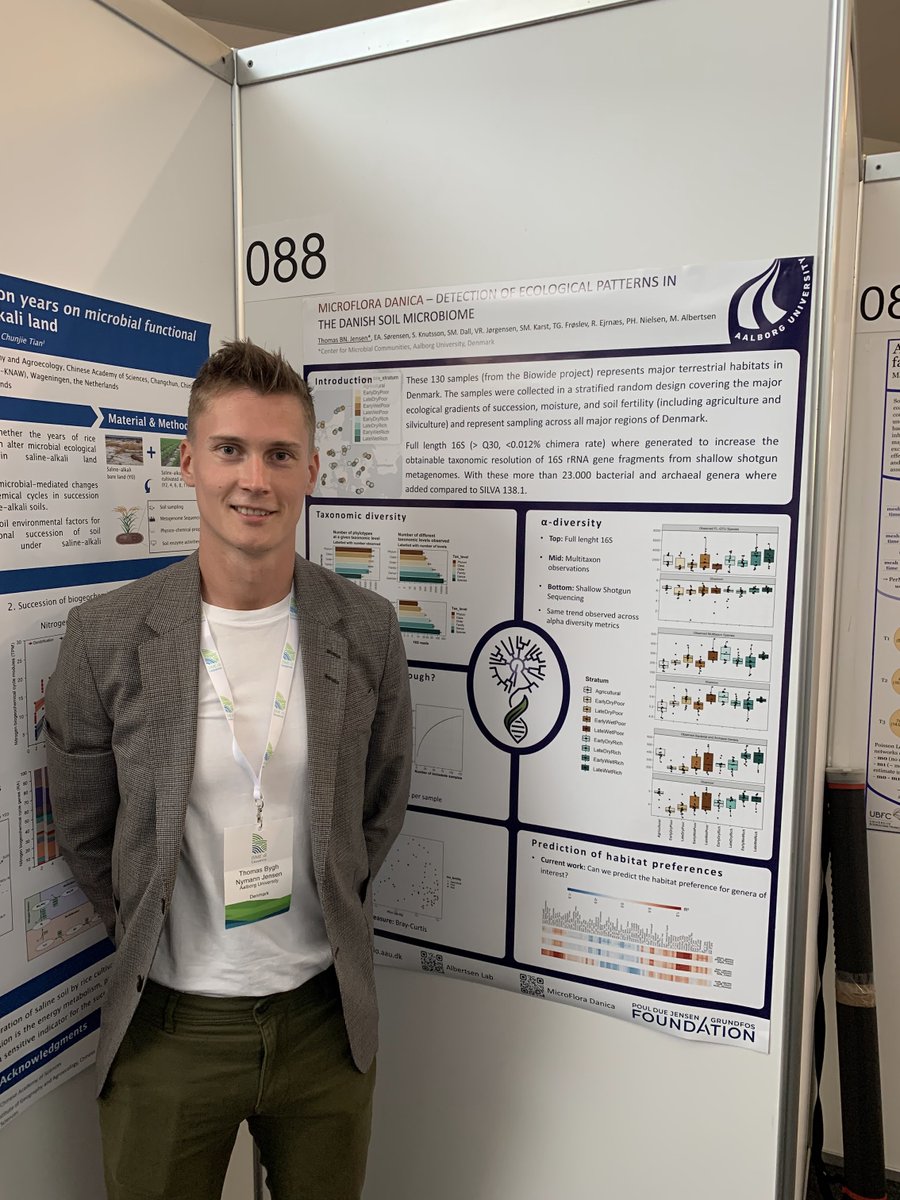
How do you generate and analyze 10.000 metagenomes across a country? Come and discuss automatization, library-downscaling, and bioinformatics with Thomas #ISME18 poster 088. + how do we integrate vast metadata from a subset of samples to connect macro and micro-diversity?
Populating the tree-of-life with a genome pr. species is a moonshot mission that I think is realistic within a decade! Come and tell me why it is bullshit and then let's discuss how to join forces to get it done! #ISME18 poster 170! pst.... we are recruiting at all levels!
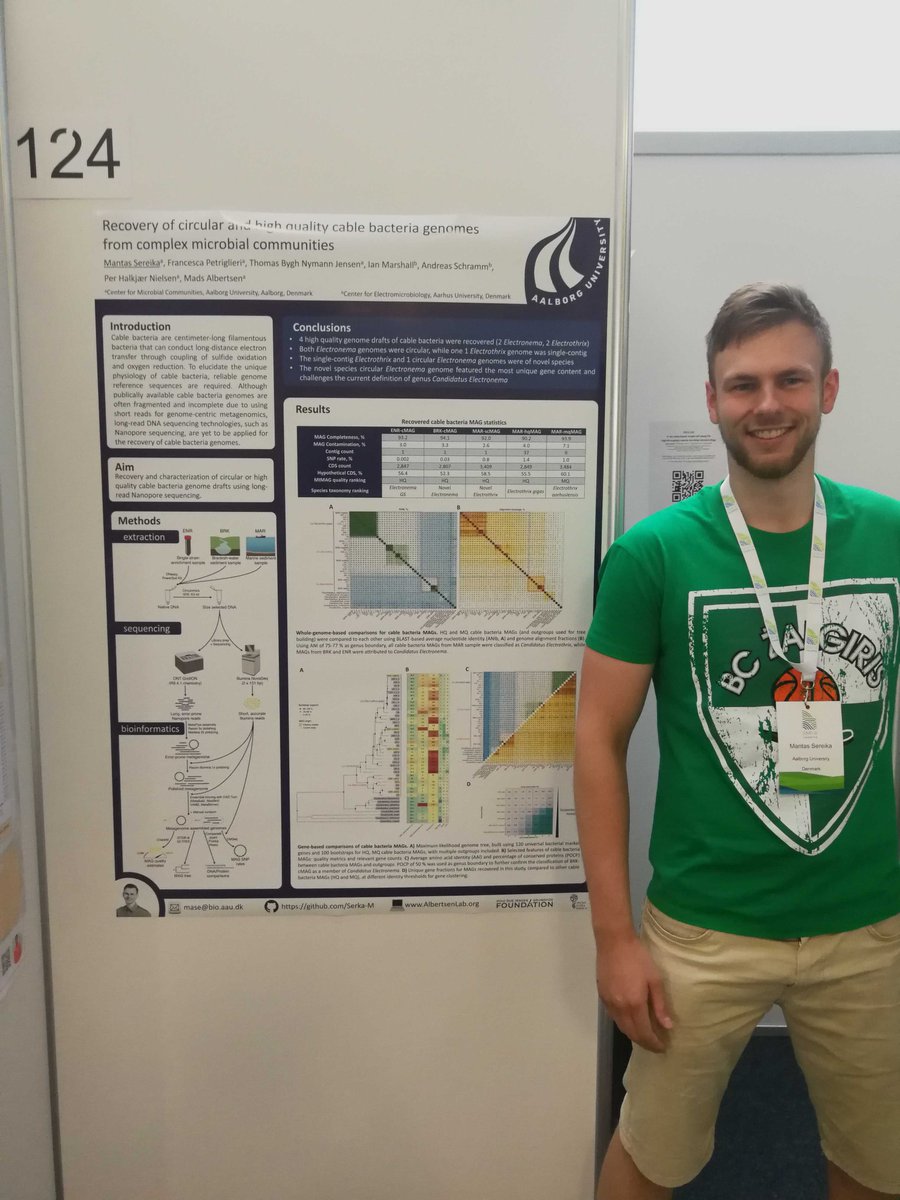
... check out and discuss Mantas' and @kirk3gaard recent work to demonstrate that @nanopore R10.4 enable "perfect" microbial genomes without short-read sequencing - the flood of HQ MAGs is coming! 2/2 https://t.co/ALk9UnZ5HA
Want to make 1000's of HQ MAGs using @nanopore long-read sequencing? Check out how @CaitySing did it and how we use it as the backbone for in-depth physiological studies #ISME18 at 15.30 in Auditorium C https://t.co/HCMX58Kgil
Want to know the potential and limits of 100 Gbp++ @Nanopore metagenomics for recovering HQ MAGs - without short-read sequencing? Come and discuss with Mantas Sereika at #ISME18 poster 124. Also... 1/2
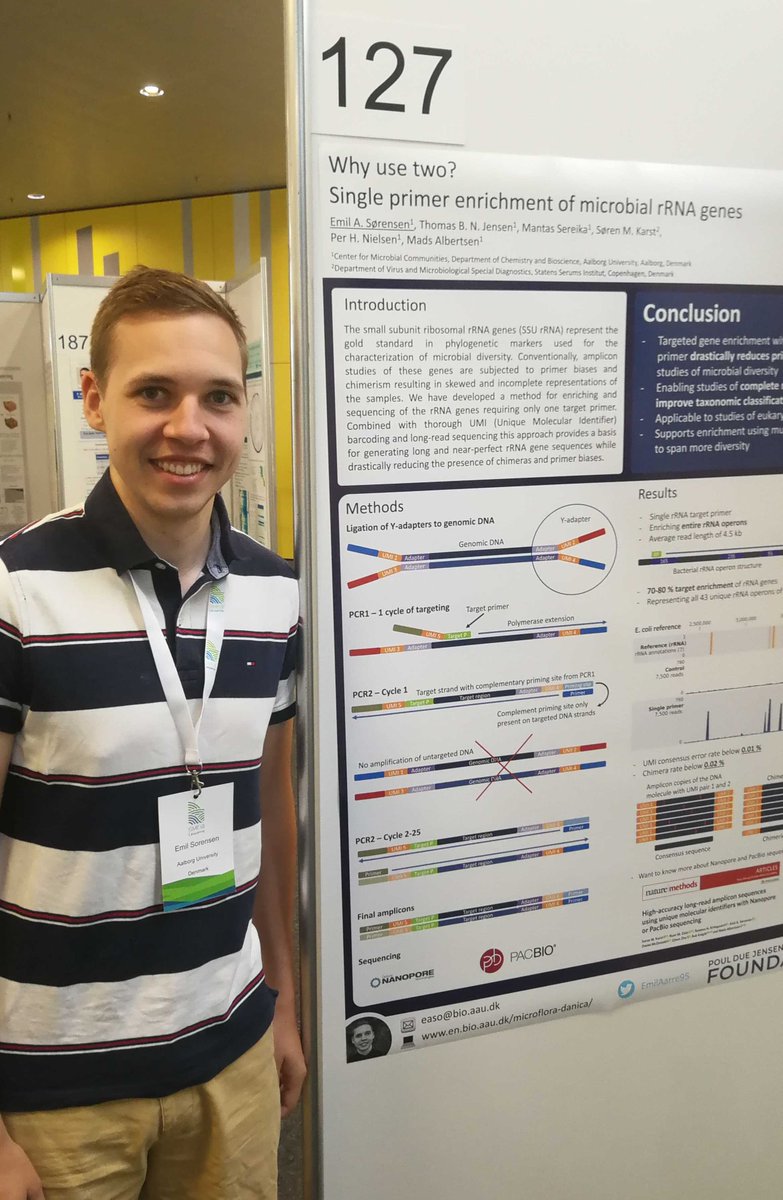
Why do we use 2 primers in amplicon studies (rRNA/functional genes)? Now you can use 1... and using @nanopore + UMIs you get perfect long amplicons (5 kbp+). #ISME18 come and chat to @EmilAarre95 Poster 127 today! 1/2
I am so excited to have my first article in preprint! Check it out to learn more about how an ecosystem-specific database can increase taxonomic resolution at genus and species level in amplicon sequencing studies.🧬🦠