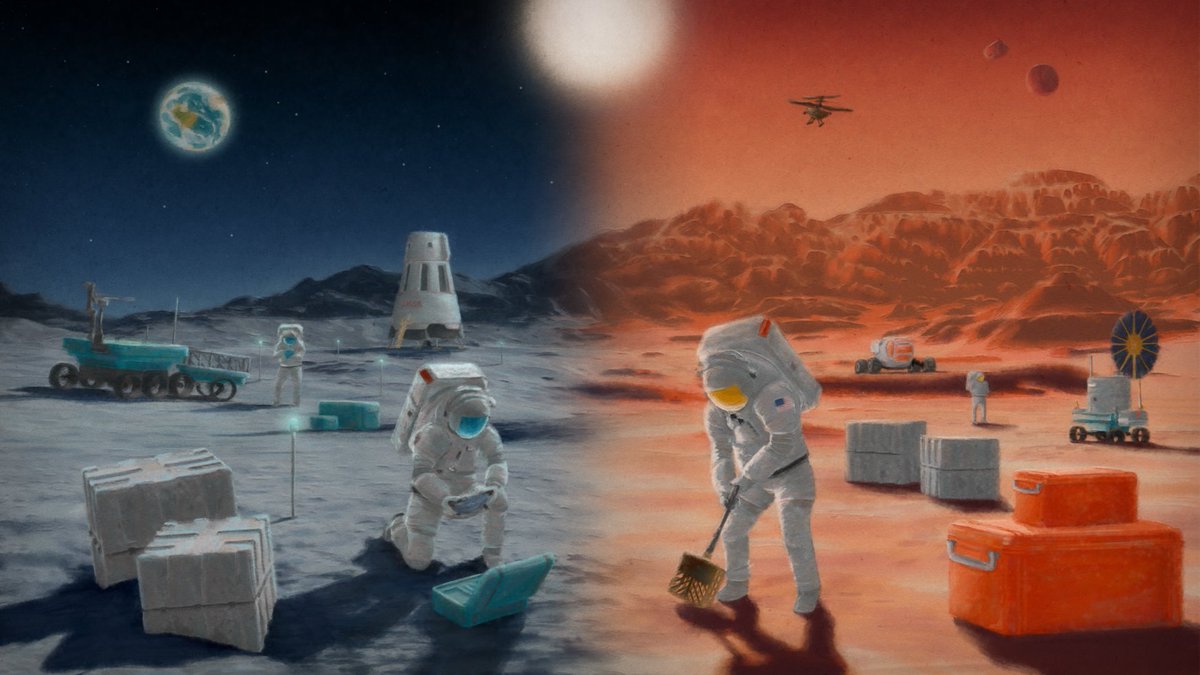
NASA is trying new methods of training science teams in our return to the Moon.
CLRN members participated in NASA Artemis training in November 2024 at Johnson Space Center in Houston. Check out the photos and details of this next step in lunar exploration here:
The sound of a meteorite striking the Earth and the impact cratering process at a small scale was recorded here in Canada — the sound is so similar to glass shattering! CLRN member
@SpaceRockDoc
discusses this rare fall and the meteorite recovered here:
https://t.co/sdmOMxUHji
Look up this evening for a super view! 🌕
Not only is tonight’s full Moon a supermoon, it’s also the Harvest Moon. The Harvest Moon is the closest full Moon to the fall equinox. 🍂
Artists: what does your vision of the future look like?
Share your vision of astronauts exploring deep space in the @NASA Moon to Mars Architecture Art Challenge. Winners will receive a portion of a $10,000 challenge purse. Submissions close Oct. 31: https://t.co/88AZ1sf7NI
Are you a planetary scientist doing research in the field of cosmochemistry, meteoritics, or returned samples? We invite you to follow our X account!! 💻☄️
Learn about the science of supermoons here: https://t.co/AoP8zitXRg
And, if you're observing the Moon this week, it's not too late to add your skywatching event (or yourself) to the International #ObserveTheMoon Night participation map. You're invited! https://t.co/LRdkgogSAX
Canada is celebrating International #ObserveTheMoon night tonight with some awesome events including @westernuCRONYN where CLRN member @MiniMoonRocks gave a talk all about lunar geology post-Apollo!
I had the opportunity to mark International #ObserveTheMoon night at @westernuCRONYN with a talk all about lunar geology and what we have learnt about lunar rocks since Apollo! For everyone in the @CLRN_News and Canadian Lunar enthusiasts, get outside and check out the Moon!
For 14 years, our custom Moon Maps have identified spectacular lunar sites to view each International #ObserveTheMoon Night.
New this year: an interactive, mobile-friendly version!
Click on each lunar feature for more information and close-ups: https://t.co/EZnX5fOK1Z
Nice to see Canadian space robotics in the @deadpoolmovie - look closely, it even has the CANADA wordmark on it. You can take @VancityReynolds out of the country ...
(video: Deadpool & Wolverine Official Teaser, Marvel Entertainment)
Canada is uniquely placed to give researchers and astronauts experience of the type of rocks seen at the Moon's surface — Kamestastin Crater in Labrador was visited by @drcrater, @csa_asc, and @NASAArtemis in Sep 2023 to learn more about lunar geology!
While the Canadian semi-finalists of the #AqualunarChallenge are their water purification technology, delve into lunar geology with researcher Tara Hayden, who explains how rock samples taken from the Moon’s surface will advance lunar water research. 🌙
Your order was delivered… to the Moon! 📦
@Int_Machines' uncrewed lunar lander landed at 6:23pm ET (2323 UTC), bringing NASA science to the Moon's surface. These instruments will prepare us for future human exploration of the Moon under #Artemis.
ASSISTANT RESEARCHER POSITION AT UC BERKELEY, SPACE SCIENCES LAB
Application information can be found here:
https://t.co/iaJFjBQjMv
https://t.co/5wGfSvOfNY
v18n04-03
@planetarysci
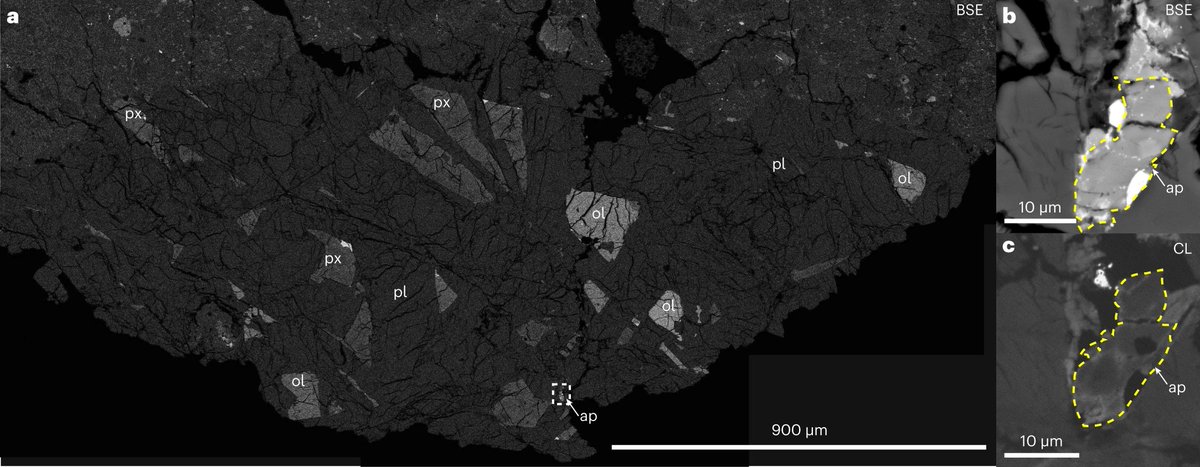
Isotopic analysis of an apatite mineral in the lunar meteorite Arabian Peninsula 007, dating from 4467–4540 million years ago, indicates very early fractionation of volatiles and a very volatile-rich lunar crust. Hayden (@MiniMoonRocks) et al.: https://t.co/lzFS0IGWMr
LPI has an opening for a mid-career staff scientist in the field of astromaterials. Applications are due by March 1.
https://t.co/27wstyEw9H .
https://t.co/5wGfSvNHYq
v18n01-03
@planetarysci