Every day, we come into contact with thousands of chemicals, through the products we use, the food we eat, and the environments we live in. Yet only a fraction of these have been thoroughly assessed for their cancer-causing potential.
In the latest article for @down2earthindia, CSE researcher Arvind Singh Senger examines this critical gap and asks an important question: Are we doing enough to identify and regulate hidden carcinogens before they become a public health crisis?
Read the article on the hidden carcinogens here: https://t.co/Z6DL2Mej99
Happening next week | CSE Workshop: The Cost of Compliance: Financing Plastic Circularity in Indian Cities
How much does it really cost to collect, transport, sort and process plastic waste in Indian cities?
Join CSE for a half-day discussion that will bring together municipal administrations, researchers and representatives of the informal waste sector to explore how India can move beyond compliance towards a financially sustainable model for plastic circularity.
The focus of the discussions will be on:
▶️ Changing face of plastic circularity
▶️ ULBs and the credit economy
▶️ Real cost of managing plastic waste
▶️ Closing the loop
This is a hybrid event. In-person participation is by invitation only.
For virtual participation, register here: https://t.co/By3y2gXK26
To know more, visit: https://t.co/VbnSzXrrjS
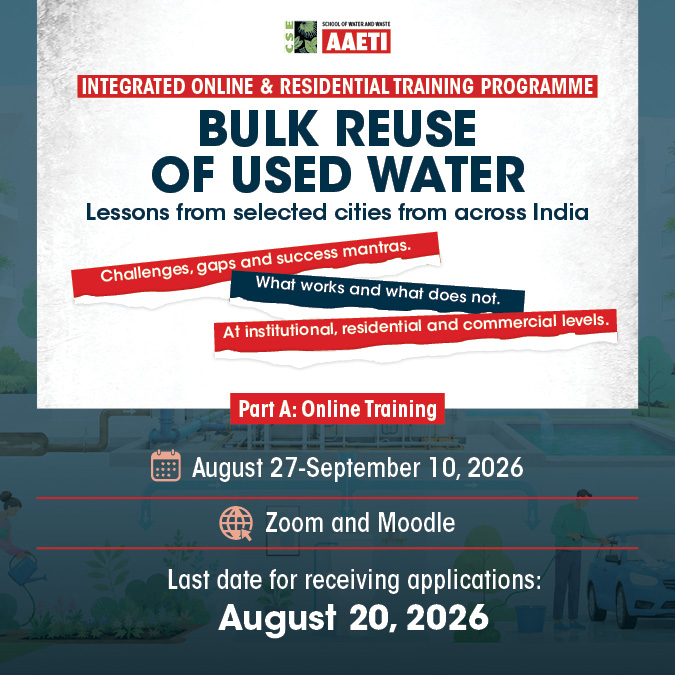
CSE is inviting applications for an Integrated Online and Residential Training on Bulk Reuse of Used Water.
👉 Aug 27 to Sept 10, 2026: Part A (online) will cover the fundamentals of decentralised wastewater management.
👉October 6 to 9, 2026: Part B (onsite) will be translating concepts into practice through an advanced programme.
The programme will combine policy perspectives with practical experiences, showcasing both successful and underperforming on-site wastewater treatment systems in institutional, residential and commercial settings.
To know more about the integrated training, visit: https://t.co/38Lfc82RbI
We are pleased to announce the signing of the Memorandum of Understanding(MoU) with the Department of Transport, Puducherry.
We thank Transport Secretary, Dr A Muthamma IAS, and Transport Commissioner Aman Sharma IAS of Puducherry for their leadership in forging this collaboration.
Through this partnership, we will work together to help transform Puducherry's incoming electric bus fleet into a seamless and efficient public transport network. Together, we are taking a close look at existing routes, traffic patterns, optimal service frequencies, and bus timings to help design a revamped network schedule that strategically integrates new electric buses to expand the service coverage and the service quality of the buses.
This initiative will optimise Puducherry’s public bus service, making daily commuting cleaner, more reliable, and ready for the future. Puducherry is stepping towards cleaner future and transitioning toward zero-emission public transport system.
Before satellites and climate models, communities looked to forests, skies and insects for signs of what lay ahead. From Jharkhand’s aankhor tree that signals the monsoon to Ethiopia’s star-based drought forecasts, indigenous knowledge systems have captured centuries of environmental observations. Today, as climate extremes grow more unpredictable, scientists are looking closer at these time-tested ways of reading nature.
Can ancient ecological wisdom help shape the climate solutions of tomorrow?
To know the answer, read Down To Earth's latest cover story by @bluewrit and @dakshipalicha.
Subscribe today for complete access to exclusive content: https://t.co/8UhdQcOH6w
PC: Yogendra Anand with AI
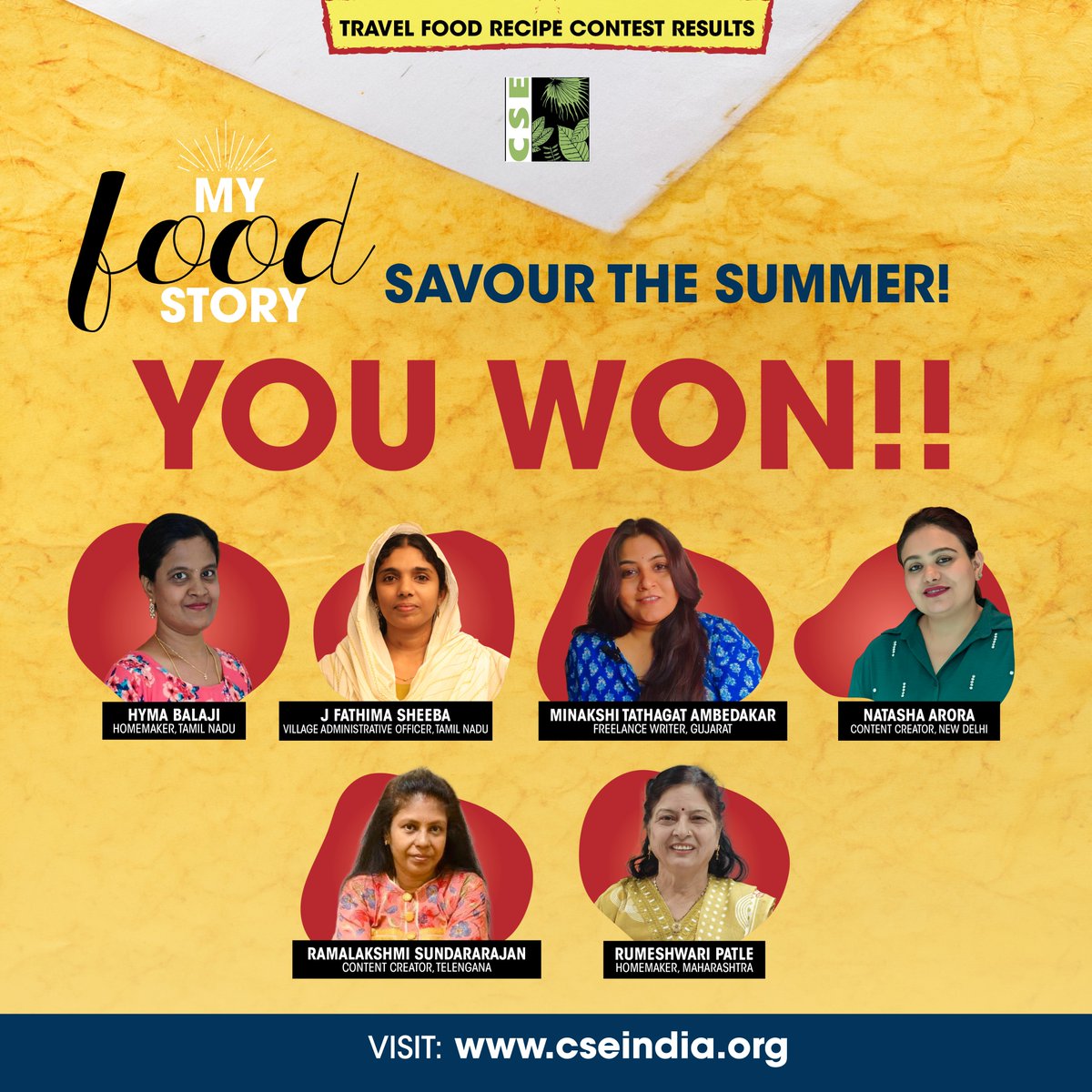
Meet Ramalakshmi Sundararajan, one of the winners of our Travel Food Recipe Contest.
From over 80 entries received from across India, six stories stood out. Our Super Six represent different regions, cultures and culinary traditions, yet they all share one thing: a cherished memory where food became part of an unforgettable journey.
For Ramalakshmi, it is Aam Choka Rice, a simple meal that could bring an entire railway compartment together.
Read her story and check out her recipe here: https://t.co/C0Fdld2BjB
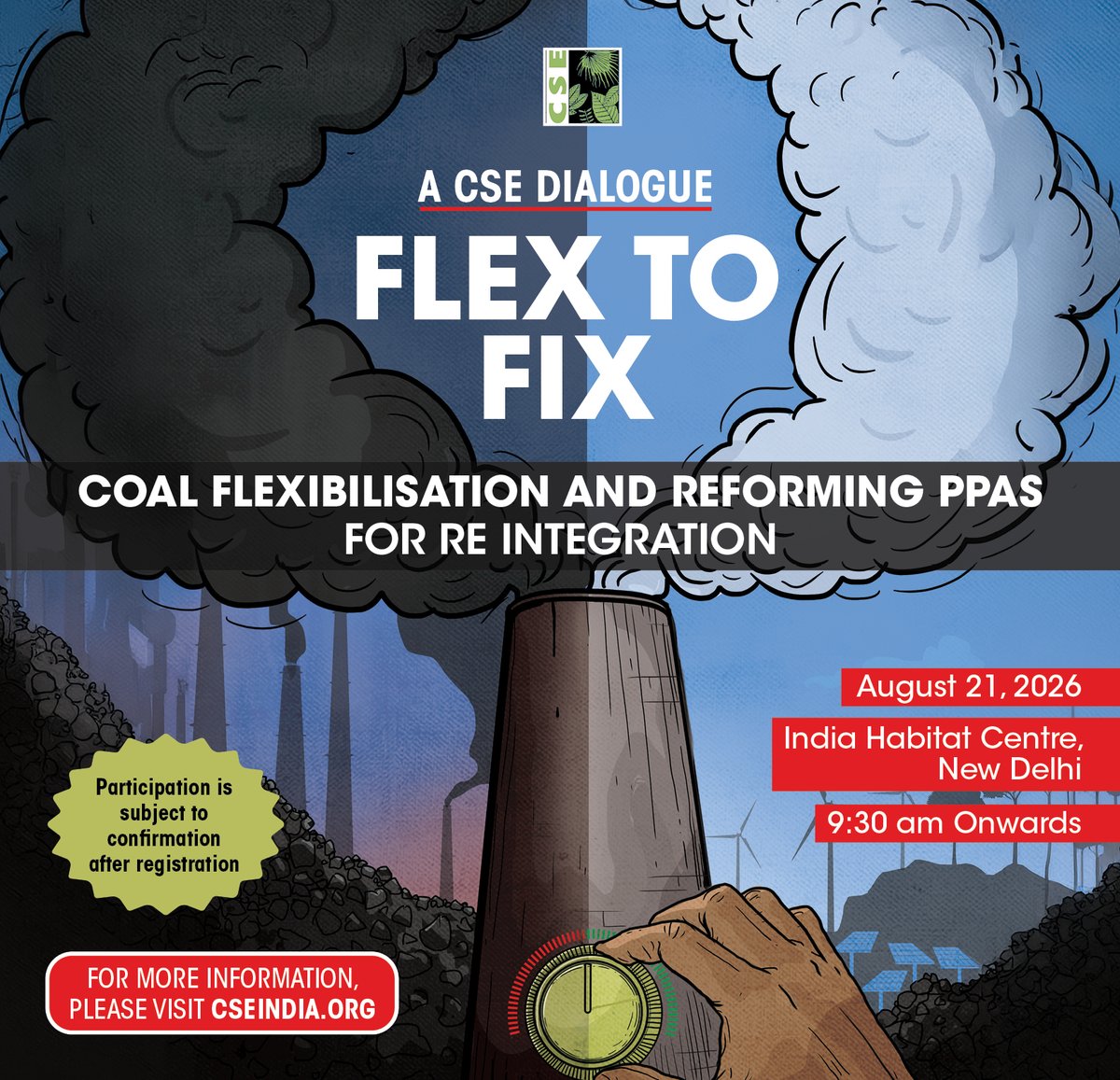
India's energy transition is entering a new phase. Adding more renewable energy to the grid is only part of the challenge. The bigger question is: Can our power system adapt to it?
As India moves towards its 500 GW renewable energy target, coal-based thermal power plants will need to operate differently. Instead of supplying steady baseload power, they must become more flexible, accommodate increasing RE generation during daytime and ramp up to meet rising evening demand.
Achieving this transition requires more than technological upgrades. It calls for enabling regulations, rethinking power purchase agreements (PPAs), and creating market mechanisms that support flexibility while safeguarding grid reliability and keeping electricity affordable.
To discuss these critical issues, the Centre for Science and Environment (CSE) is convening a national dialogue that will bring together policymakers, regulators, industry representatives, researchers and civil society.
We will be releasing two new policy reports on the occasion to guide the discussion. The event is bringing together policy regulators, sectoral experts, and stakeholders from industry and civil society, with an aim to support the policy ecosystem towards power sector flexibility while ensuring energy security.
The event will also mark the release of two new CSE policy reports.
For more details, visit: https://t.co/a862PjM9Nj
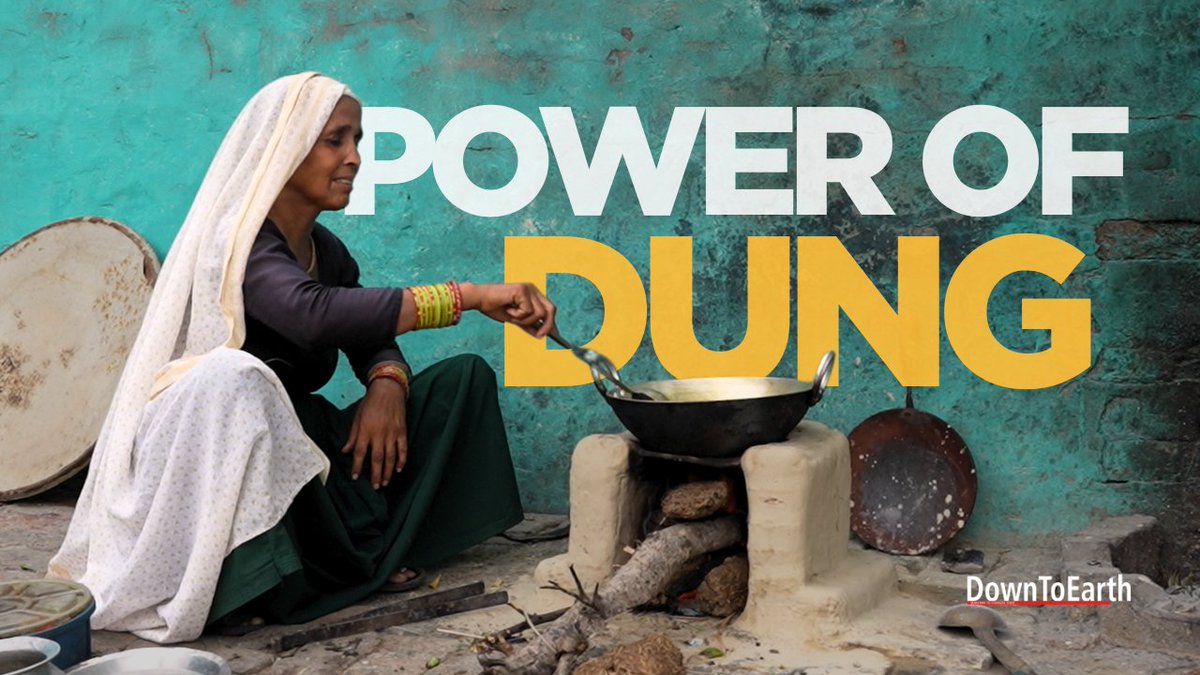
Can India cook without imported LPG?
When the Strait of Hormuz closed, LPG supplies were disrupted, prices surged and millions of households felt the impact. Although the government later declared the crisis over, families continue to pay higher prices, while those without registered LPG connections often have little choice but to rely on the black market.
But what if India already has an alternative?
In this documentary, @down2earthindia travels from urban neighbourhoods affected by rising LPG costs to villages in western Uttar Pradesh, where dung cakes have long been used as a cooking fuel. But dung cakes are not a clean fuel and they cannot be used in cities.
So the question becomes: can India take this same raw material and convert it into a clean fuel that can reach the whole country?
Watch the full story to find out: https://t.co/04eqhkVCvS
Centre for Science and Environment (CSE) is organising a national Roundtable to discuss pathways for scaling utility-scale renewable energy deployment while ensuring grid reliability.
The roundtable is bringing together policymakers, regulatory bodies, transmission and distribution utilities, project developers, financiers, manufacturers, and state and central government agencies to examine how India can sustain the pace of utility-scale renewable energy addition without compromising grid stability, generation scheduling discipline, land-use sustainability and cost to consumers.
To know more about the roundtable, visit: https://t.co/s71InbCO4e
@binit_04
We are happy to announce the winners of the Summer Edition of 'My Food Story Contest'.
From more than 80 entries received from across India, six stories stood out. Our Super Six come from different regions, cultures and culinary traditions, but they all shared one thing in common: a cherished summer memory brought to life through food.
Meet the winners and explore their recipes here: https://t.co/6ScXhjMawR
Over the coming week, we will be featuring each of the winning recipes. Stay tuned!
Explore our My Food Story recipe dashboard here: https://t.co/oZu4sDCRza
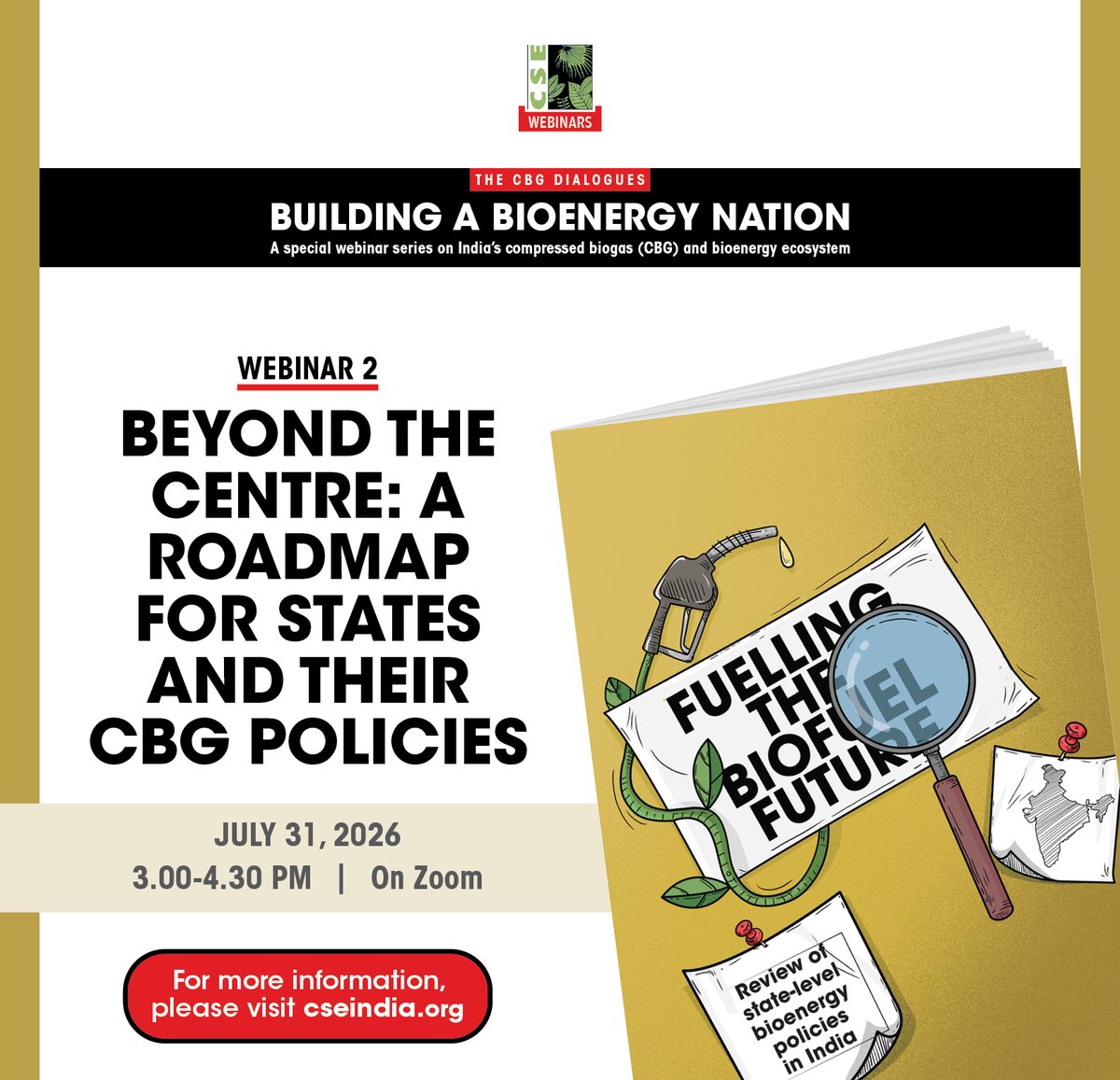
Going live in an hour! Webinar on Roadmap for States and their CBG Policies
Compressed Biogas (CBG) offers a viable domestic, waste-based alternative to imported, expensive natural gas. It has the potential to transform agricultural residues, municipal organic waste and industrial biomass into a clean transport and cooking fuel, while supporting India’s climate and energy security goals.
In our first webinar of this series, we had discussed a blueprint for unlocking the sector's full potential -- which could be developed for the nation as a whole.
Join us today for our second and final webinar to find out what is happening in the states and how their policies and programmes could be seamlessly synced with the national priorities: https://t.co/oDe6OtYvzJ
Check out our new report here: https://t.co/NrjJTvm1XA
Meet Tasem Ali, an electric autorickshaw driver from Guwahati.
His EV costs far less to run than diesel, helping him save every day. But heavy EMIs, the looming cost of battery replacement, and the lack of promised EV incentives tell another side of the story.
Ali's journey reflects Assam's EV boom, where adoption is racing ahead of charging infrastructure, financing and policy support.
Read the full piece by @t_sandipan: https://t.co/on15Y3TsAJ
#IndiaOnEWheels
CSE is inviting applications for an Integrated Online and Residential Training on Bulk Reuse of Used Water.
India's cities generate far more wastewater than can be treated through existing infrastructure. At the same time, educational institutions, hospitals, residential townships, commercial establishments and industries are increasingly turning to on-site wastewater treatment and reuse to reduce freshwater demand and ease the burden on centralised systems.
But making these systems work effectively requires more than installing a treatment plant. It calls for the right design, operation, maintenance, monitoring and reuse strategies.
To address this need, @CSEINDIA is offering an Integrated Training Programme on Bulk Reuse of Used Water.
👉 Part A (online) will cover the fundamentals of decentralised wastewater management.
👉 Part B (onsite) will be translating concepts into practice through an advanced programme.
To know more about the training programme, visit: https://t.co/38Lfc82RbI
"We cannot neuter politics of access, justice and rights, and hope to fix environment or indeed development."
Writes Sunita Narain (@sunitanar), Director General, @CSEINDIA in her latest editorial.
Read the full editorial for @down2earthindia here: https://t.co/FnIaqBaPl8
📢 New report out!
If you have ever been stuck in traffic next to a road or metro construction site, you have probably experienced the clouds of dust they create. Unlike regular construction sites, these projects stretch over long distances and keep moving, making dust much harder to control.
Our new report explains how dust is generated during different stages of linear construction projects such as roads, metro rail and utility corridors. It also provides practical guidance on reducing dust through better planning, construction practices and monitoring.
Get the copy of the report here: https://t.co/phumU6EqUC
📢 Training announcement
▶️India’s rapidly urbanising landscape is placing unprecedented pressure on its water resources and sanitation infrastructure.
▶️According to the Central Pollution Control Board (CPCB), urban India generates over 72,000 million litre a day (MLD) of sewage, while the installed treatment capacity is only 31,841 MLD. The untreated wastewater finds its way into rivers, lakes and groundwater, posing serious risks to public health and the environment.
▶️ @CSEINDIA offers a two-part intensive integrated training programme to help do just that — design, operate and maintain systems that can efficiently reuse used water – through insights gained from its extensive field studies conducted across Indian cities.
▶️The programme will combine policy perspectives with practical experiences, showcasing both successful and underperforming on-site wastewater treatment systems in institutional, residential and
commercial settings.
More details here: https://t.co/fhr3c30wc6
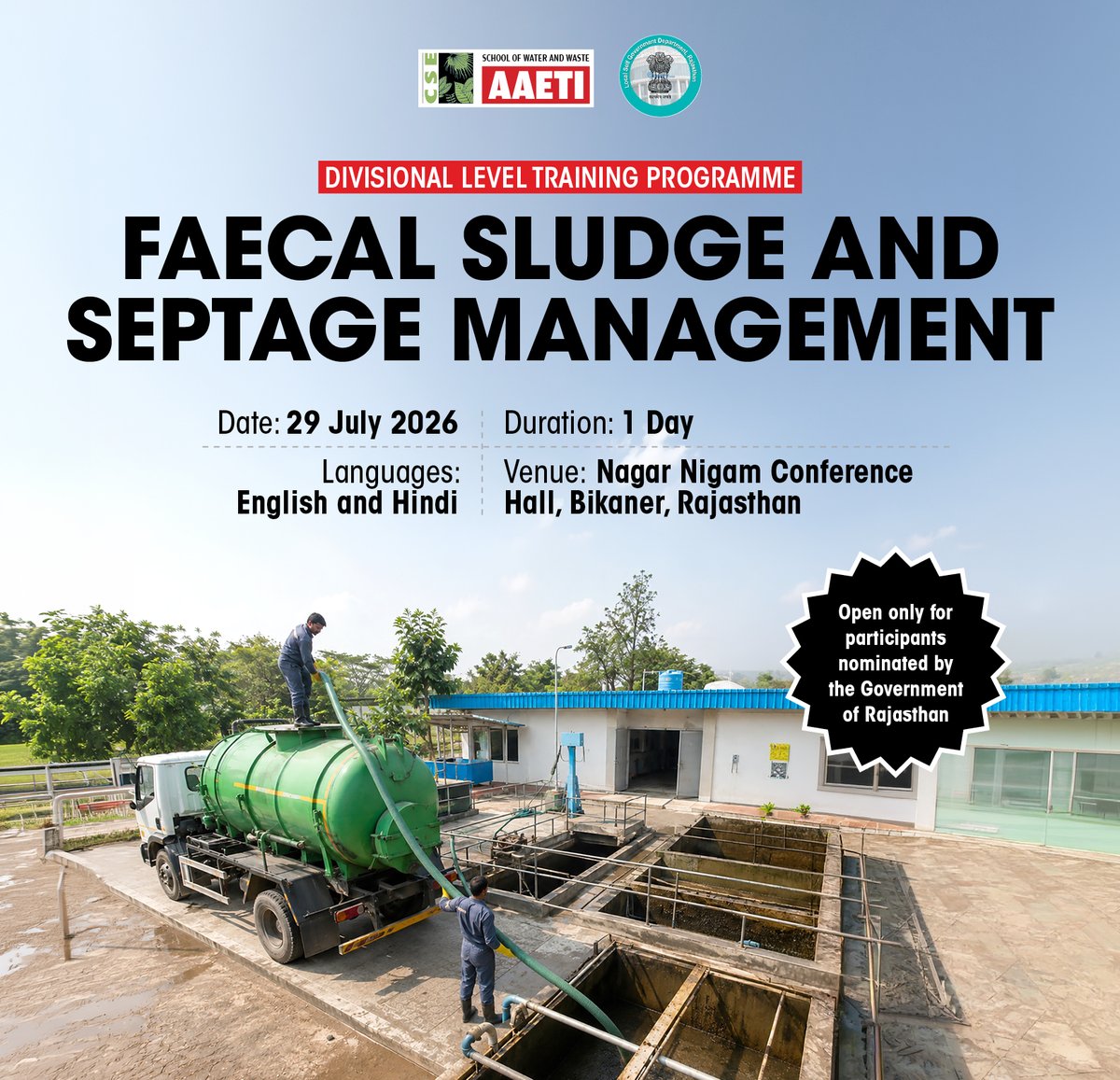
📢 Happening today! The Water Programme of @CSEINDIA, in collaboration with the Swachh Bharat Mission (Urban), Directorate of Local Bodies, Government of Rajasthan, is organising the second Divisional-Level Training Programme on Faecal Sludge and Septage Management (FSSM) at the Nagar Nigam Auditorium, Bikaner.
The programme is bringing together officials from Urban Local Bodies (ULBs) across the Bikaner and Jodhpur divisions to strengthen their knowledge and capacities in the planning, operation, maintenance, and sustainable management of faecal sludge and septage systems.
The training focuses on promoting safe sanitation practices, strengthening institutional capacities, and improving urban sanitation service delivery across Rajasthan.
For more details about the programme, visit:
https://t.co/xwlXuvp1OR
@SmdsbmU@Suchak2001@Vivek_s011@singhal_sumita@DadhichJp