Glamsterdam has ten EIPs included(confirmed) that are shipping together, each fixing a different issue and touches every layer of @ethereum
> EIP-7732 ePBS: Block builders enter the protocol, validators stop depending on off-chain relays.
> EIP-7928 BALs: Transactions execute in parallel, blocks process significantly faster.
> EIP-7708: Every ETH transfer now emits a log, giving ETH the same trackability ERC-20 tokens have always had.
> EIP-7778: Gas refunds are removed, making block gas accounting predictable and consistent.
> EIP-7843: Smart contracts can read the current slot number natively.
> EIP-7954: Contracts can store more logic without hitting size limits.
> EIP-7976: Calldata floor cost increases to reduce worst-case block size.
> EIP-7981: Access list costs increase to reflect actual resource usage.
> EIP-8024: New stack opcodes resolve the stack too deep compiler issue in Solidity.
> EIP-8037 & EIP-8038: State creation and state access get repriced to slow chain growth.
Ten fixes. One fork.
Great news on first look but sadly crypto ETNs are banned from being bought via the tax efficient ISA since April this year.
WisdomTree shown below as an example. This is why I have to go down the digital asset route with @Sharplink
@ajbell now offering @Bitwise_Europe Bitcoin & Ethereum $ETP’s
AJ Bell is the second largest UK platform managing ~£108bln AUM.
This is a huge step forward for the UK market 🚀
I'm against issuance reduction, mainly because my validator approved a block today. Gonna spend the rewards on a Chinese takeaway; chicken chow mein and prawn crackers. Don't take my prawn crackers away from me via the issuance reduction. #homestaker
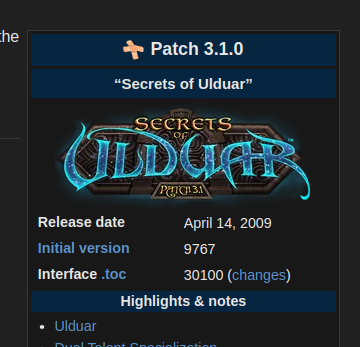
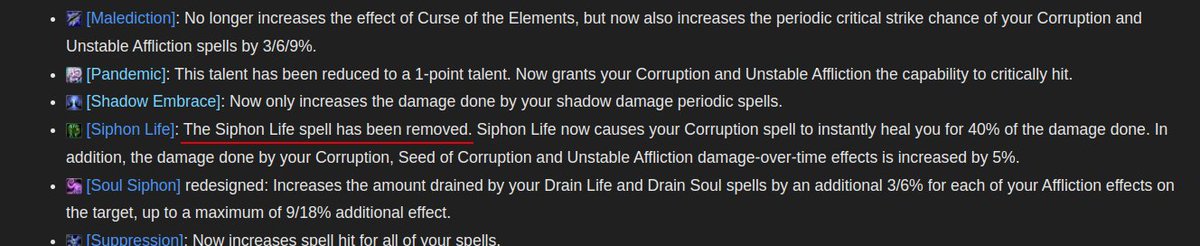
Today is the 17th anniversary of WoW patch 3.1.0, aka the day Blizzard nerfed Siphon Life and accidentally invented Ethereum.
In a parallel universe, Affliction warlocks were left alone, @VitalikButerin is a top 500 raider and we are all still using Paypal.
You are welcome! 🤣
And here goes the other ANNOUNCEMENT:
The @thedaofund is adding 69,420 ETH in validators to the pool. They want to help stakers access smoother MEV rewards and it strengthens the whole proposition of Smooth.
Just bit the bullet on upgrading my validators to compounding validators (0x02) with a view to consolidate them in the near future.
Still feckin scary to pissing around with my life savings like this!
@ViktorBunin@EliBenSasson Shhhh you're ruining his narrative that Starknet is the best chain if you don't include any other chainsthat are better than it
Today marks an inflection in the Ethereum Foundation's long-term quantum strategy.
We've formed a new Post Quantum (PQ) team, led by the brilliant Thomas Coratger (@tcoratger). Joining him is Emile, one of the world-class talents behind leanVM. leanVM is the cryptographic cornerstone of our entire post-quantum strategy.
After years of quiet R&D, EF management has officially declared PQ security a top strategic priority. Our journey began in 2019, with the "Eth3.0 Quantum Security" presentation at StarkWare Sessions. Since 2024, PQ has been central to the @leanEthereum vision. The pace of PQ engineering breakthroughs since then has been nothing short of phenomenal.
It's now 2026, timelines are accelerating. Time to go full PQ:
→ PQ ACD: Antonio Sanso (@asanso) kicks off a bi-weekly All Core Devs PQ transactions breakout call next month. These sessions focus on user-facing security, covering dedicated precompiles, account abstraction, and longer-term transaction signature aggregation with leanVM.
→ PQ foundations: Today we are announcing a $1M Poseidon Prize to harden the Poseidon hash function. We are betting big on hash-based cryptography to enjoy the strongest and leanest cryptographic foundations. Check out our other $1M PQ initiative, the Proximity Prize.
→ PQ devnets: Multi-client PQ consensus devnets are live! Shoutout to pioneers @zeamETH, @ReamLabs, @PierTwo_com, @geanclient, @ethlambda_lean, as well as established consensus teams Lighthouse, Grandine, and soon Prysm. This incredible teamwork is coordinated by @corcoranwill via weekly PQ interop calls.
→ PQ workshops: Building on last year's PQ workshop in Cambridge (see photo), the EF is hosting another 3-day PQ event in October. Top experts from around the world will convene. In addition, a PQ day is set for March 29 in Cannes just ahead of EthCC.
→ PQ FV and AI: Last week Alex Hicks (@alexanderlhicks) ran a specialised maths AI for 8 hours, at a $200 cost. It one-shotted a formal proof one of the hardest lemmas in the foundations of hash-based snarks. Mind-blowing. Applied cryptography will never be the same.
→ PQ roadmap: A comprehensive breakdown of the EF's proposed PQ strategy will be shared soon™ on pq[.]ethereum[.]org. The roadmap targets a full transition in coming years with zero loss of funds and zero downtime. Stay tuned :)
→ PQ education: The ZKPodcast (@zeroknowledgefm) is producing a 6-part video series on Ethereum's PQ strategy. EF Enterprise Acceleration is also preparing material for enterprises and nation-states. Finally, Ethereum is now represented on the PQ advisory board that Coinbase announced yesterday.
Believe in something. Believe in PQ security.
1. @Rocket_Pool is a powerful contributor to @Ethereum node diversity.
2. The Rocket Pool Saturn 1 upgrade is coming February 9, 2026.
3. YOU can operate a RP validator with 4 Ether, this is huge.
Ethereum itself must pass the walkaway test.
Ethereum is meant to be a home for trustless and trust-minimized applications, whether in finance, governance or elsewhere. It must support applications that are more like tools - the hammer that once you buy it's yours - than like services that lose all functionality once the vendor loses interest in maintaining them (or worse, gets hacked or becomes value-extractive). Even when applications do have functionality that depends on a vendor, Ethereum can help reduce those dependencies as much as possible, and protect the user as much as possible in those cases where the dependencies fail.
But building such applications is not possible on a base layer which itself depends on ongoing updates from a vendor in order to continue being usable - even if that "vendor" is the all core devs process. Ethereum the blockchain must have the traits that we strive for in Ethereum's applications. Hence, Ethereum itself must pass the walkaway test.
This means that Ethereum must get to a place where we _can ossify if we want to_. We do not have to stop making changes to the protocol, but we must get to a place where Ethereum's value proposition does not strictly depend on any features that are not in the protocol already.
This includes the following:
* Full quantum-resistance. We should resist the trap of saying "let's delay quantum-resistance until the last possible moment in the name of ekeing out more efficiencies for a while longer". Individual users have that right, but the protocol should not. Being able to say "Ethereum's protocol, as it stands today, is cryptographically safe for a hundred years" is something we should strive to get to as soon as possible, and insist on as a point of pride.
* An architecture that can expand to sufficient scalability. The protocol needs to have the properties that allow it to expand to many thousands of TPS over time, most notably ZK-EVM validation and data sampling through PeerDAS. Ideally, we get to a point where further scaling is done through "parameter only" changes - and ideally _those_ changes are not BPO-style forks, but rather are made with the same validator voting mechanism we use for the gas limit.
* A state architecture that can last decades. This means deciding, and implementing, whatever form of partial statelessness and state expiry will let us feel comfortable letting Ethereum run with thousands of TPS for decades, without breaking sync or hard disk or I/O requirements. It also means future-proofing the tree and storage types to work well with this long-term environment.
* An account model that is general-purpose (this is "full account abstraction": move away from enshrined ECDSA for signature validation)
* A gas schedule that we are confident is free of DoS vulnerabilities, both for execution and for ZK-proving
* A PoS economic model that, with all we have learned over the past half decade of proof of stake in Ethereum and full decade beyond, we are confident can last and remain decentralized for decades, and supports the usefulness of ETH as trustless collateral (eg. in governance-minimized ETH-backed stablecoins)
* A block building model that we are confident will resist centralization pressure and guarantee censorship resistance even in unknown future environments
Ideally, we do the hard work over the next few years, to get to a point where in the future almost all future innovation can happen through client optimization, and get reflected in the protocol through parameter changes. Every year, we should tick off at least one of these boxes, and ideally multiple. Do the right thing once, based on knowledge of what is truly the right thing (and not compromise halfway fixes), and maximize Ethereum's technological and social robustness for the long term.
Ethereum goes hard.
This is the gwei.