INVESTING IN LONG TERM S CURVE GROWTH ASSETS. Successful long-term investing requires vision, capital, courage, fortitude, patience, and deferred gratification.
All 8 point to the same root.
Your nervous system has set its cortisol baseline too high. Every "fat loss hack" fights the symptom.
You don't need 8 protocols. You need to reset the baseline.
That's what I'm teaching this Thursday — free.
🎟️ https://t.co/eZ8gI12OMi
$HOOD
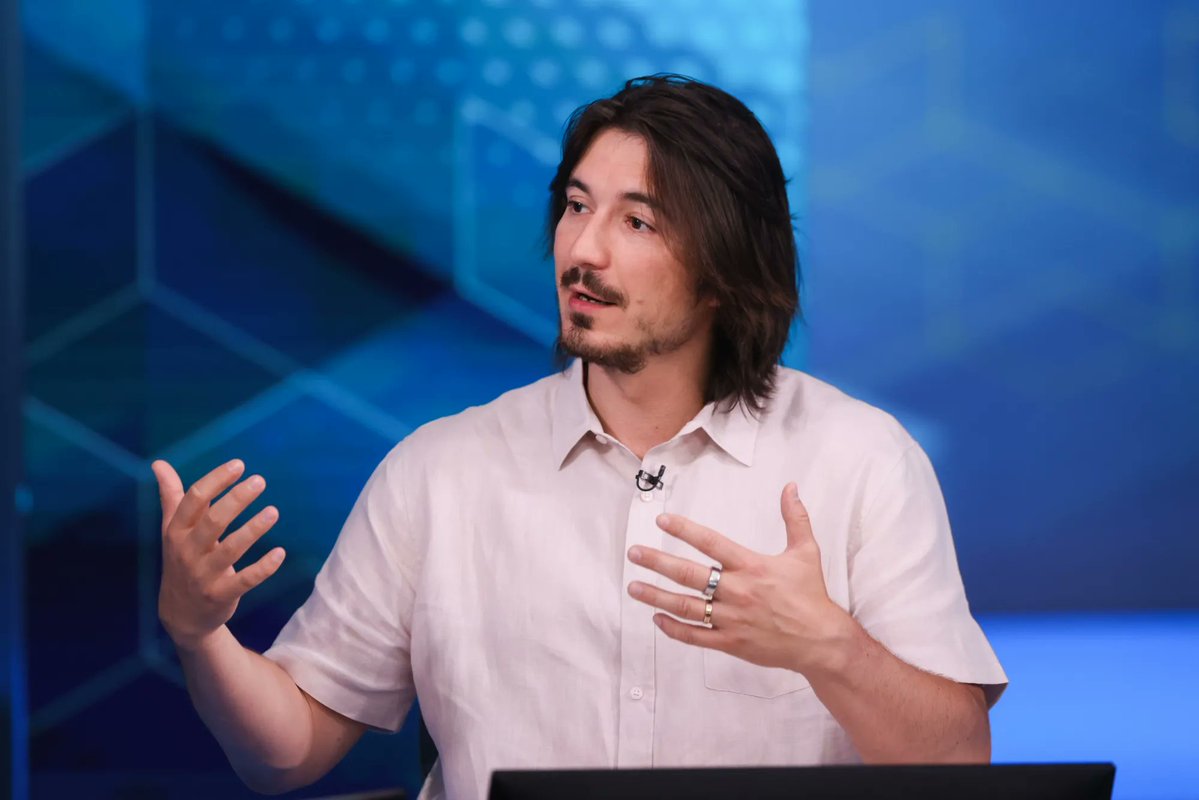
I have covered Robinhood for the past 3 years, and it is fair to say that something really different has happened in the past 2 weeks since their Crypto event in the UK.
Why? Well...
Just over one week after launch of the Robinhood Chain:
- 17M+ transactions
- Nearly 350K total addresses
- Nearly $250M in protocol TVL
- More than $1B in DEX trading volume
And three days ago, Robinhood Chain flipped Hyperliquid in 24-hour DEX volume, according to DefiLlama:
Robinhood Chain: $433.19M
Hyperliquid: $296.23M
The implications for $HOOD are significant and really cannot be ignored by the market.
Robinhood is evolving from a brokerage that earns from customer trading activity into a vertically integrated financial ecosystem with its own blockchain, exchange infrastructure, tokenized assets and on-chain liquidity.
This along with the Trump accounts is why I think the stock has finally decoupled from $BTC and is now trading at 80% above its lows in May. Bitcoin could go up or down, the market has moved on with pegging HOOD's stock to random BTC fluctuations, because HOOD is so, so much more important than what happens with any individual coin.
If Robinhood Chain continues gaining adoption, Robinhood could capture economics from:
- Blockchain transaction fees
- DEX trading and liquidity activity
- Tokenized stocks and real-world assets (something Vlad really wants to push heavily as he sees the entire world is moving on chain)
- Stablecoin payments and settlement
- Third-party applications built on its network
- Increased customer deposits and engagement
The bigger opportunity is that Robinhood may no longer need to simply route transactions through financial infrastructure owned by other companies.
It could increasingly own the infrastructure itself...which has always been the bull case for them in crypto. It's not just about making fees off people trading coins, but owning the entire stack when it comes to the broader crypto ecosystem.
That gives Robinhood more control over the customer experience, potentially stronger margins and several new recurring revenue streams.
It is still early, and some of the initial volume may be driven by launch incentives, but Robinhood Chain is already showing that the company could become far more than a retail brokerage. The main assets being traded on it right now are meme coins, which some people may think are a joke, but to me this is showing the willingness of so many native crypto investors to accept Robinhood Chain as a legitimate platform to be able to trade on and eventually, millions of other assets with real world utility will come on chain.
$HOOD is building toward becoming a global, crypto-native financial platform and that level of innovation and speed is what has helped the stock recover this year but is also getting the street excited for the future, diversified streams of revenue which will continue to compound earnings over the coming years.
LFG.
GOOD NEWS 🚖 Cybercabs were spotted in Miami, hinting a simultaneous launch with the cities in Texas is right around the corner 🔥
Because Tesla has already launched unsupervised Robotaxi networks in both states using Model Ys, the hardest part is already done 🆒
Texas and Florida have fully cleared the state-level regulatory hurdles for commercial driverless vehicles, and the digital infrastructure is mapped 🆒
This makes the introduction of the actual Cybercab a simple matter of dropping the new, purpose-built hardware into an already-functioning system 🔥
The @RobinhoodApp Chain quickly turned into a massive breakout product garnering more volume than many established crypto DEX...
- uses $ETH as the native gas token
- transaction fees denominated in ETH
- finality on @ethereum L1
ETH is money... see it clearly now?
@BitMNR@arbitrum@ajwarner90
$BMNR
Dylan Patel believes $NVDA will not use CPO even with Feynman
“We’re very bullish on copper and non-CPO optics. We're kinda bearish CPO.
$APH is going to perform much better over the next few years than previously expected.”
Full quote:
“The spending associated with AI chips is currently at or below 10%, but when we move to CPO, networking will grow even further, to 20% or 30%. We are seeing a huge uplift in networking content. CPO is a massive step-function change for the industry, and everyone recognizes it now, but people are getting a little too exuberant. In my view, it is not coming in 2027. It will really arrive toward the end of 2028, with 2029 being the real ramp for scale-up CPO.
There have been a lot of manufacturing problems. If we could deploy it today at a good cost, everyone would do it. However, it is really hard. The manufacturing volumes and yields are not there, and the chips are not fully designed for it yet. It is a very complex and difficult technology to ramp, so people are going to stay with copper for as long as they can.
That means Rubin is all copper, and Feynman, the next-generation Nvidia GPU after Rubin and Rubin Ultra, is still copper. We are not even shipping Rubin yet. We have a few generations of chips before we get to CPO on the GPU.
CPO on switches is coming earlier than on GPUs or AI ASICs. Even without CPO, as cluster sizes get bigger, you need more optics, active electrical cables, and similar components per GPU. We have seen a major shift in the dynamics.
On Monday, we released a note for our institutional research subscribers stating that, over the medium term, we are actually very bullish on copper and non-CPO optics, while being slightly bearish on CPO. This is due to delays in downstream chips, such as Feynman not fully utilizing CPO.
Copper companies like Amphenol, which make backplane connectors and cables, are going to perform much better over the next few years than previously expected because CPO is being delayed.
Ultimately, integrating optics is much more expensive than sending signals electrically. However, electrical signals cannot travel very far without adding repeaters or optics. There is a trade-off continuum, and while CPO will happen, it is currently being pushed out.”
Grok being used for internal tech development at Tesla & SpaceX is an underrated AI flywheel that could become a crazy advantage if it keeps improving
There is one looming bear case for Photonics
$LITE $COHR $AAOI $SIVE
That this is cyclical and will end up in oversupply.
With lots of the focus on lasers/transceivers.
My goal with this post isn't to refute that.
We can talk about how much demand is still showing up
Or the difference between 'capacity' and 'qualified capacity'
Or the different moats that exist for certain porducts.
And more. But I won't dig into that now.
For those of you that are concerned about oversupply at these layers, I want to encourage you...
Don't look at the Photonics sector as 1 general trade.
While they generally share sentiment and move in sync, the different layers have different headwinds & tailwinds.
Hopefully different companies will be albe to de-sync and the most durable will outperform.
Sure, the market can decide it doesn't want to reward a premium multiple. Fine.
Let's separate the stock from the company for a sec.
Think about it....
Which companies will BENEFIT if there is an eventual oversupply at the laser/transceiver level?
> Does more volume here mean more fiber deployment from $GLW ?
> Does more laser supply/availability mean that $NOK $CIEN can better meet their demand?
> Does more volume mean more components that need to get tested? $AEHR $FORM $VIAV
Would love to hear your thoughts around who would be hurt and who would benefit.
Assuming that supply does actually catch up to demand at any near point.
WHY ARE THE SEMIS UP THIS MORNING?
Well…a hyperscaler called $META just reminded the market how much they are willing to spend on capex:
- Meta plans to double its AI computing capacity to 14GW in 2027 and begin manufacturing its in-house Iris AI chip in September, according to Reuters citing an internal memo.
- The Iris chip, part of Meta’s MTIA program, is designed with $AVGO Broadcom and manufactured by $TSM TSMC, with the goal of reducing reliance on $NVDA Nvidia and $AMD GPUs.
- Meta has also secured long-term supply agreements with Samsung (memory), $SNDK SanDisk (flash storage), and Sumitomo Electric (fiber-optic equipment).
Once again, the market remembers how much Big Tech is willing to spend and how serious they are about creating their own custom silicon.
Trump saying that Iran wants a deal last night + META getting ready to spend even more on capex is likely why the semis are starting to recover.
I was clearly wrong about Anthropic. They are obviously currently the leader in AI. No company has released a model as good as Mythos/Fable and they will undoubtedly have Mythos 2 ready soon.
And I would never cut them off in a way that hurt them badly, even as a competitor. That’s not my style.
Tesla open sourced its patents and we made the Supercharger network available to all competitors, even though we could have made it a walled garden.
SpaceX launches competing satellite systems with no increase in price or use of unfair terms.
Even my worst enemies can attack me on this platform.
…
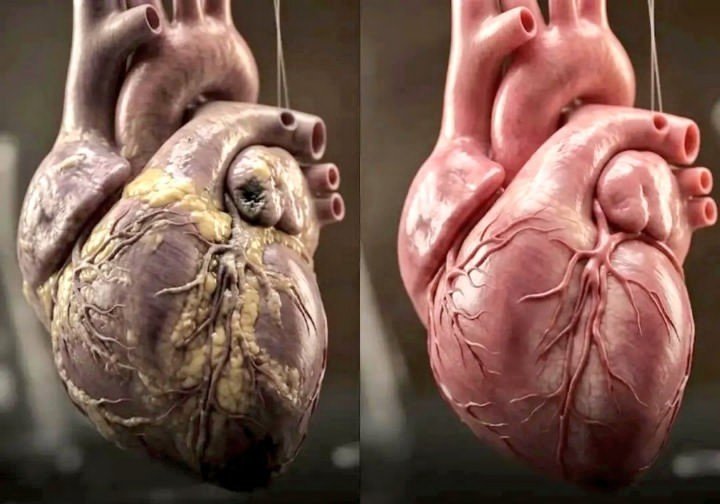
A cardiologist said one thing that stuck with me:
“The heart can heal itself, If you do one thing every night before you sleep”
This is the 5 minute fix that triggered healing:
Tesla on Cybercab in new report:
"We plan to deploy Cybercab as the primary vehicle in our Robotaxi fleet. It eliminates the need for a steering wheel, pedals and traditional controls, freeing up cabin space and ultimately reducing weight and operational costs. It is designed as al compact two-seater because more than 85% of ride-hailing trips carry one to two passengers, * while other autonomous Tesla vehicles serve larger groups.
Cybercab incorporates numerous in-house advancements including our 4680 battery cells, steer-by-wire technology and 48-volt architecture, with the latter enabling the delivery of power to different parts of the vehicle more efficiently.
It also leverages our "unboxed" manufacturing process that builds the vehicle in parallel (instead of using traditional sequential manufacturing lines),| leading to a more efficient use of the factory space.
Furthermore, Cybercab is manufactured from lightweight reactive injection molded (RIM) panels that eliminate the need for a traditional paint shop. Cybercab also includes a new drive unit that eliminates reliance on critical minerals that can be costly and difficult to procure. These innovations deliver a step-change reduction in vehicle bill of material and manufacturing costs while aiming to meet and, in some cases, exceed the global safety standards."
Many things are happening today with $TSLA and it's only morning!
1. VP of External Affairs at Tesla said that Optimus will officially enter mass scale of Optimus by end 2026.
2. Germany singling to be one of the next European countries to approve Tesla's FSD.
3. BAIRD keeps their PT of $522 due to strong Q2 deliveries & energy deployment.
4. Big Tesla announcement tomorrow regarding "scaling efforts" according to VP of Vehicle Engineering Lars Moravy.
SHEESH!
⚽️World Cup Public Betting for Sunday
🇧🇷 Brazil vs Norway
✅ Public side: Brazil ML
• 68% of bets
• 76% of handle
📉 Norway has drifted from +310 → +350, which lines up with the public leaning Brazil.
📊 Prediction market check
• Kalshi: Brazil 55% | Draw 27% | Norway 21%
• Polymarket: Brazil 55% | Draw 27% | Norway 20%
🇲🇽 Mexico vs England
🔥 Public side: Mexico ML
• 54% of bets
• 76% of handle
That’s the more interesting split of the day because the prediction markets still lean England.
📊 Prediction market check
• Kalshi: England 40% | Mexico 32% | Draw 30%
• Polymarket: England 40% | Mexico 31% | Draw 31%
🔗 More World Cup public betting: https://t.co/9bKaKmZluN