@sydney_dyslexia For me there’s nothing wrong in letting a child escape into a movie once in a while. Parents could’ve spent the entire day interacting with their children for all we know. But headphones only so other diners aren’t disturbed.
@sydney_dyslexia I think we can’t always know the circumstances. Some people with sensory issues can’t handle the noises etc of a busy restaurant, or struggle to hear one voice over background noise. Maybe they are listening to an audiobook on a device? Headphones are a must though!
@jamesmatthey@newscomauHQ@GaryLineker I’m English and would use the expression “utterly choked” to mean “devastated/upset eg feeling choked by emotion”. I think you are using Lineker’s tweet out of context! https://t.co/VGTEuyXLn9
@newscomauHQ@alexblair_1@GaryLineker Lineker’s comment taken completely out of context here!! Pretty sure “utterly choked” means upset/devastated. The England team did us proud 🏴🏴 https://t.co/eHFtU9cgH4
@jmr12765@duns3399 @DECD_SA @susan_close Decodeables are kept in the learning support storeroom at our school too - not much use for mr8 with severe dyslexia and APD who isn’t being given any learning support! I send decodeables from home in his Reader bag just in case anyone asks to read with him..
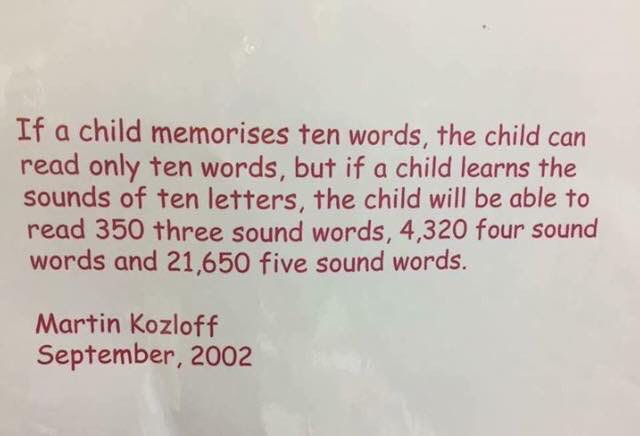
@londonjohn9@LogicofEnglish@mazst@SaraJPeden@RuralPsych@SWLiteracy@debbiehepp I don’t understand your logic - if your students have poor working memories as many dyslexic children do then trying to get them to memorise multiple high frequency sight words is going to be far harder for them than learning the sounds so they can decode words themselves
@duns3399 Just hate it when people make out decodeable readers aren’t “real” books. I’m a huge fan of decodeable readers after seeing mr 8s face light up when he realised for the first time he could read a book himself. He loves the Magic Belt decodeable adventure series
@tombennett71@KindyNick Disagree - some above average intelligence kids are good at maths & fully understand the concept of times tables but struggle to memorise them all due to issues with working memory. Stress of mental arithmetic testing makes this even harder.
@JaneCaro@mazst @InteriorsAvenue @johnqgoh The so called “balanced approach” with a bit of phonics and a bit of guessing from pictures and a bit of sight word memorising leaves many kids of above average intelligence completely confused & unable to read after 3/4/5 years at school...
@debbiehepp Don’t know where the “arc” originates from, but the alphabet arc exercise has made a huge diffference in just a few months to mr8s ability to identify the letters of the alphabet, know their order, manipulate the sounds etc.
@debbiehepp@duns3399 ..the alphabet arc isn’t Phonics but it helps children with the sequencing of letters and to understand that these letters represent speech sounds which then make up words
@debbiehepp@duns3399 I disagree, dyslexic mr 7 didn’t know half the letter names/sounds, couldn’t put in order & did multiple reversals after 3 years of school following a jolly Phonics program. 2 terms with an msl tutor incl the alphabet arc & he knows all letter names/sounds, in order no reversals.
@jimbo9848@rupert_higham Many children who struggle to learn to read have above average IQ. Finding learning to read easy means you are lucky - not clever!