“Understanding a word’s structure and then spelling the word by announcing its morphemes is a more reliable strategy for spelling than sounding it out or judging the word on its looks.” @MaryBethSteve18 https://t.co/x2vOOLhmRQ
These lucky learners are studying the English writing system, investigating “tricky” words to discover their relatives, elements, and units.
https://t.co/x2vOOLhmRQ
Isn’t their work amazing? Check out the tools they use to deepen their understanding of the writing system, identify and correct errors in their current thinking, and create explanatory knowledge for reading and spelling.
@JSerravallo@NateJoseph19 Hi Jennifer. I agree that there are several strategies for word reading that are not MSV.
Did the research that you shared also look at peeling off known affixes (to reveal the base element) as a word-level action that readers can take?
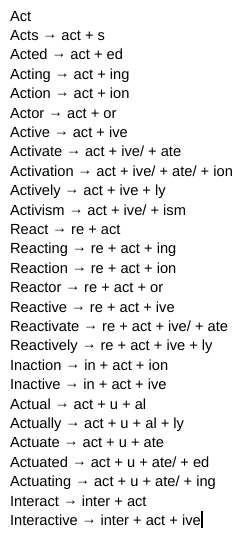
“The fact that the grapheme <t> in act and action maps onto different pronunciations is not evidence of a poor spelling system; rather, it is evidence that English spelling encodes morphology in a consistent manner.” https://t.co/hz98C6evnc
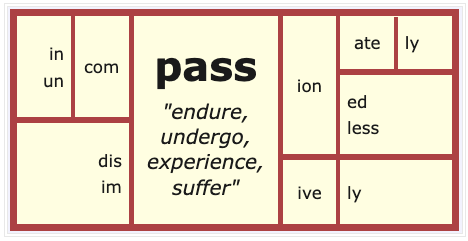
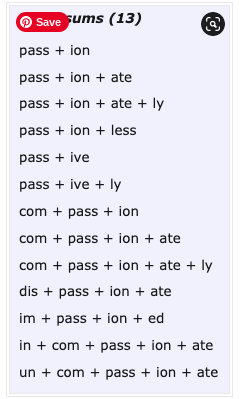
Morphological analysis tools such as word sums and matrices provide a useful structure for helping kids to think about word pronunciations and meanings https://t.co/jjVaY8FM8k
Looking at how words containing a shared base change as other morphemes are added/removed will not only solidify core spelling patterns but also draw attention to how the phonological aspects of a word can change even when the spelling remains constant within these word families.
@TimRasinski1@DrMPaff @rrcna_org @plthomasEdD Tim Shanahan warns of this very real potential to harm, noting that he has been hearing from many teachers whose schools have severely cut back on critical aspects of reading instruction to facilitate phonics coverage. https://t.co/kuM3XerzEh
@MiriamFein @jeffrey_bowers@ehanford@DeborahLynam Like phonics, SWI teaches grapheme-phoneme correspondences explicitly, but it does so in the context of morphological families to help kids understand how they work.
Going deeper than phonics, it helps kids (and their teachers) grow their knowledge of the *system* itself.
@MiriamFein @jeffrey_bowers@ehanford@DeborahLynam To be fair, teachers and students also identify all of the graphemes in written words, mapping them to phonemes and noting how they may be pronounced differently in related words (e.g., the <t> in <act> and <action>).
Spelling words out loud is only one of several activities.
Note: I meant to include a link to the source for the above <act> family matrix. It's Dr. @GinaCookeLEX's work, not mine. https://t.co/21xGVITcQb
@SCESCLiteracy @eeharrington4 You can group anything in a cell that can work across that row. For example, here, I do NOT group <ion> and <ive> because *activeable and *actionly are nor possible words. But the connecting <u> can serve the words actual, actually, actuary, and actuate, so I group accordingly.
I’d love to hear if anyone else has any ‘go-to’ spelling activities they feel help children to consider the both the phonology and morphology of words!