Stop teaching reading. It's too hard and grows more complicated daily. Many of the methods produce temporary results. Move up to Language-literacy development. Just focus on the four major parts of spoken language using A-B-E-C. Go from sounds to sentences in every lesson. https://t.co/9SEtlpBWrY
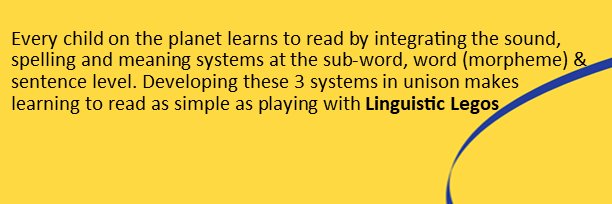
Let's stop focusing on decoding and start focusing on developing literacy. The three most important yet overlooked components of literacy are: morphemes (the building blocks of all words) phrases (the building blocks of sentences) syntax - the universal blueprint for build sentences.
Wondering how to provide integrated instruction? Listen to Australian teacher educator Meghan Hicks describe how word, sentence & text structures develop reading comp & written expression. "Four Powerful Word, Sentence, Text and Cognitive Routines for Teaching Writing" Apple Podcasts too https://t.co/X91cxF1SxA
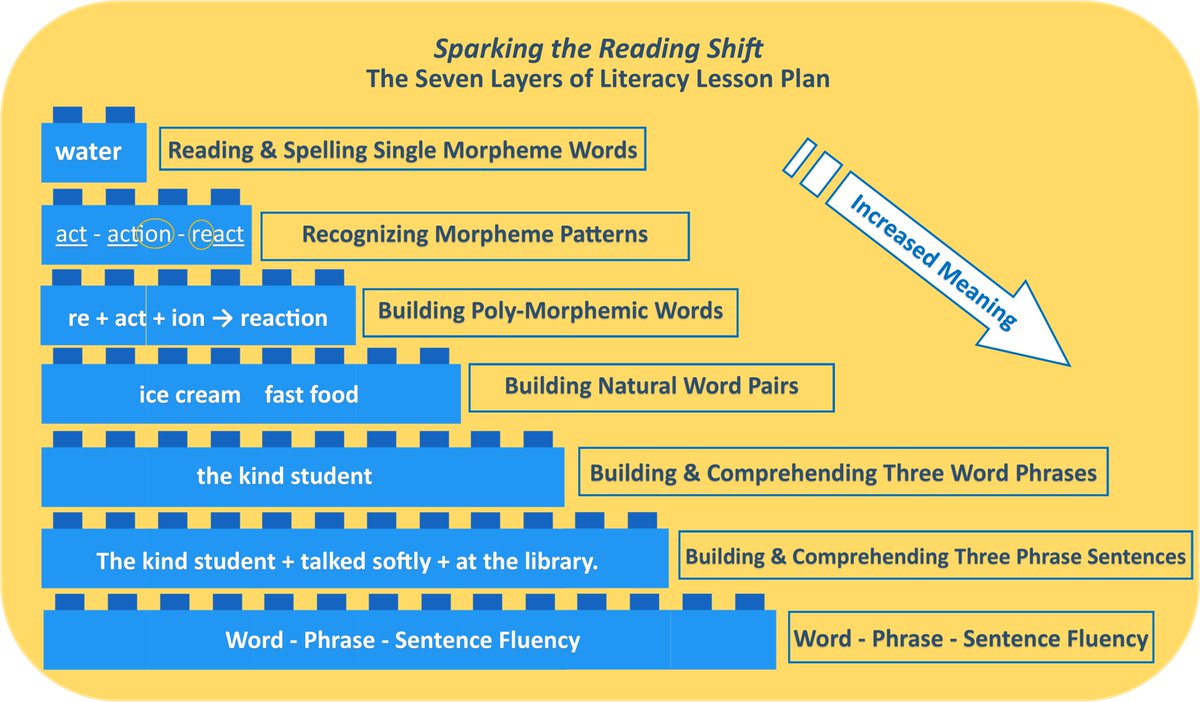
Still teaching reading, spelling & writing as if they are different things? The Seven Layers of Literacy lesson plan takes all students, including weak decoders & spellers, from single words to natural words pairs to phrases to sentence comprehension and writing in each lesson.
https://t.co/9SEtlpBWrY
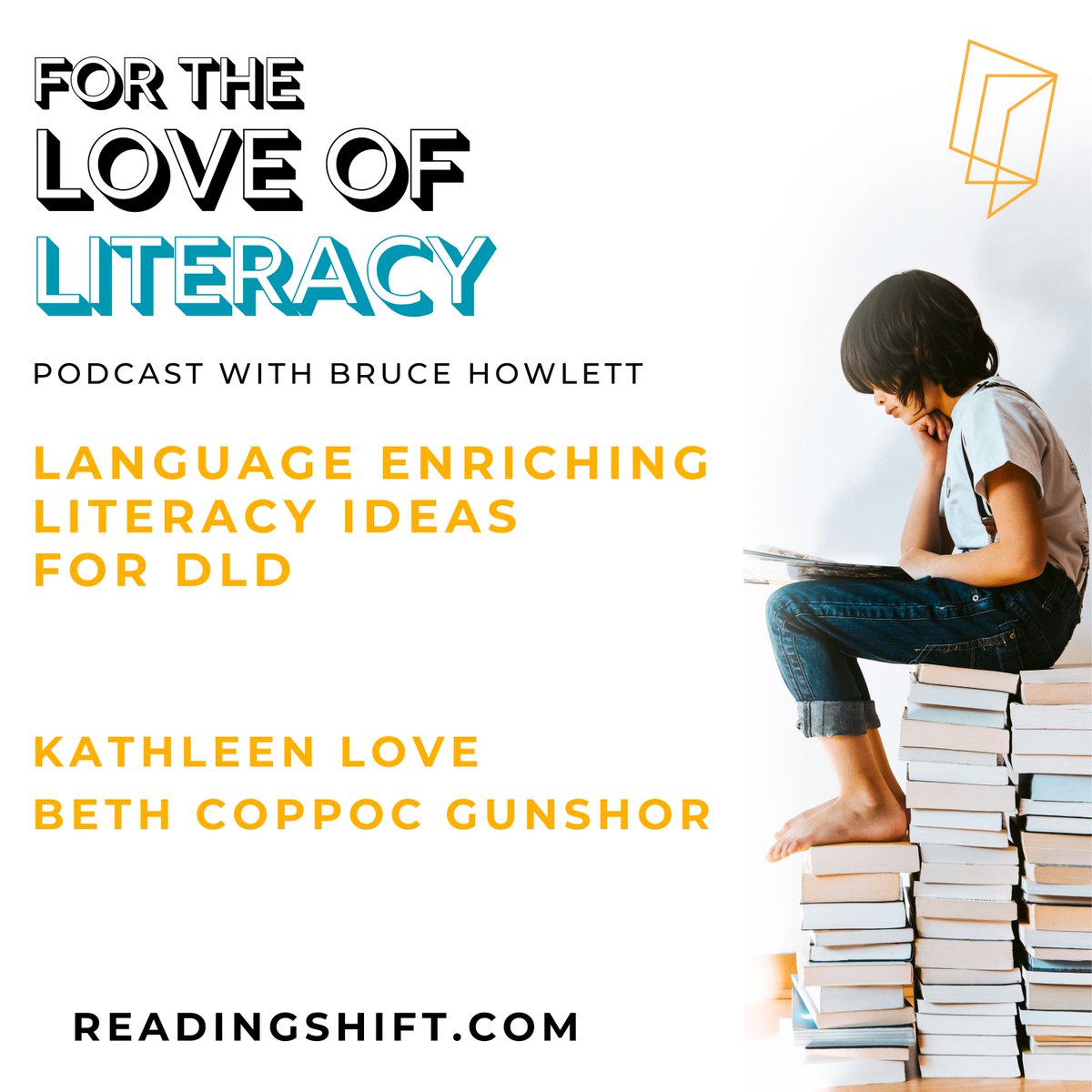
Learn about the most important topic in literacy -- developmental language disorder DLD. Identify and support using practical methods students who struggle with language and literacy. Kathleen Love and Beth Gunshor will show you practical methods so you can be successful with these students.
If you are looking for ways to teach in accordance with IDA’s current definition of Structured Literacy, A School Year Rich in Words, will interest you. The definition emphasizes the “systematic integration” of “the domains of oral language (phonology, morphology, semantics, and syntax) and their representation in written language (orthography).
In this podcast, two experienced Australian educators, Ann Whiting and Lyn Anderson, shows how they integrate the four oral language domains with English orthography into the daily lives of their students, from kindergarten and into secondary education. They discuss their book, A Year in Words, and how the spelling system is built by combining morphology (meaning), phonology (pronunciation) and etymology (history). From this approach to spelling, Reading instruction, sentence writing, and vocabulary enrichment develops.
You will come away from this For the Love of Literacy Podcast understanding how to integrate reading, spelling and writing as one process, offering your students deeply enriching language-literacy lessons. https://t.co/Ue1VZ1yT8F
Reading expert Timothy Shanahan's new book, reviewed by Natalie Wexler, exposes a major flaw in how schools teach reading. Many teachers limit kids to "easy" books at their reading level, but this common practice isn't backed by research and may actually hold students back. While Wexler agrees with ending this approach, she emphasizes that students also need broad knowledge to become better readers.
https://t.co/YhxW1ry8H6
We wouldn’t be here if the universe were even slightly different.
This is what scientists call the fine-tuning problem.
The more we study the cosmos, the clearer it becomes: the physical laws of our universe are finely tuned – balanced precariously atop a hill.
If the strength of gravity were just a fraction weaker, galaxies wouldn’t form. If the strong nuclear force were slightly stronger, stars wouldn’t burn. If the expansion rate of the universe were off by one part in 10⁶⁰, matter would either collapse into a single point or spread so thin no stars could ever ignite.
Get your copy now! Rebecca and Fiona use those high frequency words so often called "irregular" words to memorize, and turns them into spellings that help you understand the whole system. Get your soon!
https://t.co/BJdK8Jigjm
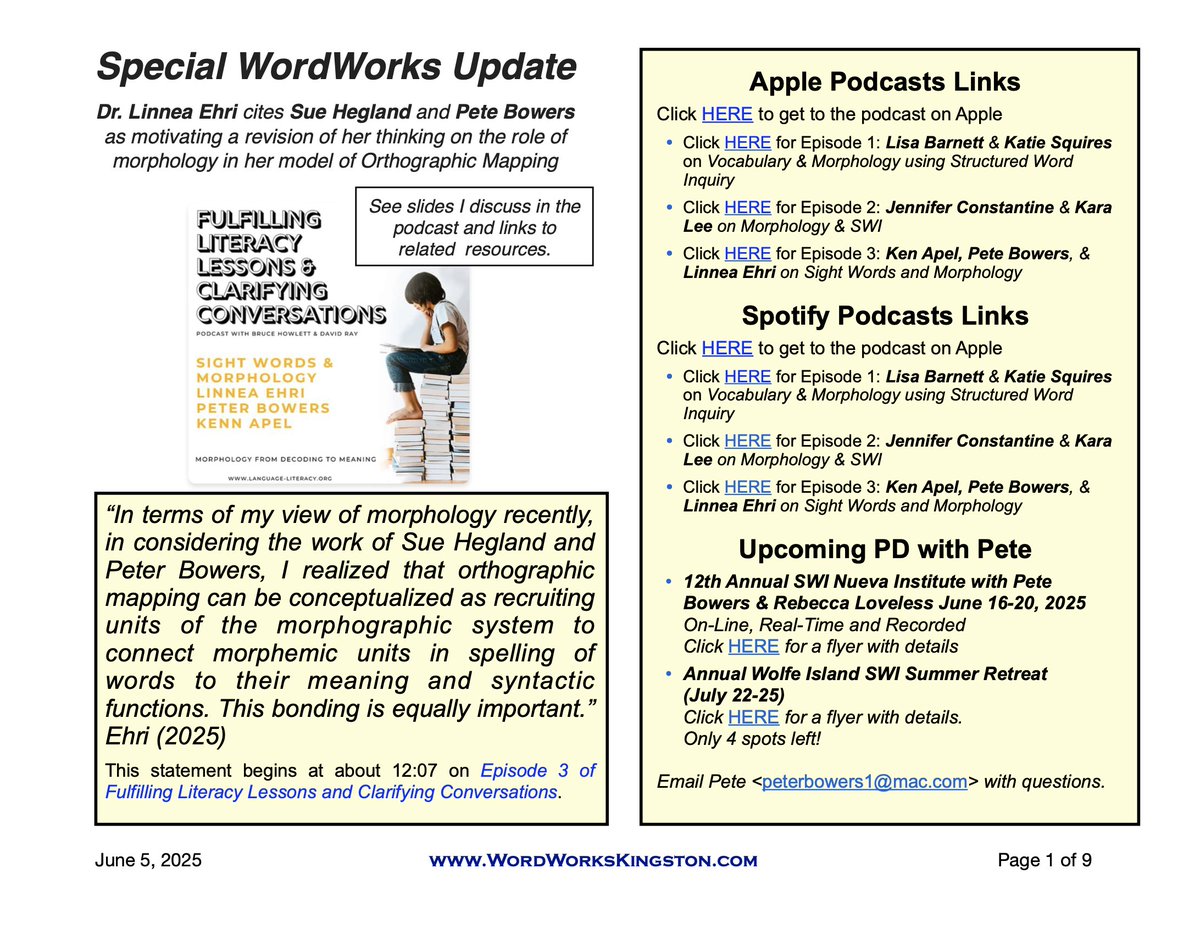
Ehri cites Sue Hegland me for shifting her thinking about the role of morphology in Orthographic mapping. The linked document points to the podcast, has a short reflection on this discussion, many resources, and graphics to reference while listening.
https://t.co/VFJp5VLSEF
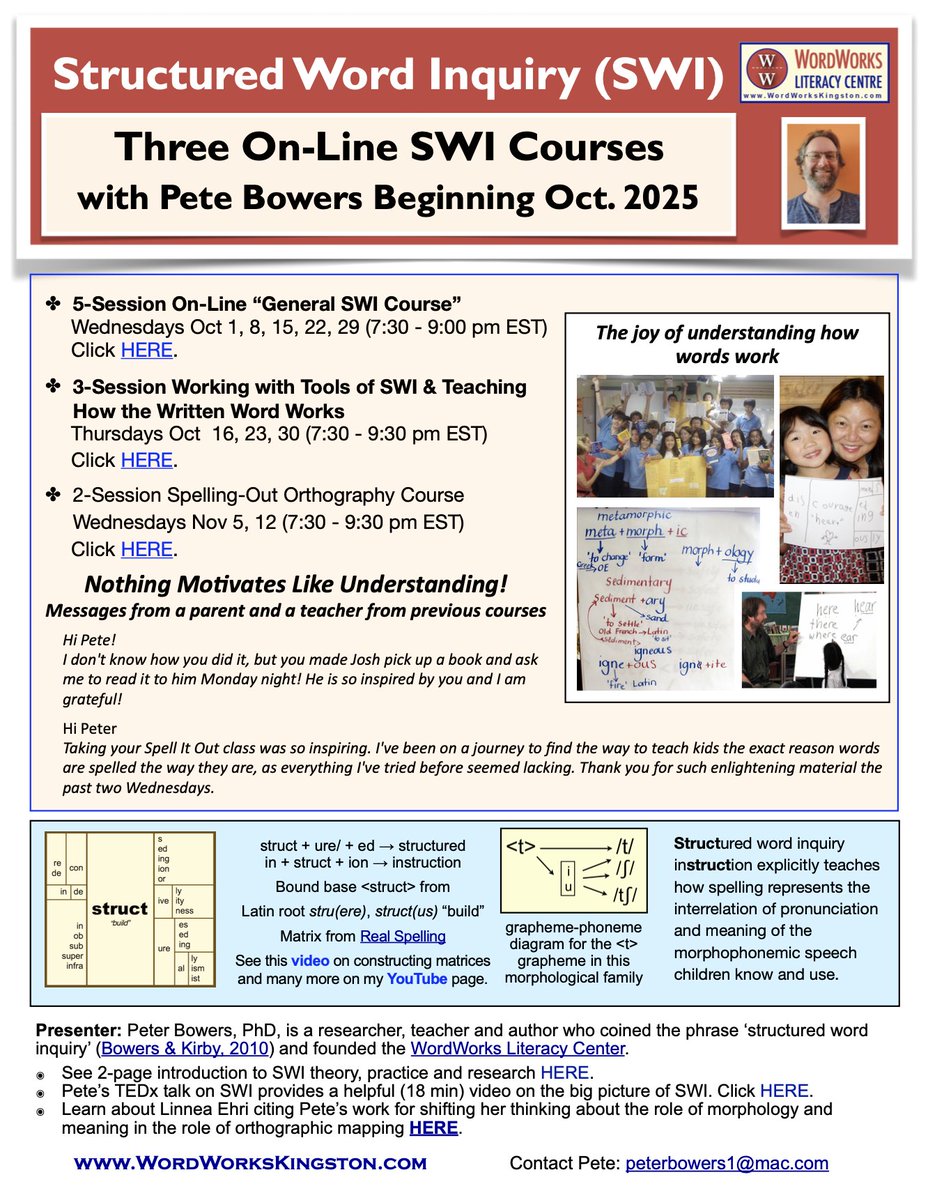
Study the logical way English spelling works to improve your literacy instruction. See why Ehri cites Sue Hegland and me for revising her thinking about the role of meaning and morph in orthographic mapping. More on SWI and these courses linked in flyer.
Tonight’s The Reading League Talk by Sue Hegland, author of Beneath the Surface of Words, who will be introduced by Linnea Ehri, expands on a statement made by Dr. Ehri on this For the Love of Literacy podcast. This talk will explain the role that written morphemes, morphographs, as Dr. Ehri calls them, play in sight word formation.
Sue will also discuss the central role that morphemes play in vocabulary and spelling development. If you want to know where literacy instruction is headed then listen to this talk.
The For the Love of Literacy podcast with Linnea Ehri, Kenn Apel, and Pete Bower, who Dr. Ehri also credits for this shift, can be found on Spotify and Apple Podcasts
Children demonstrated superior spelling performance with interleaved practice on trained words both immediately and eight weeks later. Crucially, the long-term benefits extended to untrained words following the same rules (transfer), but only for children with average to high prior knowledge. https://t.co/xeI4bibAwF
Linnea Ehri just updated her theory of orthographic mapping to say that the spelling of morphemes is an important way of bonding a words spelling, pronunciation and meaning in memory. If the word contains more than one morpheme use morphology to teach it.
https://t.co/BJdK8Jigjm
Ehri cites Sue Hegland me for shifting her thinking about the role of morphology in Orthographic mapping. The linked document points to the podcast, has a short reflection on this discussion, many resources, and graphics to reference while listening.
@ReadingLeagueWI The Mississippi Miracle turned into the Mississippi Marathon when gains didn't transfer to other schools. Now it's the Mississippi Mirage as when the 4th graders reached 8th grade their gains disappeared.
With falling NAEP scores and research showing how vital sentence writing is to reading growth, it’s imperative that students get a change to perform at a higher level - even if they are struggling with decoding.
Yes, writing success can motivate struggling readers!
See more linguistic challenges at https://t.co/9SEtlpBWrY